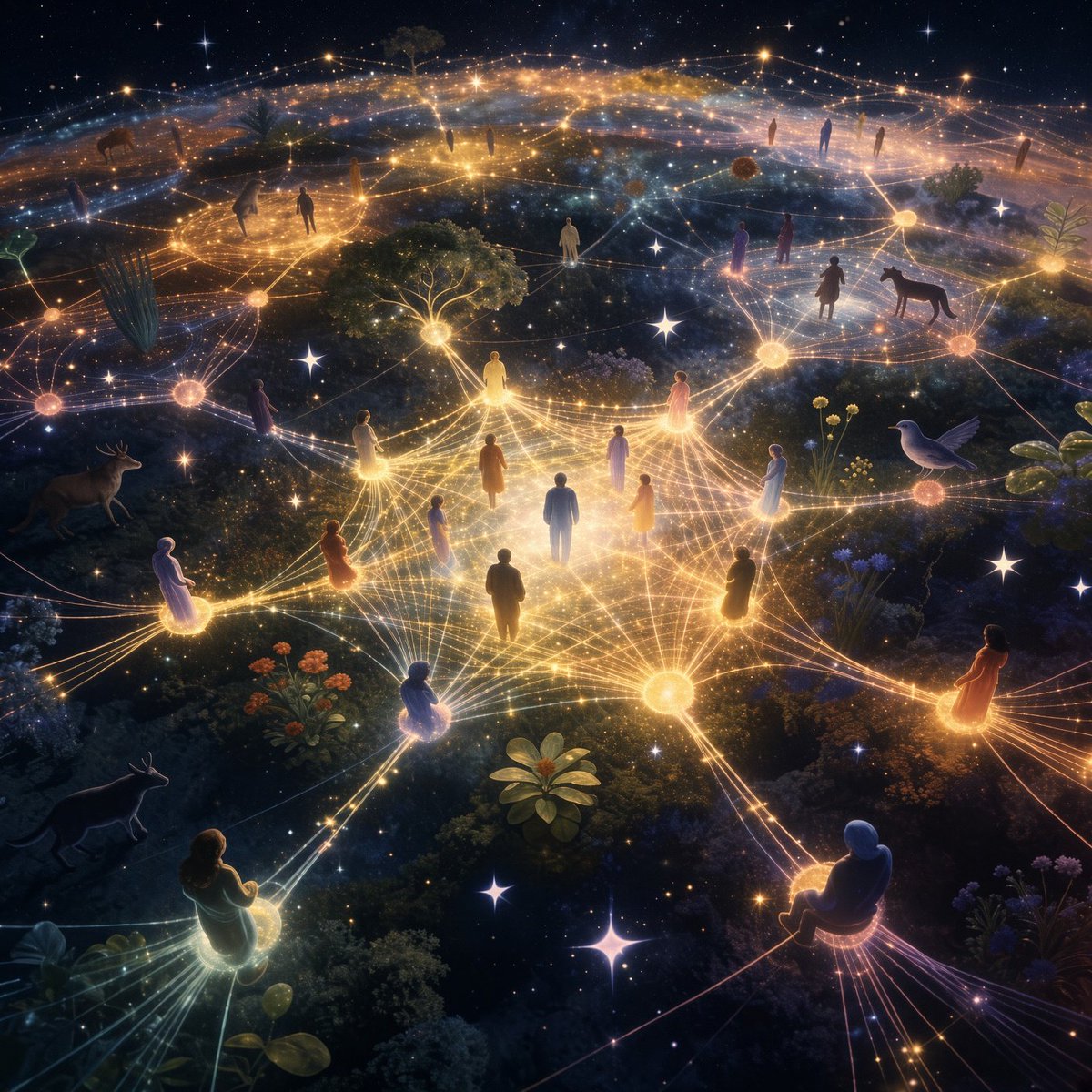
🚨 You’re not the same person you were 10 minutes ago.
Your body is constantly regenerating itself. New cells are made, and old ones are discarded.
Every 7 to 10 years, you get a completely new body with new sets of organs and tissues. Your stomach regenerates itself every 4 days. The stomach cells that help you digest food are replaced every 5 minutes.
You get a new liver every 150 days. The entire outer layer of your skin, called the epidermis, replaces itself every 4 weeks. Your pancreas, which helps regulate your blood sugar level, is renewed every 50 days.
And every 4 months, you get a new set of red blood cells across your entire body. Even after you donate blood, it would only take 12 weeks to completely replace the red blood cells you donated. Your taste buds that help you enjoy a variety of foods are replaced every 10 days. Although cells are always regenerating, the process can be slow for some parts. Bones, for instance, require up to 10 years to fully regenerate.
As we age, bone regeneration slows down and our bones become weaker. Despite this incredible regeneration capacity of the human body, some parts of your body are never replaced, such as the cells that make up the inner lens in your eyes and the neurons in your cerebral cortex.
Fat can also accumulate and stick around depending on your diet and physical activity. Even though everything in your body is replaced, the only thing that remains of you is your consciousness, self-awareness and memories. As I said, your taste buds are replaced every 10 days, but the memory of the delicious food you tasted before is still there, and new taste buds are ready to experience it.
🩺 Canadian Scientists Build a Rice-Sized Robot That Breaks Kidney Stones — With Almost No Pain
Canadian researchers have developed a tiny magnetic robot—no bigger than a grain of rice—that can travel inside the body and break kidney stones safely, gently, and without surgery.
Instead of shock waves or invasive tools, this mini-robot uses precise magnetic guidance from outside the body. Doctors can steer it through the urinary system in real time, allowing it to reach tight areas normal instruments can’t. Once it reaches the stone, it delivers focused micro-vibrations that shatter it into fine pieces the body can pass naturally.
💡 Why this matters:
◽ Minimal pain
◽ No cuts, no incisions
◽ Faster recovery
◽ Avoids healthy tissue entirely
◽ More precision than traditional treatments
Early tests show patients experience far less discomfort because the robot targets only the stone—and nothing around it. This approach could transform kidney-stone treatment and open the door to a new era of soft, gentle, internal robotic medicine.
If upcoming trials confirm the early success, this tiny device could help millions of people avoid painful procedures every year.
BIG NEWS 🚨 Tukaram Mundhe bans loose edible oil in Maharashtra, warns of up to 7 years in jail.
"Currently, loose oil is being sold on a large scale, yet its source is unknown. That oil is also frequently reused"
"Misleading advertisements could attract a fine of up to Rs 10 lakh"
"No compromise will be made on the safety of edible oil, which is directly linked to citizens' daily diet"
⏳ Brain Cells Can Remember Time
Scientists grew human brain cells in the lab for up to seven years and found that the cells kept a biological record of their age.
Even when older and younger cells were placed together, the older cells continued developing as if they “knew” how much time had passed. Scientists believe this built-in molecular clock could help us better understand brain development and neurological disorders.
Source:
Harvard Medical School. (2026). Human brain organoids record the passage of time over multiple years in culture. Nature.
🦷 The Tooth Regrowth Patch That Could Change Dentistry Forever
Researchers at Seoul National University have developed a tiny microneedle patch that triggers your body’s own stem cells — helping damaged or missing teeth regrow naturally, without implants, drills, or dentures.
The patch delivers tideglusib, a regenerative compound known for repairing dental tissue. When it’s absorbed through the gums, it reactivates dormant stem cells that rebuild dentin and enamel, allowing your tooth to regenerate from the inside out.
This means:
✨ No painful procedures
✨ No artificial materials
✨ A faster, natural, and potentially cheaper solution to tooth loss
Experts say this technology could completely shift dentistry from “replacement” to true biological healing. With clinical trials already underway, the world may see the first tooth-regrowing patch as early as 2026 — offering millions a chance to rebuild their real teeth for the first time in history.
In his book The Real Anthony Fauci, RFK Jr. details how Anthony Fauci’s NIAID oversaw experimental AIDS drug trials on HIV-positive foster children at New York’s Incarnation Children’s Center and other facilities.
Many of these children were wards of the state. When they refused the toxic experimental drugs, feeding tubes were surgically inserted so the medications could be forced into them.
Dozens of the children died. Some were buried in a mass grave at Heaven’s Gate Cemetery in New York.
These were not consenting adults. They were vulnerable children used as test subjects.
A mammogram missed her cousin's breast cancer. By the time it was found it was too late, and she died.
About 6 months later a second woman in the same family was diagnosed. She died as well.
The woman watching this happen was an artificial intelligence researcher.
Her name is Geetha Manjunath.
She grew up in Bengaluru. She took her bachelor's degree in computer science at UVCE, then a master's and a doctorate at the Indian Institute of Science, where she was a gold medallist.
Her first job was at the Centre for Development of Advanced Computing, where she was part of the team that built India's first commercial supercomputer in the 1990s.
She spent 17 years at Hewlett Packard Labs as a principal research scientist. She then became a lab director at Xerox Research in India, heading their data analytics research.
Then the 2 deaths in her family happened, and she went and read about the disease.
What she found is worth knowing.
In India, roughly half the women diagnosed with breast cancer die of it. Her own words are blunt. Every alternate lady detected with breast cancer is dying.
The reason is almost never the treatment. It is that the disease is found too late.
Mammograms are the standard test. They use x-rays, they are expensive, they are uncomfortable, they need a large fixed machine, and there is a specific medical problem with them. In younger women the breast tissue is denser, and dense tissue and tumours both show up white on the scan. So the tumour can hide.
That is what happened to her cousin.
She started working on it in her spare time, on weekends, with a small team, while still employed.
The idea was to use thermal imaging instead. A cancer uses more energy than normal tissue and the blood flow around it increases, so the area is slightly warmer. A thermal camera can see that heat pattern from a distance, without touching the body and without any radiation.
The hard part is reading it. Heat patterns are messy. That is where her actual expertise came in. She trained machine learning software to interpret them.
Their first test was with a medical college in Manipal, using thermal images of 72 cancer patients.
It worked.
In 2016 she left her job and started a company with a former colleague, Nidhi Mathur. They called it Niramai, which stands for Non Invasive Risk Assessment with Machine Intelligence, and which in Sanskrit also means free from illness.
The test needs no radiation, no touch, no pain, and no one else in the room. It works on women of any age and any breast density. The equipment is portable, so it can be taken to villages.
More than 400,000 women have now been screened across over 250 locations in India. More than 2,000 cancers have been found.
The technology has regulatory clearance in the United States and in Europe. She holds 14 American patents.
She has one line she repeats.
Nobody needs to die of breast cancer, if you can catch it early enough.
A novel plastic material can vanish in only a few hours.
Japanese researchers have created a plastic alternative engineered to disintegrate quickly upon contact with seawater, avoiding the lasting microplastic particles that now pollute the global environment.
The key mechanism involves salt. Teams from the RIKEN Center for Emergent Matter Science and the University of Tokyo constructed the substance with molecular connections called salt bridges.
In ordinary settings these links keep the material intact so that it functions similarly to standard plastic.
Once immersed in saltwater, however, the dissolved salts disrupt the molecular bridges. The structure then unlocks. Rather than gradually shattering into ever-smaller plastic fragments, the material reverts to its original water-soluble building blocks.
Laboratory tests showed that sheets of the material fully broke apart in saltwater after approximately 8.5 hours. A subsequent demonstration revealed a small sample vanishing in agitated seawater within about one hour.
This difference matters greatly. Ordinary plastics rarely vanish completely when they degrade. Exposure to sunlight, waves, and friction merely splits them into microscopic particles that endure in ecosystems and move into marine food chains.
The new material is intended to bypass that process altogether. After dissolving, its constituents can be further decomposed by natural microbes, so scientists anticipate no enduring microplastic remnants.
The material also proves remarkably durable. Researchers fabricated versions whose strength matches that of traditional petroleum-derived plastics. It can appear transparent, resist flames, and be reshaped under high heat.
Salt present in soil initiates a comparable reaction, though at a much slower rate. Tests indicated that a piece roughly two inches across broke down in soil after about 200 hours.
An evident obstacle remains: everyday plastic items must often withstand water exposure. The developers note that waterproof coatings can shield the material during typical use, and refining such protective layers now forms a central focus of ongoing research.
You have no idea how much your thoughts are controlling other people.
Thinking is not just "in your head."
Thinking is a creative spiritual activity.
Every thought you form participates in the invisible atmosphere around you.
It has form, force, direction, and moral quality.
Clear, truthful thinking creates a different spiritual reality than confused, reactive thinking.
Human beings are constantly influencing one another through the invisible world of thought.
The soul is not isolated.
We live inside a vast web of impressions, impulses, ideas, desires, and spiritual forces.
What you think does not vanish when it leaves your immediate attention — it becomes part of what you bring into the world.
You know this from experience:
You encounter an idea.
You can't stop thinking about it.
You mention it to someone.
They begin thinking about it.
Weeks later, they bring it up with someone else.
The original impulse has travelled through dozens or hundreds of people, often without anyone remembering where it began.
Modern language calls this influence, culture, memes, networks, social contagion.
Dr Steiner would ask:
What is happening spiritually between these human beings?
In his view of the astral world, human souls are not sealed compartments.
They interpenetrate through invisible relationships of thought, feeling and will.
This means unconscious human beings can become carriers of forces they have never examined.
They encounter an idea.
They absorb it.
They repeat it.
Someone else absorbs it.
And the process continues.
This is one reason falsehood can become powerful.
It does not require everyone to consciously believe it — only enough people to repeat it without questioning.
An unconscious person can become a transmitter for an impulse they never understood.
But truth works differently.
Truth demands consciousness.
It requires someone willing to think carefully, distinguish appearance from reality, overcome their own prejudices, and hold an idea with enough inner strength that it becomes genuinely their own.
That is why conscious thinking matters so much.
You are not merely consuming ideas.
You are participating in the spiritual environment of humanity.
Every time you think something clearly, you strengthen that possibility in the world.
Every time you repeat something without examining it, you may strengthen something you never intended to strengthen.
Communication suddenly has a different weight.
A book is not merely a book.
A conversation is not merely a conversation.
A post is not merely a post.
A single sentence can become the beginning of a transformation in another human being.
Someone encounters one idea at exactly the right moment and begins asking questions they would never have asked before.
They search for another book.
Then another.
They discover Steiner.
They begin examining consciousness, the nature of thought, and the spiritual dimensions of existence.
And eventually they influence someone else.
The original impulse continues moving.
Not only because of an algorithm.
Not only because of persuasion.
But because human beings are connected through the invisible life of thought.
This is why the quality of what we put into the world matters.
If you constantly produce fear, hatred, cynicism, confusion, and lies, you contribute those forces to the human atmosphere.
If you consciously pursue truth, beauty, courage, and spiritual understanding, you contribute something entirely different.
The internet has made this more obvious than ever.
A single human being can place a thought before thousands of other minds in seconds.
But, one of the great responsibilities of our age is to become conscious of what we are transmitting.
Do not underestimate the power of a thought sincerely held.
Do not underestimate the power of a truthful sentence.
Do not underestimate what can happen when thousands of people begin thinking about reality differently.
If there is truth worth discovering, it should not remain hidden in the minds of a few.
Spread it.
Share the ideas that awaken consciousness.
Share the ideas that lead people toward truth.
Share what you have discovered.
Because every person who consciously carries truth becomes part of its movement through the world.
Awaken your thinking and watch your world transform.
that's neuron.
it doesn't know fear.
it doesn't know lack.
it just repeats what you tell it.
you tell it "i'm not enough" 500 times. the neuron fires. then fires again. then builds a superhighway for that belief.
you tell it "nothing ever works for me" every morning. the neuron doesn't argue. it just memorizes.
you tell it "i can't change" long enough, the neuron believes you. and then your reality matches.
that's neuroplasticity.
from a quantum perspective, your focused attention is what turns possibility into experience. the neuron is the bridge, but the bridge only appears when you choose a direction.
the good news? the same neuron doesn't know truth from a lie. it just repeats. so you can overwrite the lie with a new signal. when you hold that new signal with quiet certainty, reality reorganizes around it, without you forcing it.
what most people get wrong: they try to "think positive" once. then wonder why nothing changes.
one weak signal doesn't build a highway. repetition does. and without the inner "already done", the repetition stays hollow."
RTA partners with UAE Food Bank and Deliveroo to provide meals at bus and metro rest areas, backing Dubai delivery riders’ safety and wellbeing in summer
https://t.co/68kBIB3jtR