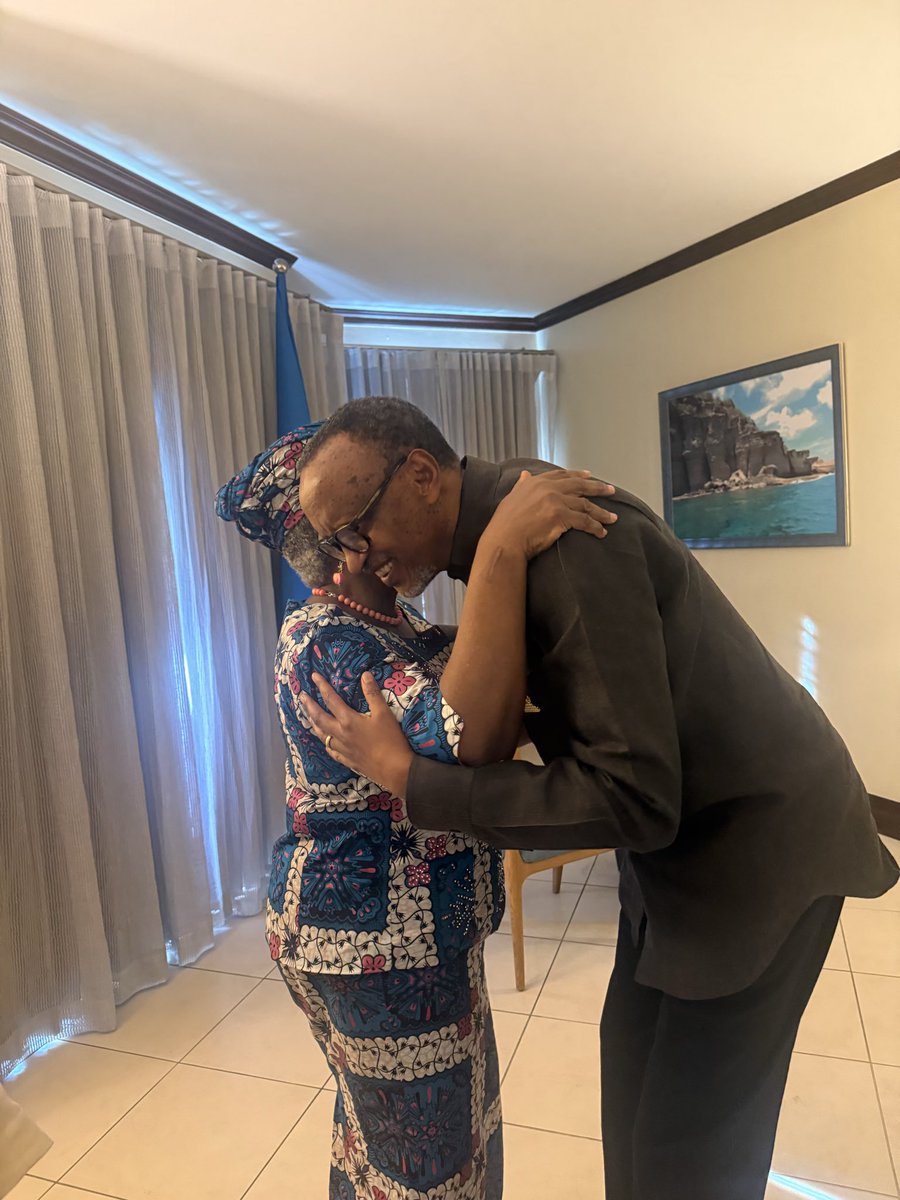
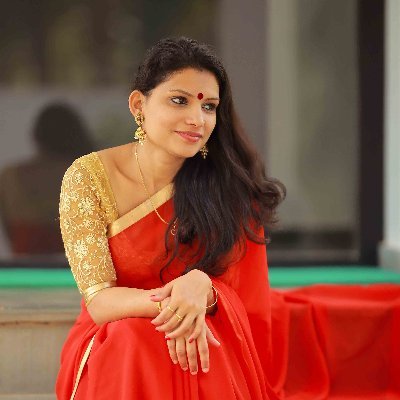
Very productive meetings on the margins of #CHOGM26 in Antigua with my sister, H.E. @miaamormottley, Prime Minister of Barbados, around South-South collaboration in trade and investment, and with H.E. @PaulKagame, President of Rwanda, on value addition to critical minerals.
@freyntje@realDonaldTrump@PaulKagame You are not informed at all about Rwanda. Rwanda was removed from AGOA long time ago for refusing Rwanda to be the dumpster from American 2nd hand clothing.
Warmest congratulations to the newly inaugurated Executive Committee of the United States Rwanda Community Abroad (USRCA) as you assume leadership. I wish you a highly successful and impactful tenure. I look forward to working closely with you to strengthen our community bonds and advance our shared commitment to Rwanda’s development. 🇷🇼🇺🇸
Barack Obama: Ilhan became the first Somali-American legislator elected to public office in the U.S. and went on to win a seat in Congress. There, she has been one of the Trump Administration’s fiercest critics, which has led the president to repeatedly single her out as someone he believes does not belong in this country!
Two mzungu mercenaries got themselves shot in the war in eastern DRC. One died. The other was wounded. The side they are backing has been bombarding villages for weeks.
« Global media » who play dumb when it comes 2 scrutinising mercenary activity in DRC are now noisily busy.
“The DRC remains in a state of war because thirty years of central state failure, bad governance, and the systematic integration of the FDLR into national security architectures, have reduced the Congolese people to second-class status.”
https://t.co/pjcS0aVG1r
I was granted access to #AFC/#M23 recruitment centers of #Goma & #Chanzu to see what motivates people to join the Congolese Revolutionary Army, to check if children are being recruited, and if the recruitment is voluntary. Watch full report in Eng. 👇
The true history of the Banyamulenge
The distortion and politicisation of the history of the Banyamulenge by the spokesperson of the Congolese government, Patrick Muyaya, is emblematic of the political instrumentalisation of identities and the exclusion suffered by Congolese Tutsi for decades in Congo, phenomena that are today at the heart of the conflict in the DRC.
Origins of the Banyamulenge
According to the leading Great Lakes historian Jean‑Pierre Chrétien, the history of the Banyamulenge is part of the long‑term pastoral migrations in the Great Lakes region. They consist mainly of groups of Tutsi herders and other Rwandophone lineages originally from the kingdom of Rwanda, and to a lesser extent from areas that today belong to Burundi and Tanzania.
From the end of the eighteenth century and especially in the nineteenth century, these groups crossed the Ruzizi River and gradually settled on the high plateaus of Uvira and Itombwe, well before the colonial borders were drawn at the Berlin Conference of 1885.
Their mobility followed a twofold dynamic: the search for new pastures for their herds, and the need to flee internal power struggles and the growing centralisation of the Rwandan kingdom under King Rwabugiri. Far from being sudden, their settlement occurred in small waves, through local negotiations and a slow process of sedentarisation.
Settlement of the Banyamulenge in Congo
These herders anchored themselves geographically around the hill of Mulenge and on the Itombwe high plateaus, which became their main living space and point of reference. It is from this toponym that the name “Banyamulenge” – literally “the people of Mulenge” – would later be derived.
At first, their presence led to a coexistence based on compromise, intermarriage, mutual dependencies and at times tensions with so‑called autochthonous populations: the Bavira, Bafuliro and Babembe. Chrétien stresses that, within the framework of the Congo Free State, then the Belgian Congo and later Zaire, these populations saw themselves and were in practice recognised as an integral part of the Congolese political community. For the historian, questioning their citizenship after the fact amounts to erasing a history of rootedness that predates colonisation and to projecting onto the past recent ethno‑national categories shaped by contemporary logics of exclusion.
Renaming “Banyarwanda” to “Banyamulenge”
The Congolese historian Aloys Tegera recalls that before the 1970s these communities did not yet call themselves “Banyamulenge”. They were grouped under the broader category of Banyarwanda, (“those from Rwanda”), which referred less to a nationality than to a shared Rwandophone linguistic and cultural belonging on both sides of the borders. In administrative and local usage, people spoke of the “Banyarwanda of Uvira” or, more specifically, of the “Watutsi”, and sometimes of Banyaruguru or Wahinda for certain pastoral sub‑groups.
The nominal shift occurred in a context of profound political reconfigurations: the so-called "Social Revolution" of 1959–1962 in Rwanda brought many Tutsi refugees to Congo, while in North Kivu the Banyarwanda Immigration Mission encouraged other Rwandophone settlements. In the mid‑1970s, and more explicitly around 1976, local leaders, among them the politician Gisaro Muhoza, promoted the name “Banyamulenge” to mark a threefold distinction: first, from the recent refugees from Rwanda; second, from the Rwandophone populations settled in North Kivu; and finally, and above all, to assert a specifically Congolese territorial anchoring through the reference to Mulenge.
In the interpretation of both Chrétien and Tegera, this redefinition of identity is not an opportunistic invention but the formalisation of a long‑standing rootedness, in response to discriminatory policies and racialised discourses which, from the 1970s onwards, turned the question of nationality into a central instrument of power struggles in eastern Congo.
@PatrickMuyaya@YolandeMakolo@AloysTegera
Kinshasa's False Peace Promise: the Facts behind the "15 Prisoners" Release.
➡️ April–May 2025: #AFC/#M23 hands over 1,359 disarmed #FARDC/#PNC to Kinshasa via @ICRC
➡️July 2025: #AFC/#M23 submits a list of 768 prisoners to ICRC held by Kinshasa in #Makala, #Ndolo & other jails; 311 are identified & confirmed by @ICRC. Kinshasa refuses to release those 768 Congolese, labeling them “AFC/M23 accomplices"/ "traitors”.
➡️ March 2026: #AFC/#M23 announces release of 2,618 FARDC, list received by @ICRC. Kinshasa refuses to take them.
➡️ 6-7 August 2026: Of the 311 ICRC‑identified prisoners, Kinshasa releases 15, of whom only 9 are on the 311 list, 1 is Ugandan & 5 are unidentified.
In sum: 1,359 FARDC were released by AFC/M23, 768 prisoners were claimed by AFC/M23, 311 out of 768 were verified by ICRC, 2618 FARDC were offered for release by AFC/M23 and rejected by Kinshasa, 15 were actually freed, only 9 out of 311 are on the list identified by ICRC.
While Kinshasa stages compliance, this illustrates lack of implementation of Doha and Washington. These inflated announcements by Kinshasa mirror its "FDLR disarmament” show, both engineered to signal implementation of Doha/Washington while avoiding a genuine prisoner exchange & #FDLR neutralization processes.