🖌️ @HsiaoRoland Thanks for info on the title phrase of your podcast interview (非人磨墨墨磨人), as originally coming from a Su Dong-po (Su Shi) poem entitled "Answering Professor Shu About My Ink Collection for A Second Time" (次韻答舒教授觀餘所藏墨)
https://t.co/qyZOPMUZqX
Really interesting episode about Chinese calligraphy as an embodied practice. I loved Roland’s discussion of the grinding of ink as a meditative process which is part of a reciprocal relationship between a calligrapher and their work.
🧵 Sign up for this virtual talk on July 11 by @drurmilamohan on weft ikat textiles in Gujarat, India
https://t.co/GbRmh3dIvS
#textileheritage@bluebelldreamer
Video by R Kunjera - A weft ikat cloth being woven on a fly shuttle loom
1/x Our new EMBODIED WORLDS PODCAST !
S1 E1 Dancer or Grasshopper? The World of the Anthropologist https://t.co/ElKGNsQ3Sd
@eocieslik and @drurmilamohan talk with Prof. Em. Jean-Pierre Warnier on his fieldwork in Cameroon
To get a bonus track - https://t.co/sHSRz66sdC
when i was on a menswear forum, there was a nativist who would be like: 😡 "non-white immigrants are ruining white American culture"
but then he would turn to me, a non-white immigrant, and ask: 🥹 "can you explain again how to dress according to classic European rules?"
I'm so saddened by the state of bespoke crafts nowadays. Seventy years ago, it would have been possible to go into a famous firm based on Savile Row or London's West End and feel reasonably assured that you're getting the best of the best. However, the decline of bespoke crafts and the loss of skilled labor have made that no longer true. Let me show you an example.
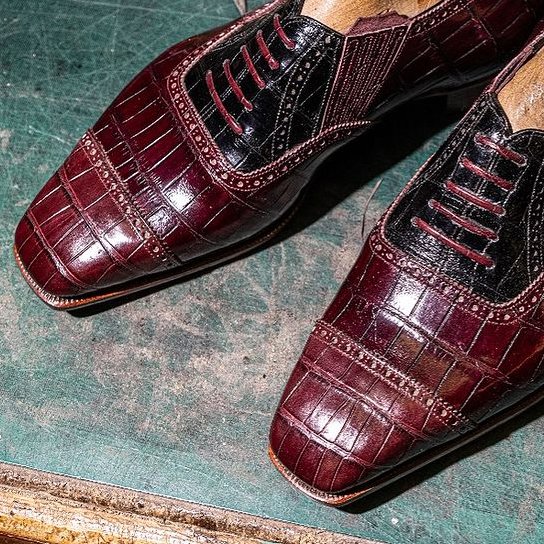
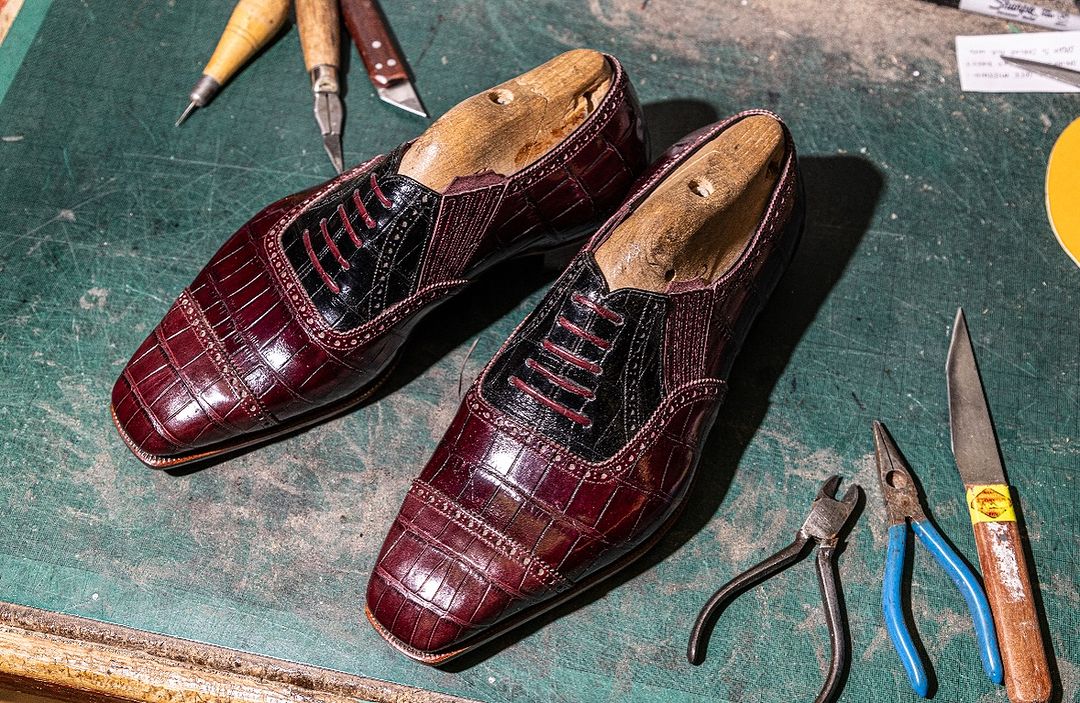
Here's a pair of bespoke alligator shoes from George Cleverly, a fairly famous West End bespoke shoemaking company. They were made for Sylvester Stallone, and the style is called a Lazyman, originally designed for Winston Churchill. It's made to look like an Oxford, but it's actually a slip-on. I don't particularly care for this style in exotic leather, especially with the contrast between the facings and the rest of the shoe. But this is a stylistic objection and not one based on quality.
If Stallone paid full price for these shoes, then he would have paid close to $10k. That's ... a lot of money. Not something I can afford, but I appreciate that there are still craftspeople who can make fully bespoke shoes by hand. (A calfskin or suede version would be less than half the price; the upcharge here is based on these being made from exotic leather, an expensive material.)
But look at the pattern matching (or rather, the lack thereof). No two alligator skins will be exactly alike, which means exotic shoes will naturally vary in some small ways. However, the whole point of having fully handmade, bespoke shoes made for you is that a skilled craftsperson is taking the time to do things to a certain level of quality. When you look at these two shoes, the scales are totally different—the top shoe is made with narrower, taller scales. The bottom shoe is made with wider, shorter scales. The toe caps also look switched around in terms of leather. Shocking to see this on a pair of ~$10k shoes.
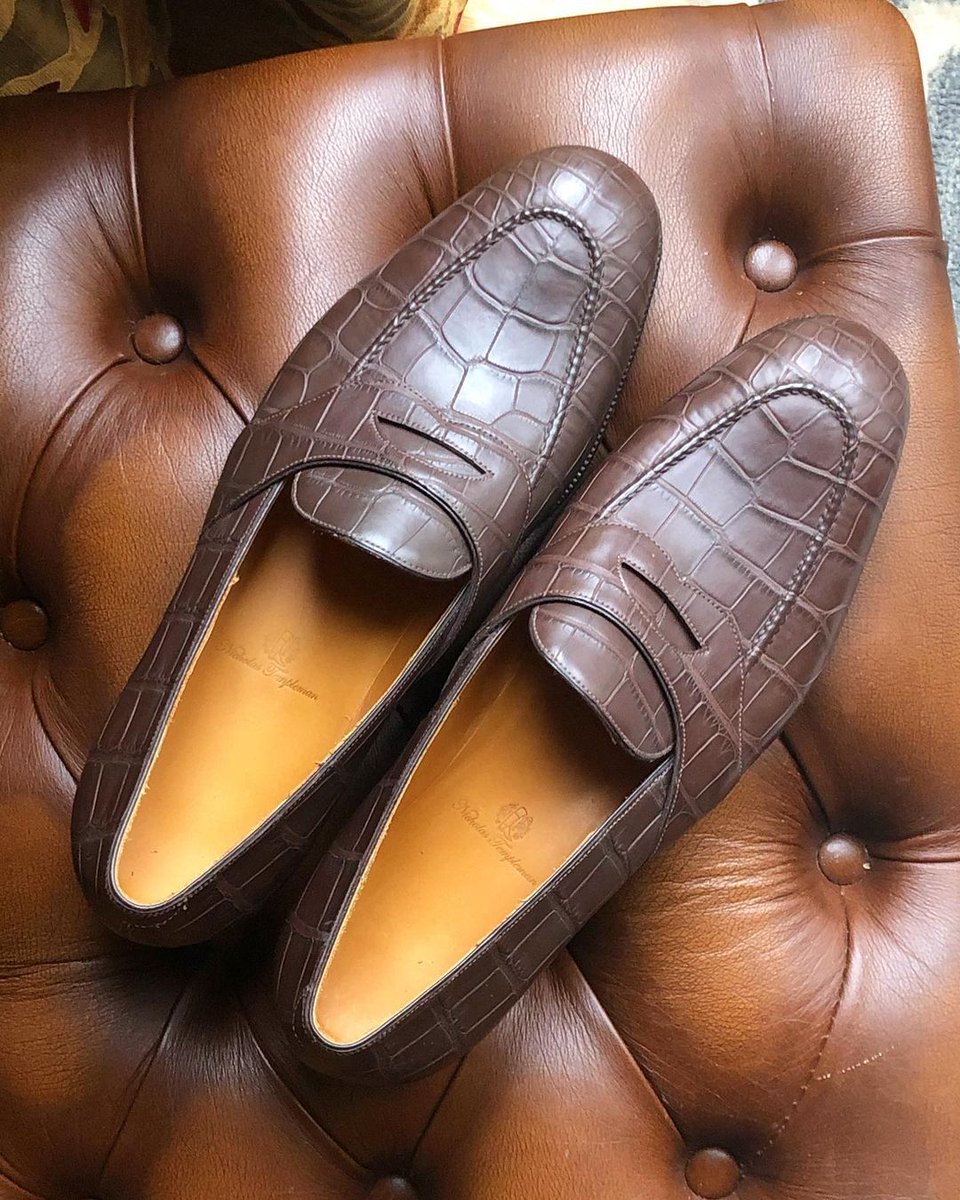
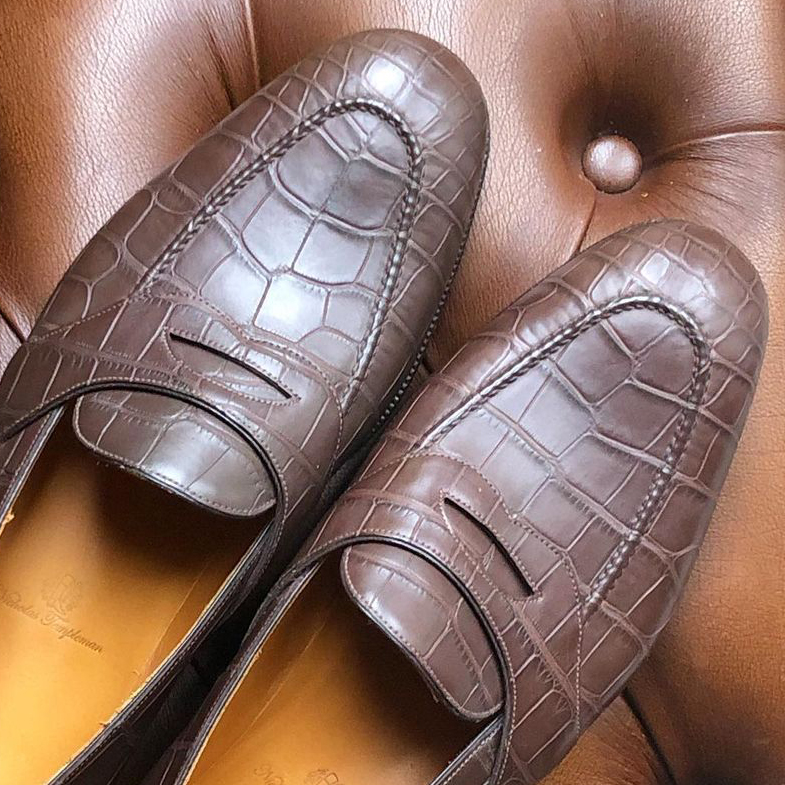
Compare those to these shoes from Nicholas Templeman, an independent shoemaker who works out of his home. He charges considerably less than Cleverley, but makes things to a much higher standard. If I remember correctly, these shoes are made from exotic leather sourced from an Hermes-owned tannery (which Hermes relies on for their exotic bags).
For an exotic shoe, the pattern matching here is perfect. This maker took the time to find two reasonably matching skins. They cut the leather from the best parts of the hide (look at the cleanliness of the scales), placed their patterns in the correct places, and then sewed everything together. The result is two shoes that match.
I saw a TikTok recently about how people should support small, independent makers over large luxury companies, and the person framed it in terms of class and race (they were arguing that Black consumers should support independent Black makers, not large brands like Gucci). I agree that you should support small makers, but it's not about charity or even solidarity. From what I've seen, the best work nowadays is being done by small, independent makers, not large luxury houses or even the most famous and established bespoke firms. This does not sound very sexy to people who want that luxurious experience of being fawned over—your experience will be more likely in some maker's studio or even home, rather than an impressive store. But even from the perspective of self-interest, I think you'll just get better work, assuming you're able to identify the small makers who do good work (not all do).
IMO, the decline in quality at these famous, established names is a result of two things. First, there has been a dramatic decline in the number of craftspeople in advanced industrial economies, which means you can no longer produce a high volume of orders while maintaining high standards. In this sense, small companies are often better at maintaining quality. Instead of having to pump out 500 pairs of shoes a year, they might only need to pump out 30 or 40. It's easier to find the craftspeople for that volume of production.
Second, skyrocketing rents and other costs have forced many companies to further squeeze labor. In London, West End bespoke shoemaking firms often rely on a network of outworkers for parts of their production process (e.g., bottom-making). Guess how much a shoemaker gets paid to make a pair of $5k to $10k shoes. Go ahead, guess ...
About £350, which, at the current exchange rate, translates to about $445. A pair of shoes can take about 30 to 35 hours to make, which means some workers are getting paid as little as $12.70/ hour. That's less than California's minimum wage. To earn enough to make rent, many have to speed through their production process, not unlike Amazon drivers who have to speed through neighborhoods to make their deliveries. The pay rate doesn't match what's a reasonable amount of time to complete such work. Consequently, you get shoes like the ones above, where the pattern doesn't quite match. Makers don't get paid enough to slow down and think things through.
Few people are in a financial position to buy this level of luxury. But if you are, I encourage you to not get swept up by famous names or celebrity endorsements (many are not even paying for their goods). Pay attention to the real markers of quality and consider smaller, independent firms. Often, you are getting better work for less money.
If you want to read more, you can check out this post 🔗: https://t.co/o4TzLOTwFQ
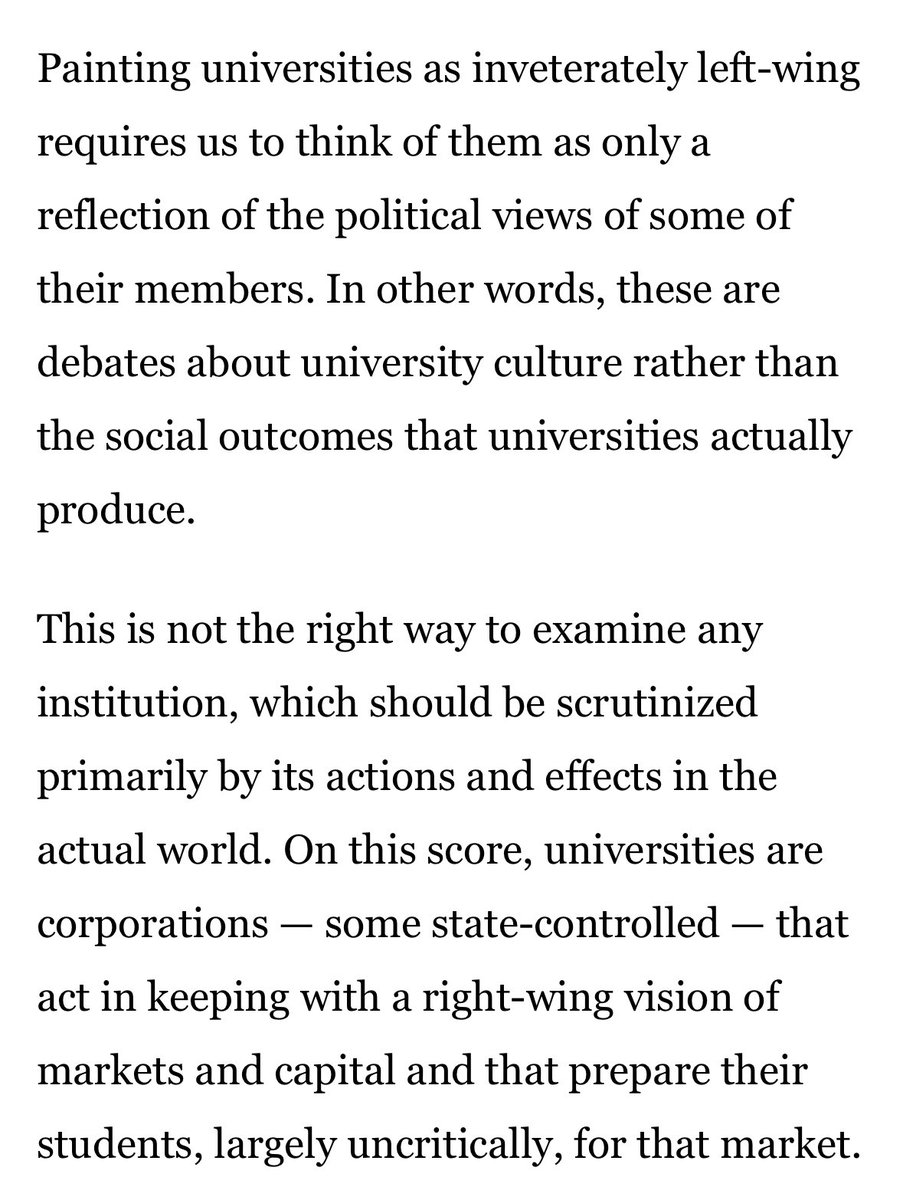
@leifweatherby’s new piece in The Boston Globe — pointing out that universities are fundamentally conservative in every way that matters — is awesome. One paragraph in particular (below) really gets to the heart of the matter. 1/
The @InternetArchive, a public library, has preserved over 400,000 of these recordings through its #Great78Project. Like every library with a sound recording collection, the Archive lends out access to these recordings to people with library cards:
https://t.co/S6Dixuqwq9
19/
So when you are value captured on a metric, you force your values to conform to that impersonal standard.
You leave out any of the peculiar, intimate understanding of what it's like for *you* to live following these goals and targets. Institutional de-contexting rules.
ironwork in tailoring is not the same as what you do at home. when you iron a shirt, your goal is to get out the wrinkles and press the garment flat. but in tailoring, ironwork is used to create shapes.
Thank you so much @NewWaysMinistry and @gfdoerfler for writing an article about the Queer and Catholic Oral History Project! We are still eagerly collecting interviews, and we have many more interviews set to go live on the Project's website soon. https://t.co/EZMarJRHSl
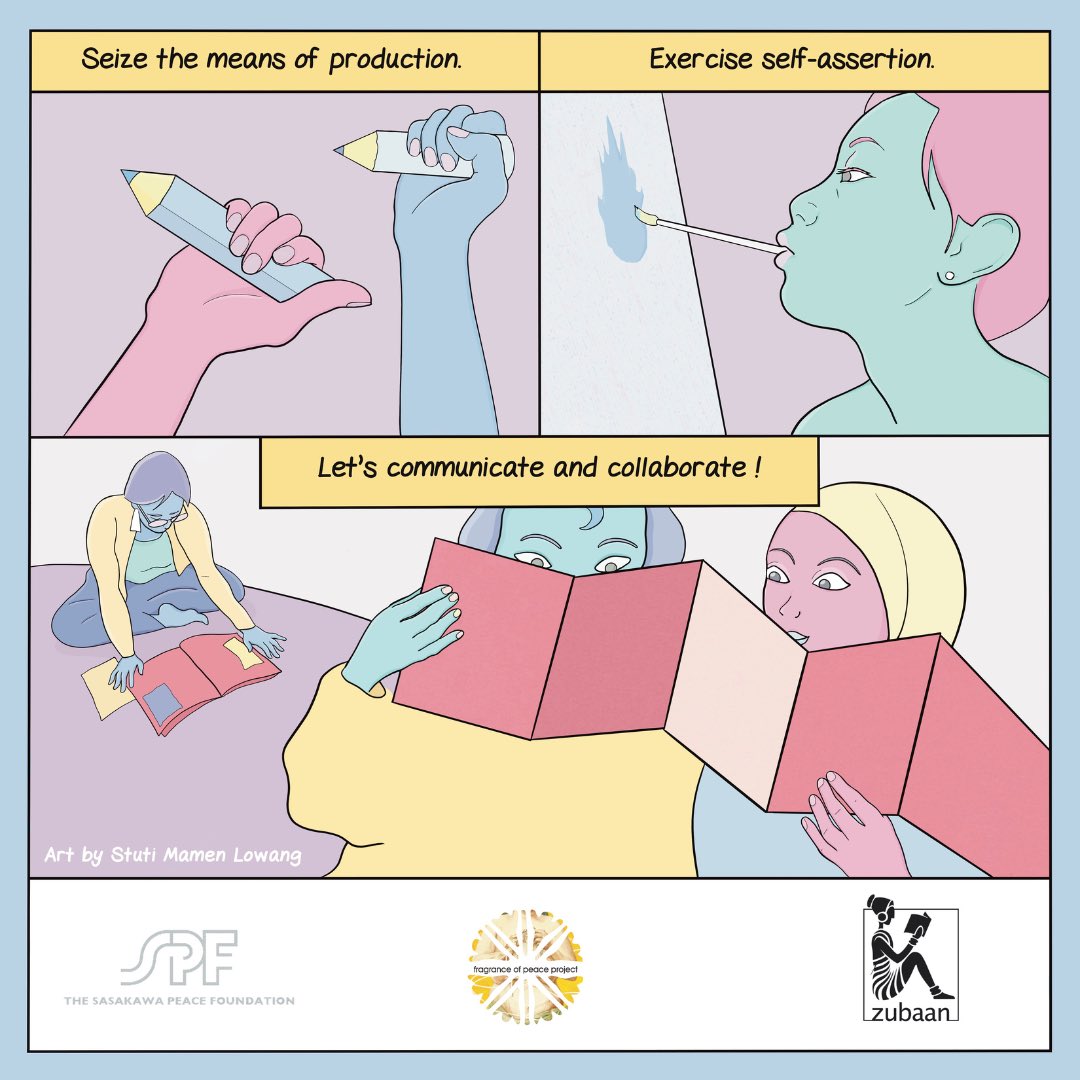
Why Zines? What role have self-publishing and zines played in empowering marginalised groups to tell their own stories in their own words, and how can an independent feminist publishing house like Zubaan take this legacy forward? (1/4)
We invite applications for a free zine-making workshop for women, queer, trans & non-binary persons from (i) Northeast India and (ii) Dalit, Adivasi, and other Bahujan communities from mainland India. No prior zine-making experience or graphic design knowledge is necessary (1/4)
Wishing you all a merry and blessed Mabon! In honor of the Autumn Equinox, I wanted to share my recent article about Appalachian folk magic published in the Smithsonian Folklife Magazine. Please take a look! https://t.co/TG2AImkLPQ