Most institutions run on three things:
— A WhatsApp group nobody can find files in
— A spreadsheet nobody fully trusts
— The memory of whoever has been there longest
The problem is never the tools. It's the coordination.
Critical work is scattered across WhatsApp, spreadsheets, email threads, and people's memories. Approvals get delayed. Compliance deadlines get missed. Managers spend hours chasing updates. Knowledge walks out the door when staff leave.
I'm building FlowStacks to fix that.
FlowStacks is operational infrastructure for institutions — the coordination layer that brings approvals, compliance, workforce management, reporting, and notifications into systems people actually use every day.
Built for schools, training centres, NGOs, clinics, and distributed teams operating in emerging markets.
Recent work:
→ Certification and workforce management system for an automotive dealer network in Nairobi — 7-stage intern lifecycle, QR-verified certificates, full compliance audit trail. Live and paying.
→ A multi-tenant EdTech platform serving multiple institutional stakeholders — 11 independent portals, ~30 microservices, now launching commercially.
→ CreatorBackend — financial operations infrastructure for creators and creator agencies. Production deployed May 2026.
My belief:
The future isn't more dashboards.
It's infrastructure that quietly coordinates work in the background — so nothing important lives in someone's head, and nothing critical gets missed because nobody was watching.
If it's not being used at 8am on a Monday morning, it's not infrastructure. It's a demo.
Building in public from Nairobi 🇰🇪
Follow for: operational systems · AI workflows · institutional technology · automation for emerging markets · lessons from building FlowStacks
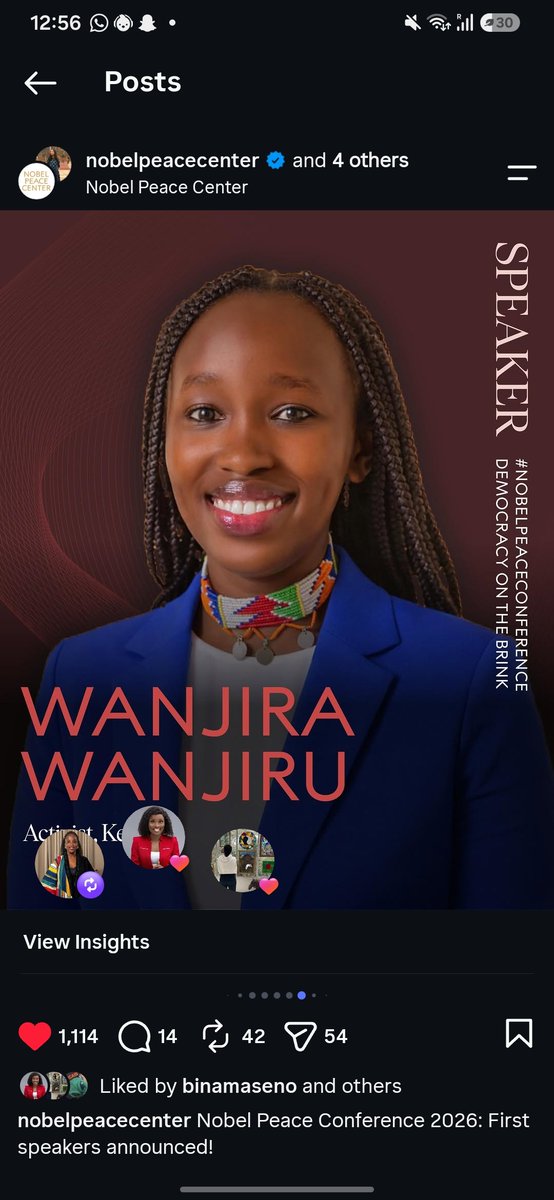
Wsup my country people!Super honored to be a panelist at the Nobel Peace conference taking place is Oslo, Norway. Topic: Democracy on the brink. Genzs, I'm also here to represent us and our vision. Mnataka nihighlight nini?
Super happy to share our intention to join forces with NVIDIA in a $12,930,300,000 acquisition 💛💚
10 years after starting Hugging Face, open-source AI is at an inflection point. Thanks to the community, we’ve shown that it can be a complement, and even an alternative, to closed-source APIs. But for it to happen at larger scale, it needs more compute, more support, more collaboration and more visibility. That’s why we went to talk to Jensen, who offered to do exactly that with us.
In addition to doubling down on NVIDIA’s massive contributions to open-source AI (I called them the “King of American open-source AI” earlier this year), they’ve committed to strongly supporting Hugging Face and our mission while keeping the platform open, independent and compute agnostic. The founders and the team are all staying to keep pushing this mission forward.
Together, we think we can make open source the default way to build AI, with the goal of empowering 100 million AI builders to own their intelligence rather than rent it.
Excited about the next 10 years! 🤗🤗🤗