Flamegraphs are a great way to narrow in on performance issues + broadly to explore program execution.
I built a custom viewer for Postgres queries, inspired Jan Nidzwetzki's excellent blog on the subject.
Highly recommend analysis tools like this for learning query execution.
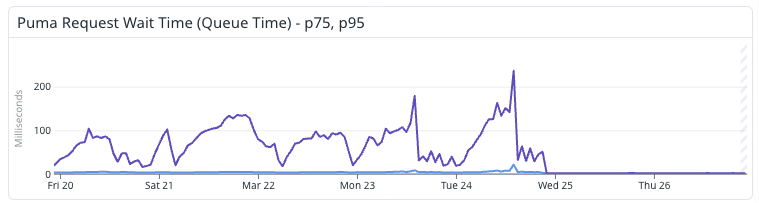
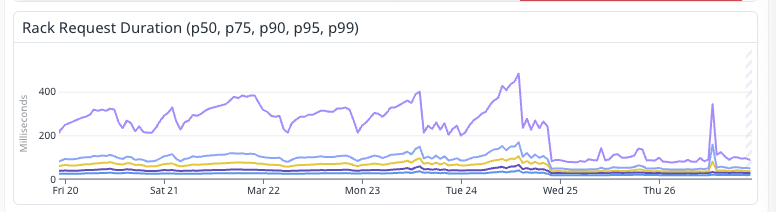
1 process per pod was a LIE that you were sold by BIG SRE and people who don't understand the oldhead technology of PRE-FORKING SERVERS.
We went from 1 Puma proc per pod to 4 and HALVED RESPONSE TIMES and dropped queue time to ZERO, for the same CPU/memory alloc.
If you do not yet have a "companion coding/research agent" running locally as a dev, this guide is absolute gold from @mitchellh (creator of Terraform).
It's practical, step by step & how he changed how he works (without getting overloaded or anxious.)
https://t.co/pnLZ1eQFpi
Adding Deno and Node.js creator Ryan Dahl to the growing chorus
Software developers add WAY more value than memorizing the syntax trivia of the languages they use
It's time to lean into that everything-else and cede putting semicolons in the right places to the robots
Expect to see a lot of layoffs this quarter spun for the press as "AI-driven efficiency improvements" and not "we are bleeding cash and the country is in a quiet recession".
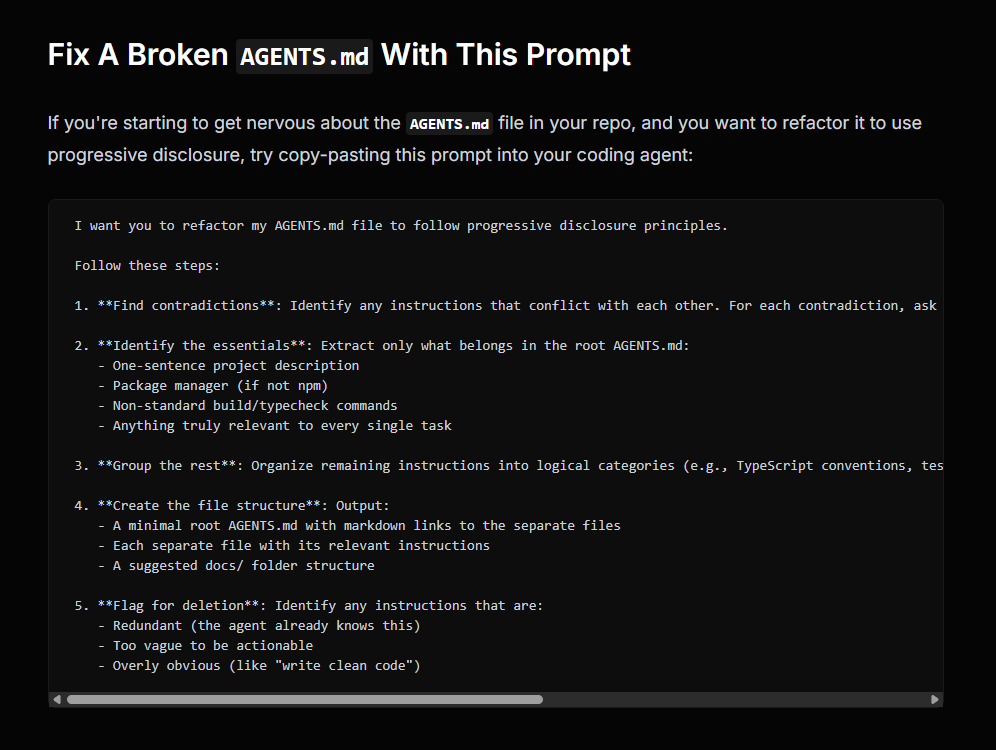
Bad AGENTS.md files can make your coding agent worse and cost you tokens.
Here's a prompt you can use to clean them up - PLUS a full guide for folks wanting to learn more.
Enjoy: https://t.co/vDSwVQYKbT
Interesting to see this closely on the heels of the new Open Responses API standard (which Ollama also supports)
The closed source Claude Code CLI is so good it's worth building out an Anthropic API endpoint clone just to integrate with it!
That was fast: we are already at the "and it wasn't even a surprise" stage of using coding agents to help port large, complex open source libraries from one programming language to another
Confirmation that Anthropic is intentionally blocking OpenCode, and any other 3P harness, in a paranoid attempt to force devs into Claude Code. Terrible policy for a company built on training models on our code, our writing, our everything. Please change the terms, @DarioAmodei.
OpenCode has a few killer features, and this is why I'm switching:
1) Proper queued message support, jesus christ Claude Code get it together
2) Don't have to switch back/forth between TUIs for Codex/Claude
3) /share is extremely useful
It's also just pretty!
Fragments: How AI is changing Anthropic's internal development, a detailed account of using LLM to program a knowledge management tool, obvious-easy-possible buckets for interfaces, specs can't be complete, & lightweight tools to work with LLMs
https://t.co/ceaoUE6Dxp
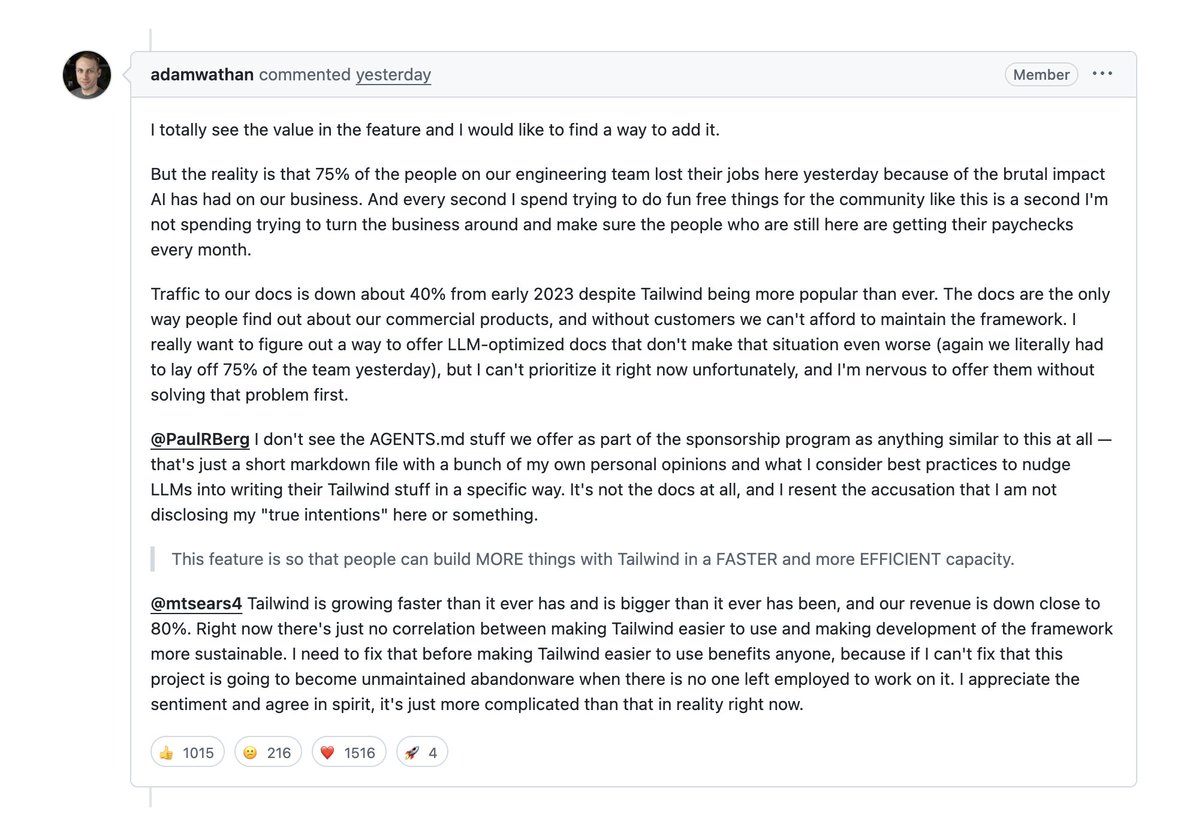
Tailwind lays of 75% of their team. the reason is so ironic:
> their css framework became extremely popular w AI coding agents, 75m downloads/mo
> that meant nobody would visit their docs where they promoted paid offerings
> resulting in 40% drop in traffic & 80% revenue loss
After using those git-switch aliases for a bit, I find them far less convenient to type than those of git-checkout, so I'm adding a few more:
* alias gs=gsw
* alias gsc=gswc
* alias gsm=gswm
For omz users like myself, there's a few handy aliases already available in the git plugin:
* gsw: git switch
* gswc: git switch -c/--create
* gswm: git switch main/master
More info: https://t.co/MhZTaDJNTM
For omz users like myself, there's a few handy aliases already available in the git plugin:
* gsw: git switch
* gswc: git switch -c/--create
* gswm: git switch main/master
More info: https://t.co/MhZTaDJNTM
This seems like a good bet to me - coding agents make it no longer remotely excusable to skip out on quality engineering processes like good issue tracking, thorough QA, automated testing, up-to-date documentation, CI, deployment automation etc
The best engineers never just wrote code. They were clarity merchants.
The collapse of the implementation middle isn't making engineering less important but it's revealing what was always important: understanding problems so clearly that the code (now, the spec for our agents) becomes more obvious.
The engineers who will thrive aren't those who can translate specs to code fastest. They're the ones who can:
1. Shape ambiguous problems into actionable intent
2. Design the context architecture that makes good outcomes inevitable
3. Judge what matters from what merely works
This mirrors what others have observed about business model shifts: when distribution costs drop to zero, value accrues to curation and taste. When implementation costs approach zero, value accrues to problem formulation and judgment.
The tools that win won't just accelerate the middle but I think they'll eliminate the need for it to exist separately at all.
The craft evolves. It always has. But it remains craft.
I'm Boris and I created Claude Code. Lots of people have asked how I use Claude Code, so I wanted to show off my setup a bit.
My setup might be surprisingly vanilla! Claude Code works great out of the box, so I personally don't customize it much. There is no one correct way to use Claude Code: we intentionally build it in a way that you can use it, customize it, and hack it however you like. Each person on the Claude Code team uses it very differently.
So, here goes.