Inspired by Psychohistory & Futurology/Futurism, the goal is to generate better predictions of the FUTURE by studying the past and understanding the present
Yann LeCun says the real world is far more complex than the world of language
LLMs can accumulate knowledge, but they fail with high-dimensional, continuous, noisy sensory data
"the next revolution is physical AI"
Systems that can truly plan, reason, and understand the physical environment
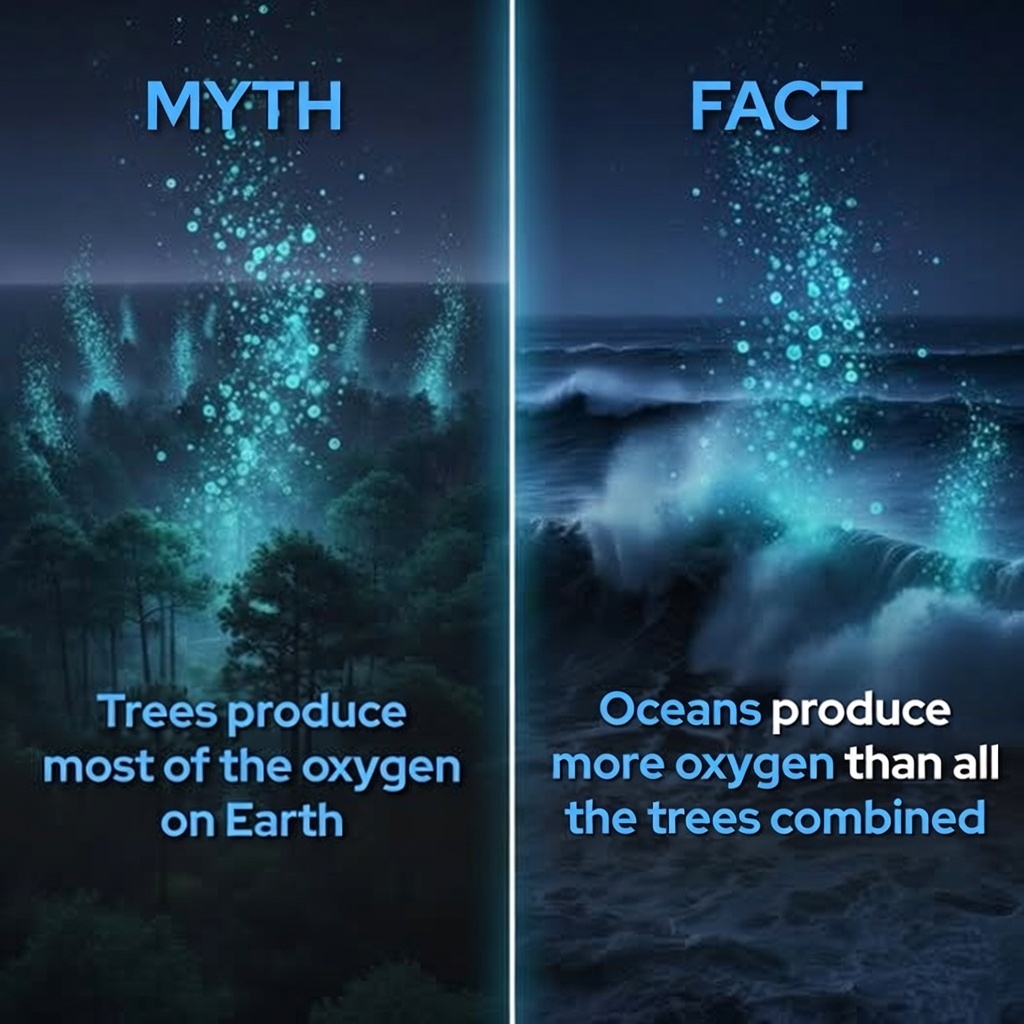
Every second breath you draw comes from the ocean.
While forests are frequently hailed as the “lungs of the Earth,” they are not the main source of our planet’s oxygen. That distinction belongs to the ocean—specifically to the countless trillions of microscopic marine organisms drifting in its sunlit upper layers.
Phytoplankton, along with cyanobacteria and other tiny algae, perform photosynthesis just like land plants: they harness sunlight to turn carbon dioxide and water into energy, releasing oxygen as a byproduct.
Though individually invisible to the naked eye, these organisms are extraordinarily productive. Together, they generate an estimated 50–80% of the oxygen present in Earth’s atmosphere.
This massive oxygen factory operates across the world’s oceans, largely out of sight. From space, satellite imagery reveals their seasonal blooms as swirling, paint-like patches of color—vivid evidence of the hidden engine that keeps our air breathable. These blooms respond sensitively to shifts in sea temperature, sunlight, nutrient availability, and ocean currents; scientists continue to study how climate change and other pressures may reshape these patterns in the coming decades.
This does not lessen the vital importance of forests. Trees lock away carbon, support immense biodiversity, regulate local climates, and provide countless other benefits. But when it comes to producing the oxygen we breathe, the ocean—not the rainforest—is the dominant contributor.
@FirasHermez@devruso@ShaneLegg Yes, I think in some ways, intelligence is also about your position in social hierarchy. Sometimes I suggest something to my superiors at work & I get ignored. A couple of months later they hire an expensive "consultant" that gives the same advice & its genius.
One of the comments in this post is "Why can't you use agi to investigate post-agi economics?". Absolutely. If it's AGI, then it should be able to be an economist. But if it requires a human, then it's not really an AGI, is it?
AGI is now on the horizon and it will deeply transform many things, including the economy.
I'm currently looking to hire a Senior Economist, reporting directly to me, to lead a small team investigating post-AGI economics.
Job spec and application here: https://t.co/VAfwrMc8Tp
@Google is just $0.5T away from passing @nvidia.
Narratives flip fast.
A year ago, NVIDIA was the untouchable AI king and Google was “about to get disrupted.”
Now Google is quietly eating ChatGPT’s share and Wall Street is talking about hardware parity with Nvidia.
Both probably still go up. But the Mag 7 is crowded, obvious and fully priced.
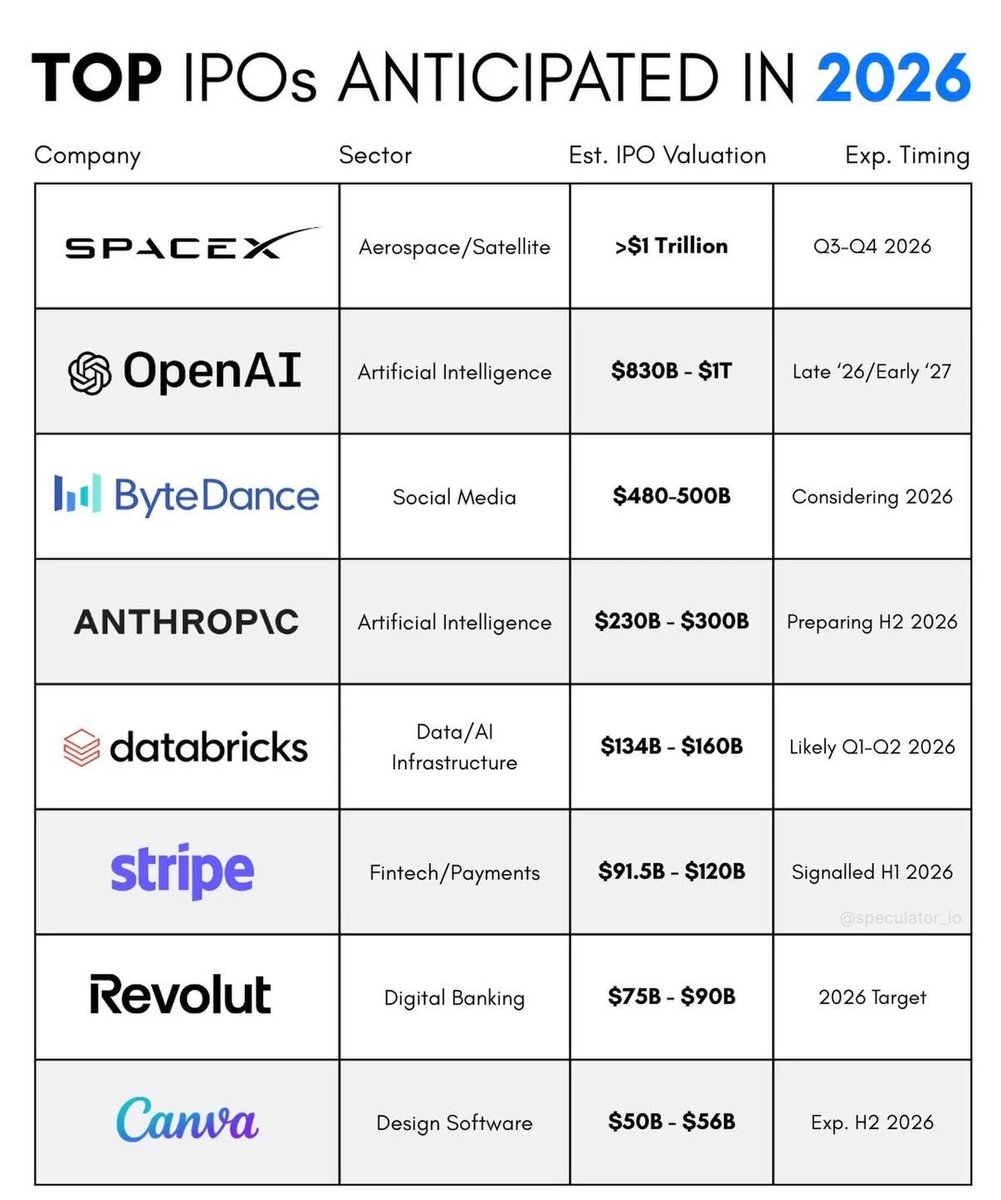
Trillion dollar IPOs are coming in 2026.
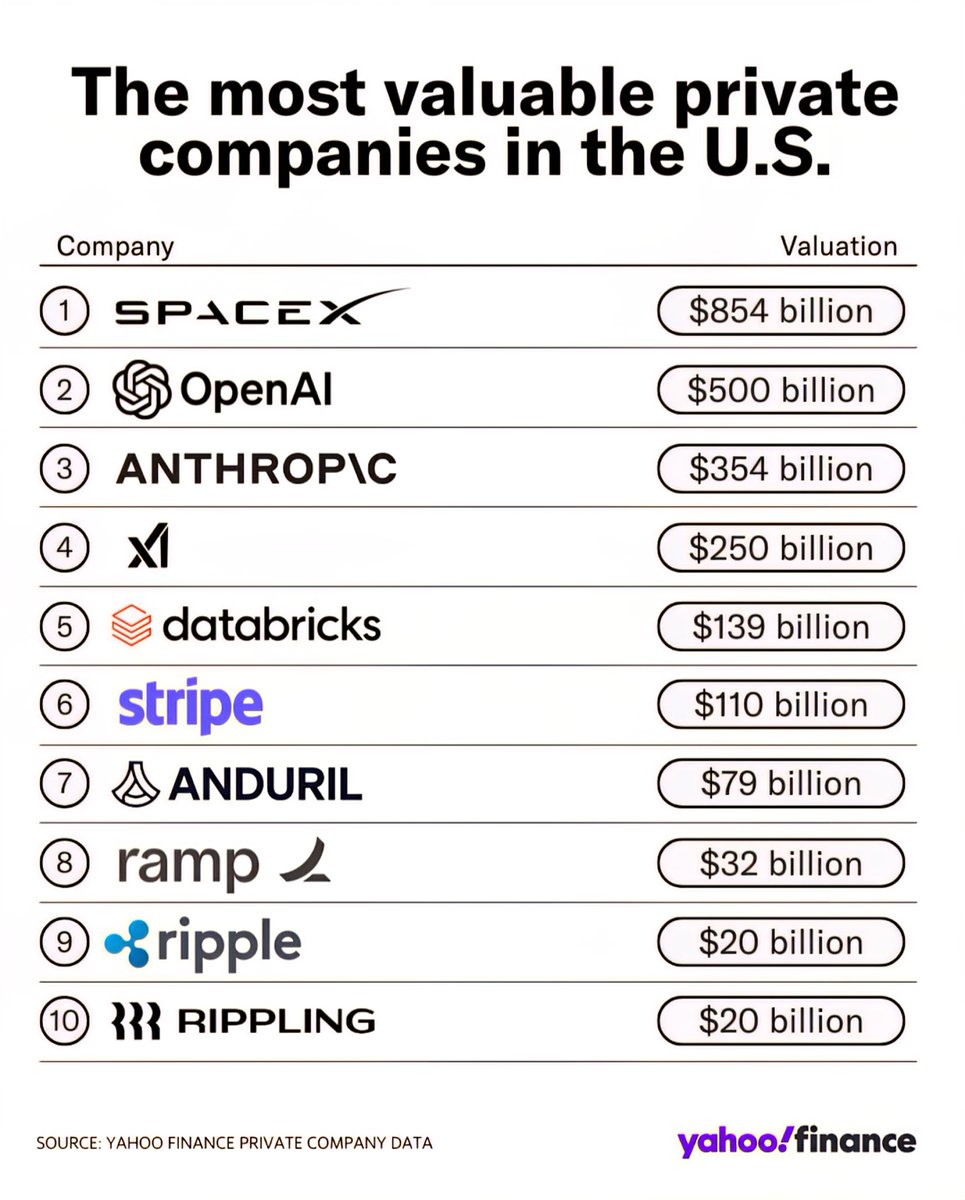
There has never been a better lineup of private companies waiting to go public than right now.
We haven’t seen anything yet.
The easiest way to get rich is to get really good at spotting patterns.
Observe the world. Pay attention to what works and what doesn't. Study successful businesses, founders, and investors. They repeat the same actions again and again.
The principles of success are universal.
The public narrative around Google has completely changed over the past 1 year. From being at the risk of being washed away by the AI wave, to being the most resilient rock. I'm sure veterans in the field were aware of it, but the wider public surely wasn't
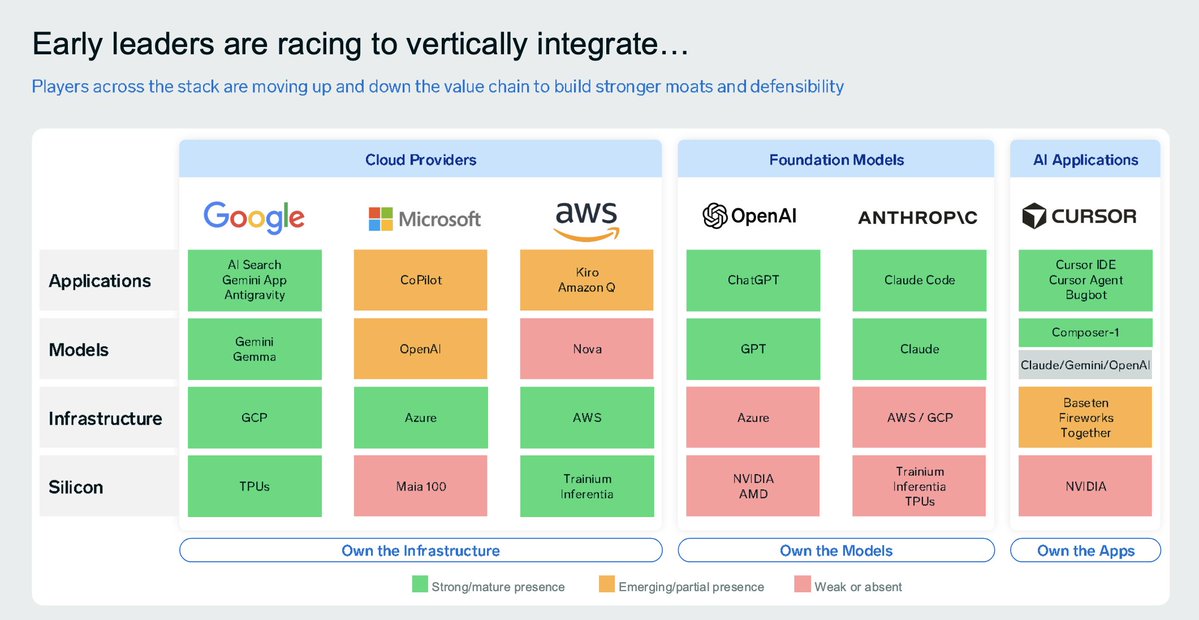
Google is the only company that owns the entire AI stack.
1. Chips: TPUs
2. Infrastructure: Google Cloud
3. Foundation Models: Deepmind
4. Applications: Gemini
Every layer matters.
The more layers you own, the bigger your advantage.
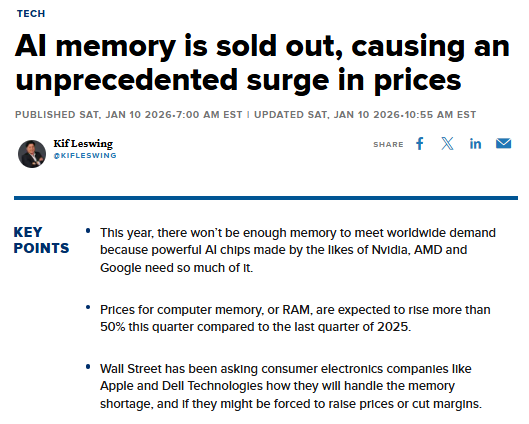
AI demand has devoured the global memory supply.
Prices for RAM especially high-bandwidth memory (HBM) used in AI chips are soaring, with DRAM prices up 50–55% in Q1 2026 alone.
Leading vendors like Micron, Samsung, and SK Hynix are prioritizing AI chips over consumer tech, causing ripple effects across Apple, Dell, and other hardware companies.
Micron says it’s already sold out for 2026.
Nvidia’s new Rubin GPU consumes massive quantities of HBM4, pushing a “three-to-one” tradeoff where making HBM means less standard memory for everyone else.
The result?
A memory bottleneck dubbed the "memory wall" that now limits AI scalability and is expected to drive up prices for both enterprise and consumer devices.
This is an interesting take on UCP. I am a big pro-tech person, but as long as it is for the benefit of people, not exploiting them. I'm not saying UCP is exploiting, but I'm keeping an open mind
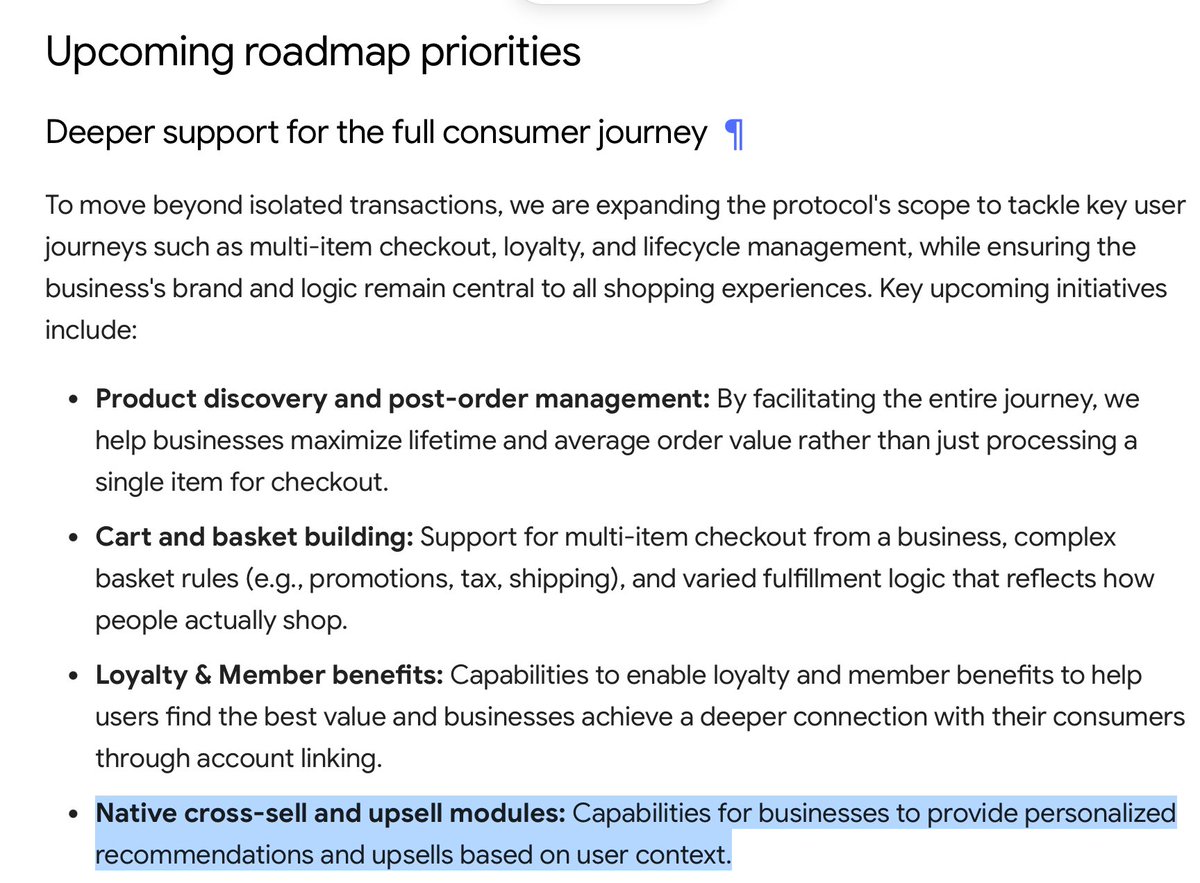
Big/bad news for consumers. Google is out today with an announcement of how they plan to integrate shopping into their AI offerings including search and Gemini. The plan includes “personalized upselling.” I.e. Analyzing your chat data and using it to overcharge you. 1/2
AI agents will be a big part of how we shop in the not-so-distant future.
To help lay the groundwork, we partnered with Shopify, Etsy, Wayfair, Target and Walmart to create the Universal Commerce Protocol, a new open standard for agents and systems to talk to each other across every step of the shopping journey.
And coming soon, UCP will power native checkout so you can buy directly on AI Mode and the @Geminiapp.