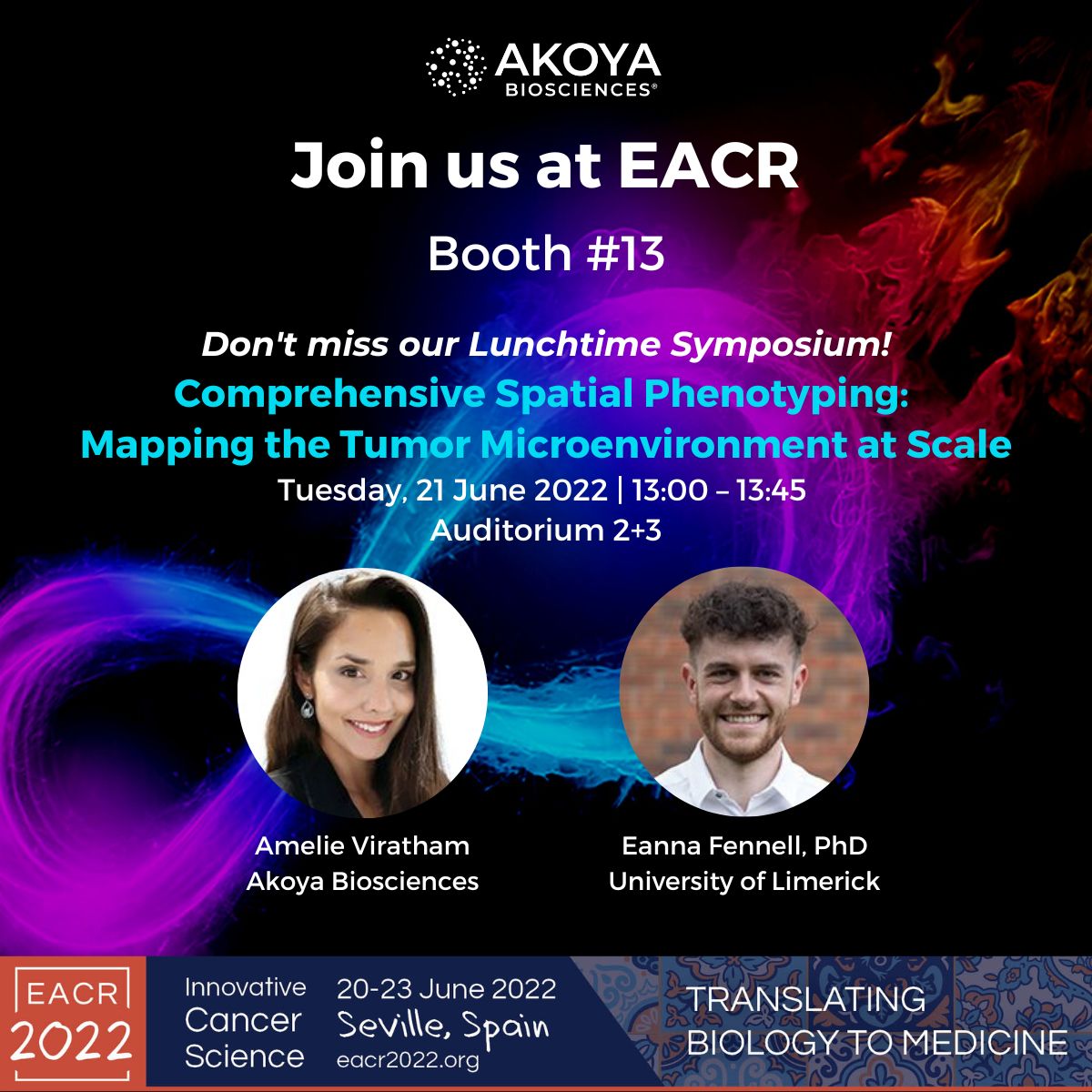
Excited to learn about the world’s 1st same-section spatial #multiomic data? Join us tomorrow during our Symposium to hear about the 1st feasibility data of a novel spatial #RNA chemistry that will enable a multiomic workflow on #PhenoCyclerFusion. https://t.co/Txm89GrCN8 #EACR22
Delighted to say that after many many failed grant attempts, we now have a super-duper @AkoyaBio PhenoImager installed at the @UCD_Conway - thanks to Adam Dickinson for first training session - persistence truly pays off! @scienceirel @ucddublin
Thank you @AkoyaBio for launching a grant program for Researchers on the island of Ireland to perform CODEX to celebrate the launch of the #LimerickCancerResearch#LDCRC launch. Codex is a powerful tech to profile proteins on single cells level on FFPE @AlCRIproject@CRUKBelfast
Looking for a thrill you can feel in your guts? Look no further than #_hubmap’s Image of the Week – a CODEX of healthy colon tissue by @johnhickey22 of the @GarryPNolan lab @stanford#imaging. It will really bowel you over 😉
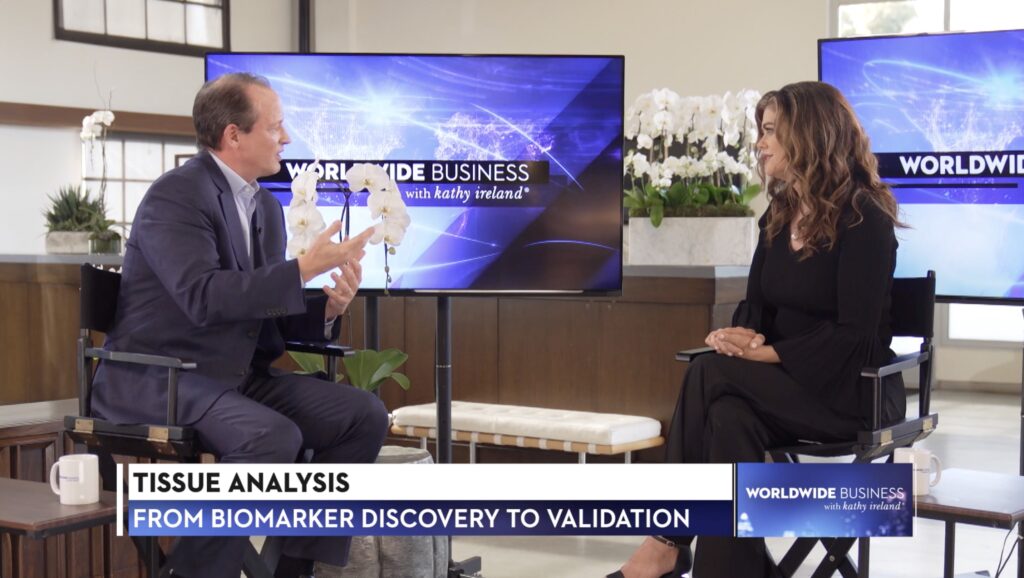
Brian McKelligon, CEO of Akoya Biosciences, joined @kathyireland to discuss the cutting-edge field of #spatialbiology and how analyzing cellular activity at a #singlecell level can unlock major clinical breakthroughs.
Watch the interview here: https://t.co/52LSoErGxi
@TVWWB
EVENT: We're facilitating this workshop from @AkoyaBio and @CellSignal to help you get the most out of the advanced tissue multiplexing facilities in our THL lab - available only to Oxford researchers
More info & registration here: https://t.co/9f44HH2WRf
To support its Centre for Cancer Drug Discovery, @ICR_London worked with an artist to create a painting with a pipette. We spoke with artist @akajimmyc and ICR scientist Mateus Crespo to learn more about the artwork and the tissue image that inspired it. https://t.co/uExoL6QNU7
Register for our upcoming webinar to learn how a @unibirmingham team applied multiplexed imaging and single-cell analysis to study the immune response to the SARS-CoV-2 virus across multiple organ systems. https://t.co/p9lca78CqM
#spatialbiology#singlecell#COVID19
Dr. Charlotte Stadler is the head of the Cell Profiling Facility @SciLifeLab, which began offering CODEX #multiplexIF services in 2020. Visit our blog to learn about about the projects they've completed and how their services will evolve in the future! https://t.co/IkklPigbem
Hearing from happy customers inspires and empowers our team to work hard. Thank you Nicola Annels from @UniOfSurrey for sharing your positive experience using our spatial biology technology.
#tuesdayinspiration#spatialbiology#singlecell
Check out this exciting new preprint from @IUMedSchool featuring our CODEX technology. This study combined spatial transcriptomic and protein analysis to study the implications of acute kidney injury on the distribution of transcript expression. https://t.co/SfytzyXpVJ
2020 made the world realize that biology is really complex. And as a scientific community, we know that studying disease biology requires us to go deeper than ever before and uncover the insights hidden in each tissue sample. https://t.co/rnZE2PdtPM
#spatialbiology#singlecell
Thanks to everyone who joined our webinar last week on Opal Multiplex Validation featuring @AmelieViratham from @QUBelfast! In case you missed the live presentation, the full webinar recording is now available on-demand. https://t.co/b5Xz5cvnNr #spatialbiology#singlecell
#Digitalpathology is a rapidly growing field and scientists need to continue to find ways to develop workflow efficiency as well as leverage tools for faster and more accurate diagnoses of diseases.
Discover how Proxima® can help: https://t.co/lsWgxmdAvq #spatialbiology
The first trial of the highly multiplex CODEX IHC system on the melanoma samples from @MelanomaAus is a game changer for spatial analysis of immune cells in cancer. #melanoma#MultiplexIF