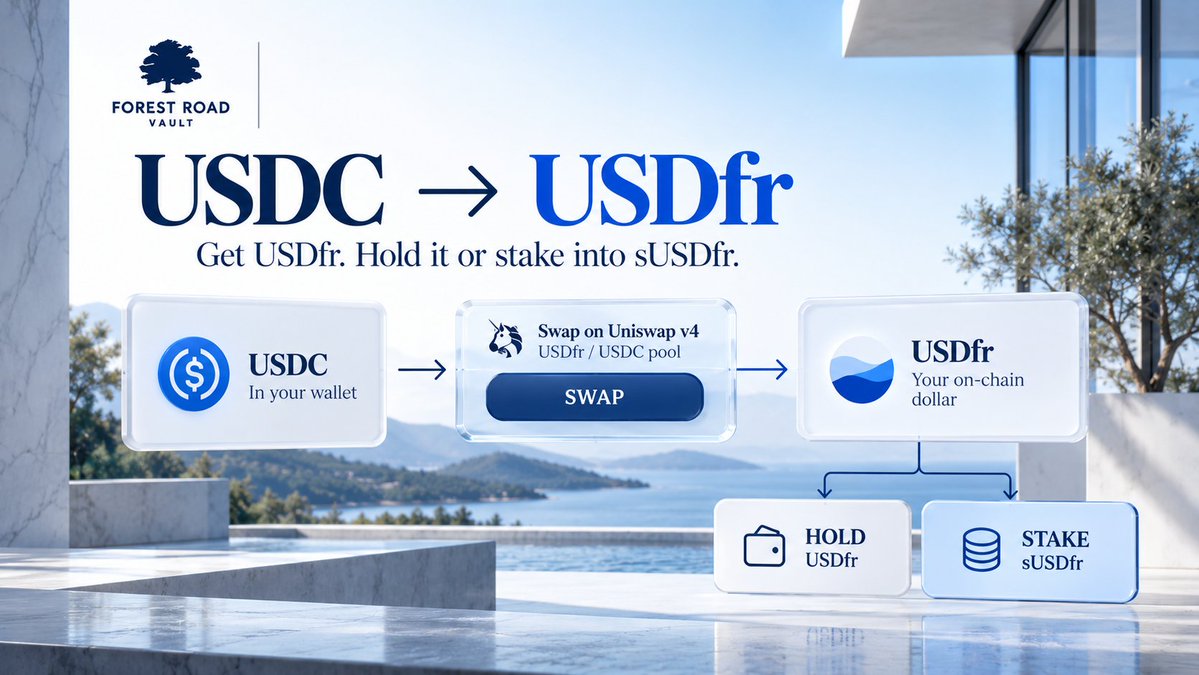
Have USDC and want to get into Forest Road Vault?
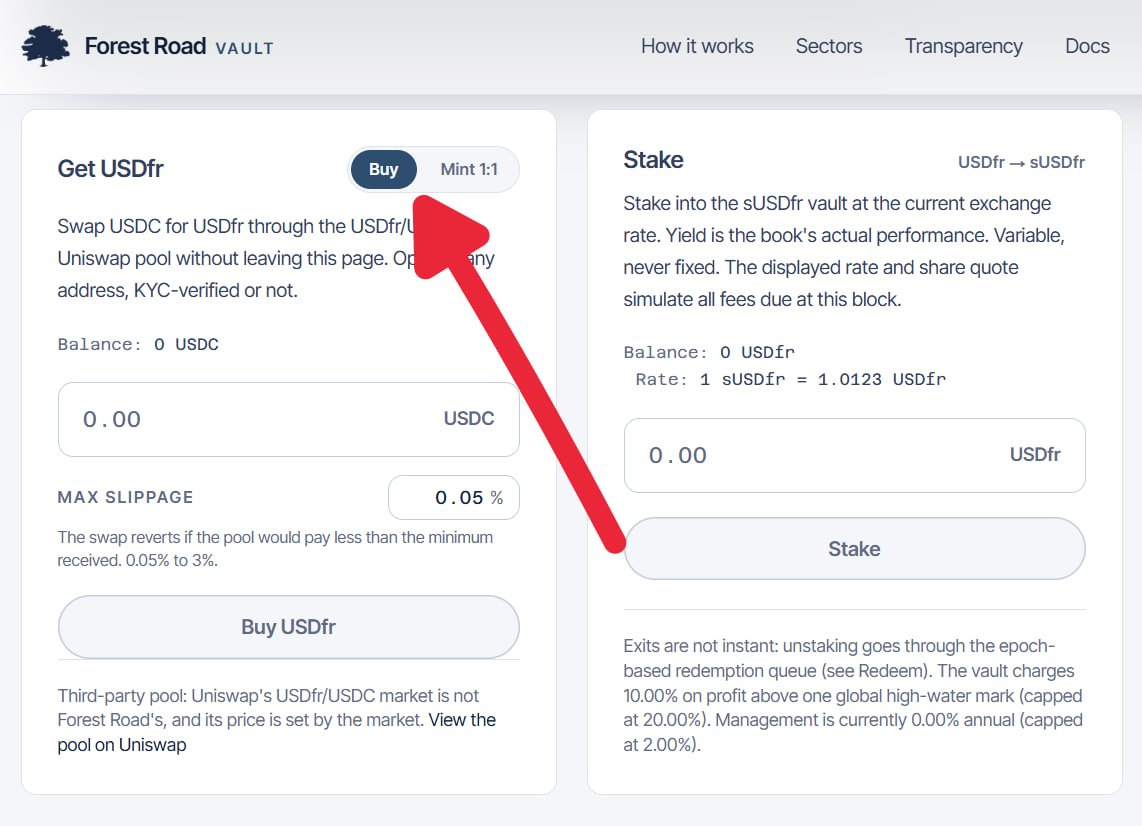
Start with the USDfr/USDC pool on Uniswap (can be accessed in the app).
Swap USDC for USDfr.
From there, you have two options:
Hold USDfr as the on-chain dollar.
Or stake USDfr to receive sUSDfr and move into the yield-bearing side of the protocol.
USDC → USDfr → Hold or Stake.
Simple entry. Clear next step.
Capital moving on-chain should be the last step, not the first.
Before a Forest Road Vault facility can be funded, the asset has to pass through underwriting, required attestations, and the protocol’s on-chain constraints.
The collateral is identified.
The terms are defined.
Required facts are attested.
The facility has to fit its risk limits.
Only then can capital move.
Putting credit on-chain doesn’t replace underwriting.
It makes the result of that underwriting more visible and enforceable.
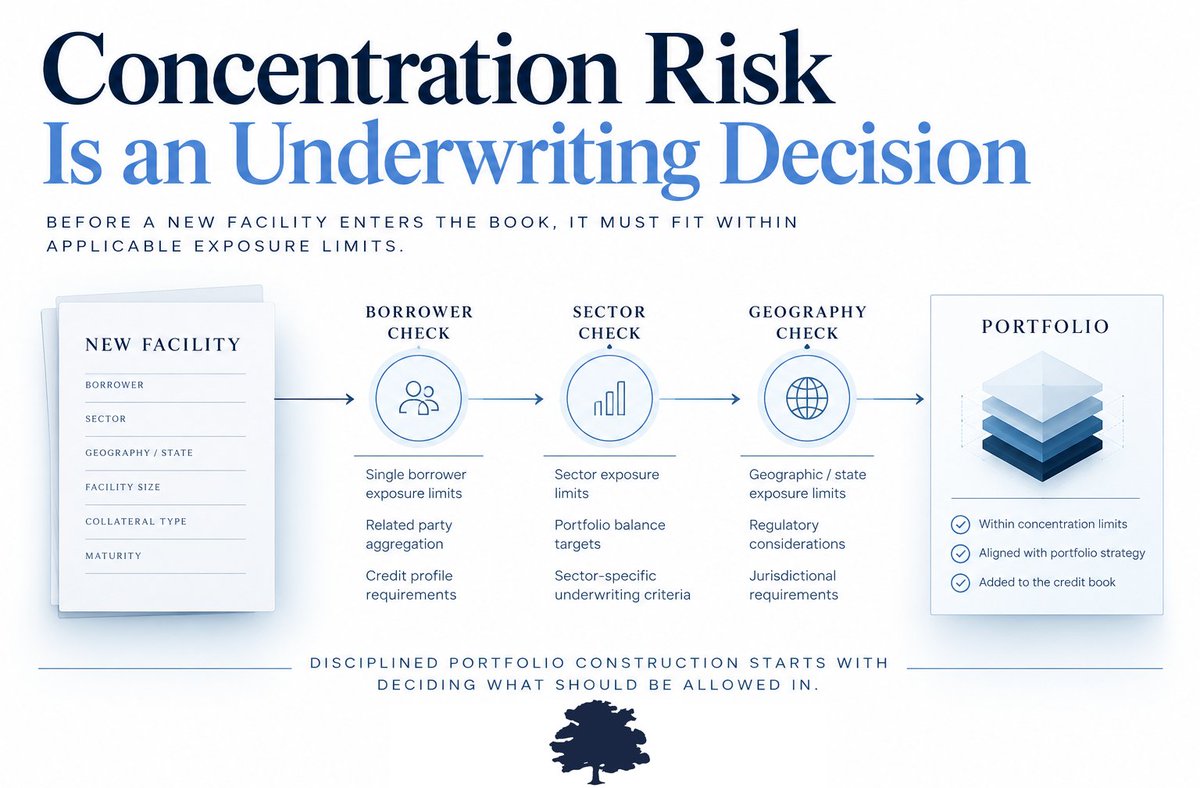
Concentration Risk Is an Underwriting Decision
Concentration risk isn’t something you discover after the portfolio is built.
It starts at origination.
Before a new facility enters the book, the question isn’t only whether the individual loan looks attractive. It’s also what that exposure does to the portfolio as a whole.
Borrower concentration.
Sector concentration.
Geographic concentration.
At Forest Road Vault, those limits are part of the credit framework itself.
Because disciplined portfolio construction starts with deciding what should be allowed in.
Different collateral. One loan book.
A film tax credit doesn’t behave like a renewable-energy project.
And neither behaves like liquid digital assets.
That’s why Forest Road Vault doesn’t force every loan into the same risk model.
Media & Entertainment: assigned tax credits and receivables.
Renewable Energy: tax credits, project assets and cashflows.
Digital Assets: liquid collateral, marked to market.
Different assets. Different underwriting.
One credit book, with the rules defined before capital moves.
A default and a loss are not the same event.
When a borrower misses obligations, the story isn’t finished. What happens next matters just as much:
Recovery efforts.
Collateral enforcement.
Restructuring.
Final write-offs.
At Forest Road Vault, unresolved defaults and realized losses are treated as different things, because credit performance should show both what is currently impaired and what was ultimately lost.
Default is an event.
Loss is the outcome after recovery.
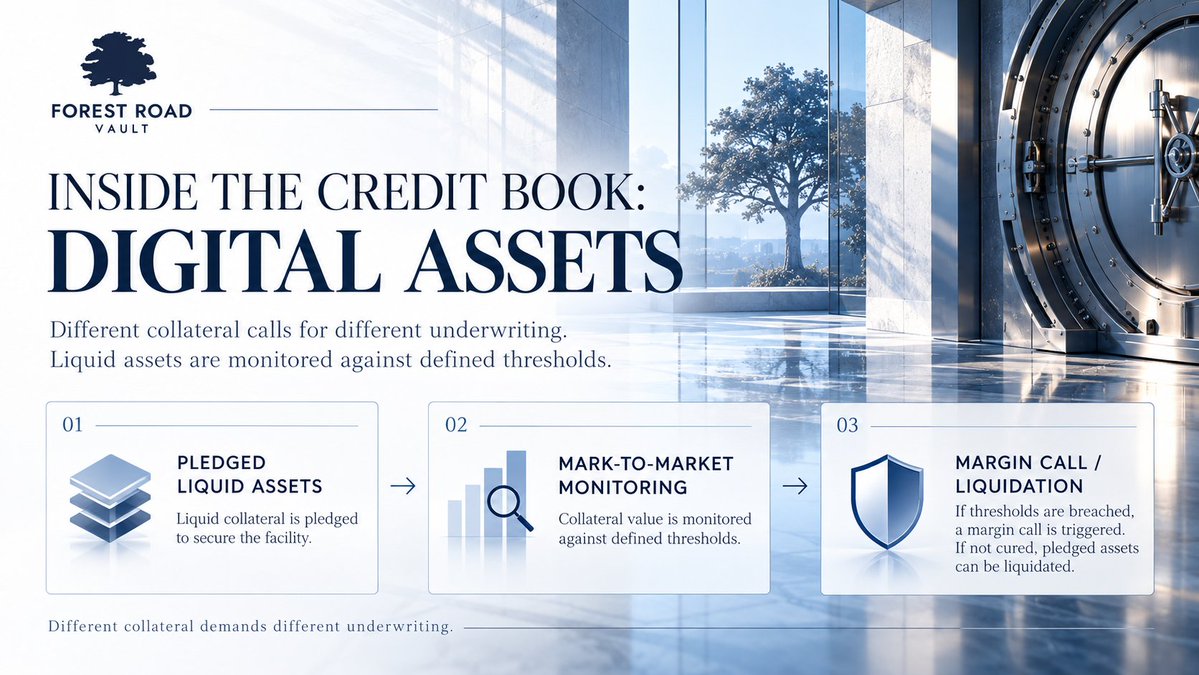
Inside the Credit Book: Digital Assets
Not every loan in a credit book needs the same collateral.
Forest Road Vault’s digital-assets lending is built around a different risk profile: liquid collateral that is marked to market.
The collateral is monitored against defined thresholds.
If its value moves far enough, a margin call is triggered. If that isn’t cured, the pledged assets can be liquidated.
Different collateral demands different underwriting.
The important part is making the rules clear before capital moves.
The road leads somewhere deeper.
Welcome to **Forest Road Vault** — where security meets the journey.
Secure
Grow
Keep moving forward
The vault is only the beginning.
@forestroadvault