One of the interesting things about the Eastern Roman Empire surviving so long is that we actually have a renaissance painting of a contemporary Roman Emperor.
This is a regal depiction of John VIII Palaiologos by the 15th century Italian painter Benozzo Gozzoli
"—¿Qué tipo de trabajo hacía usted para ganar ese “poco dinero” de vez en cuando?
—Lo que se presentara. Yo podía hacer un poco de casi cualquier cosa: manejar lanchas, pintar casas, pilotar aviones. Nunca necesitábamos mucho dinero porque entonces la vida era barata en Nueva Orleáns, y todo lo que quería era un lugar donde dormir, un poco de comida, tabaco y whisky. Había muchas cosas que yo podía hacer durante dos o tres días a fin de ganar suficiente dinero para vivir el resto del mes. Yo soy, por temperamento, un vagabundo y un perezoso. El dinero no me interesa tanto como para forzarme a trabajar para ganarlo. En mi opinión, es una vergüenza que haya tanto trabajo en el mundo. Una de las cosas más tristes es que lo único que un hombre puede hacer durante ocho horas, día tras día, es trabajar. No se puede comer ocho horas, ni beber ocho horas diarias, ni hacer el amor ocho horas… Lo único que se puede hacer durante ocho horas es trabajar. Y esa es la razón de que el hombre se haga tan desdichado e infeliz a sí mismo y a todos los demás".
Fragmento de una entrevista a William Faulkner
The research behind this is wild. Your face as a kid shaped how teachers treated you, how many friends you made, how much practice you got being social, and even how much money you earn right now. It starts before you can crawl.
Babies just hours old already prefer attractive faces. Researchers at the University of Exeter showed newborns (average age: 2 days) pairs of faces and tracked which ones they stared at longer. The babies consistently picked the faces adults rated as good-looking. The sorting starts on day one.
Teachers do it too. In a 1973 study, they were given identical student profiles with different photos attached. The teachers rated the good-looking kids as having more academic potential, paid them more attention in class, and gave more detailed help when they struggled. Same kid on paper, different face, completely different treatment.
This creates a loop that psychologists have studied for decades. When people expect you to be friendly and capable, they act warmer toward you, and because they're warm, you actually become more social in return. Researchers at the University of Minnesota proved this in 1977 with a phone experiment. Men were shown a fake photo before a call (not the actual woman on the line). The ones who thought she was attractive were friendlier. And the women on the other end, who knew nothing about any photo, became more outgoing in response. The expectation changed real behavior in real time.
Now picture this running on repeat for an entire childhood. The good-looking kid gets picked for group projects, invited to birthday parties, gets smiles from strangers at the grocery store. Each of those is a rep. Social skills work like a muscle, and you get better by doing them over and over. The kid who got fewer invitations and fewer smiles fell behind for a simple reason: less practice.
The University of Texas pulled together 919 studies on attractiveness and found the same four things every time: people across cultures agree on who is good-looking, those kids get judged more favorably, they get treated better by the adults around them, and they end up with stronger social skills. Once the loop starts, it feeds itself.
It carries into your paycheck. Economists at UT Austin found that workers rated below average in looks earn 5 to 10% less per hour than average-looking coworkers, even when education and experience are the same. Over a 40-year career, that penalty alone runs into six figures. A 2026 study in Personality and Individual Differences tracked kids rated for their looks at ages 7 and 11, then checked back at age 50. The ones rated attractive in childhood still had better social skills four decades later.
So yeah, this tweet is more right than wrong. But the real driver is practice. Being less attractive as a kid meant fewer people reaching out to you, fewer good interactions, fewer chances to build the muscle. You didn't lack a social gene. You got fewer at-bats.
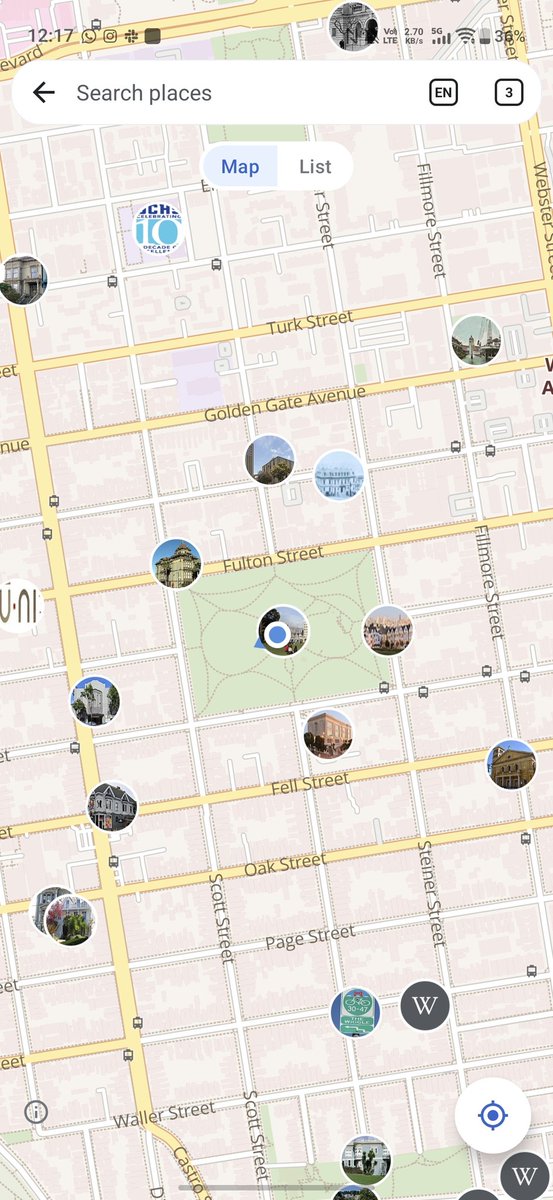
i accidentally discovered one of the coolest features on the internet
the Wikipedia app has a "nearby" feature that shows wikipedia articles around your location!
i opened it and instantly fell into a rabbit hole of random places, local history and weird things around me
try it and tell me what shows up near you
📢‼️ Mirad qué maravilla. Las lluvias invernales han permitido que, por primera vez desde 2017, el agua vuelva a asomar en la Motilla del Azuer, en el considerado como el pozo más antiguo de la Península Ibérica y máximo exponente del Bronce de La Mancha (2200-1500 a.C.) 🧵👇