A local bank transfer can take seconds. An international one can still take days.
We built Due to close that gap: one API combining local rails and stablecoins in 80+ markets.
Learn more 👉 https://t.co/VDVfgATHj9
The new wave of crypto neobanks runs on @due_network .
Virtual accounts and global payouts through our money movement APIs, and for a growing number, our embedded wallet too.
Next up: card acquiring, issuing and yield.
“We want to be the global player that gives you the biggest coverage.”
With @due_network, you pick only the products you need, “whether you want to use our virtual accounts in Brazil or payouts to Argentina.”
Most clients start with one and add more over time. “They expand into global payouts. They expand into embedded wallets, and more.” — @robiosss
Build your compliance for Europe first, and emerging markets get easier.
“It’s usually getting less strict as you go to some of those emerging markets, and it’s usually easier to adopt.” — @robiosss@due_network's European-first program has taken it to:
> A MiCA license in Spain, passported across the EU
> MSB and RPA registrations in Canada
> A VASP registration with Argentina’s CNV, announced Oct 23
> Brazil’s transition period, ahead of the Oct 30 filing deadline
How can you move fast and launch new markets very quickly?
> Focus on the infrastructure
> Let fintechs bring in the customers
> Handle their local and global payments
> Hire a team that has done it before
“A lot of our operations team is ex-Revolut.”
@robiosss, Co-Founder & CEO of @due_network
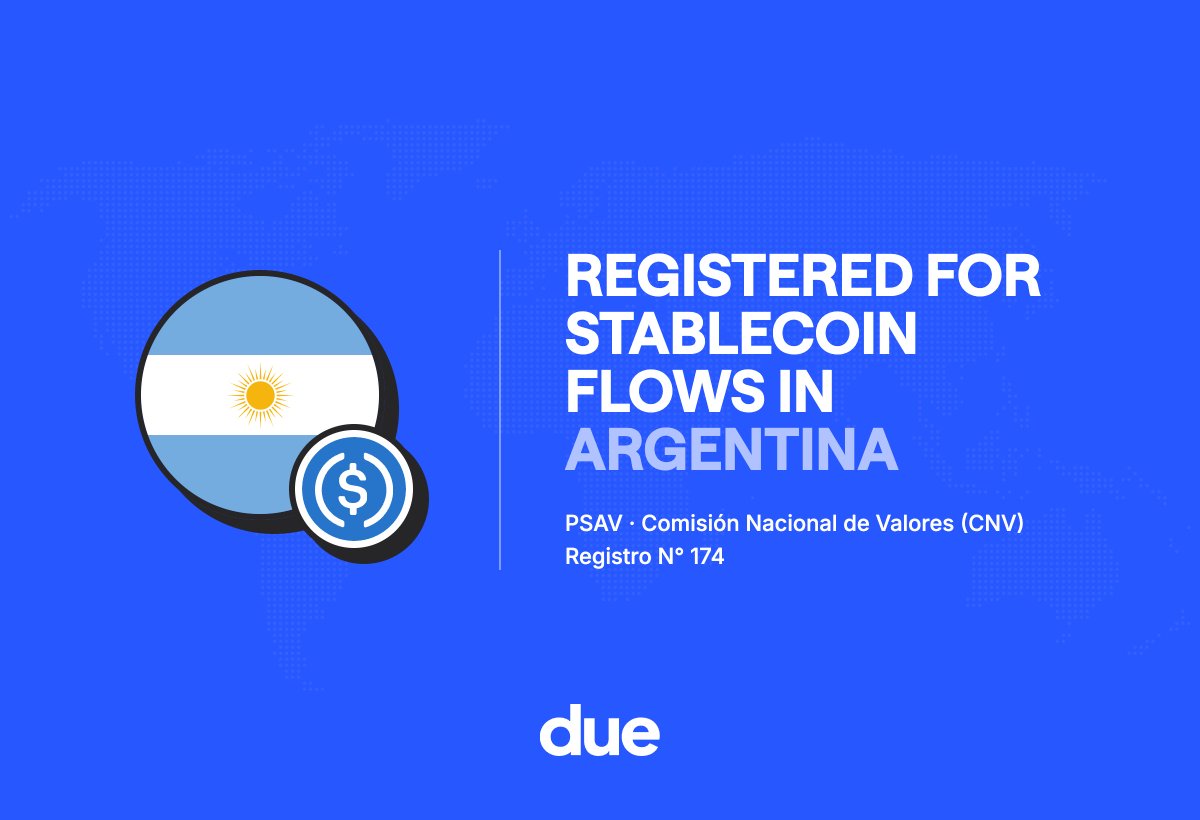
Due is now registered with Argentina's CNV as a Virtual Asset Service Provider (PSAV) 🇦🇷
USDC/USDT brokerage and stablecoin flows into and out of Argentina, through one API.
Next up: ARS virtual accounts, pay-ins and payouts.
After Brazil and Mexico, the next stablecoin markets in Latin America are Chile, Peru and Bolivia, says @robiosss, Co-Founder & CEO of @due_network.
“Those are the markets where we haven’t seen a formal regulation yet. However, we see a lot of demand to adopt stablecoins and adopt cross border money movement flows in those markets.”
Our CEO @robiosss joins Stabledash Live today at 1:30 PM ET 🎙️ Tune in to hear more about what we’re building at Due and the state of stablecoin payments.
Money sent to India from abroad doesn’t land on UPI directly. It enters through a licensed channel first, and that channel sets the limits and paperwork.
Our guide covers the rails, the rules, and how Due pays out INR over UPI and IMPS 🇮🇳
Getting paid by US clients and platforms usually takes a US account and routing number. Users outside the country rarely have one.
Our guide covers how fintechs issue named USD virtual accounts, the three common setups, and how to launch: https://t.co/HjT64Z0Icb
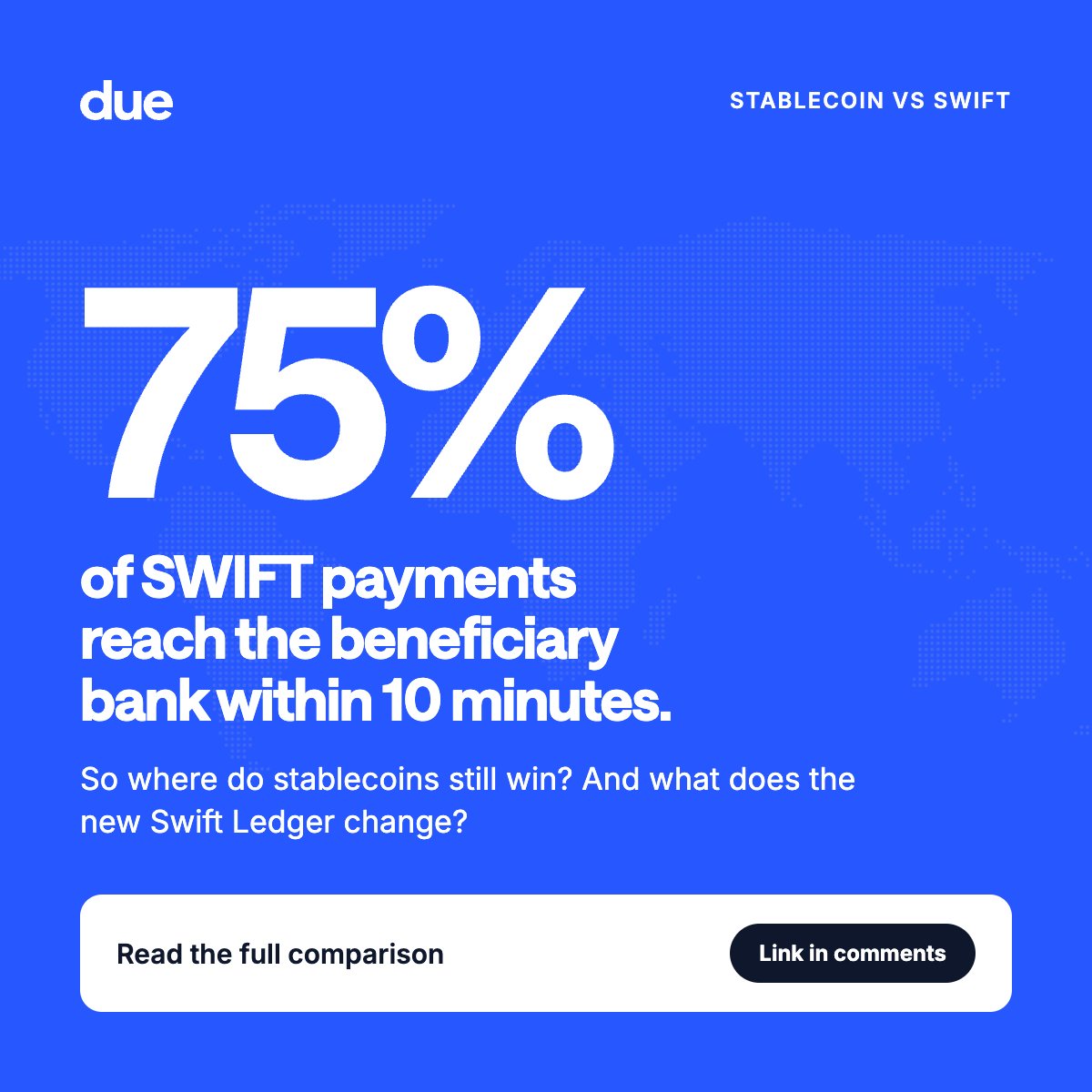
Swift's blockchain ledger is ready for initial use, with 17 banks set to pilot 24/7 cross-border payments on tokenized deposits.
Stablecoins vs SWIFT is now a three-way comparison. What moves, who gets access, and where settlement happens 👇
MiCA defines 10 crypto-asset services. A provider can be authorized for one, several, or all of them.
We mapped them to common stablecoin payment flows, and where Due fits.
More on Due’s MiCA setup 👉 https://t.co/KhbAv5it9Q
Emerging market payments infrastructure getting priced like this speaks volumes about where the category is heading.🚀
Congrats to the @fasset team and everyone involved!
Fasset has entered the global fintech unicorn category.
Less than four months after our Series B, we have raised a further $68 million in Series C funding, led by SBI Group. This brings Fasset’s total funding in 2026 to $119 million.
The investment will expand Own Network and support the next stage of Fasset’s growth across regulated markets, banking corridors and settlement infrastructure.