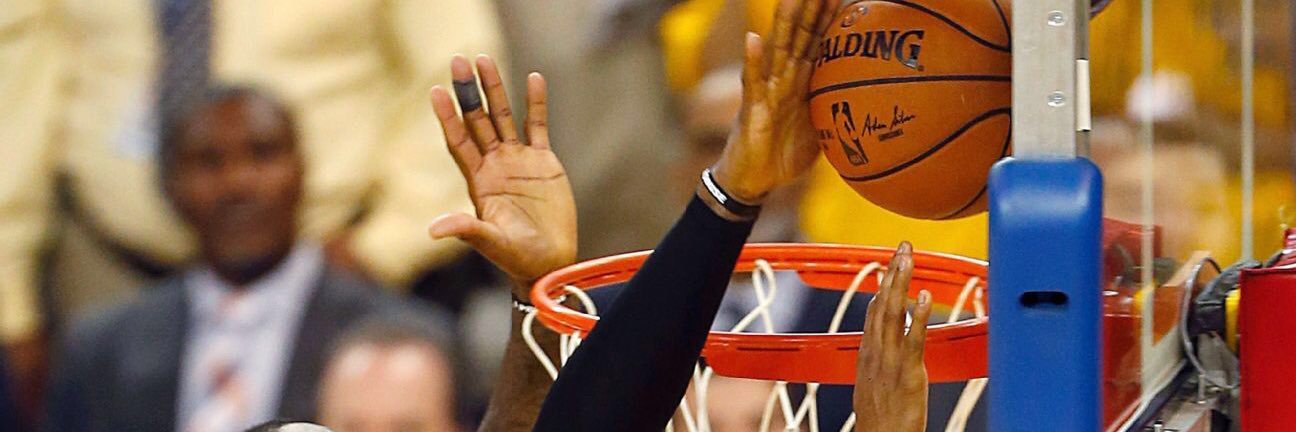
@rBillSimmonsPod Easiest question ever. You tell her the invite you just got. If she’s a ball knower she’d never let you miss out. If she protests it was never meant to be in the first place…
If you ever wanted more evidence that Lewis is an eight-time champion, this race was it. That's how Abu Dhabi 2021 legally had to end. Lewis is an 8 time champion.
@_ayandamay a business owner can either raise prices by 3% on everything for every customer regardless of method of payment or offer a 3% discount for cash paying customers… your choice. All overhead is ultimately passed on to the customer. That’s literally how business works…
@OhioTate so stupid for nearly every part of the country with the exception of texas and maybe the I-95 NE corridor. Columbus to Vegas would require 8 stops and 1 train change. Who is doing that? They couldn't make it cheap enough to justify over a $400 direct southwest flight...
A mind-blowing-but-true fact about Trump's stock trading.
Trump traded up to ~$700 million in stock in Q1 of 2026.
The 535 Members of Congress made ~$635 million in trades in 2025.
Trump bought and sold more stock in 3 months than all of Congress put together did in a year.
The argument structure is always the same.
Leaded petrol: we need it for engine performance. Removing it would increase costs and damage the car industry.
We removed it. Engines still work. Blood lead levels dropped. Childhood IQ scores rose.
DDT: we need it for crop protection. Removing it would devastate agriculture.
We removed it. Agriculture continued. Bald eagle populations recovered. Breast milk became cleaner.
Asbestos: we need it for fire resistance and insulation. Removing it would compromise building safety.
We removed it. Buildings remain standing. Mesothelioma rates began to decline.
CFCs: we need them for refrigeration. Alternatives don't work as well.
We removed them. Refrigeration continues. The ozone layer is recovering.
Glyphosate: we need it to feed the world. Removing it would cause famine.
The script is identical.
The industry interest is identical.
The outcome, each time we've removed the "essential" chemical, has also been identical.
We managed.
We always manage.
The chemical was never as essential as the company selling it said.
This video should unsettle anyone who takes the United States seriously as a nation.
Because it exposes something dangerous: the trivialization of the world's most consequential office. It shows how carelessly the power, credibility, and accumulated moral authority of a superpower can be squandered for a few seconds of viral attention.
In any other major democracy, this behavior from a head of state would trigger a constitutional crisis. Paris would burn. Berlin would convene emergency sessions. In the Nordic countries, resignation would follow within hours. Across functioning democracies, the public, institutions, and political class would recognize this for what it is: an assault on the dignity of the state itself. Leaders are not free to perform as entertainers without consequence. National honor is not personal property, it's held in trust.
But the United States is not just another country with a provocateur in charge. It is the linchpin of global order. It maintains formal alliances and security guarantees with forty to fifty nations. It underwrites the financial architecture, trade systems, and diplomatic frameworks that billions of people depend on daily. When the American president speaks—or posts—it doesn't land as satire, meme, or personal whim. It reads as a signal about what the country is becoming.
American power has never relied solely on carrier strike groups or economic output. It has rested on something more fragile and more valuable: trust. The belief that beneath domestic turbulence lies institutional seriousness, predictability, and a baseline commitment to dignity. That belief is now disintegrating in real time.
Millions of American companies operate globally. They negotiate multibillion-dollar contracts in environments where reputation is currency. Boardrooms in Frankfurt, Singapore, and Dubai aren't debating whether a post was clever—they're asking whether the United States remains a reliable partner. Whether agreements signed today will be honored tomorrow. Whether American leadership has devolved from institutional to purely theatrical.
Consider tourism, which sustains millions of American jobs—airlines, hotels, restaurants, museums, entire regional economies. Soft power isn't an abstraction. It materializes in flight bookings, conference locations, study-abroad programs, and decades of accumulated goodwill. A quiet, decentralized boycott doesn't require government action—only a collective sense that a nation no longer respects itself.
Now picture this image being studied by foreign ministers, central bank governors, defense strategists, and sovereign wealth fund managers. Picture them asking a coldly rational question: How do we write binding thirty-year agreements with a country whose public face will be this, relentlessly, for years to come? How do we plan for the long term when the tone is impulsive, mocking, and unbound by the gravity of office?
This is where the real calculus begins. Trillions in foreign capital depend on confidence that America is stable, credible, and rule-governed. That confidence is now being traded for what, exactly? Applause from an online mob? A dopamine rush from manufactured outrage? Content designed to dominate the news cycle rather than serve the national interest?
Every serious nation eventually confronts this choice: burn long-term credibility for short-term spectacle, or safeguard the reputation previous generations bled to build. The United States spent eighty years constructing an image of reliability, restraint, and leadership under pressure. That image wasn't born from perfection—it came from a visible commitment to standards that transcended impulse.
This isn't a partisan issue. Europeans who value democratic norms recognize something ominously familiar here. Americans—Democrat and Republican alike—who believe in responsibility and restraint should see it too. Power attracts scrutiny. Leadership demands discipline. A superpower cannot behave like a reality TV contestant without paying a price.
The presidency is not a personal broadcast channel. It's a symbol carried on behalf of 330 million people and countless international partners who never voted but whose lives are shaped by American decisions anyway. Every post either reinforces or erodes the idea that America can be counted on when it matters most.
So the question is no longer whether this is offensive. The question is whether this is who America chooses to be: a nation that trades a century of hard-won reputation for viral moments. A country that replaces statecraft with content creation. A republic governed like a season of reality television.
History offers a harsh lesson here. Great powers don't fall because enemies mock them. They collapse when they begin mocking themselves—publicly, proudly, and without grasping the cost until it's far too late.
Stay connected,
Follow Gandalv @Microinteracti1