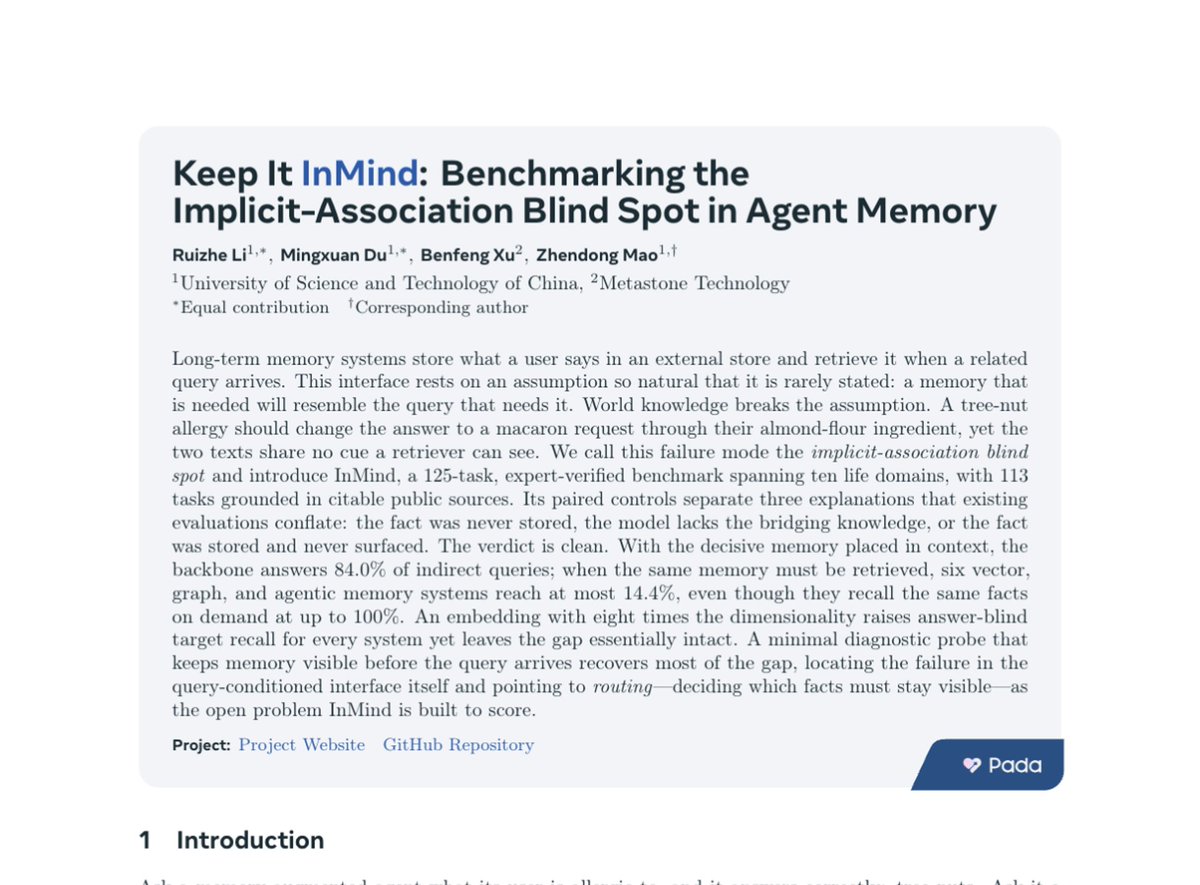
Introducing InMind Memory Bench.🤠
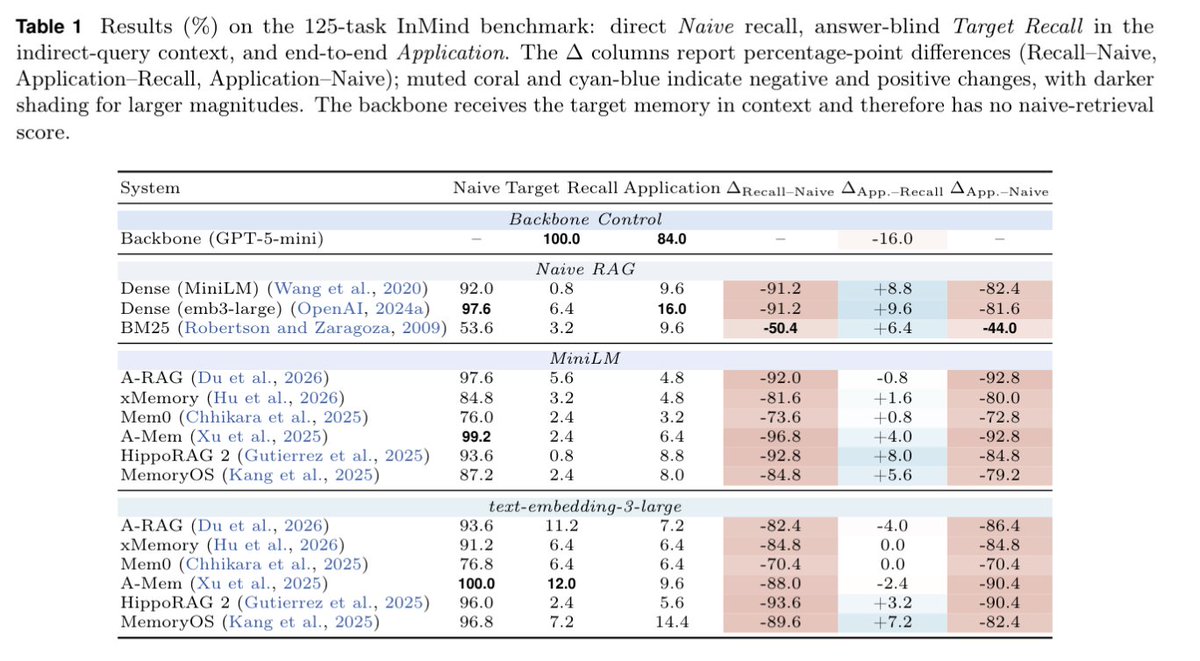
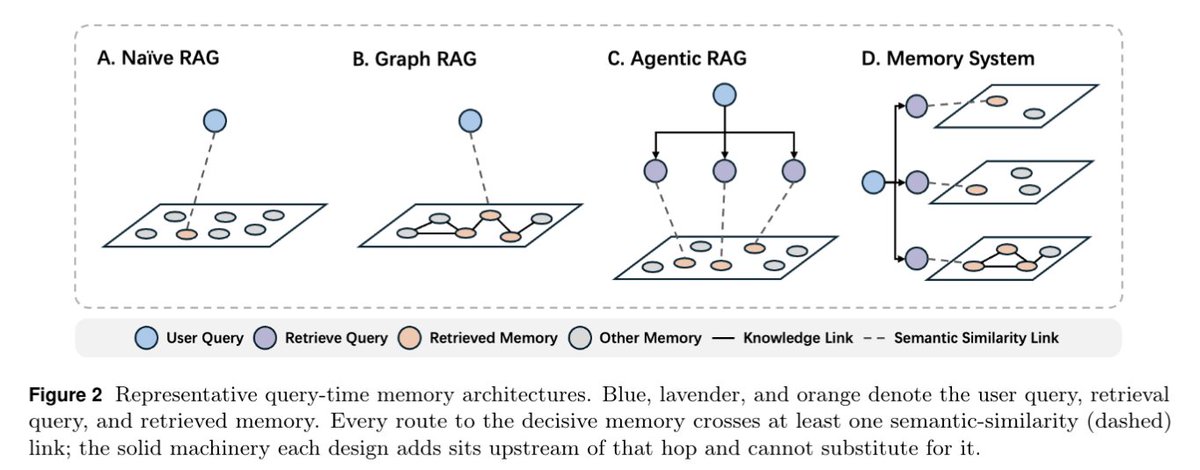
Most agent memory systems are retrieve-based: they store user information externally, then retrieve memories that look similar to the current query. But semantic similarity is not the same as usefulness.
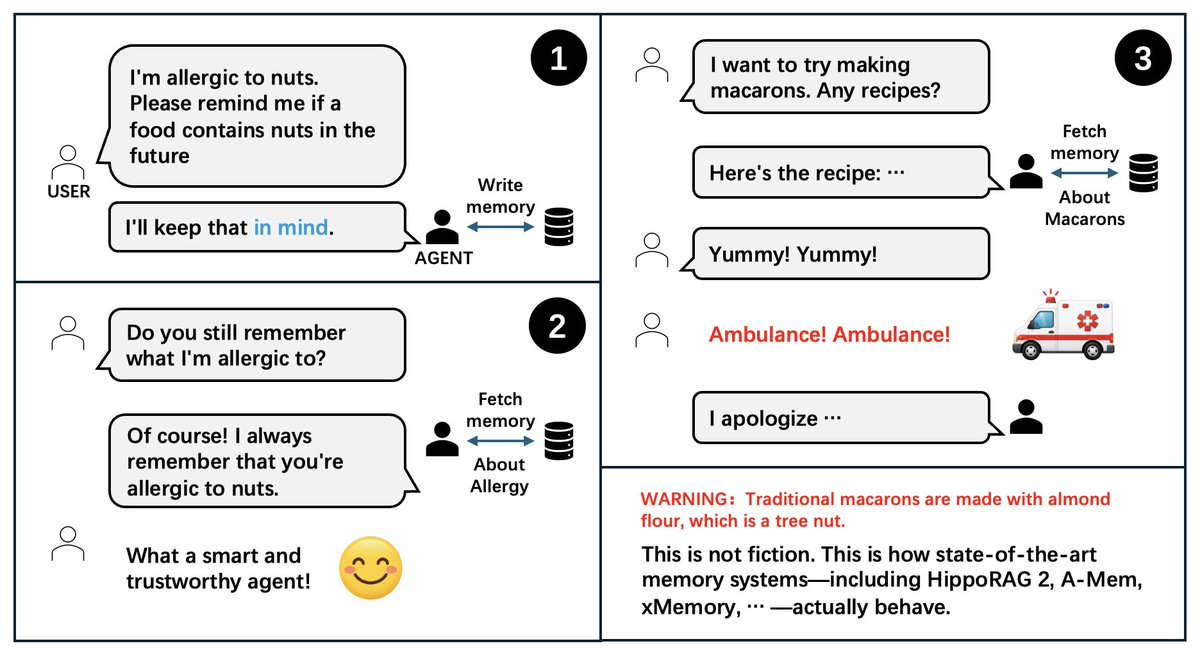
Suppose a user says: "I’m allergic to tree nuts."
Days later, they ask: "I want to make macarons. Any recipes?"
A RELIABLE agent should connect macarons to almond flour and warn the user.
Yet many memory systems simply provide a recipe: 'tree-nut allergy' and "macarons" are not similar enough, so the critical memory is never retrieved.
Worse, when asked directly—"What am I allergic to?"—the same systems answer correctly.
The fact was stored, creating the illusion that the agent truly keeps the user in mind.
We evaluate HippoRAG 2, A-RAG, A-Mem, Mem0, MemoryOS, and xMemory, and find this failure is systematic.
Paper: https://t.co/Gjr4gqkszo
Website: https://t.co/Kt9ZMKd3km
Code: https://t.co/oO02QgxphZ
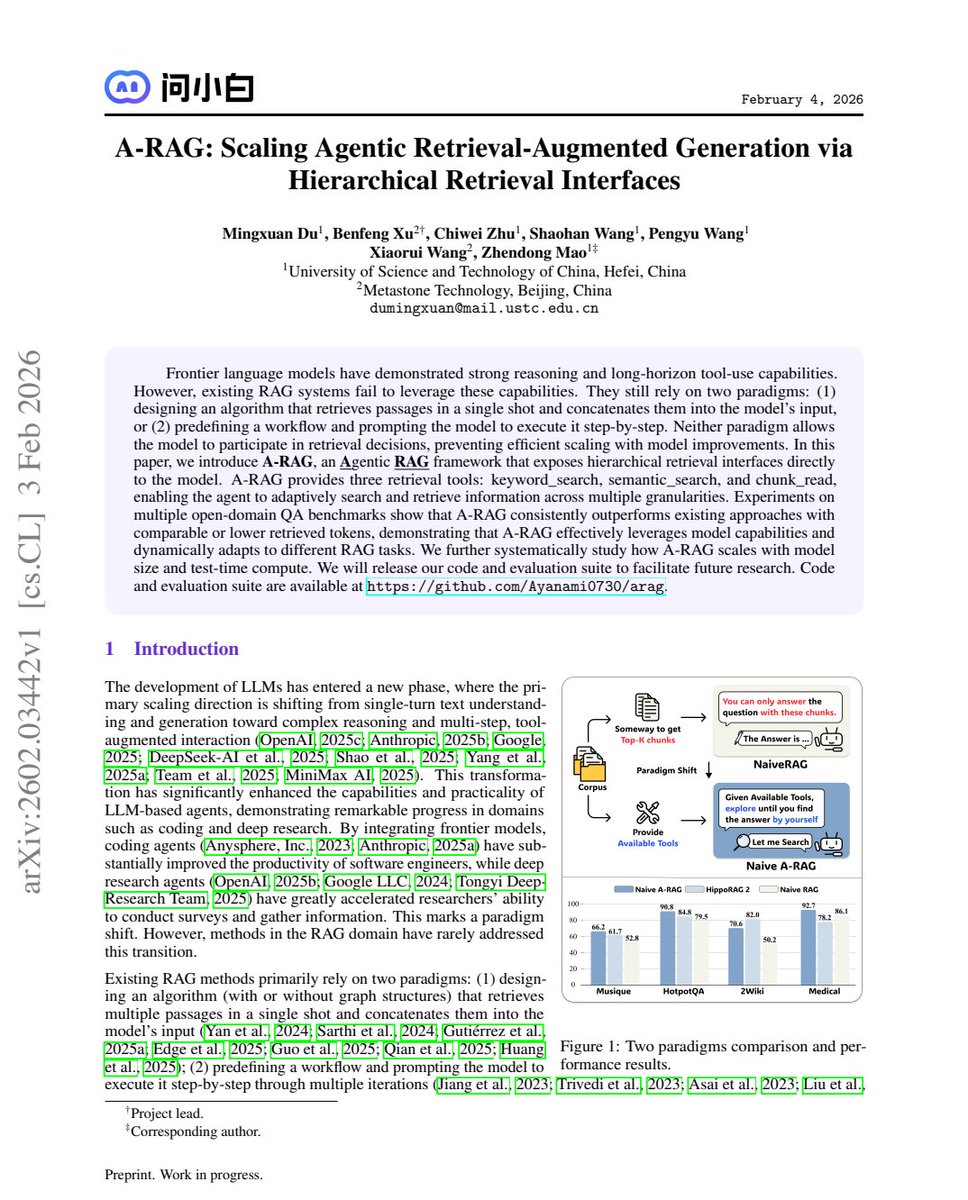
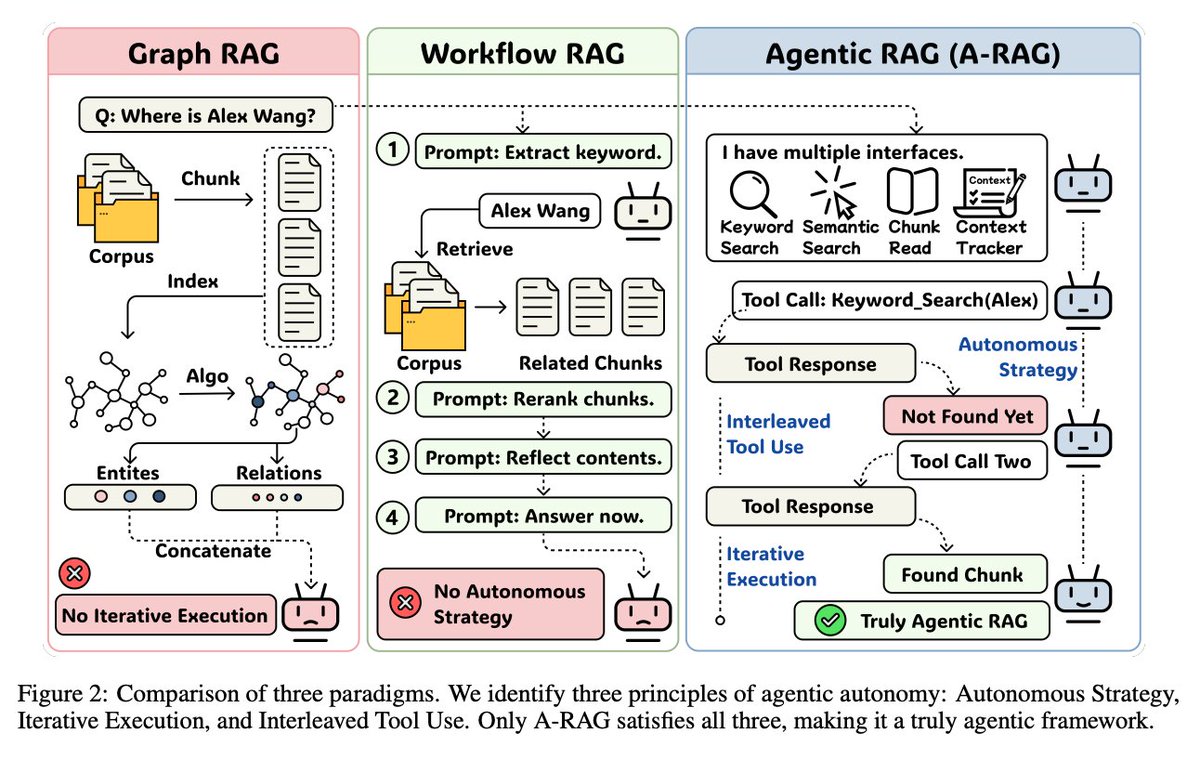
Existing RAG systems don't let the model participate in retrieval decisions — they either retrieve-and-concatenate (GraphRAG) or follow a predefined workflow.
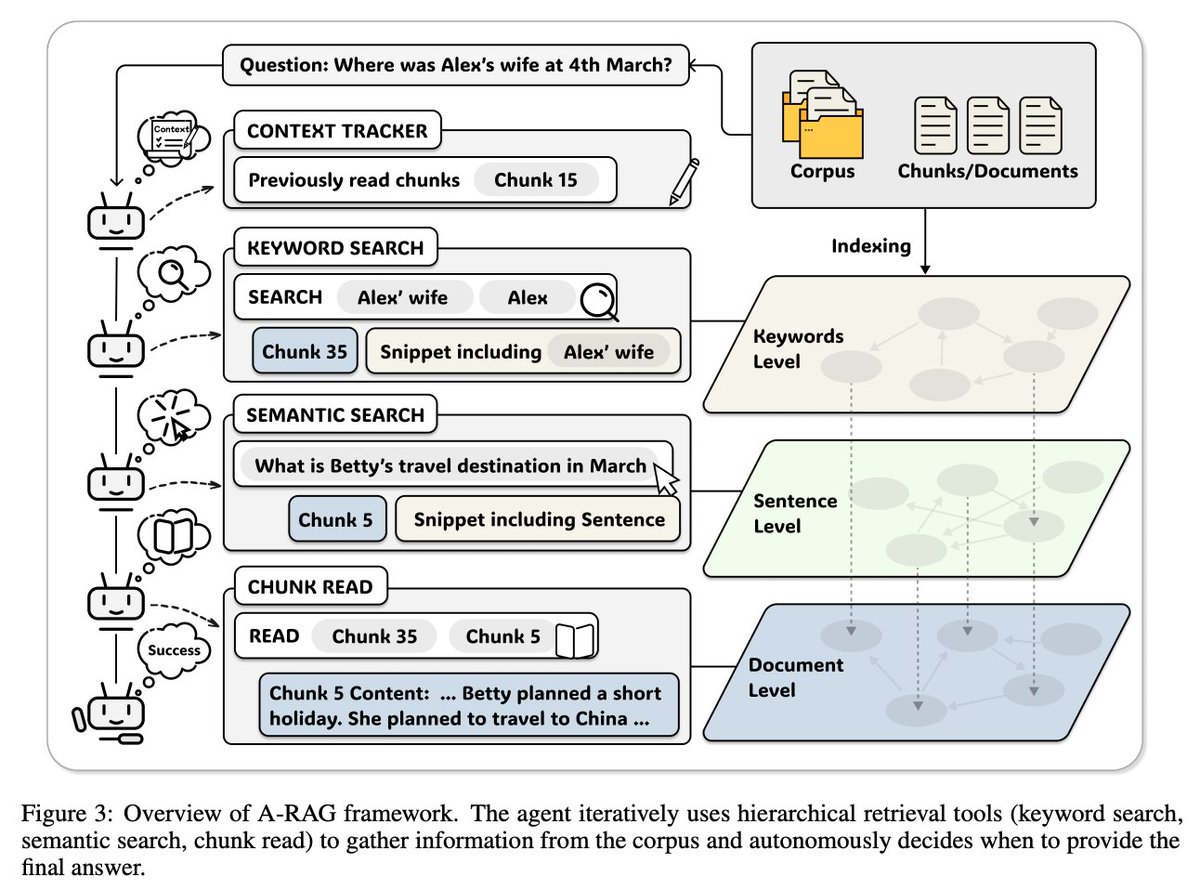
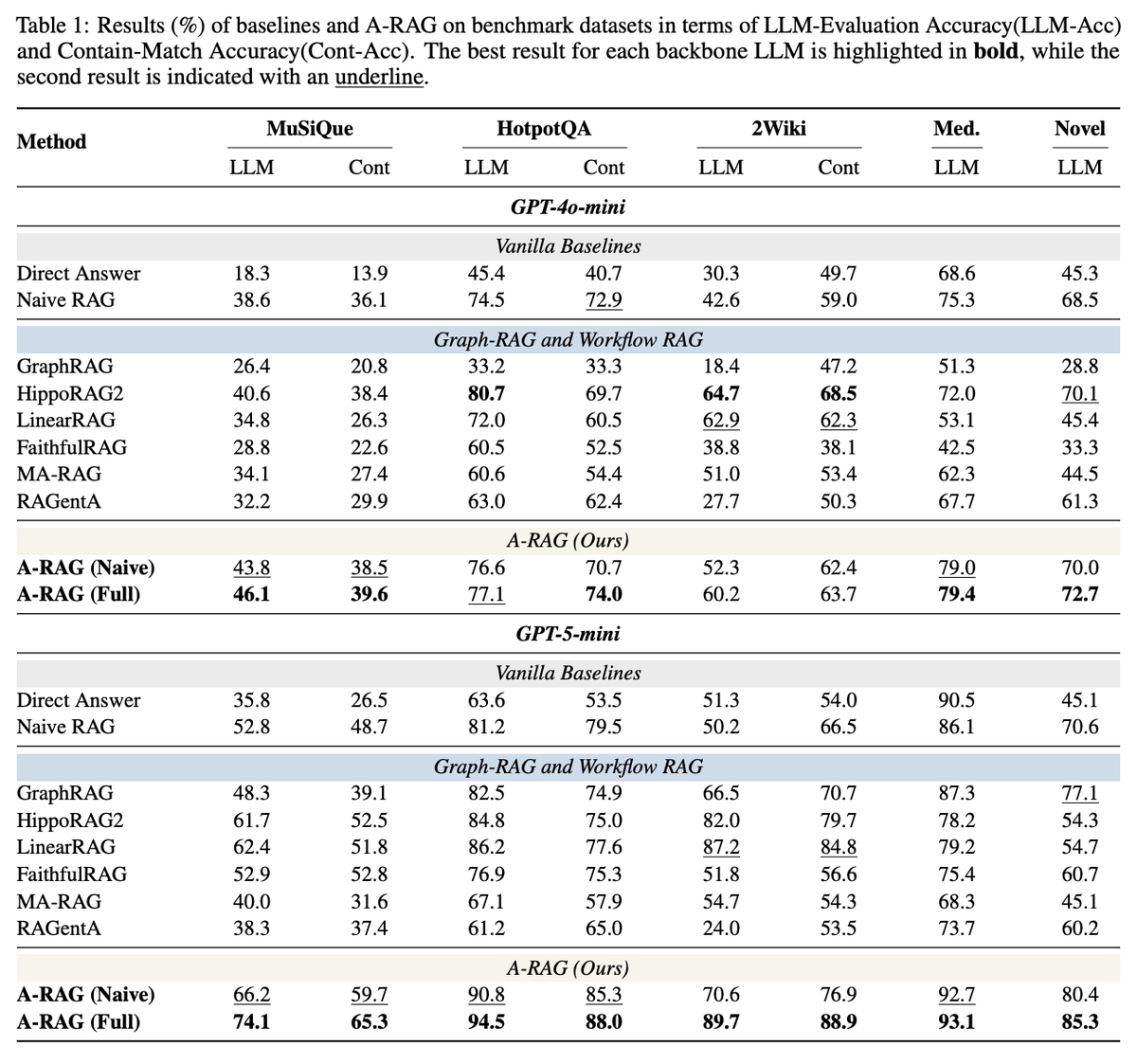
We propose A-RAG: expose hierarchical retrieval interfaces directly to the agent.
📄 Paper: https://t.co/rBqzXMozDH
💻 Code: https://t.co/Apgag90r7e
We also find evidence of test-time scaling: increasing max steps or reasoning effort consistently improves A-RAG performance.
Failure analysis reveals a paradigm shift — errors are no longer about retrieval recall, but about reasoning: wrong search strategies, task misunderstanding, and information conflicts.
These are open problems worth exploring 🧵
Upgrade 4: Validated diagnostic value on real systems.
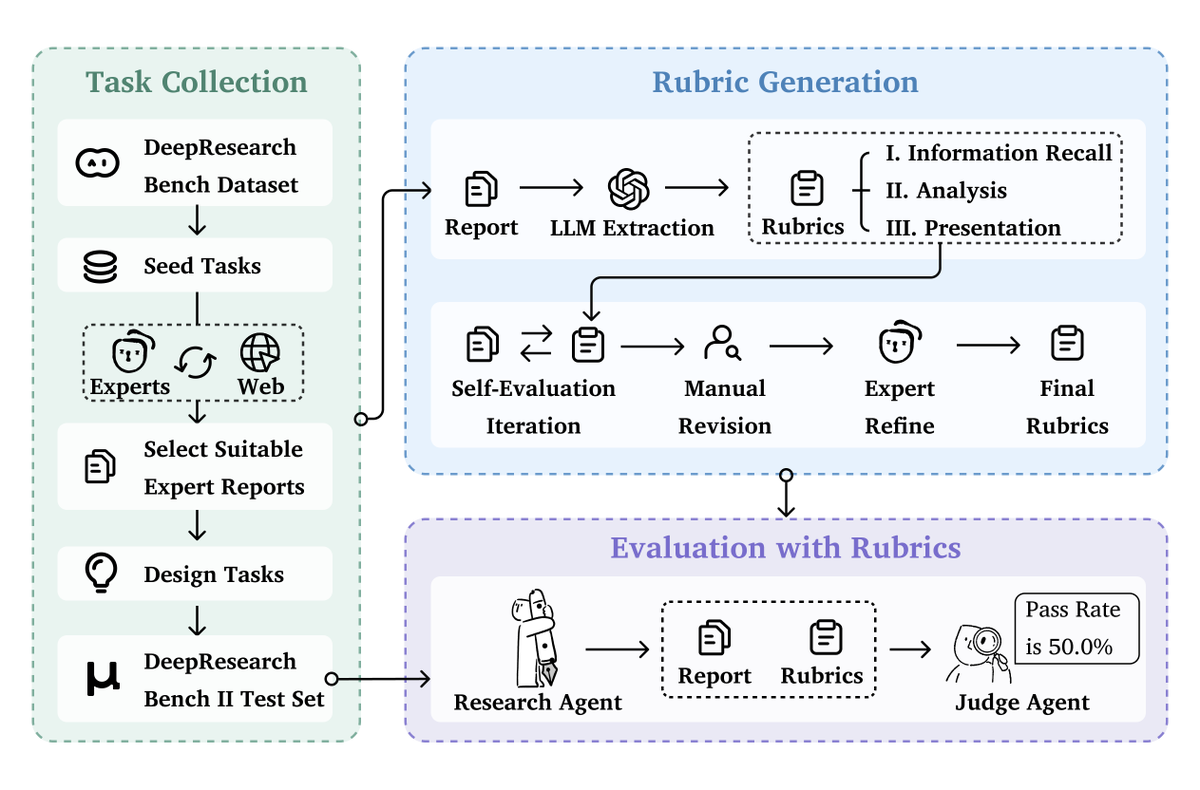
We evaluated multiple SOTA deep research systems and found that even the strongest models satisfy <50% of the rubrics. More importantly, the gaps are attributable (recall vs. analysis vs. presentation), turning evaluation into concrete levers for the next iteration rather than a single leaderboard number.
Today we introduce DeepResearch Bench II (DRB-II)—a benchmark designed to evaluate deep research systems/agents in a way that is not only reliable, but also explainable and diagnosable.
We previously released DeepResearch Bench (https://t.co/YM0tD0QmZk) and received strong community feedback. In practice, v1 can produce an overall score that aligns well with human judgments, provide a relative ranking for DRAs, and capture differences between agent versions. However, we realized a key limitation: the feedback was still not fine-grained enough. When you see a single final score, it’s hard to tell what to change next—agent architecture, tool interface, retrieval strategy, reasoning procedure, writing policy, or even the training recipe. In other words, the evaluation lacked the interpretability needed to directly drive iteration.
That’s why we spent substantially more time tackling a harder problem: fine-grained, explainable, and human-expert-aligned evaluation for Deep Research Agents. DRB-II (with the accompanying leaderboard + code) is a milestone in that direction.
Paper: https://t.co/vdXde3lp2q
Website & Leaderboard: https://t.co/hq2rxZ64gi
Code: https://t.co/f6Lh1T0bvr
Upgrade 3: From “ranking” to “three-axis diagnosis.”
Rubrics are organized into information recall / analysis / presentation. This makes results actionable: combined with agent trajectories, you can localize failure modes—missing evidence, broken reasoning/synthesis, or issues in report structure and writing quality—and map them to specific parts of your pipeline.
Building effective review tools significantly improves your agent's success rate. The point is review tools can act as external forces within the agent trajectory, driving reflection and refinement.
We've built effective review tools in the @muset_ai system.