In 1911, Heike Kamerlingh Onnes, by virtue of being the first person to liquify helium, serendipitously discovered that the resistance of mercury dropped to zero below 4.2K–the first superconductor. For the next decades, some of the luminaries of 20th century physics tackled the superconductivity problem, without achieving the holy grail of a microscopic theory about why it happens. It was not until two smoking gun experiments in the 1950s pointed in the correct direction: isotope effect experiments in mercury showed that the atomic lattice, not just electrons, were implicated, and low-temperature specific heat experiments gave evidence for a small energy gap associated with the superconducting state. These key experiments were among thousands of valid works about superconductivity, and certainly no one knew what would be the smoking gun experiment in 1911 or even in 1941 (the author of the isotope effect paper even stated that their motivation was that they had different isotopes of mercury laying around).
With all the key observations in place, Bardeen, Cooper, and Shrieffer were able to formulate the BCS theory explaining what is now called the ‘conventional’ type of superconductivity.
This history illustrates the important role of serendipity and path-dependence in superconductivity research (as well as other areas dealing with complex many-body systems). If Onnes chose to measure aluminum instead of mercury, he would not have discovered superconductivity when he did; if someone had tried to FAFO superconductivity in different isotopes of a metal earlier, the mechanism of superconductivity could have been established much sooner.
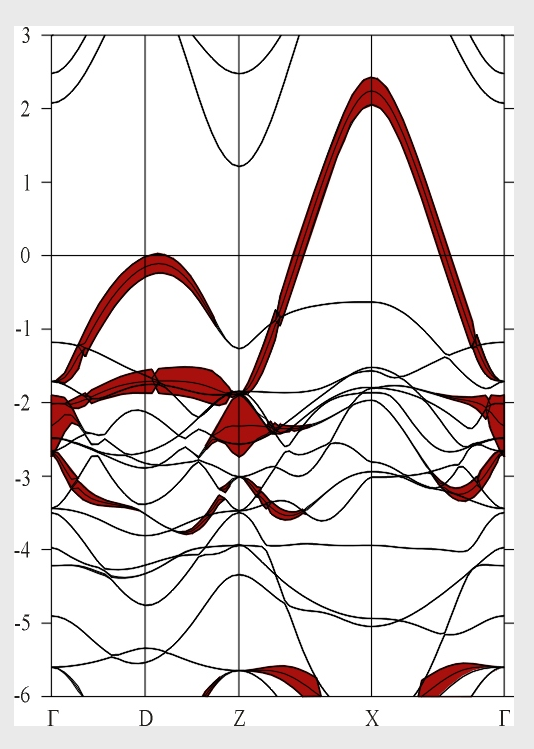
Similarly if superconductivity was discovered in Ba1-xKxBiO3 (BKBO, Tc up to 34K) *before* it was discovered in La2-xBaxCuO4 (LBCO, Tc up to 35K, first cuprate discovered), humanity could have gone another generation without discovering cuprate superconductivity in excess of liquid nitrogen temperatures.
i don’t get why people get so upset when you say getting to do a PhD is a privilege
if you are working at a company or a startup, the work you do has to deliver value to its customers, if not immediately at least eventually
barring a few roles in probably a handful of companies you can not just show up and work exclusively on stuff that you find intellectually interesting
looking back now, i realize now how much of a privilege the time during my PhD was. being able to work on interesting and hard problems, in my specific case: simulations (MHD+Radiative transfer, for those of you who care) of magnetized flows on distant stars, without having to consider at all the economic impact of the problem
while getting paid a salary (modest, yes), being flown out to international conferences and not having to deal with corporate BS
why would you even want to treat it like a regular 9-5 (unless you have specific family obligations)? i don’t mean working yourself to death, but i don’t understand the sentiment of: oh it’s friday 17:00, my shift has ended and i can not look at my computer until monday
you have insane resources at your disposal, if you are at a wet lab you have access to the most sophisticated and precise instruments worth millions of dollars
in my case i got essentially infinite compute time in a super computer.
at a very early age you are spending tens of thousands of dollars of lab resources/ compute to just pursue your curiosities
a single simulation run of mine (48 hours , say 5000 cores ) cost around 1000 Euros in electricity and cooling, and i would just casually fire off 10 such simulations
that is an insane opportunity. why would you not want to pursue your ideas endlessly?
and how is this not a privilege?
@Kaju_Nut Well, intuition itself has roots in some model/picture, largely from older experiences. New theories/ideas may or may not break them and when they do, they change perspectives. "Following intuition" here is just reluctance to fully accept a new idea. Humans do that all the time!
The quantisation of the electromagnetic field doesn’t just affect emission and absorption. It explains blackbody radiation, scattering, indirect effects of the electromagnetic field, for example the way energetic charged particles interact or precision measurements of fundamental constants, etc
And not just qualitatively, but in agreement with some of the most precise measurements in history.
It’s not a dumb question, many don’t appreciate how extraordinarily strong and consistent the evidence for photons is
We should think of causal ordering in relativity much like the Born Rule in quantum mechanics: an interpretive structure that is not part of the dynamical theory itself, but added on post-hoc to make it make sense in the world.
One thing academia does extremely well and startups and companies massively screw up is hiring. Hear me out!
A friend of mine, PhD in Astrophysics, solved a tough problem for their PhD: when light from stars travels through the Earth's atmosphere, the turbulence and density fluctuations cause the light rays to become "squiggly" instead of straight and the resulting image you get from a telescope becomes blurry.
So he had to model atmospheric turbulence and then write a piece of software in C++ that inverts this problem to get de-blurred images. This involved understanding physics, maths, computation, a bit of ML and writing production-level code in C++.
When he tried to look for an industry job he simply couldn't find any. It was also hard to just get interviews.
The first problem is that recruiters, who are often deeply non-technical, look for specific keywords in CVs and they just don't know how to parse a non-standard CV. This is a guaranteed way of missing out on outlier candidates.
Second, a lot of hiring managers over index on niche knowledge about a specific tool/framework/language and the ability to remember syntax off the top of your head. A solid researcher sees programming languages, machine learning, physics, maths etc as tools that are at their disposal and may not know/remember very specific information or every little detail about arbitrary technical things.
The whole process essentially becomes a lottery.
This was how we hired at our Max Planck Institute: the candidate would be given a paper a week before the interview and the interviewer and the candidate would discuss it together. A second interview would entail asking the candidate about THEIR past work and checking if they deeply understood what they did.
This interview format doesn't require the candidate to memorizes stuff beforehand and is pretty much independent of the whims, fancies and "taste" of the hiring manager.
A lot of stuff is wrong with academia but this is an area where they do much much better than startups/companies.
This whole debate between public vs private funding is so silly. Private funding cannot operate at the scale that public funding does (even with the cuts). At the same time, it's true that private funding (Allen, Keck, Kavli etc.) is uniquely good at funding specific areas in great depth. The two complement each other, both will always be important, and it's silly to argue that we are in a "new age" of any kind.
I have always admired prior generations of scientists for putting aside their parents’ and grandparents’ conflicts to collaboratively pursue truth. The symbolic gravity of Germans collaborating with Israelies, Turks collaborating with Armenians, Chinese collaborating with Japanese, etc showed that science could be a source of progress in this world in ways beyond the obvious ones. Unfortunately, the next generation is rapidly casting aside this thoughtfulness, instead pursuing boycotts, bans, and bigoted open letters that undermine any moral superiority that was accumulated by their mentors.
Let this be a lesson to all condensed matter experimentalists: guard your samples fiercely, crystalline or otherwise. Do not trade them for bananas or yogurt.
https://t.co/7PolpievQI
Scrap the journals and formal peer review. A better system could be a dynamic arXiv-like document (including a verification system similar to arXiv) where new versions are assigned new DOIs, coupled with a comment section.
Comments get DOIs. Helpful comments are incorporated into the living manuscript as edits or citations. Substantive additions are given co-authorship in updated version. Substantive critiques or re-analysis of data by another group get cited because they have DOIs and become part of the record of knowledge in this topic.
Comments can be anonymous, but if you want credit and H-index growth, it has to be under your name.
Our recent preprint on gluon amplitudes has sparked a lot of discussion, so I want to share the backstory — including how AI helped crack a problem that had stumped us for a year.
I'll also be giving a public lecture at Harvard this week. Details at the end.
Public service announcement: quantum mechanics almost certainly has nothing to do with consciousness.
If I:
•Fire a photon at an electron
•Let it hit a detector
•Record the result on a hard drive
•Leave the room forever
The wavefunction still “collapses” in the sense that the detector records a definite outcome.
No consciousness necessary.
The word observer in quantum mechanics means:
“A macroscopic system that becomes entangled with the quantum system.”
It does NOT mean:
“A sentient being having an experience.”
That confusion fuels 80% of the mystical takes online.
@InnaVishik I expected the CT blob to vanish for polarization parallel to Gamma-X (CuCu). Yes, optically, k-space is integrated, but why a gap (CT blob) along CuCu? Does this imply electron transitions from 2 eV across that gap above Gamma-X region (not seen in this fig)?
@InnaVishik I've only seen this measurement in the literature as "in-plane" reflectivity (or conductivity)! They never mention the CuO and CuCu directions separately. And I've only come across this distinction predominantly in ARPES literature, where its 2D Fermi surface fig is everywhere!
@InnaVishik In-plane anisotropy has been measured for LCO but in the near/mid IR, where the CT blobs don't appear. We tried it in the visible and saw the CT blobs in both directions. Crystal is very good quality - Laue XRF confirms it and I tried it on zillions of batches (all same result)!
@InnaVishik But in the optical measurements (ellipsometry in my case), I only saw mountain blobs peaking at the CT gap in both directions. Any idea, why we don't see the anisotropy in the optical?
@InnaVishik I was trying to experiment and see if we could optically observe the signature of the 2D anisotropy in the CuO planes in cuprates. In ARPES, we can clearly see a shift (equal to CT gap) as we change the polarisation of the excitation from the CuCu direction to the CuO direction.