In the latest firmware releases, @Starlink finally introduced a signal-quality metric in its gRPC telemetry. No authentication or account is required.
The value name is signalQuality, and it reports numbers from 0 to 1.0
These values are real SNR values divided by 10 and clamped to the 0-1 range.
To get the Starlink SNR value, we can simply multiply signalQuality by 10. Sure, we can't get any value higher than 10, which effectively means >=10 dB; 0 is the noise level.
Example request with SNR calculation:
grpcurl -plaintext -d '{"get_status":{}}' 192.168.100.1:9200 SpaceX.API.Device.Device/Handle | jq -r '.dishGetStatus.signalQuality' | awk '{printf "SNR=%.1f dB\n", $1 * 10}'
I wrote a simple program that displays Starlink signal quality and SNR.
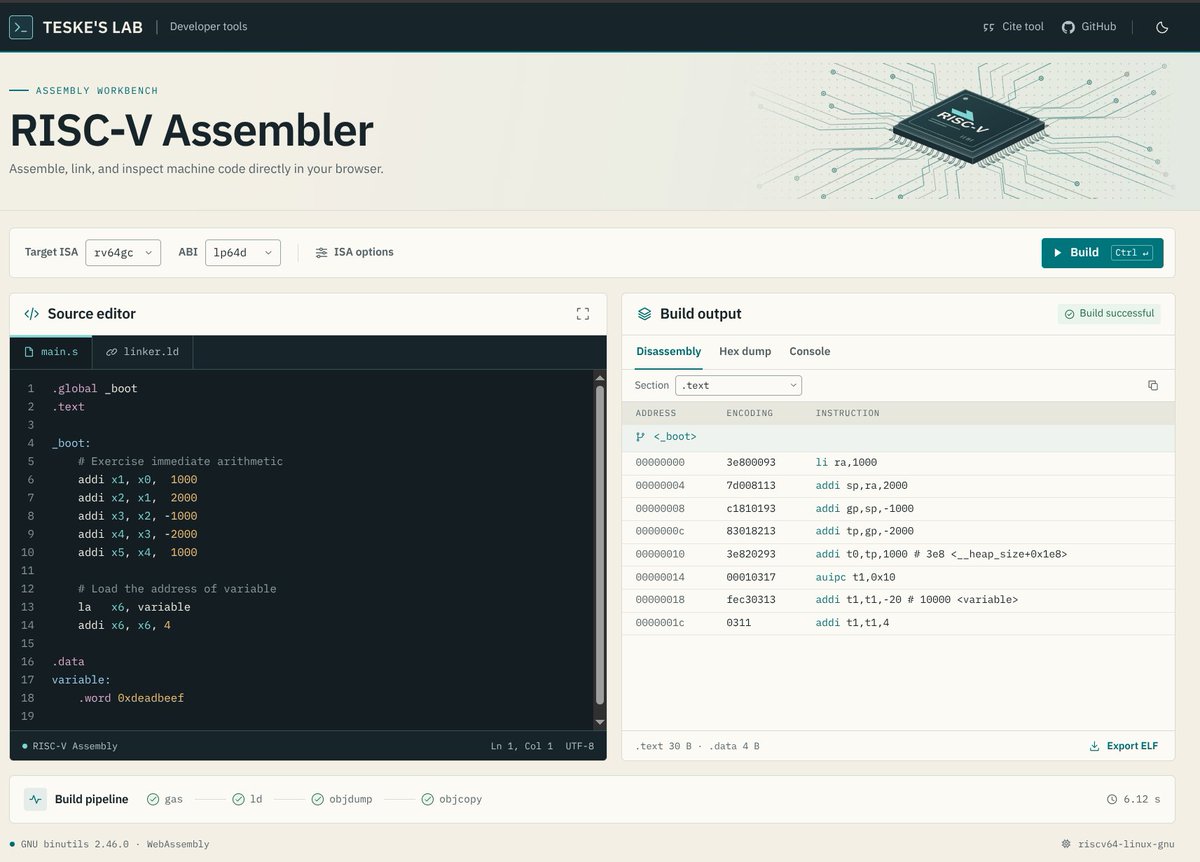
New theme on #RISCV Online Assembler for better UX and same design system as all other Teske's Lab project :D - Hope you liked it!
https://t.co/FLtYHQxrKX
Keeping our dev methodology but with AI assistance, we've finally stabilized the USB3-PIPE project, implemented a proper USB3 Core, added support for Gowin/ECP5/Xilinx FPGAs and USB 3.2 Gen 1 (5Gbps) and Gen 2 (10Gbps).
This will also be an enabler for other projects: SLogic16U3, M2SDR, etc...
https://t.co/UaEZWunv7t
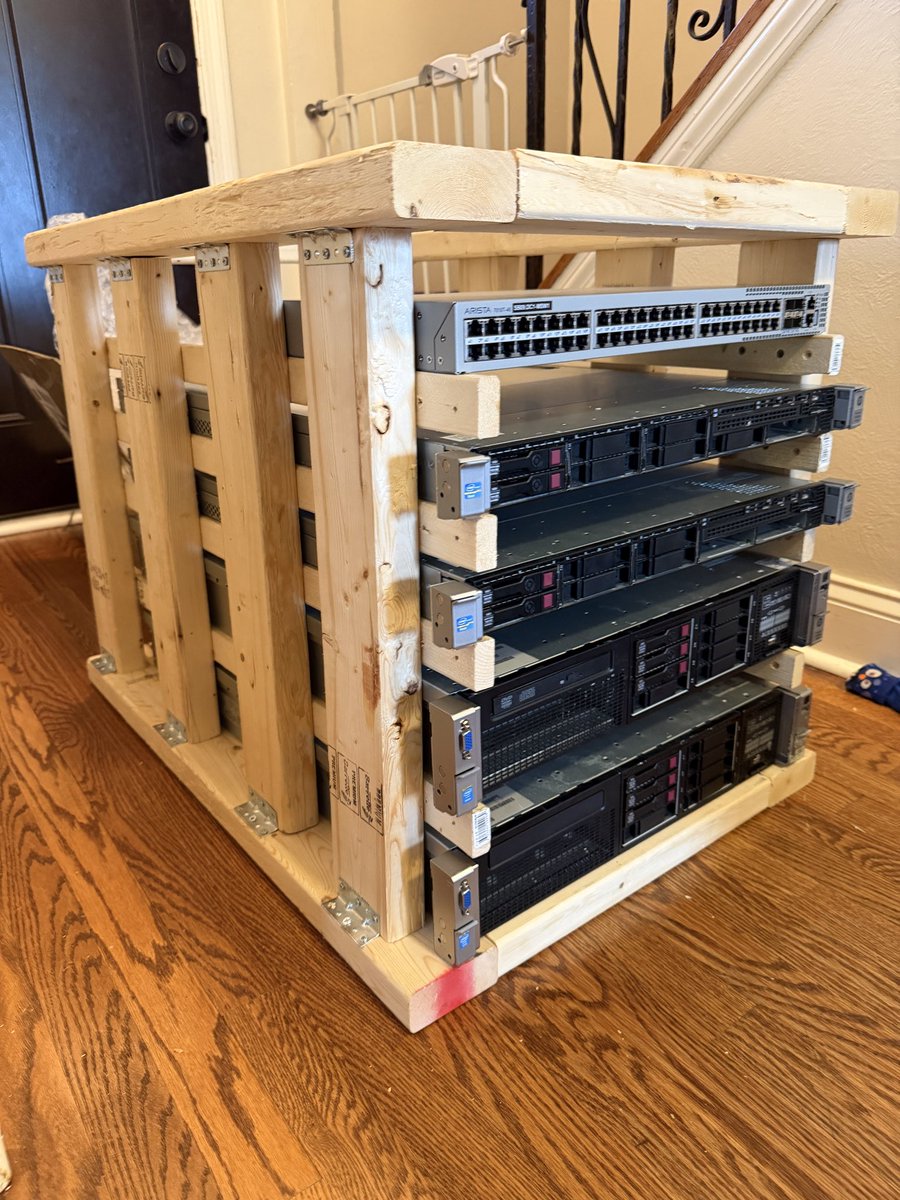
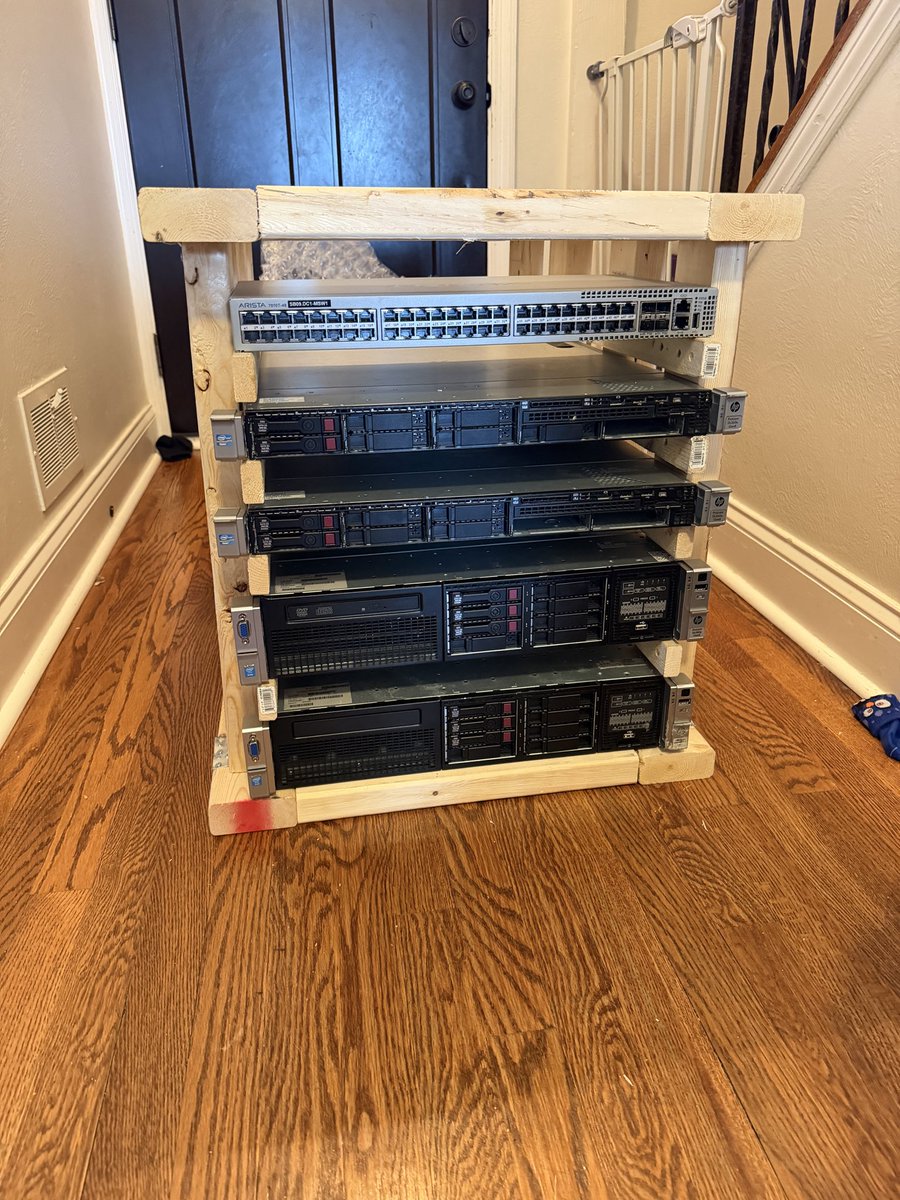
Newest addition to the homelab! Made it extra homelab-y by building a wooden rack instead of buying more rails because they seem wildly expensive.
2x DL380 w 2x e5-2660v2 + 384GB ddr3 ram
2x DL360 w 2x e5-2470v2 +192Gb ddr3 ram.
40 cores, 80 threads, over 1TB ram. I know it’s like 14 years old. I know it’s slower than whatever.
But the whole thing including the lumber cost ~$640 and my first ramp test got to 63 concurrent VMs and today we got to keeping the VM image/snapshot in ram so they load ridiculously fast and I’m so pumped
Seems like you can make RFIC's now... Open Source 433MHz OOK Transceiver! Nice Promise, Lets wait for the real asic! https://t.co/WBMVIvRBqb
#rfic#ook#433mhz#sdr#dsp#cmos#chip#opensource