The Daily Routine of Flannery O’Connor
Miss O’Connor would awaken at 6:00 O’clock every morning. She would begin each day with prayers from her breviary.
After prayer, she would head to the kitchen to share coffee with her mother while they listened to the weather report on the radio. Then, she would head to 7 O,clock morning Mass at Sacred Heart church in Milledgeville, Georgia, which was located about 10 minutes from her family’s farm, Andalusia.
After Mass, O’Connor would return home to write for 3 hours straight from 9-12. She typically averaged three pages a day, but once told a reporter, “I may tear it all to pieces the next day.”
Flannery O’Connor suffered from lupus, and was typically exhausted by the time the afternoon arrived. Because of this, she would spend the afternoon relaxing with visitors, painting, or caring for her flock of birds, particularly her beloved peacocks.
She would head to bed at 9, exhausted and ready for sleep. Each evening, she would pray the night office from her breviary and would read Thomas Aquinas. She once said, “I read a lot of theology because it makes my writing bolder.”
She only lived until the age of 39, but lived a life devoted to Christ, spending her time creating beautiful works of literature.
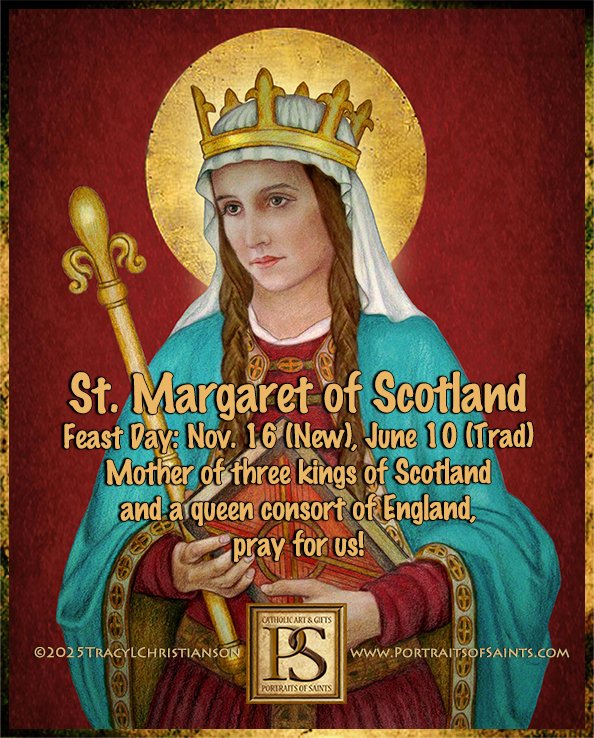
St Margaret of Scotland, pray for us. Her life was constant prayer & practices of piety. The mother of 3 kings of Scotland & a queen consort of England. Patron of Scotland; parents of large families; against the death of children https://t.co/sS905uD5CU
I sent a DM to @CBradleyThomps1, founder of Clemson University’s Lyceum Program (one of the most selective academic programs in America)
My question: Would he recommend sending one of my own children to a small classical high school that doesn’t offer a single College Board Advanced Placement (AP) course?
His response speaks volumes.
———————-
Hi Jeremy: Good to hear from you.
Your son sounds like the kind of young man, who seems destined for Clemson!
In our experience, we have found that AP classes are not particularly rigorous and certainly don't prepare students for the Lyceum Program. In fact, we don't even look at the applicants transcripts and the courses they've taken, and we're not particularly interested in their high school GPA, which we find to be mostly usesless. We also rate the CLT higher than the SAT or ACT.
What's most important for the Lyceum application are the essays, and, more particularly, a good account by the student of the books that have been most influential in their lives. We want students who can think and talk about the most important questions in human life.
We accept a disproportionally high number of students into Lyceum who have received a classical education, either from a charter or private school. In our experience, classically educated homeschool kids are typically our best students.
We've also found that true-blue Great Books schools such as the Chesterton Academies and the Great Hearts schools tend to produce better students and precisely the kind we're looking for. We want our Lyceum students to have read not a good book or two in high school but dozens of great books in the Western tradition. Schools like Chesterton tend to do that better than most.
Bottom line: my advice would be to send your son to the school where he will get the best classical education and not worry about schools with AP courses, which mean nothing to us.
I hope that you and family will be able to come down sometime for a visit.
Please let me know if I can help in any way.
Best,
Brad
The reason Flannery O’Connor is the height of Southern literature, and in a way Southern culture, is that as a Catholic she was able to distill meaning from what it is to be a Southerner, something intrinsically linked to sorrow and suffering.
The reason Catholicism will bring out the best of the South is that Catholicism may be the only thing capable of finding beauty in pain and tragedy better than a Southerner.
"This is a great and terrible world!"
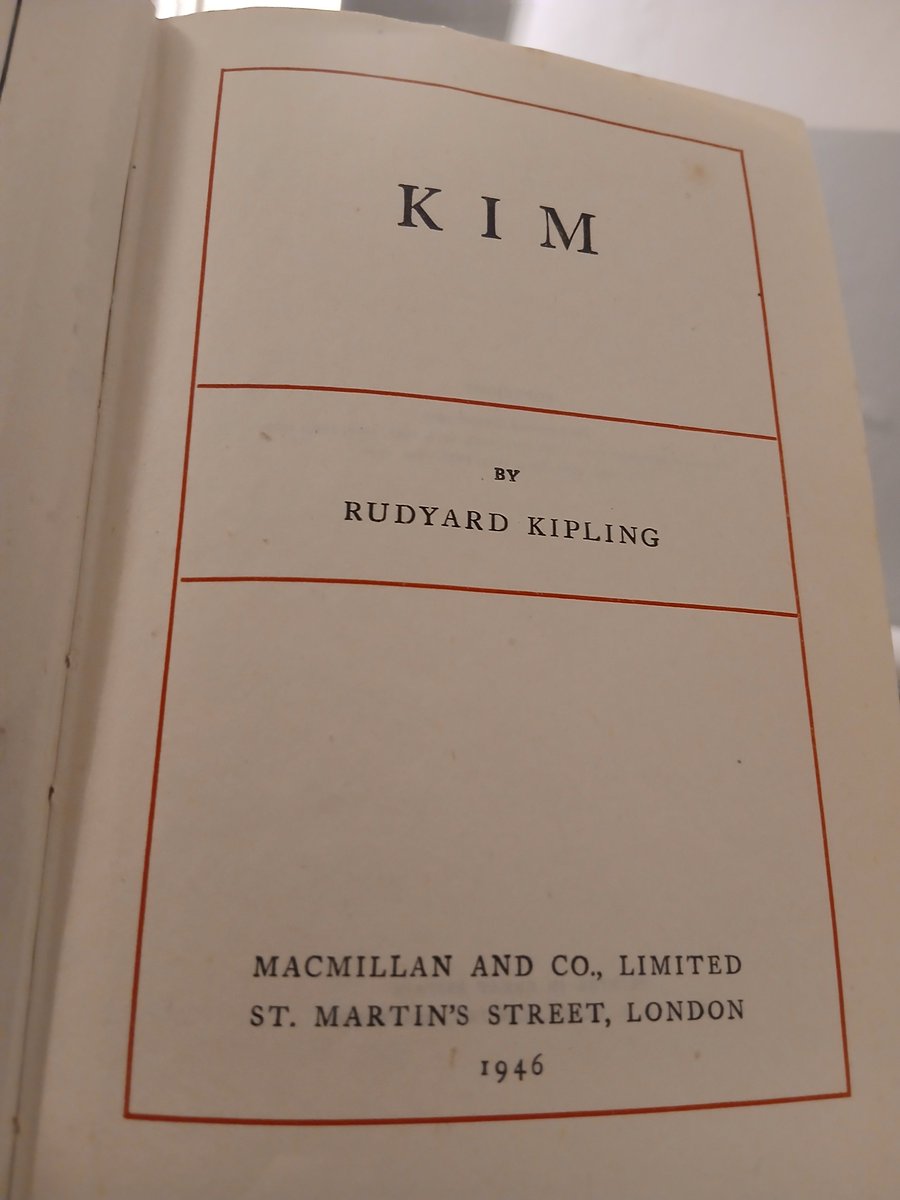
Back reading one of my three or four favorite books ever, KIM by Rudyard Kipling.
Love its colourful dive onto the dusty roads of India, its beautiful humanity and its clever Great Game.
(Not exactly devout though😁)
Love Kipling in general.
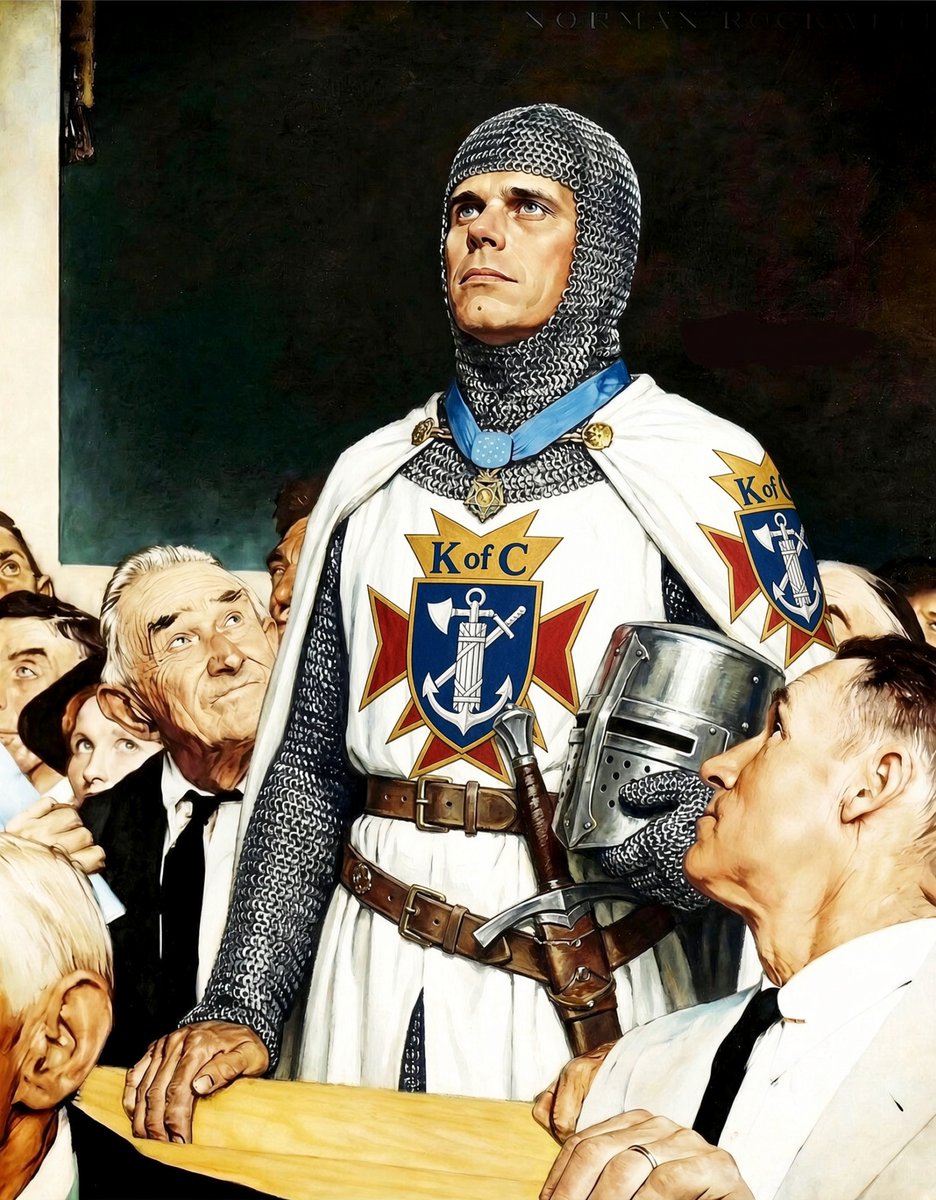
Fr. McGivney founded the Knights in 1882 to support parish families.
Local service is the original mission, not a watered down version of it. It’s fine to have criticisms about the organization at the highest level but you really miss the point if that’s all you see.
Your local KofC council IS your parish and the prime conduit to turn your ideas and ideals into a reality. It’s the clearest example of living the principle of subsidiarity. Doing the little things big under a recognized, respected banner.
Those old guys won’t be there forever and one day you will be asked to take their place to support the parish, run service projects and support neighbors/parishioners in need.
Massive change starts when Men get involved in their own community all throughout the United States. But instead younger men sit down with twitter fingers giving super chats to live streamers, which is pretty gay.
You have to take action to get action.
Dear Brothers and Sisters in Christ,
It is with great joy that I invite you to join me in Semper Virgo, a five-year journey of Marian devotion and spiritual formation in preparation for the 500th anniversary of the apparitions of Our Lady of Guadalupe to Saint Juan Diego, which we will celebrate on December 12, 2031.
For nearly five centuries, Our Lady of Guadalupe has shown her maternal love to all her children, leading them always to her Divine Son, their Lord and Savior. Amid the many trials and uncertainties of our time, we have particular need of her intercession, so that we may remain steadfast in the truths of our Catholic Faith and faithful in love of Christ and His Mystical Body, the Church.
Beginning on this December 12th, the Feast of Our Lady of Guadalupe, we will contemplate together the mystery of the Blessed Virgin Mary, the graces and privileges with which Almighty God adorned her as Mother of God the Son Incarnate, and her maternal mission in His work of our salvation. Through daily contemplations grounded in Sacred Scripture, Sacred Tradition, and the perennial teaching of the Church, we will seek to grow in our knowledge and love of the Mother of God and of her Divine Son, following her example, in the theological virtues of faith, hope, and charity.
It is my fervent prayer that these five years of preparation will be a time of true conversion of heart, of renewed devotion to the Blessed Virgin Mary, and of ever closer union with her Divine Son, so that we may worthily celebrate this jubilee and give thanks to Almighty God for the immeasurable graces which He has bestowed upon countless souls through the intercession of Our Lady of Guadalupe.
I invite you to accompany me on this spiritual pilgrimage by receiving the daily contemplations of Semper Virgo by email. Register at https://t.co/KkuOzSJ9ys.
May the Ever-Perfect Virgin Mary, Our Lady of Guadalupe, Mother of God and Mother of the Church, lead us ever more faithfully to her Divine Son, Our Lord Jesus Christ, Who alone is our salvation.
Raymond Leo Cardinal Burke
Friends, please pray for the entire Kirk family, who learned they'll wait until at least June 2028 for justice, news likely made doubly painful by remarks about Charlie this week that are beneath contempt.
On the “I’ve Had It” podcast, so-called culture commentators Jennifer Welch and Angie Sullivan laughed at the idea of digging up Charlie’s body and “doing it again.”
Then Dave Chappelle told a sold-out Madison Square Garden that “life got better” after Charlie was murdered, and that Charlie is now “looking up, laughing so hard he can’t breathe.”
I have often defended comedians, and I understand that pushing the boundaries of what's acceptable is part of the gig. But this is different.
This is laughing at the murder of a young husband and father of two small children, who was killed with a microphone in his hand, inviting those who disagreed with him into honest, respectful dialogue. Shame on you.
There have always been people in the fever swamps who cheer when someone dies. What is new is that it now comes from the main stage and is met with applause.
How did we get here?
This is what a culture looks like when it drifts away from God. Remove God, and with him any sense of the transcendent and the sacred, our objective sense of what is true and good is left in ruins.
What remains is relativism, “my truth” and “your truth,” and finally a game of power: my team against yours. In a world like that, a man's death can become a punchline.
Charlie understood this cultural disease and spent much of his life trying to heal it. It's why he went onto hostile campuses to sit with young people, many of them unmoored and unaffiliated, and make the case for God, for truth, and for a moral order beyond themselves. He listened patiently, argued charitably, and spoke openly about Jesus Christ.
It is my hope, then, that many more will take up this vital part of Charlie's work.
In a Christian community in India, a wandering elephant encounters an altar dedicated to Jesus Christ and gently reaches out as if wanting to embrace His statue.
Elephants are known for their incredible emotional intelligence and capacity for affection.
#CatholicChurch#priest
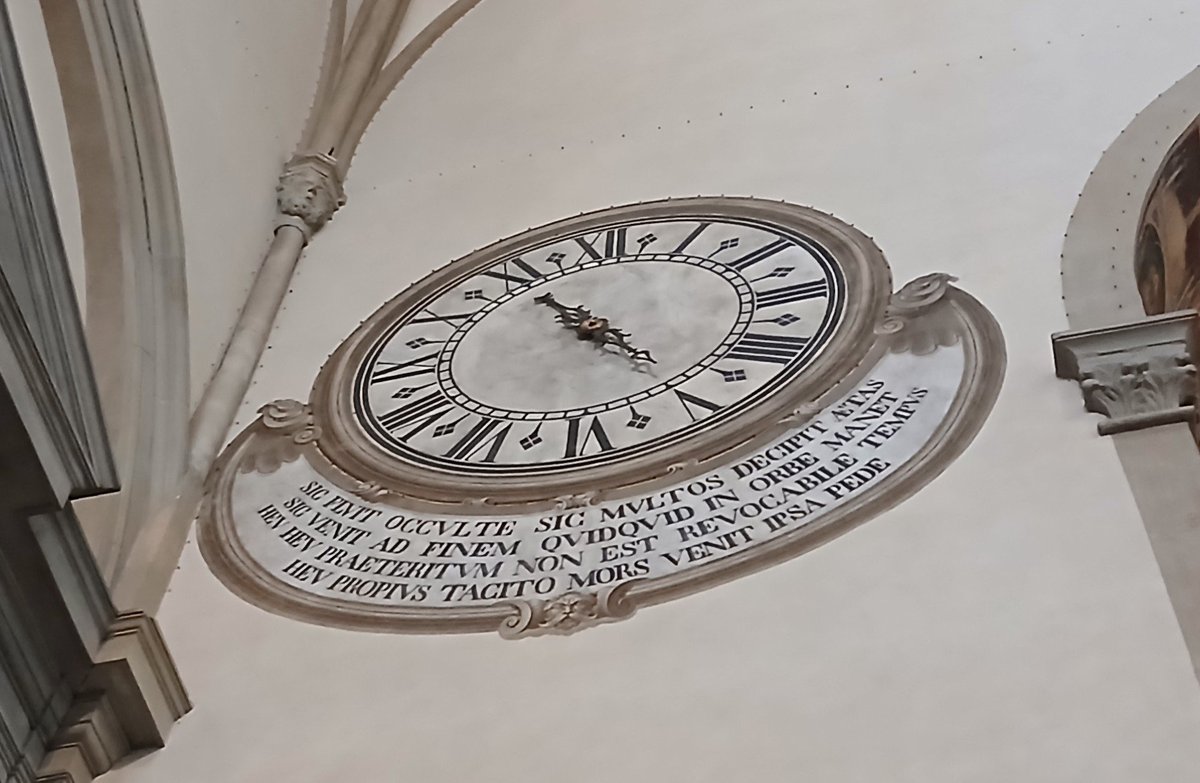
From Santa Maria Novella in Florence, two Memento Mori inscriptions, one with a skeleton and one with a clock.
Skeleton:
"IO FU QUEL CHE VOI SIETE,
E QUEL CHI SON VOI ANCHE SARETE"
"I was, what you are, and what I am, you also will be."
Clock
"Sic fluit occulte, sic multos decipit aetas/
Sic venit ad finem, quidquid in orbe manet.
Heu heu praeteritum non est revocabile tempus/
Heu propius tacito mors venit ipso pede."
something like this:
"Thus secretly flows, and many deceives, Age,
So does come to an end, everything staying in this world.
Woe, woe, passed-by time can never be called back,
woe ever closer creeps Death on silent foot."
While Remembering St. Charles Borromeo
(A) Today is the feast day of St. Charles Borromeo. He was a great Archbishop of Milan, the largest diocese in Italy.
The Council of Trent, which had to resolve many problems, had taken place at that time. The Protestant Reformation contained heresies and denied the sacraments—rejecting the Eucharist and the true priesthood, and the council served as a Counter-Reformation.
However, there were also internal issues within the Church that required a thorough reform. The powers of the nobility had weakened the Church, and the formation of the clergy had been greatly neglected.
The Council lasted 18 years, under the leadership of three popes (Our Second Vatican Council lasted four years under two popes: John XXIII, who began it, and Paul VI, who continued and concluded it). A great deal of work followed the Council of Trent: many diocesan synods in Milan and in many other dioceses, partly under the influence of St Charles Borromeo, truly brought forth the fruits envisioned by the Council of Trent.
(B) Many years after the Second Vatican Council, we must regrettably acknowledge today that it has not been sufficiently fruitful. It has been under constant attack by those who claim to be “continuing” the Council—arguing that its “reform” was not completed—while, on the other hand, there are those who suspect that the Council contains assertions contrary to the Tradition of the Church.
Following the example of St. Charles Borromeo was the Archbishop of Kraków, who later became Pope John Paul II. He worked strenuously with his diocesan community to ensure that the Council’s documents were thoroughly understood and their teachings put into practice. Obviously, this did not happen in all the dioceses of the Church.
Popes Paul VI, John Paul II and Benedict XVI did a great deal to ensure that the Council achieved its desired purpose, and they succeeded to a certain extent.
Many bishops found themselves in difficulty after the Council, because they did not know how to explain to the faithful precisely what the Council had changed in the life of the Church and what it had not changed. The Holy See, under the leadership of Cardinal Ratzinger, following extensive consultations throughout the Church, drew up a “Catechism” containing the entire dogmatic, moral and liturgical doctrine of the Church, set out in a systematic order. However, the sheer volume of the “Catechism” may have put people off, and not many have actually studied it.
(C) Forces opposed to the Council have been troubling the Church throughout these years.
Regrettably, in these recent years we have had the supreme head of our Church who, whilst proclaiming the great validity of the Second Vatican Council, was in fact not faithful to its decrees.
Pope Francis was certainly admirable for his kindness and his special concern for the poor and the weak. However, this kindness and predilection have lacked balance; he seemed to believe that, out of compassion for these people, one can even compromise on the truth.
He believed that the primary danger within the Church is clericalism, and thought that through a general consultation of the People of God he could succeed in having his line of thinking approved. He was certainly a reformist. He destroyed many good things built up by his predecessors.
He did not appreciate the entire struggle in defence of Orthodoxy waged by John Paul II and Pope Benedict XVI.
He abolished the Synod of Bishops which had been established by Paul VI towards the end of the Second Vatican Council as a sort of continuation, miniature version, of the Council, intended to provide the Pope with counsel from the episcopate of the entire Church through their elected representatives.
This Synod has been done away with, and in its place, something else has been created: what might be termed “a democratic consultation of the entire People of God” (See my address to the General Congregation of Cardinals prior to the conclave).
(D) How can the Pope directly consult the entire People of God? Pope Francis said that a shepherd must have a “feel” for the scent of his sheep, but how can a Pope in Rome possess this sense? It is the bishops who can truly sense the scent of their own sheep, and they, in turn, bring this insight to the Pope so that he may see what today’s problems are and how to tackle them.
By emphasizing the etymological meaning of the word “synod,” this Synod on Synodality has overlooked the historical reality of what synods actually are. A synod is, by definition, a matter for the bishops.
The fact is that behind all this lay “hidden agendas”.
After all these years of the synodal process, they have failed to get their “hidden agendas” (in fact, not so “hidden”) fulfilled. There was relentless manipulation and strict control of the process, yet it was a failure. Despite every effort to stifle genuine discussion, the objectives that the Pope evidently entrusted to the Synod Secretariat were not achieved.
Even within the limited time for free speech in the assembly, it was evident: that Synod members rejected those objectives: changing the hierarchical constitution of the Church, ordaining women to the priesthood starting with the diaconate, the free choice of celibacy for the Roman clergy, and the sexual morality radically “updated” (?) under the L.G.B.T.Q. banner.
As this attempt failed, the Pope then removed these “controversial” topics from the Synod and handed them over to “study groups”, the formation criteria of which were unknown. And these groups were expected to report their conclusions directly to the Pope.
(E) That the cause of homosexuals had been one of the “hidden agendas” was highlighted by the publication of the document “Fiducia Supplicans”, which approved the blessing of same-sex couples (issued between two sessions of the ongoing Synod, without consulting the Synod participants).
The document threatened to cause a terrible breaking up of the Church; Pope Francis and the Cardinal had to appease the public outcry with an attitude of “condescending understanding”, yet without any genuine retraction.
That the cause of homosexuals is particularly close to Pope Francis’ heart is evident in his special favor toward Father James Martin, S.J., of “Outreach,” as well as his famous quote: “Who am I to judge?”
And recently, something has happened which made us realize, to our horror, that the whole lengthy discourse on the synodal process is intended to provide a tool for justifying anything.
At the end of Section D, we mentioned “study groups”. Now, the final report of Group 9 has been published, in which assuming (arbitrarily) that the synodal method is sacrosanct when it comes to the study of homosexuality, they reached the conclusion that the sexual act between a homosexual couple is a gift from God!? Is this not blasphemy? It is incredible that such a thing could appear in a publication issued by the Holy See!
Confusion has reigned for years, but now it has reached the bottom.
The groups are supposed to submit the results of their study to the Pope; now the Pope is Pope Leo, did he see the report before its publication? And did he give his consent?
Everything that happens in the Church falls under the jurisdiction of the reigning Pope (he could even cut short an ongoing Ecumenical Council. There is a saying: “no Pope rules from the grave”.)
[By the way, during the Jubilee Year, there was that “triumphal entry” into St Peter’s, which was obviously a “Pride Parade”– a true desecration of the Basilica – and yet no protest from the Holy See!?]
(F) It is said that the doctrine of the faith does not consist solely of sexual morality. This is true; the most important thing is the love of God. Yet, no one rejects God for no reason; rather, it is always because one is drawn towards some other values—one ends up worshipping another (false) divinity.
St Paul, in his Letter to the Romans, says that the most obvious sign of the rejection of God is precisely this sin of homosexuality.
The enemies of God, the three enemies of our salvation are: our passions, the world and the devil. But where does the destruction of God in souls begin? Precisely with this deviation from sexual morality! For concupiscence lies within our flesh, and when indulged, it becomes an addiction, causing us to lose the power of the will. That is why even the devil says that the most important thing is to destroy the family.
Moreover, it is not true that we insist solely on sexual morality; the question of the Church’s hierarchical structure is far more fundamental today. Jesus founded the Church upon the apostles, with Peter as their head. Now the Church must be guided by the bishops, with the Pope at their head. But the entire course of the recent synod on synodality ignores the importance of the bishops; it is no longer a true synod. By emphasising the etymological meaning of the word “synodality” as “traveling together” or “participation”, the significance of the historical reality of synods has been sidelined: synods and councils of bishops within the Church, and the synod presided over by the bishop within the diocese.
With the conclusion of the second session of the Synod, a final document was approved, which Pope Francis has incorporated into his own magisterium. He stated that it is not strictly normative; rather, each episcopal conference is to implement it experimentally, in the manner deemed most appropriate for its own local culture. But in this way, we will end up resembling the Anglicans (no offense intended toward the Anglicans, but we are different).
(G) The world is in a state of great confusion.
I was not present at the recent Consistory in June, but I noted from the press that during the discussion on the question “In what kind of world are we to carry out our mission today?”, many cardinals remarked that the fundamental problem is the loss of meaning, which is why an ever-increasing number of young people are taking their own lives.
We possess the solid doctrine that gives meaning to life, for we know that God created us for eternal life. This truth resides within the Catholic Church, but only if the Catholic Church remains faithful to the entirety of the doctrine handed down from the Apostles.
If we now seek to accommodate the world, we betray our own mission.
So let us put a stop to this so-called “Synod on Synodality”!
May the Holy Father grant Cardinal Grech and Cardinal Hollerich a long vacation; he cannot entrust the governance of the Church to the Secretariat for the Synods; on the other hand, closer communion between the bishops and the Pope, between the cardinals and the Pope, is most welcome.
People are longing for something solid. Sadly, the world is dominated by modern atheistic philosophy and nihilism, and an attitude of relativism is now permeating the Church. Let us strive to testify to the intact treasure of our faith, so as to offer hope to all of humanity.
The Holy Father should also replace the head of the Dicastery for the Doctrine of the Faith.
It is well known that this cardinal has written things in the past that he would not write today.
But most disconcerting of all is the letter Pope Francis wrote to him upon his appointment as head of the Dicastery; in that letter, the Pope assigned him a task quite different from the one traditionally entrusted to that office—no longer the defense of doctrine, but rather to encourage the theologians.
I am old, but I believe my mind is still clear. I thank those who have formed me with the doctrine of the Church, which is a great gift that the Lord has bestowed upon so many of us. Let those who are keenly aware of the urgent need for the Church to return to the unity of the true faith, raise their voices to encourage and support the Holy Father as he undertakes this arduous task.
Of course, we must pray intensely for the Holy Father; only Almighty God can grant him the steadfastness and prudence he needs.
“May the Lord preserve him,
and give him life,
and make him blessed upon the earth.”
Translated 6/11/2026 #synodality #synodofbishops #PopeFrancis #Jesuits #Grech #Hollerich #DicasteryfortheDoctrineoftheFaith #Jamesmartin https://t.co/g9ABYTvwzn
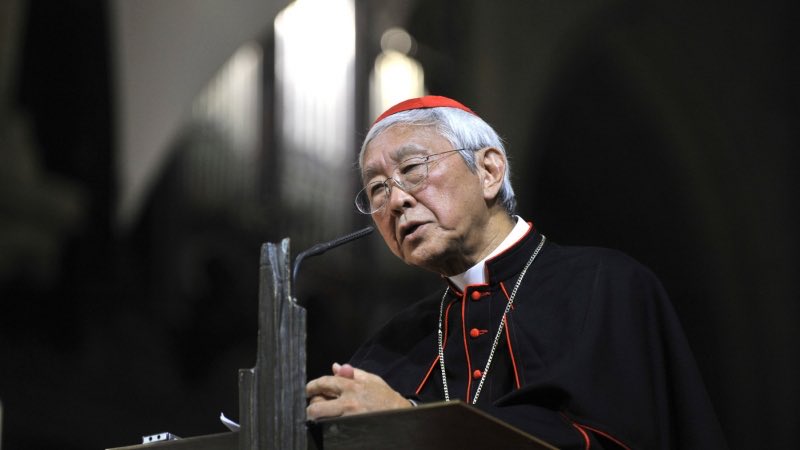
JUST IN: Cardinal Zen calls for Pope Leo to remove Cardinal Grech, Cardinal Hollerich & Cardinal Fernández from their roles
He also urges Pope Leo to put an end to the Synod in Synodality & its follow up stages
“If we now seek to accommodate the world, we betray our own mission,” he says re the Synod
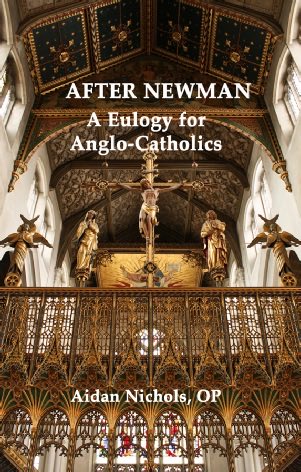
This marvellous book by my favourite living theologian is a history of Anglo-Catholicism from Newman’s conversion to the great wreck of the 60s. Given that I owe my retaining the Catholic Faith partly to the Anglo-Catholics I encounter, I am fascinated by what is essentially a prehistory of the Ordinariates (to one of which I belong), and thus is now the property of the entire Catholic Church.
Feeling frustrated and helpless?
Have kids. That is what we need more of. Populate the country with sane people. You CAN do it. People did it in the year 1000 when they had none of our comforts. Do it.