😱 I used to do this manually in Google spreadsheets (not all) , but after read in the paper each column had some data , the rows content of the paper and the next column my comments , I still have them as reference but this is way better
1️⃣ Literature Insights
Built with @NotebookLM, it searches scientific papers, organises everything into custom tables, and lets researchers chat with curated data to create slide decks, audio overviews, and more in minutes.
@eladgil BS.
Attention was born in Montréal
PyTorch in NYC.
AlphaGo in London
AlphaFold in London
ESMFold in NYC
Llama 1 in Paris.
Llama 2 in Paris+NYC+SV
DeepSeek in Hangzhou
Plus:
DINO in Paris
JEPA in Montréal+Paris+NYC
SV is 3 mos ahead on topics SV is singularly obsessed with.
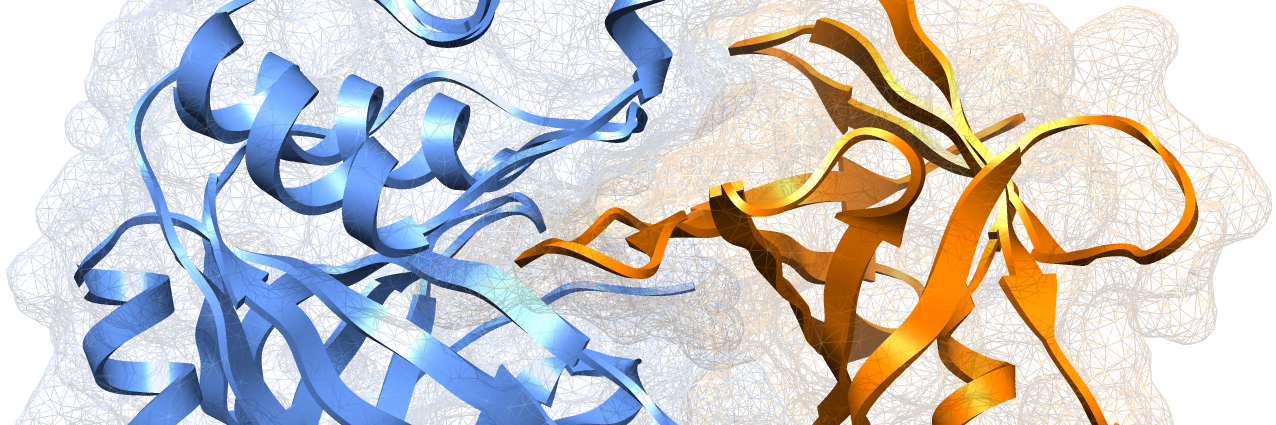
We introduce ConforNets, a mechanism for conformational control in AlphaFold3 models
- SoTA at producing diverse conformations on every multistate benchmark (N=104)
- Novel capability: transfer state from one protein to another
Outperforms BioEmu, ConforMix and AFsample3
🧵1/8
Does AlphaFold’s latent space encode only the native state or something like a distribution over conformations? We begin to answer this question with ConforNets, a mechanism for producing diverse states, or very specific ones, via inference-time adaption of OF3p’s latent space👇
Big news! Starting my lab as Ramón y Cajal PI at @IBVF_Sevilla in Seville 🌞, Spain, bridging microbial ecology, photosynthesis & plant biotech: from metagenomic and AI analyses 💻 to experiments in microbes & plants 🌊🧬🌱 Looking for PhD students & postdocs. DM or share!
Even with the 10X boost of the #LLMs and #Ai I still feel I’m behind my projects
I still have to read, write and proof-read papers
I still read documentation, with the intention of guiding better the several #GPT I use
Requests just keep coming 🫠
@leonpalafox También los novios conocen , el lugar, a su familia y amigos , si lo hacen así es por algo . Por el otro lado nadie esta forzando al invitado a ir
Julieta Fierro fue ciencia, divulgación y ruptura de barreras. Astrónoma, educadora y referente que acercó el cosmos a millones ✨
Hoy la recordamos como Personaje del Año 2025. Lee su historia completa y su legado https://t.co/sImFuBWbxq
This paper from Harvard and MIT quietly answers the most important AI question nobody benchmarks properly:
Can LLMs actually discover science, or are they just good at talking about it?
The paper is called “Evaluating Large Language Models in Scientific Discovery”, and instead of asking models trivia questions, it tests something much harder:
Can models form hypotheses, design experiments, interpret results, and update beliefs like real scientists?
Here’s what the authors did differently 👇
• They evaluate LLMs across the full discovery loop hypothesis → experiment → observation → revision
• Tasks span biology, chemistry, and physics, not toy puzzles
• Models must work with incomplete data, noisy results, and false leads
• Success is measured by scientific progress, not fluency or confidence
What they found is sobering.
LLMs are decent at suggesting hypotheses, but brittle at everything that follows.
✓ They overfit to surface patterns
✓ They struggle to abandon bad hypotheses even when evidence contradicts them
✓ They confuse correlation for causation
✓ They hallucinate explanations when experiments fail
✓ They optimize for plausibility, not truth
Most striking result:
`High benchmark scores do not correlate with scientific discovery ability.`
Some top models that dominate standard reasoning tests completely fail when forced to run iterative experiments and update theories.
Why this matters:
Real science is not one-shot reasoning.
It’s feedback, failure, revision, and restraint.
LLMs today:
• Talk like scientists
• Write like scientists
• But don’t think like scientists yet
The paper’s core takeaway:
Scientific intelligence is not language intelligence.
It requires memory, hypothesis tracking, causal reasoning, and the ability to say “I was wrong.”
Until models can reliably do that, claims about “AI scientists” are mostly premature.
This paper doesn’t hype AI. It defines the gap we still need to close.
And that’s exactly why it’s important.
What a crazy year, it started with me being just an HPC data scientist and now I have to be an expert in data stewardship , data lakes, data warehouses, and the combination. #DataScience
Excited to share ForamSlice an AI-assisted paleontology tool from KAUST Visualization Lab, built with Abdelghafour HALIMI, Ph.D and Ronell Sicat.
It uses Micro-CT + #DeepLearning to classify foraminifera via an interactive dashboard.
👉 https://t.co/sw8JoWa2FD #AI
#compchem#machinelearning#quantumcomputing
We have several open positions and we are looking for:
- 2 postdocs in machine learning to work on foundation models (theoretical developments)
- 1 HPC engineer to work on quantum computing
- 1 HPC engineer in the framework of ab initio computations and QM/MM
Reach to me for more details. Please RT.