Owner of DX Central - A site devoted to AM/FM DX. Extra Class amateur. NWS trained weather spotter. Politics-free zone. Member: IRCA/NRC/CPC/WTFDA/ARRL
https://t.co/8NSSk4n8yg
/ T_H_E_R_E / I S A S P A C E / _ / B_E_T_W_E_E_N / T H E N O I S E_ A P_L A C E /// W_H E R E _S I G N A L S / F I N A L L Y \ S E T T L E * [ D E C O D E _ E R R ] + / W E / A R E / R E T U R N I N G / F R O M / T H E _ E_T_H_E_R / D X _ C E N T R A L _ L I V E / R_E_T_U_R_N_S / _ S E A S O N / 7 / / S_E_P_T_E_M_B_E_R _/_11_/ _2_0_2_6_ / D_X_C_E_N_T_R_A_L_L_I_V_E . C O M /_
Have been playing with this for a bit here on the MW band and it is outstanding.
SDR# already has the best-in-class noise reduction but this newest option actually “learns” the noise and gives you a dynamic noise reduction.
The audio quality is even better than what we have had with legacy NR in SDR#.
Will post clips later but all I can say is wow!
@lambdaprog@airspy_com
Check the new Hybrid Intelligence Noise Reduction plugin in SDR#. It's based on the legendary SDR#'s NINR with a low-complexity neural network, targeted for SSB, NFM and AM up to 3.2 kHz speech*.
Check the beta: https://t.co/UdjulFAqqg
*Works best with the Airspy HF+ Discovery.
In the last 48 hours, two prominent SDR programs have made significant improvements to their feature sets.
On Monday we saw v13 beta of Jaguar (specifically MW DX with the Perseus) drop that now includes a phenomenal co-channel “reviver”. Select a carrier offset and null it out. The bigger the signal, the deeper the null. Works very well.
Today, we got a new test version of WavViewDX that also includes a co-channel “eliminator”. It automatically picks the strongest signal on a frequency. You can even “stack” this with the diversity/phasing mode on dual channel SDRs like the RSPduo.
@airspy_com ‘s SDR# has been making significant strides in absolute best-in-class noise reduction and has its own very robust co-channel canceller.
Will be talking about all of this on our livestream Friday night.
What a time to be alive as a DXer.
The Beep That Keyed the Transmitters
The short tone that cuts the recordings of Apollo voice loops is not a courtesy beep and not a signal that the speaker has finished.
It is a pair of pure sine waves generated in Houston and sent down the same voice circuit that carried the CapCom’s words.
One tone, 2,525 Hz for 250 milliseconds, told the remote ground station to key its high-power transmitter.
The second, 2,475 Hz for the same duration, told the station to release the key. Both tones rode inside the voice band so NASA did not have to lease a second long-haul circuit simply to switch the transmitters on and off.
CapCom sat in Houston and used a push-to-talk switch exactly as a pilot or a radio operator would. The switch did not connect directly to a transmitter. The active station might be in Australia, Spain, or California, chosen by the rotation of the Earth and the position of the spacecraft.
When CapCom pressed the button, the tone generator in the Mission Control voice system inserted the higher-frequency burst. Detectors at the distant station recognized the tone, closed a relay, and placed the uplink audio on the S-band transmitter aimed at the spacecraft.
When CapCom released the button, the lower-frequency burst arrived and the relay opened. The astronauts’ own transmissions needed no such tones; their microphones keyed local transmitters inside the spacecraft or on the lunar surface.
The equipment that generated and detected the tones was built by Quindar Electronics. The name stuck. The same arrangement had already been used on Gemini and remained in service on early Shuttle UHF voice circuits.
Full-duplex operation meant both ends could transmit at once on separate frequencies, so the tones did not mark the end of a transmission in the way a repeater’s courtesy tone does.
They simply marked the state of CapCom’s switch. Notch filters at the uplink sites removed most of the tones from the audio that reached the spacecraft, which is why the crews rarely heard them even though the tones are prominent on the ground recordings that were later released.
Frank Borman once noted that the intro tone could clip the first syllable if CapCom began speaking before the remote relay had closed. The fix was procedural: wait a fraction of a second after keying.
The system was never elegant. It was the cheapest reliable way to control transmitters scattered across the globe when every additional leased line carried a real cost.
The two beeps therefore did exactly the work a local microphone switch would have done had the transmitter been in the same building.
DX Central Live! returns for Season 7 tonight! Pre-show festivities kick off at 2304 UTC/1805 CT. Live in Stufio A at 2345 UTC/1845 CT!
Tune in at https://t.co/OdeWMl78tO
A whole new era for our challenges complete with a new custom challenge app, your shoutouts and lots of live DX!
#amdx #mwdx #dx #fmdx #wxdx
Doing a full, on-time rehearsal run through for next week’s DX Central Live! season premiere. Running this as if the premiere was this week, hitting all the timing cues, hitting all the usual markers for TOH, etc, doing live DX……the whole thing.
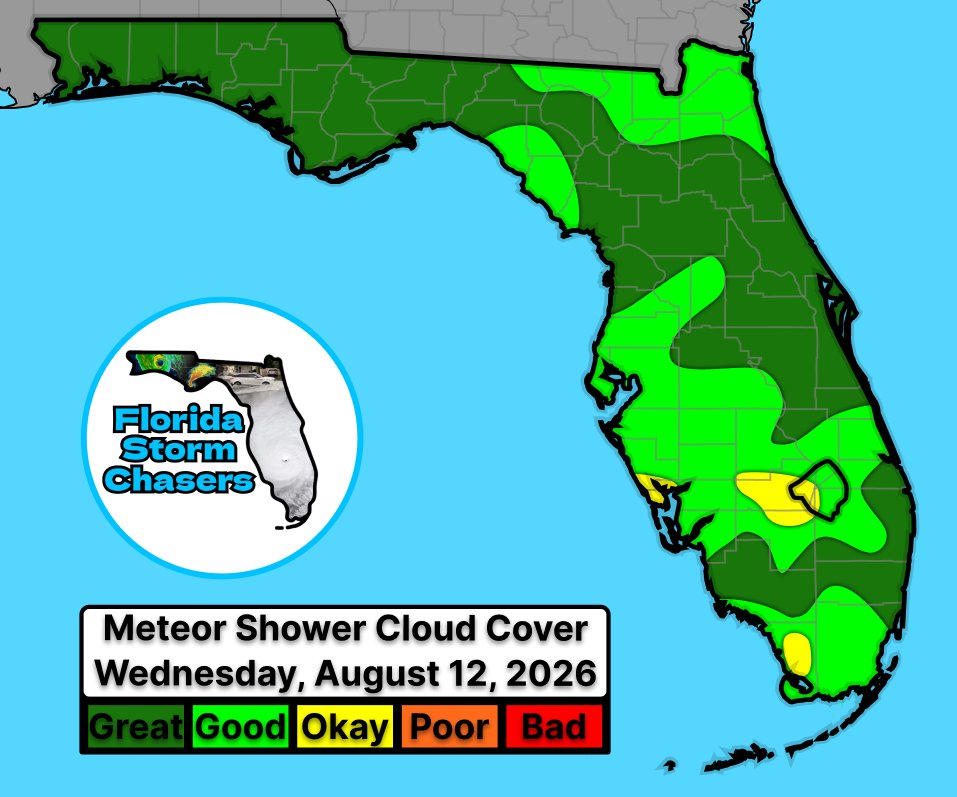
🌠100 METEORS PER HOUR?🌠
UPDATE: Cloud cover is looking great for much of the state on Wednesday night, so be sure to take advantage of it to see the Perseids Meteor Shower! Under perfect conditions, you could see up to 100 meteors in an hour! Start making your plans now!
#flwx
I received KEC83 Baltimore, MD on 162.400 MHz due to tropo conditions during the overnight hours. It was recorded on Wednesday, August 5, 2026. #Radio#WXDX#DXing#Weather
https://t.co/4oZtq9DB91
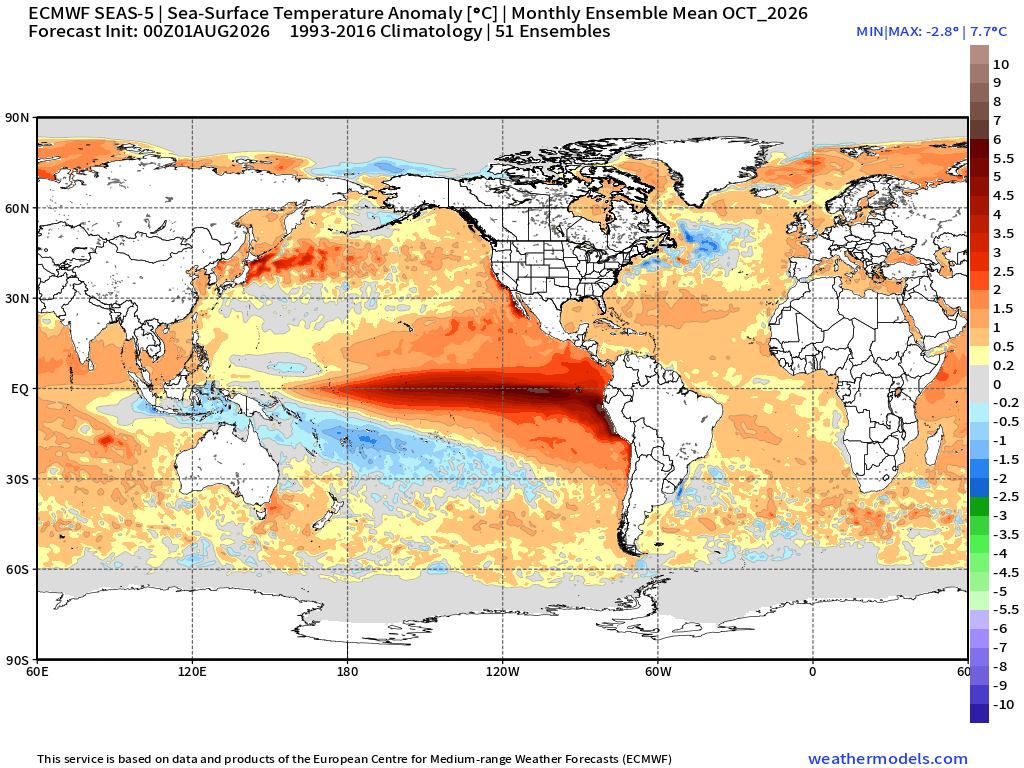
Update: This "Super El Niño" will be perhaps the strongest in 500 to 1000 years, and could legitimately be the most extreme global weather or climate event experienced by humanity since the invention of the printing press. Only more extreme situation is a volcanic winter.
New episode of the podcast is up, with our look back at the Sporadic Es data from July for #fmdx. Spoiler alert: it was a decent month of activity. https://t.co/cle94OTh05
@DXTVFM@w2njl@AllanWeather
@w2njl I can’t wait to hear you and Bryce break this one down on the podcast. I have been trying to put the season into context on mine this summer but I have no idea what to say when I get to next month’s look back at July. The numbers don’t even seem real when I look at them