Avian Ecologist - PA Natural Heritage Program at Western PA Conservancy | RTE, SGCN bird conservation | habitat relationships | avian movement| GIS analysis
@DLNarango Sorry, just saw this now...3.5 months later! We have an EVGR Working Group. Message me if you'd like to get involved! More about project here (focus is continent-wide, but I'm in PA): https://t.co/B4UBYuhAqz
@ptarmiganthony @albatross_888 @aplori_org @_BTO @ptarmiganthony I'd be interested in chatting with you about your use of Lotek Sunbirds. I have deployed 45 Sunbirds on Evening Grosbeaks in North America since Mar 2022, with mixed results. Getting some amazing data, but tags have issues with consistency and longevity.
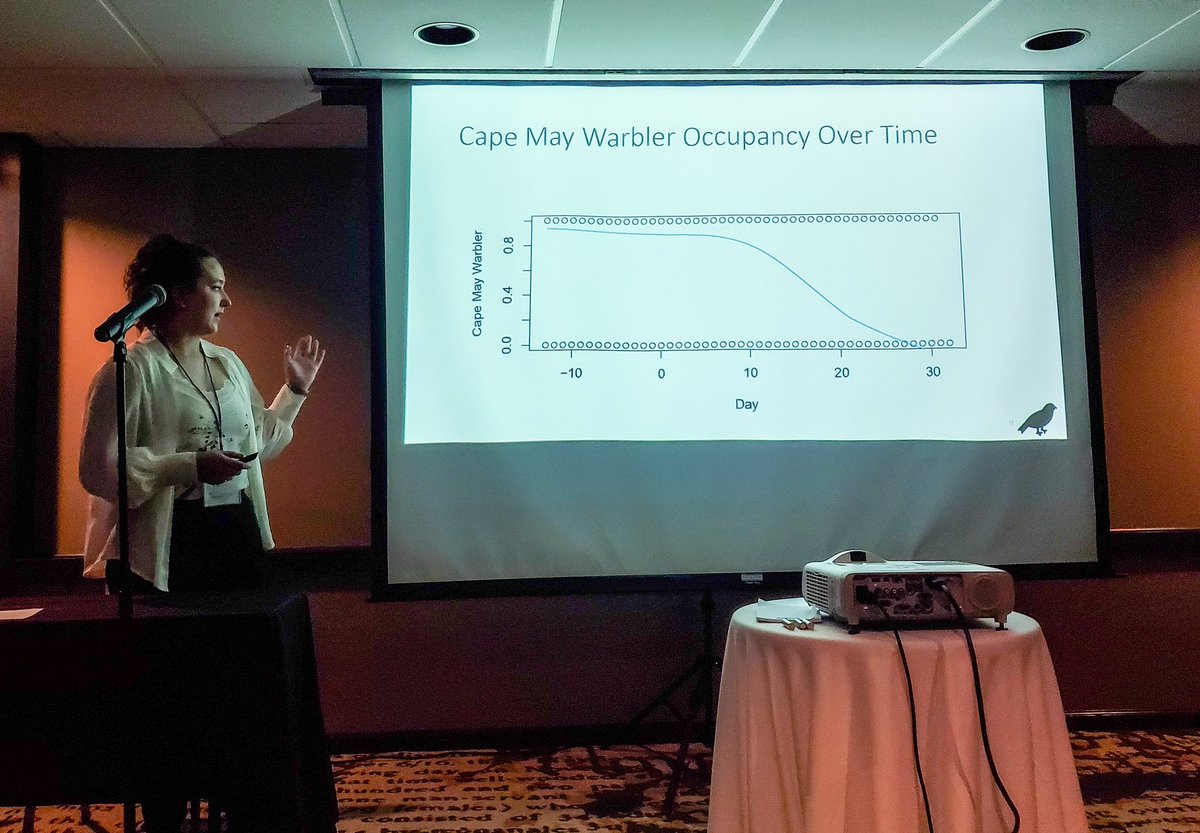
@MariaMacIvor shared results showing decline in occupancy for CMWA, BBWA, and TEWA at 10days post biological insecticide treatment for SBW in New Brunswick forests - what other bird species could be effected? EVGR? #AFO100@FieldOrnith
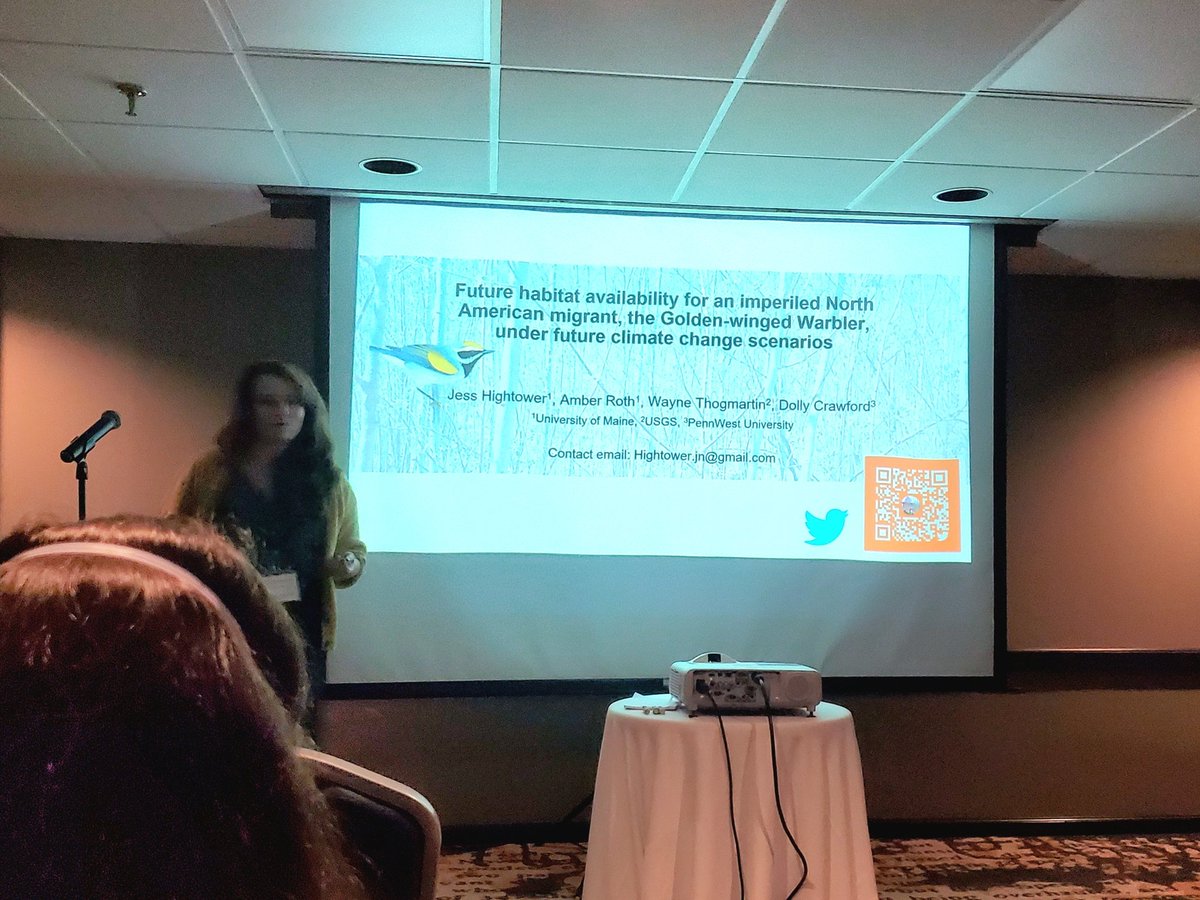
@HightowerJn shows at #AFO100 that ensemble climate models predict Golden-winged Warbler habitat availability shifts from US deciduous forest to Canadian conifer forest - but how quickly will trees respond?
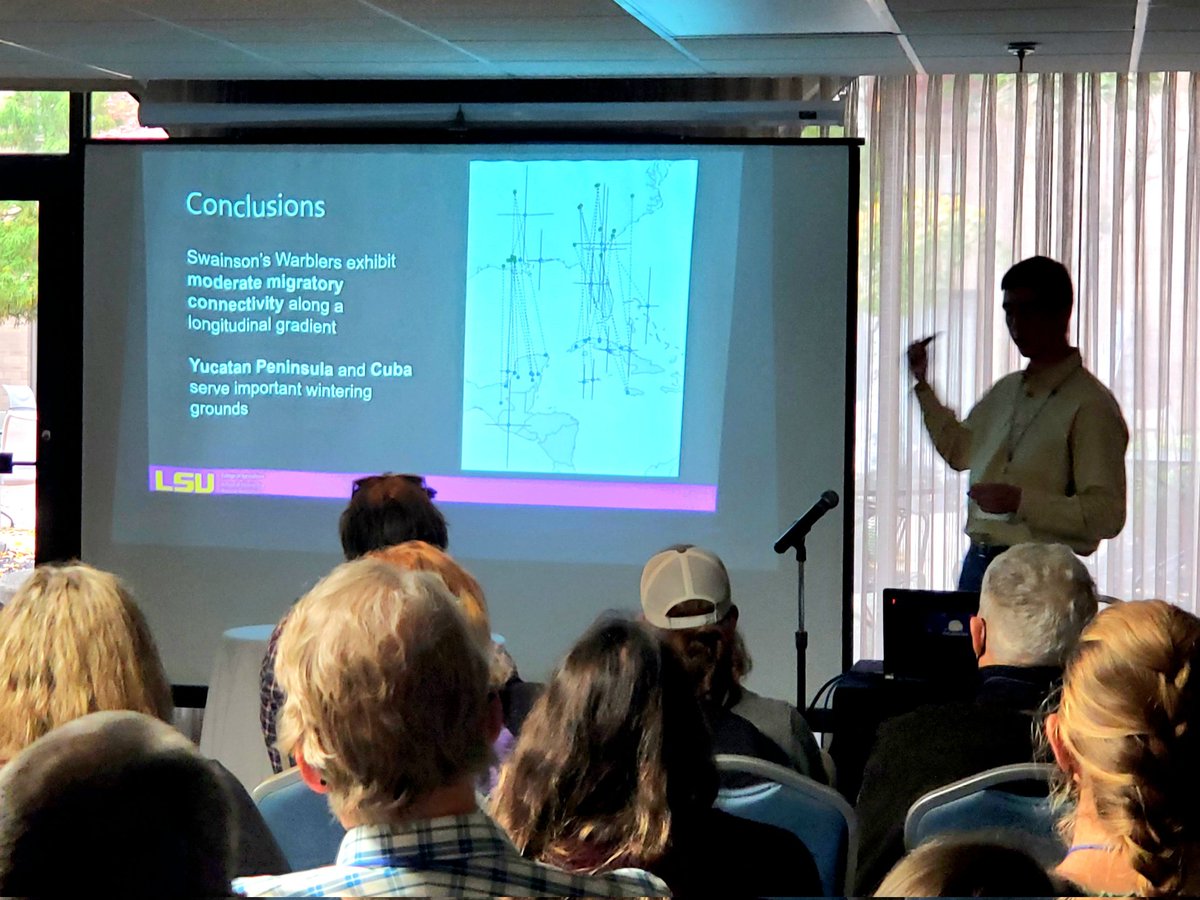
@garrett_s_rhyne uses NEW atmospheric pressure geoloactors to reveal Swainson's warbler migratory connectivity along a longitudinal gradient at #AFO100. @FieldOrnith
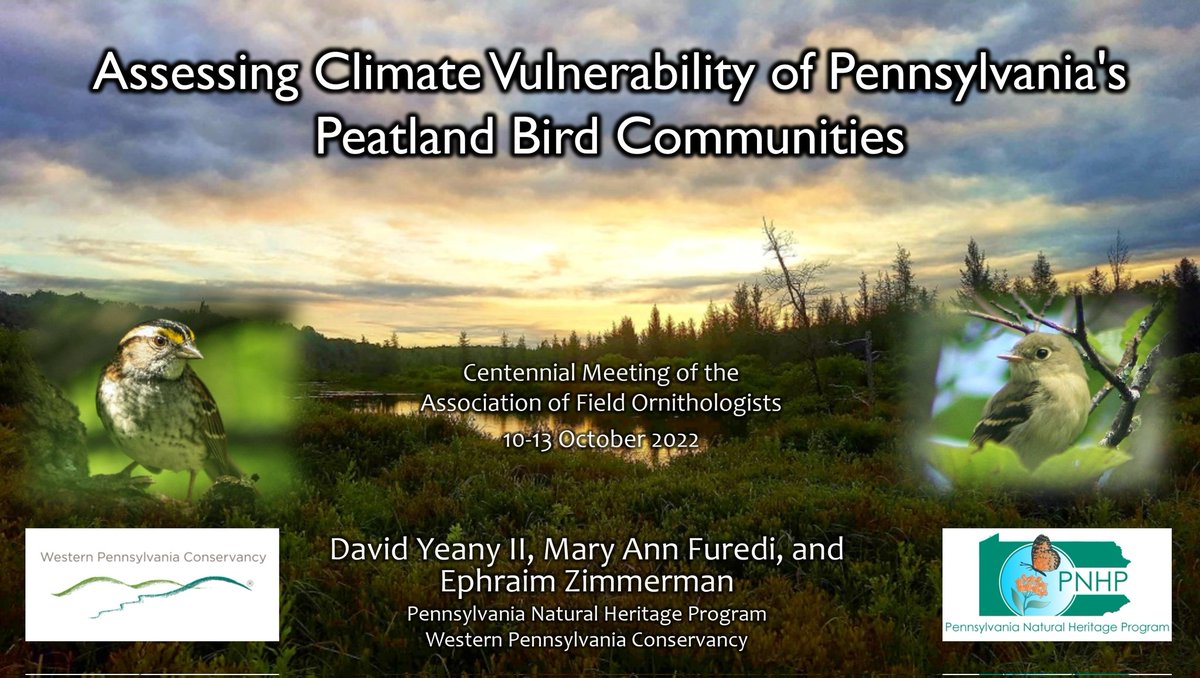
Thanks to all you ornithologists that stuck around for my #AFO100 talk at the end of the last day to learn about the PA Natural Heritage Program's work on "Assessing climate vulnerability of Pennsylvania peatland bird communities."
@FieldOrnith@WaterLandLife
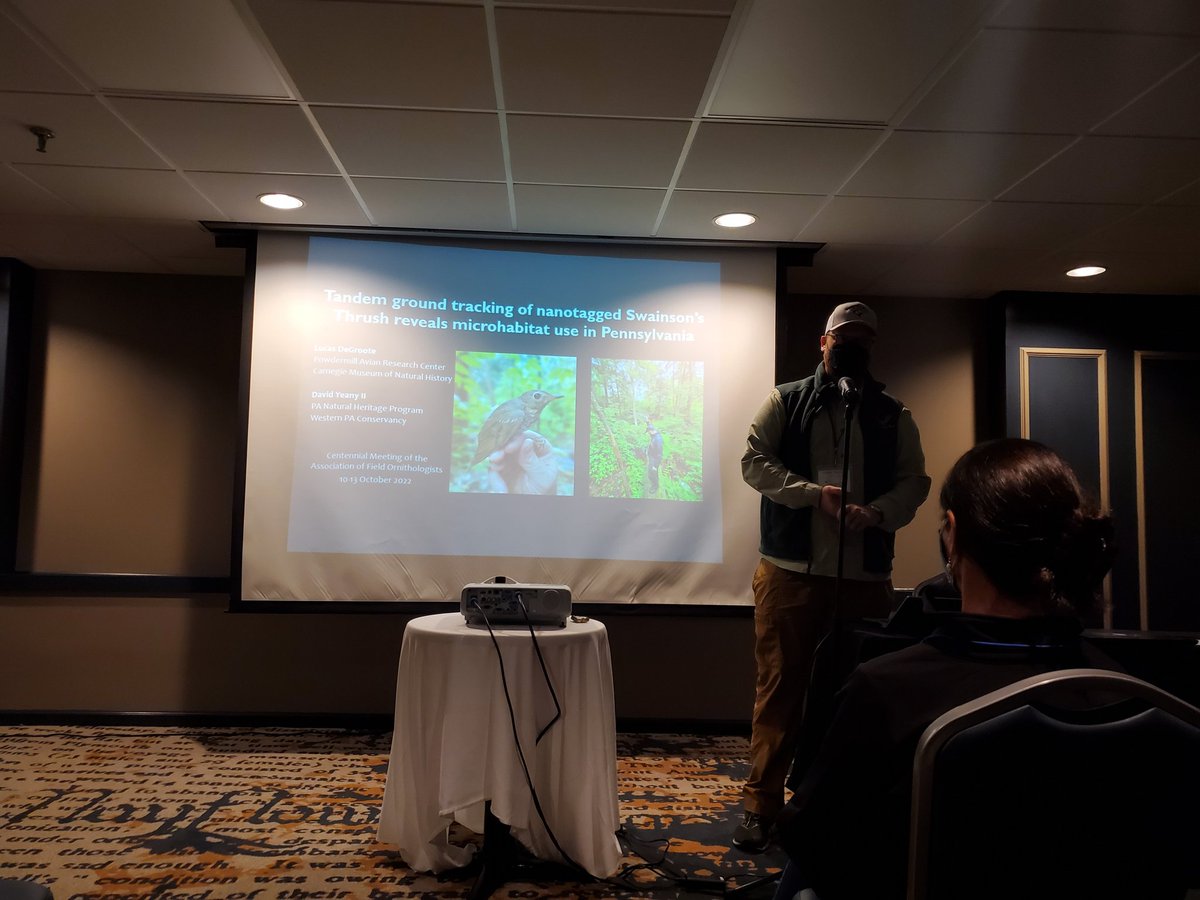
@LukeDeGroote presented our Swainson's Thrush tracking study at #AFO100 - "Tandem ground tracking of nanotagged Swainson’s thrushes reveals microhabitat use in Pennsylvania" #motus@WaterLandLife@Powdermill_CMNH@FieldOrnith
Chestnut-sided Warbler - One of the most abundant species in shrub-dominated habitats in higher elevations and northern PA. This was one of many observed during surveys in pitch pine-scrub oak woodlands and dry… https://t.co/xE4OOQfPDJ
Golden-winged Warbler - Continues to decline (6.8% per year, BBS) and is an "Imperiled" breeding species in PA, tracked by the PA Natural Heritage Program. They nest in a variety of higher elevation (>900ft) "young… https://t.co/QjXyusPfMH