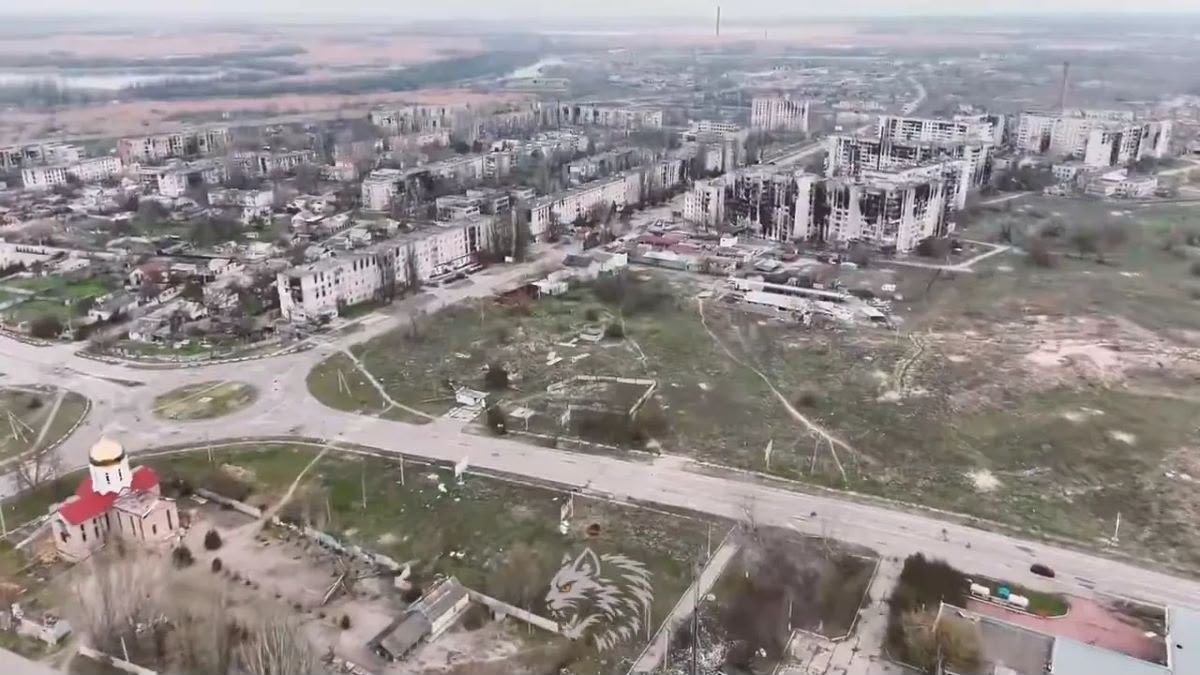
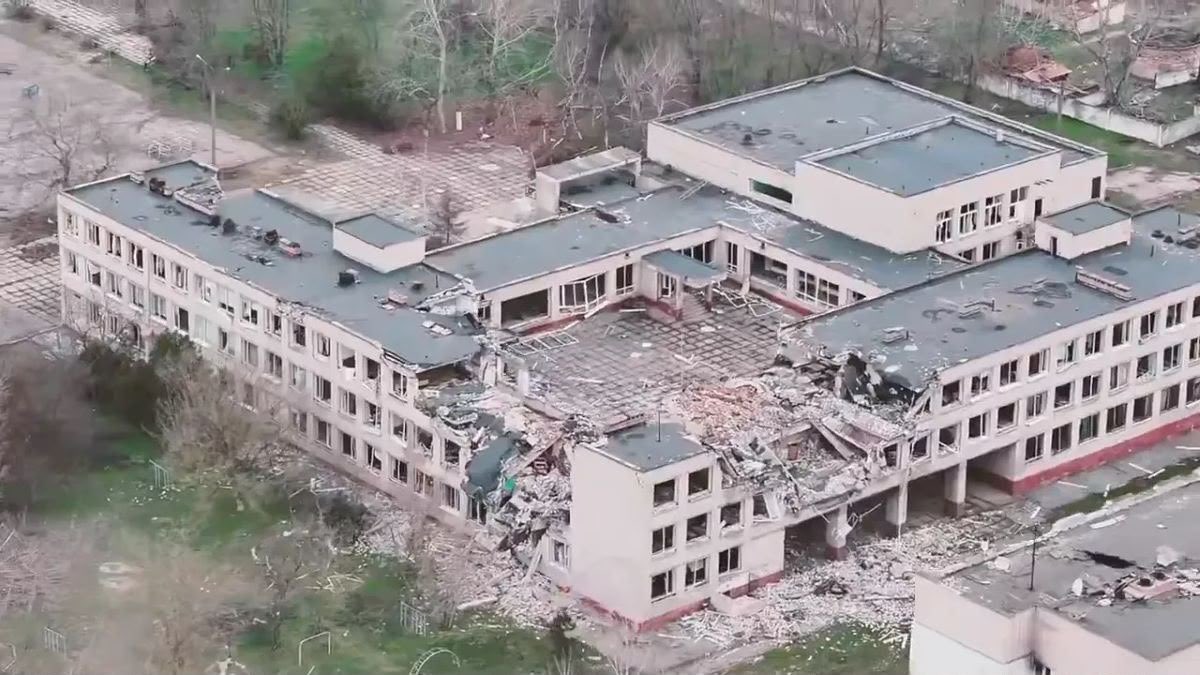
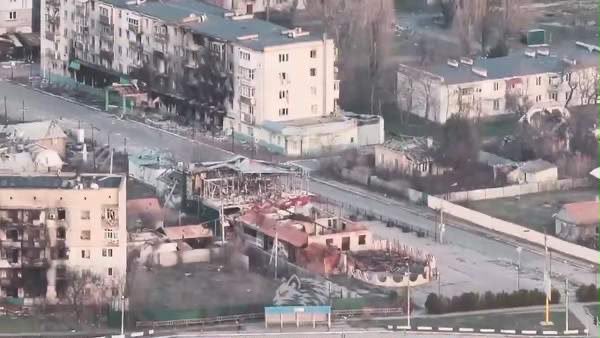
Russia is deliberately creating a humanitarian catastrophe in the occupied part of the Kherson region. It is blocking access to food and medicine, obstructing humanitarian access and the evacuation of civilians, while Russian FPV drones hunt people in the streets.
The situation in Oleshky is particularly dire. Of a pre-war population of around 24,000, only about 2,000 people remain, including around 50 children. There is no electricity or gas. Food, medicine, and other essentials have been blocked for the past month. Horrifying reports indicate that people are searching for scraps of food and gathering grass to survive.
Ukraine is seeking an organised evacuation, the @ICRC has confirmed its readiness to participate, and international humanitarian organisations stand ready to deliver life-saving assistance. The only obstacle is Russia.
Russia is deliberately preventing these efforts from reaching people who desperately need them, turning humanitarian access itself into an instrument of pressure.
In New York during UNGA High-Level Week, we will work to mobilise international pressure to secure humanitarian access, a humanitarian corridor, and the safe evacuation of civilians. I will also discuss these efforts with ICRC President Mirjana Spoljaric.
The international community must use its collective voice to break Russia’s humanitarian blockade, secure immediate and unhindered access for humanitarian organisations, and enable the safe evacuation of civilians. Moscow must not be allowed to turn occupation and isolation into a means of starving, terrorising, and trapping people beyond the reach of international assistance.
What is happening in Oleshky and other occupied communities of the Kherson region is the result of deliberate Russian actions, and Russia must bear full responsibility for creating this humanitarian catastrophe and for its consequences. We will not allow these crimes to remain hidden behind the frontline and Russia’s refusal to grant access to the occupied territories.
📷: @34obrmp
What’s happening in Oleshky: a 🧵
Oleshky is a city on the Left Bank of the Kherson Region in Ukraine, formerly around 20,000-30,000 residents, now down to 2000-3000 due to the occupation.
When a boy wrote to C.S. Lewis, worried that he loved Aslan the lion more than he loved Jesus, Lewis told him something you would never expect...
Instead of saying the lion was just a character in a book, he told the boy he could not possibly love Aslan more than Jesus. Because Aslan is not a symbol for Christ: according to Lewis himself, Aslan IS Christ.
This is the thing most readers get wrong about Narnia. People call it an allegory, a tale where a lion stands in for Jesus the way a character might stand in for an idea.
Lewis rejected that completely...
In a letter he wrote: "If Aslan represented the immaterial Deity, he would be an allegorical figure." Instead, he explained, Aslan is the answer to a question: "What might Christ become like if there really were a world like Narnia, and He chose to be incarnate and die and rise again in that world as He actually has done in ours?"
The answer Lewis gave was a lion. And he explained exactly why: "Since Narnia is a world of Talking Beasts, I thought He would become a Talking Beast there, as He became a man here. I pictured Him becoming a lion," Lewis wrote, partly because the lion is the king of beasts, and partly because "Christ is called The Lion of Judah in the Bible."
Once you know this, the story of Narnia changes: the moment Aslan lays down his life on the Stone Table for a traitor, and rises again at dawn, is not like the story of Christ. To Lewis, it is that story, happening in another world. And it is why, in the final chapter of The Voyage of the Dawn Treader, Aslan tells the children this:
"I am in your world too. But there I have another name. You must learn to know me by that name. This was the very reason why you were brought to Narnia, that by knowing me here for a little, you may know me better there."
Дивовижні коментарі: у всьмому світі всі люди вважали темношкіру жіночку власницею будинку та Тома, і тільки в США всі вважали її прислугою. Я так само був переконаний, що це її будинок і Том просто її кіт, і буду й надалі так вважати.
God looked at a man and said: "Before I formed you in the womb, I knew you."
Nineteen chapters later, that same man looks at God and says:
"Cursed be the day on which I was born. My mother should have been my grave."
This is one of the most staggering collisions in scripture.
In Jeremiah 1, God speaks like a sculptor. The Hebrew verb for "formed" (yatsar) describes a potter shaping wet clay with bare hands. God treats the womb as an altar where a destiny is permanently pressed into human flesh.
Then comes Jeremiah 20.
Jeremiah radically attacks the very place God claimed:
"Cursed be the day on which I was born! ... Because he did not kill me in the womb; so my mother would have been my grave, and her womb enlarged forever."
He looks back at the place God claimed to have loved and shaped him, and decrees that it should have been his cemetery. He wishes his mother’s body had remained swollen with his corpse forever.
This is not a cry for relief; it is a retroactive veto. It is saying: The ink of divine intention should have dried in the bottle. Even death is insufficient, because dying leaves behind the record that I existed and was broken. I do not want an end. I want an erasure.
It is the most absolute rejection of creaturehood imaginable. And yet, here it sits in sacred scripture, completely unedited.
Ancient mythology had zero tolerance for this kind of grief. Mortals who challenged the gods were instantly destroyed. Human religion almost always buries the scream to protect the reputation of the temple.
The God of the Bible despises religious propaganda.
By canonizing Jeremiah 20, God binds His own character to human despair. He gives agony legal standing in court. He refuses to let anyone believe being chosen by God is an insurance policy against being ground into dust.
Jeremiah ends his curse in verse 18: "Why did I come out from the womb to see toil and sorrow, and spend my days in shame?"
And then, silence.
No lightning bolt, loud rebuke or lecture on divine sovereignty.
A petty tyrant executes the subject who curses the reign. An insecure king cannot tolerate a son saying, "I wish you were never my father."
A true Father does not police the tone of a bleeding son.
God lets the scream hang in the air. The chapter simply fades to black, and in chapter 21, God resumes speaking to Jeremiah without a single word of defensive vindication.
The most extraordinary detail is that Jeremiah preserved this moment himself.
Nobody leaked chapter 20. At some point after the dust settled, the same man who cursed his own creation wrote his darkest hour into the permanent record. He did not redact it or soften it with a pious footnote.
Recording the curse is proof that he outlived it. He put it on the page to say: look at how low I sank, and look at the fact that I am the one still standing here to tell you.
The man who wished his mother had been his grave went on to write the book of Lamentations, giving three thousand years of human sorrow its language.
God can afford the silence because He knows Jeremiah's twentieth-chapter collapse cannot overthrow His first-chapter decree. The foundation does not buckle just because the man inside is thrashing against the walls.
Jeremiah was not an atheist walking away; he was a broken son slamming his fists against his Father's chest.
And God did not move. He absorbed the blows and waited in absolute composure, knowing that when the boy's strength finally gave out, the only place left for him to collapse was straight into the hands that formed him.
A missile just crashed into the building I was sleeping in. Built up residential complex intentionally attacked in Odesa. The building is still on fire. Barbaric terrorism.
🧵URGENT. HUMANITARIAN CRISIS IN OLESHKY/THE OCCUPIED TERRITORIES OF THE KHERSON REGION.
I am writing to urgently draw global attention to a severe humanitarian crisis on the Russian-occupied left bank of the Dnipro River in the Kherson region of Ukraine, to seek immediate action