You've probably never heard this before, but the clearest sign of $MSTR's value prop is in the raging debate over the CLARITY Act.
It's crazy because both sides of the biggest congressional debate in modern history are completely ignorant to economic reality.
Let me explain.
The central conflict of CLARITY is between banks and stablecoin issuers. Stablecoins want to pay yield, because they are after all backed by US T-bills. Passing some of the yield gets them more users and more business.
Banks dislike the obvious competition this would cause for their business model. They know that stablecoins already move money much more efficiently. If stablecoins paid yield too, there would be even less reason to ever use a bank. So banks are pushing heavily against stablecoins bearing yield.
So the heart of the conflict is really about an instrument with stable USD value that generates meaningful returns for the end user. If such a thing existed, it would clearly disrupt everything. Incumbents and newcomers are battling to decide the future.
People on both sides of the debate act like this is an open question that needs to be resolved by policy.
Both sides are wrong.
The debate already has been resolved, but it was resolved in a sly roundabout way that neither side has yet to realize.
It was resolved 8 months ago.
@Strategy issued $STRC in July 2025. This is a perpetual preferred security that uses a monthly dividend adjustment to hold its market price near par value of $100. So far, the peg has been largely stable, with some instability at times of large bitcoin downside volatility. I fully expect volatility to come down as the asset matures (that goes for both bitcoin and STRC).
STRC pays 11.5%. Almost 4x most HYSA. This rate will come down as adoption improves but probably stay meaningfully above the 3 month T-bill (and thus higher than any HYSA or stablecoin that is backed by T bills). ~$3.5 billion of STRC exists today. For reference, it took $USDC over 2 years to get to that size.
The remarkable thing is that STRC already is a yield bearing stablecoin, of sorts. You'll never hear Strategy call it that because stablecoins are supposed to have T-bill reserves and Strategy holds BTC, overcollateralized.
The very fact that there is a gridlock between stablecoins and banks over yield on cash while a Nasdaq 100 company just went ahead and compliantly and legally did it using the preferred equity markets is already a huge indication of how innovative Strategy really is.
The next move is to turn STRC into the bedrock of global savings. Imagine completely stripping away the volatility of STRC, while creating liquidity 24/7, while passing off most yield. STRC would become the base asset for a new class of financial products that pay a high yield while gaining the instant portability of digital money.
And this is all happening at this very moment. A handful of projects are already working on this. Completely and legally sidestepping the CLARITY debate in Congress.
The net long term effect is that demand for these products will drive a convergence of the fiat cost of capital and Bitcoin CAGR. This is the most probable shape of Hyperbitcoinization.
A sly, roundabout way of reclaiming private sector control over money: fulfilling the 1984 prediction by FA Hayek.
This truly can be a short book because there are so many layers to it all.
🚨 BITCOIN VOLATILITY: MSTR vs STRK vs STRF vs STRD?!?!?!?!?!?!?! w/ @PunterJeff of @tnorth.
- Will $350 TRILLION DOLLARS chase these products..?
- MSTR family vs other Bitcoin treasuries..?
- What is the best product to own..?
Let's discuss...
Here are 10 hard truths that Wall Street doesn't want people to know:
1. The efficient market hypothesis was wrong.
2. There is no such thing as intrinsic value. All value is subjective and relative.
3. Stock market growth is based on currency debasement, not earnings growth.
4. Saving lots of cash is a guaranteed way to lose money.
5. Bonds destroy your investment returns.
6. Investing in basic indexes outperforms almost every hedge fund over the long run.
7. The more you look at your portfolio, the less likely you are to generate attractive returns.
8. Owning a home is almost always more expensive than renting. You should buy a primary home for non-economic reasons.
9. A financial advisors job is to accumulate assets and a stock brokers job is to drive trading volume. Follow their incentive.
10. Bitcoin is the new benchmark for a portfolio. If you can't beat it, you have to buy it.
You might think the rich are stealing from you because... well... they're rich, and they MUST have stolen this value from someone
But that's not true
Governments are the ones who are stealing the most wealth from us through inflation
The dollar has lost 99% of its value since 1930
"Corporate greed" is a distraction
When the value of money keeps dropping, the cost of doing business ALSO rises
When the costs of a business go up, they have to be transferred to customers
Otherwise, they will no longer be in business in a few years
If a product is a staple and customers need it to survive, the company can get away with transferring 100% of the cost of inflation to customers
If a product is considered a luxury, then the company producing it will very likely go bankrupt if costs go up too much and customers can't afford the product anymore
So when you see your costs going up every single year, don't blame the company
Blame your government for devaluing the money that you save in and use to exchange for goods and services
By devaluing our money, governments make it harder for new businesses to get into an industry and create competition
When money is devalued, people who are savers aren't able to build businesses and invest in their future to compete with all of these mega-corporations
The entire financial system is so complicated because it's meant to be a distraction from reality
Bitcoin fixes all of this
The 1.4K / per person stimulus check was not enough.
Let's hand people 25K to buy their first home. Let's pay people 6K for each baby. Including undocumented immigrants.
None of this will be inflationary. And if it is, we'll enact rules and fines to go after food companies. We'll counteract house price inflation by having the government build affordable homes. We're really good at doing that.
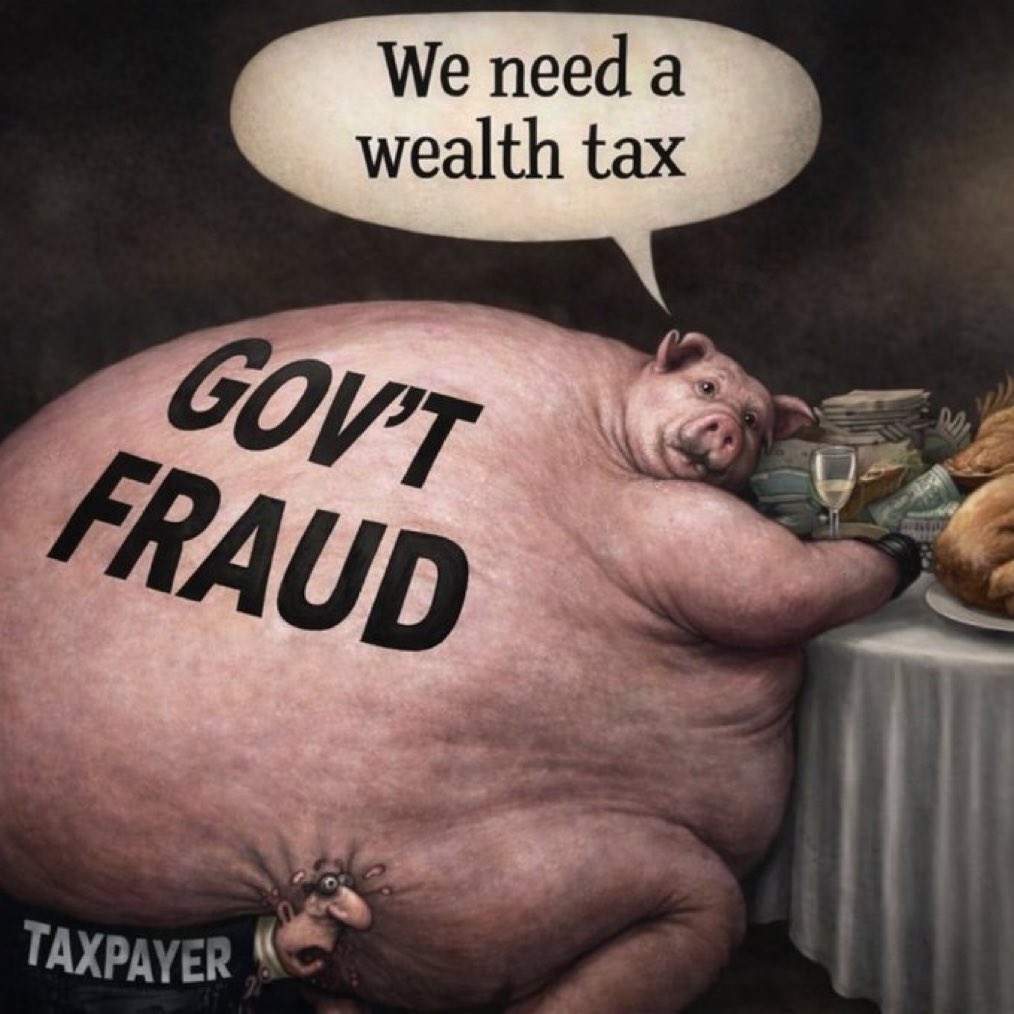
And we'll pay for it by taxing startups, VCs, and millionaires on their "unrealized gains". This won't have any negative effects whatsoever on the stock market or the tech sector.
There won't be any unemployment either, because we will continue to grow the government sector. The new "reparations force" is hiring. As is the IRS and the SEC.