“Pope mania” makes a wonderful headline, but I increasingly think it misses the most interesting part of what we are witnessing in France. Of course there is excitement surrounding Leo himself, but hundreds of thousands of people did not simply gather in central Paris to see a celebrity, they gathered for Mass! And what did the supposed “rock star” tell them? Not that they should admire him, but that “only God can fill the emptiness within us”; that Jesus Christ gave His life for us; that France possesses a “long and beautiful history of faith”; that they should “drink from the source that is the pierced heart of Jesus”; and, crucially, that they must not keep their faith in Christ to themselves. “Let it overflow.” For decades we have been told a fairly simple story about France: modernisation means secularisation, Christianity belongs increasingly to the past, and Catholicism will gradually retreat into the private lives of an ageing minority. Then 700,000 people gather for Mass in the heart of Paris, 80,000 young people fill the Stade de France, and adult baptisms are rising dramatically. None of this proves that France is suddenly becoming Catholic again. We should resist romantic conclusions as much as pessimistic ones.
But it surely tells us that the secularisation thesis is considerably more complicated than we thought.
Perhaps beneath the “Pope mania” lies something much more consequential: a spiritual hunger which modern secular culture has proved remarkably bad at satisfying. And Leo's message to that hunger could hardly have been clearer:
“You thirst for God, for life, for truth, for unity, for peace, for communion and for happiness.”
Only God, he told them, can ultimately satisfy it. https://t.co/eyxUp5NBMk
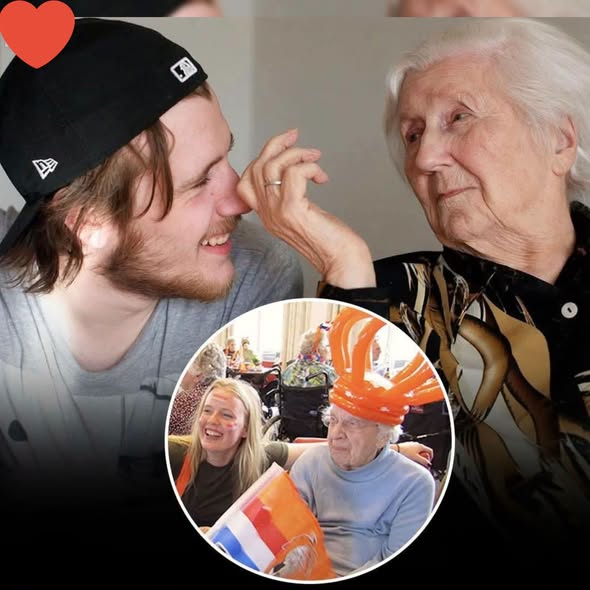
Une maison de retraite néerlandaise a trouvé un remède touchant à la solitude qui ronge ses résidents.
Elle a ouvert ses portes aux étudiants des universités, leur offrant un logement gratuit… en échange d’un simple engagement : consacrer au moins 30 heures par mois à partager du temps avec les aînés. Un repas, une conversation, une présence bienveillante.
Ainsi naît une belle réciprocité : un toit pour les jeunes, une chaleur humaine pour les anciens.
Un pacte de tendresse, où chacun donne, et chacun reçoit.
Le monde littéraire
I watched this video clip again, filmed in the Barcelona metro a few months ago, and thought: this is who we are; defined not by fear, but by our compassion and our courage in the face of crisis.
Le père spirituel de l'éducation moderne a méthodiquement condamné ses cinq enfants à une mort quasi certaine par pur confort personnel.
L'Histoire a fait de Jean-Jacques Rousseau l'idole des humanistes et le grand théoricien de la bienveillance. Son célèbre traité L'Émile est encore aujourd'hui la bible des pédagogues progressistes.
La réalité est celle d'un égoïsme effroyable.
Entre 1746 et 1752, Rousseau partage la vie d'une lingère, Thérèse Levasseur. Le couple donne naissance à cinq enfants.
Le grand philosophe de la compassion n'en gardera pas un seul.
Dès leur naissance, il les arrache à leur mère pour les déposer anonymement à l'hospice des Enfants-Trouvés de Paris.
À l'époque, cette institution n'est pas un orphelinat classique, c'est un mouroir. Les registres historiques établissent que le taux de mortalité infantile y dépassait allègrement les 70 %.
Que sont-ils devenus ? Absolument personne ne le sait. Ils ont purement et simplement disparu de l'Histoire.
Des années plus tard, la maréchale de Luxembourg, une riche protectrice du philosophe, tentera de mener l'enquête pour les retrouver et les sauver de la misère. Ses recherches se heurteront à un mur sordide.
Rousseau n'avait même pas pris la peine de conserver les dates exactes de leurs naissances ou de glisser un signe distinctif dans leurs langes, comme cela se faisait couramment pour espérer les récupérer un jour.
Ses cinq enfants ont été engloutis dans l'anonymat absolu. Statistiquement, ils ont probablement fini dans la fosse commune de l'hospice avant l'âge de savoir marcher. S'ils ont survécu, ils ont grossi les rangs des vagabonds dans les caniveaux de Paris.
Le père de l'éducation ne s'en cache même pas. Dans ses propres Confessions, il assume cet abandon avec une froideur terrifiante.
Ses justifications officielles ? Les enfants faisaient trop de bruit, son travail de penseur nécessitait le calme, et il refusait d'assumer la charge financière de sa propre descendance.
D'un côté, le philosophe écrivait des milliers de pages pour apprendre à l'humanité entière comment élever, écouter et chérir la jeunesse. De l'autre, il effaçait méthodiquement sa propre progéniture pour ne pas être dérangé pendant son processus créatif.
Le mythe du grand éducateur humaniste s'effondre. L'idole absolue des Lumières a bâti sa légende de moraliste sur l'abandon méthodique de ses propres enfants.
– Mi hija: Mami... vi por la ventana como Blancanieves se llevó nuestra basura.
— Yo: Hija... pero qué imaginación tan grande tienes.
Lo que vio mi hija por la ventana: 🤣
In the aftermath of the September 11 attacks, search‑and‑rescue teams deployed highly trained dogs to sift through the wreckage of the World Trade Center. These dogs were accustomed to finding living survivors in disaster zones, but at Ground Zero the reality was different: day after day, they located only deceased victims. Handlers soon noticed troubling changes in the dogs’ behavior, confusion, stress, and what looked like depression, as the animals struggled to understand why their searches never resulted in a successful rescue.
To protect the dogs’ emotional well‑being, rescue workers devised a compassionate solution. They staged mock rescue scenarios within the debris, hiding volunteers so the dogs could “find” someone alive. These carefully planned exercises restored the dogs’ confidence and motivation, giving them the sense of accomplishment their training had conditioned them to expect. The staged finds weren’t just morale boosters; they were essential to keeping the dogs focused and effective during one of the most grueling recovery operations in modern history.
This little‑known aspect of the 9/11 recovery highlights the deep bond between rescue dogs and their handlers. It also underscores how emotionally intelligent and sensitive these animals are, capable of experiencing distress when their work seems to fail, and equally capable of renewed purpose when shown that their efforts matter. Their story is a reminder that heroism at Ground Zero came not only from human bravery but also from the loyal, hardworking animals who searched tirelessly amid unimaginable devastation.
Another lesser‑known detail is how handlers themselves struggled emotionally alongside the dogs. Many rescuers said the animals mirrored their own grief and exhaustion, sensing the heaviness of the site and becoming clingier, quieter, and more protective than usual. Some dogs refused to stop searching even when injured, pushing through smoke, twisted steel, and unstable debris because they could feel their handlers’ urgency. That shared emotional strain, humans and dogs absorbing the same trauma, became one of the most quietly powerful bonds at Ground Zero.
#archaeohistories