Hay momentos en los que es necesario hablar con la verdad sobre lo que sucede, especialmente cuando están en juego la dignidad humana y los derechos fundamentales de las personas. Nuestra preocupación nunca ha sido un edificio, ni una narrativa política, ni una polémica pública. Nuestra preocupación son las personas.
Las detenciones arbitrarias, las desapariciones forzadas, la tortura, los tratos crueles y las violaciones al debido proceso tienen consecuencias reales sobre la vida de seres humanos, sus familias y sus comunidades. Defender los derechos de quienes han sido víctimas de estos abusos no depende de sus ideas, de sus opiniones o de la simpatía que puedan despertar. Es una obligación ética y un principio fundamental de cualquier sociedad que aspire a la justicia.
Por eso consideramos que el cierre de un lugar asociado durante años a graves violaciones de derechos humanos solo tendría verdadero significado si estuviera acompañado de acciones concretas para poner fin a esas prácticas, liberar a quienes permanecen detenidos por razones políticas, garantizar el debido proceso y preservar las evidencias necesarias para el esclarecimiento de los hechos.
No se trata de trasladar el sufrimiento de un lugar a otro ni de transformar espacios para borrar la memoria de lo ocurrido. Se trata de reconocer a las víctimas, garantizar que estos hechos no se repitan y asumir compromisos reales con la verdad, la justicia y la reparación integral.
La dignidad humana no admite excepciones. Los derechos humanos tampoco. Por eso seguiremos alzando la voz por todas las personas sometidas a persecución, detención arbitraria o cualquier forma de violencia institucional, porque ninguna razón política puede justificar la vulneración de derechos fundamentales.
#JusticiaYLibertad
🇭🇳🗳️En esta edición de Transparencia Electoral Review, @JesusDValery escribe sobre Las elecciones de Honduras celebradas en 2025.
"En un contexto de desafección ciudadana y pérdida de confianza en las instituciones, los organismos electorales deben evitar perder su capital principal, la credibilidad".
🔗https://t.co/HYFWNTQ3r9
🌎🗳️Compartimos el artículo de Rui Santos (@elrui) para la edición de mayo de Transparencia Electoral Review:
✍️"Fiscalización pública del proceso electoral: el rol irrenunciable de la sociedad civil"
🔗https://t.co/GO4sjW11Hc
Election observers are the first line of defense for democratic rights and freedoms, and they work in some of the most challenging places. They deserve the same protections as human-rights defenders.
https://t.co/st7YRE5dLk
During the Freedom Tech track at the 2026 Oslo Freedom Forum, @leopoldolopez, co-founder of the World Liberty Congress and Venezuelan opposition leader, joined @AlvaroSalas, president and CEO of The Reynolds Foundation, to examine how freedom tech can help people reclaim dignity, access, and agency under authoritarian rule.
López also presented Agora, a new censorship-resistant donation platform he vibe coded and designed, built on Nostr and Bitcoin to help freedom movements and political prisoners receive direct international support without relying on traditional financial gatekeepers.
Mexico's ruling party just rammed through a bill in Congress that could nullify any election (legislative, gubernatorial o presidential) if the government —or the electoral authority, which was independent until the governing MORENA regime coopted it and controls now— decides there was "foreign interference." Sounds reasonable? There’s not even a need to read the fine print. While this is one of the most egregious, alarming and retrograde pieces of legislation in Mexico's young democratic history, it’s also a tell-tale sign that electoral alarm bells are starting to ring within the governing party as the scandals of corruption of some of its leaders and politicians tainted with ties to drug traffickers and organized crime start to take a domestic and public opinion toll on governmental and party approval.
What counts as "foreign interference" under this law? Virtually anything. A statement by a US official or a policy decision by a foreign government. An editorial by a British newspaper, an investigative story by a US broadcaster or a report by a French weekly magazine. Coverage by international media of corruption, violence or human rights abuses in Mexico. A social media post by a foreign NGO or by a member of the US Congress, the European Parliament or a foreign leader. Even a trip by a Mexican governor or political party leader abroad, or a press conference by a Mexican politician or Mexican NGO with foreign correspondents accredited in Mexico. All of it —every single one— can now be used as grounds to claim there’s a foreign conspiracy to impact the electoral fortunes of MORENA and its movement and to void an election result. This bill becomes a blank check, and MORENA holds the pen.
And therein lies the rub: the body that decides whether "interference" occurred is no longer independent. MORENA's reforms and policies since 2018 have gutted Mexico's electoral institutions and robbed them of their autonomy. The electoral referees are now handpicked —directly or indirectly— by MORENA, in what is basically the return of a single-party hegemonic ruling system like in Mexico’s days of yore. More crucially, this law doesn't prevent foreign interference. It hands the government a veto over election outcomes it doesn't like, particularly as the country heads into next year’s midterm elections and a critical presidential election in 2030.
Think about what this means in practice: if the opposition wins an election in a state where the US Department of Justice —as it has done recently in Sinaloa— indicts a public official, or the US State Department yanks the visa of a Mexican official or a MORENA politician (as it has already done) or legislator, a UN body publishes a report on disappearances in the country, or a foreign paper runs a critical investigation on MORENA, the government can move to annul the result. Due process? Optional. And while there is no evidence whatsoever of “foreign interference” in any of Mexico’s modern-era elections, there’s one exception to that rule exception, one that also entails a huge paradox: Hugo Chavez’s financial (in bulk cash) support for Andrés Manuel López Obrador’s first presidential campaign in 2006.
This is the playbook you've seen before —in Hungary, in Venezuela, in Nicaragua. Dress up democratic backsliding in the language of sovereignty and anti-imperialism. Make legitimate external scrutiny or opinion illegal. Then use that law selectively, à la carte, when you need it. And finally top that off with a chauvinistic claims of sovereignty and of “foreign conspiracies of the right”, as the current and previous MORENA governments are so prone at asserting every time there’s an unfavorable or critical publication in international media outlets or a foreign government or politician stakes a critical or unfavorable stance regarding Mexican politics or foreign policy.
The US is the most obvious target here. Any comment from Washington, from any governmental actor or non-state actor —on rule of law, press freedom, migration, fentanyl, human rights, a level playing field for US businesses— can now be retroactively framed as electoral interference. This isn't about protecting Mexican democracy. It's a legal weapon pointed at the bilateral relationship itself.
But here's the gravest irony of all: the bill is willfully blind to the real interference plaguing recent Mexican elections. Not a foreign government. Not a US newspaper. It’s organized crime. Plain and simple. In the 2021 midterm elections, criminal organizations, particularly in Sinaloa and Tamaulipas, didn't just meddle — they handpicked candidates, intimidated or whipped voters, and in some cases effectively ran the ballot. That’s what has ultimately led to the US indictments against ten current and former public officials in Sinaloa, including the sitting governor, a federal senator and the mayor of the state’s capital city, Culiacán. At the end of the day, this what genuine electoral coercion and interference looks like. MORENA's bill has nothing to say about any of it. Because that threat doesn't serve the narrative. And in some cases, it may be rather too close to home.
Mexico deserves better. So does the democratic community that has stood by it. This bill must be challenged —in the courts, in the streets, and in the court of international opinion. Silence is not an option. Contrary to the famous mantra about Las Vegas, what happens in Mexico should not stay in Mexico.
During today’s House Foreign Affairs Committee hearing, I asked @SecRubio a simple but critical question: when will the Venezuelan people finally have the opportunity to participate in free and fair elections?
The people of Venezuela have waited far too long for democracy, accountability, and the right to choose their own future. A lasting transition must lead to credible elections and the restoration of democratic institutions.
The world is watching, and the Venezuelan people deserve a clear path back to freedom.
En el Oslo Freedom Forum he coincidido con mucha gente maravillosa, entre ellos @AuroraSuperlano una mujer valiente que ha sido voz, no sólo por la libertad de su esposo @freddysuperlano sino por la libertad de todos los presos políticos.
Seguimos alzando la voz desde todos los espacios hasta que los liberen a todos. #Queseantodos
🇻🇪 Dentro y fuera del país, somos millones exigiendo lo mismo: el derecho a elegir libremente a quienes gobiernan nuestro país.
#QuieroElegir es una iniciativa ciudadana que exige convocar y celebrar elecciones lo antes posible.
#VzlaQuiereElegir
👉 https://t.co/phNXwY3Eq0
➕ Manifiesto Ciudadano #QuieroElegir
1. Elegir es un derecho fundamental: el voto es soberanía popular.
2. La democracia se restaura con elecciones presidenciales y parlamentarias, auténticas y verificables.
3. Exigimos condiciones electorales reales: sin garantías no hay elección legítima.
4. Queremos una ruta política clara: con plazos y mecanismos verificables.
5. Elecciones auténticas como base democrática: competencia real, no simulacro.
6. El voto es lucha pacífica: participación electoral sobre confrontación.
7. La ciudadanía es el centro: organizada, consciente y exigente.
8. Democracia, bienestar y derechos van juntos: sin cambio político no hay progreso económico.
9. Transición con base en la Constitución.
10.Acción colectiva para reconstruir: articulación social y compromiso sostenido.
#QuieroElegir
The furor around Piker and Uygur is a distraction from a more central issue: Britain’s repudiation of free speech. These two American men hold views worthy of rebuke and ridicule. The lies they peddle should be rebutted forcefully.
But you can do that only in a liberal system that allows free expression. If anything, refusing entry to Piker and Uygur because they pose a “potential risk” to Britain, to use the Home Office’s language, gives them way more credit than they deserve.
https://t.co/ffCgF3SgIZ
🔴 Publicaron mi dirección exacta por registrarme en la página del "estado 51".
El creador de la página hizo un video divulgando mi ubicación buscando intimidar.
Tengamos cuidado donde ponemos nuestros datos.
Georgia’s first female president refused to stay silent as democracy came under attack.
At the Oslo Freedom Forum, Salome Zourabichvili reflects on a country pulled between freedom and authoritarianism, where citizens, journalists, and activists continue risking everything to defend their future.
Her story is not just one of political struggle, but of a national fight to keep Georgia free.
Un ejemplo de la efectividad de la estrategia, es que en el titular el "centro para la tercera edad" acompaña el hecho principal: el robo de la vivienda
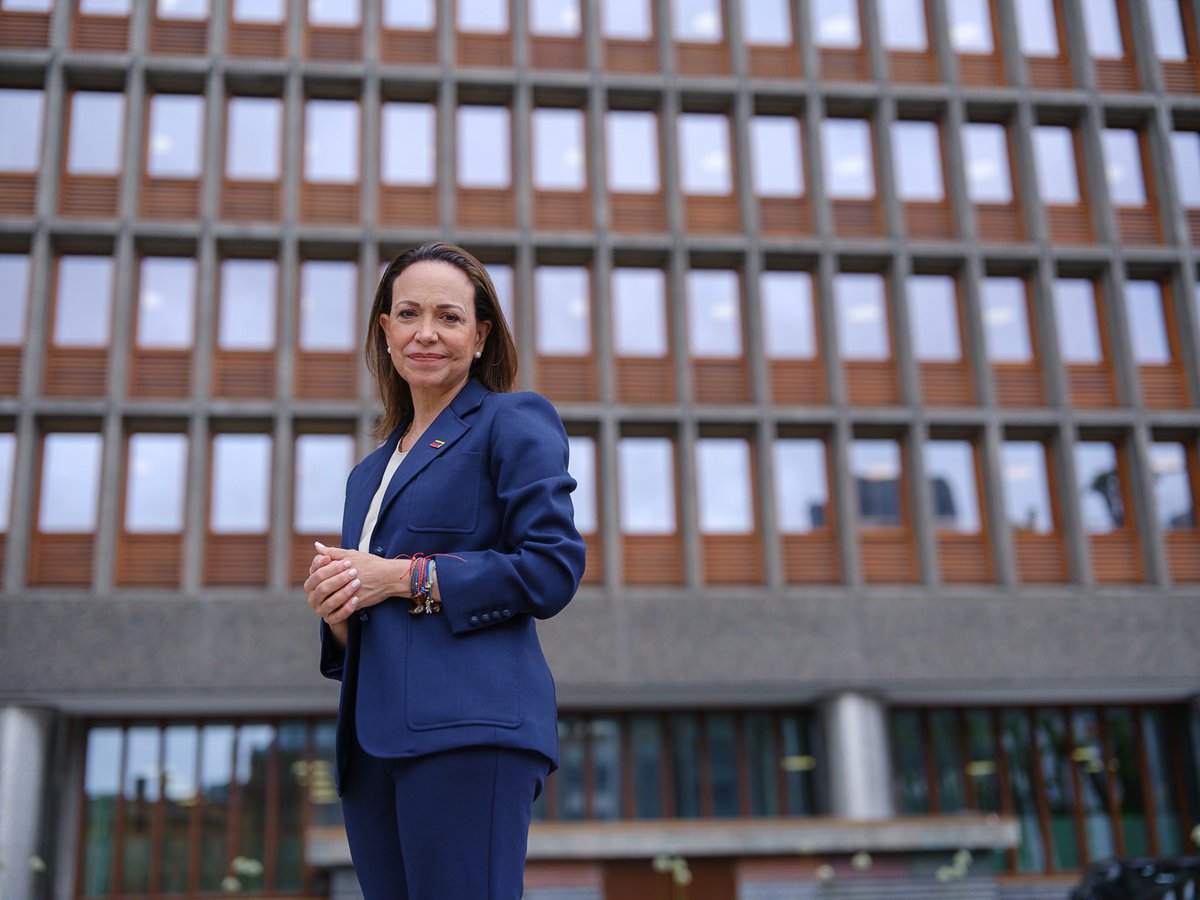
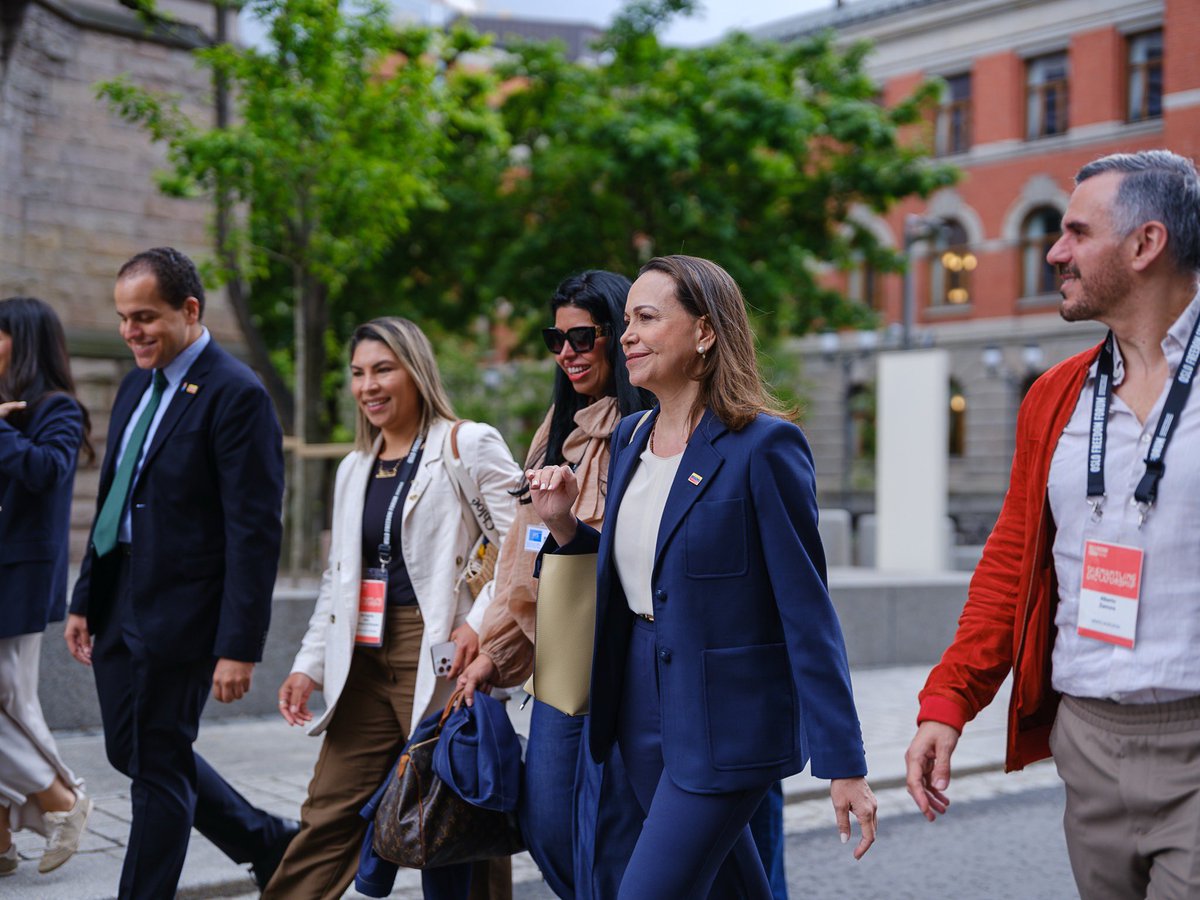
🇻🇪🇳🇴 | Hoy, @MariaCorinaYA regresa a Oslo 🇳🇴, la ciudad que la recibió tras 12 años de prohibición de salida de Venezuela.
Aquella primera vez el motivo fue recibir el Premio Nobel de La Paz; hoy, la razón es aún mayor: hablar por los millones de venezolanos que resisten y nos esperan en Venezuela 🇻🇪
#DetectorDeMentiras🔎 El presidente @petrogustavo es el principal difusor de teorías infundadas sobre fraude electoral.
🧐La Silla revisó más de 300 trinos de 2026 que impulsan esta narrativa. El 18% son del presidente, con 12,8 millones de vistas. Lo contrastamos con evidencia.