Excited and nervous to share my personal story and thoughts on how bringing lived experience and vulnerability to the table can enhance our #SRHR work. #Storytelling#LivedExperienceMatters
.@WHO? Take a stroll through the decades of @HRPresearch achievements.
Or take a scroll here: https://t.co/a5YFXSWrz3
Study highlights:
'78: Shows safety of oral contraceptives
'98: Confirms emergency contraception works
2010: Shows how to prevent perinatal HIV transmission
Save the date: 2 May at 8AM EDT.
Delivering uncertainty: The ongoing risk of motherhood
Discussion moderated by @PascaleAllotey@USAID_MOMENTUM
Stream on Facebook or LinkedIn: https://t.co/u5rXt3AAnf
An expert film series has launched to celebrate the work of @HRPResearch and the ppl behind it.
View @PascaleAllotey's film on the future of HRP and #SRHR below.
📽️Find the playlist here: https://t.co/sppmhOyJQL
Stay tuned for more.
Climate activists are sometimes depicted as dangerous radicals.
But the truly dangerous radicals are the countries that are increasing the production of fossil fuels.
Investing in new fossil fuels infrastructure is moral and economic madness.
These new @WHO and @HRPresearch guidelines, include recommendations on removing medically unnecessary policy barriers to safe abortion, alongside clinical and service delivery recommendations.
https://t.co/enFbuT4l7A
Women everywhere face violations of their rights during childbirth – including their rights to privacy, informed consent and a trusted companion.
Explore the latest evidence: https://t.co/UbuLZTAcQn
#SRHR#HumanRights
The new estimates indicate that unintended pregnancy & abortion rates vary widely between countries - even within the same region or geographic area. The greatest variations were found in Latin America and sub-Saharan Africa.
https://t.co/05f2AdKCBe
All this useful evidence for reproductive health activists and providers ✅
@Guttmacher & WHO global estimates on unintended pregnancy and abortion
➕
@WHO updated abortion care guidelines
https://t.co/1SuHAvh2xl
Caring for a baby in the first weeks after birth includes:
🐣Responding to baby’s signals
🐣Keeping baby comfortable, warm and clean
🐣Exclusive breastfeeding
🐣Putting baby to sleep on their back
🐣Vaccinations
🐣Development check ups
🐣Looking after yourself
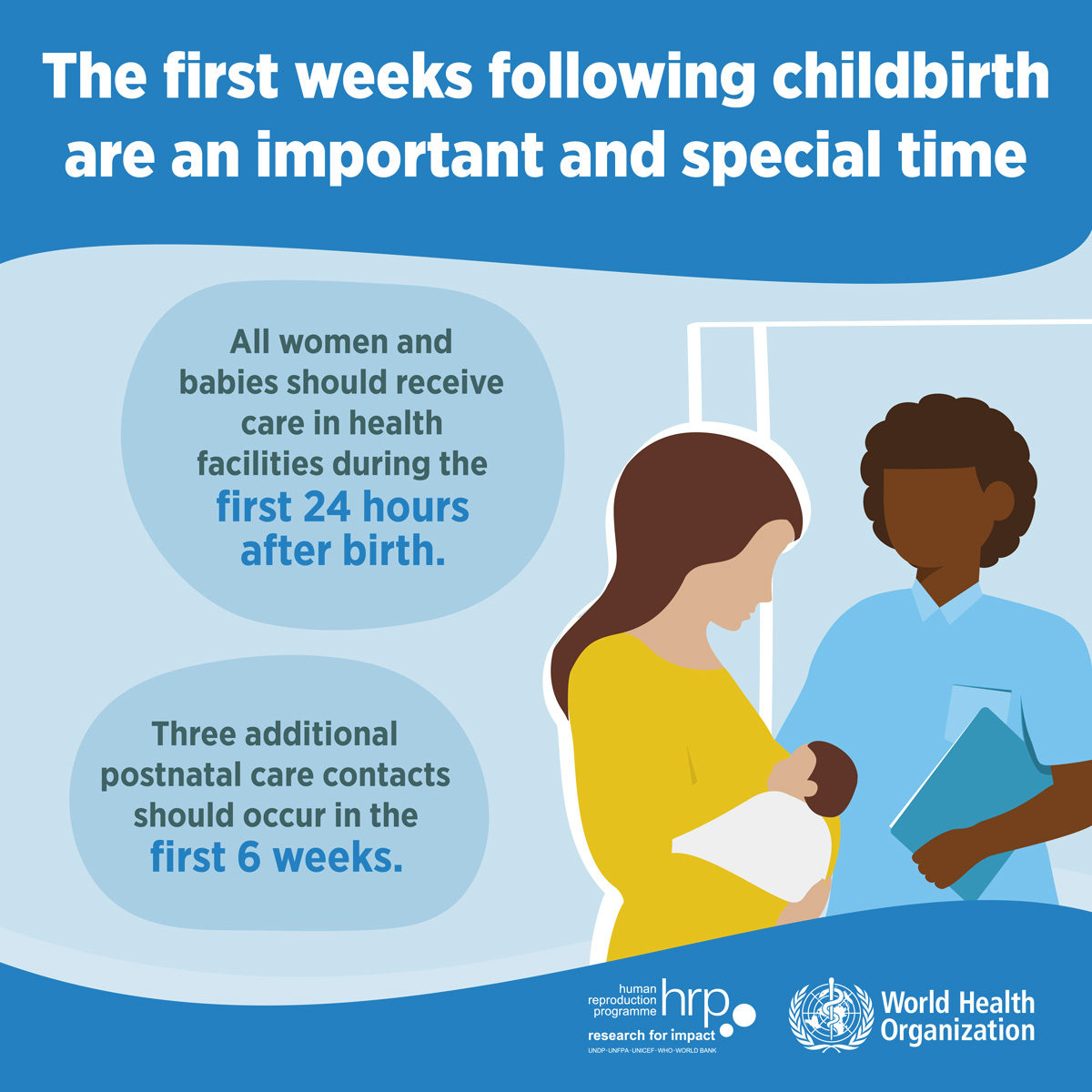
For the important days following birth, new @WHO@HRPresearch guidelines recommend:
✅Continuous care in the 24 hrs after birth
✅At least 3 follow-up visits for women & babies w/in 6wks after birth
✅Respectful care always
https://t.co/OPKjAvkjio
#PostivePostnatalExperience
@DrTedros@UNICEF "Last year’s conflict led to major disruptions to essential health services, and a significant exodus of health workers. Women and girls are especially at risk – from lack of access to health services, and lack of access to education"-@DrTedros#Afghanistan
A positive postnatal experience = Information + Reassurance + Support for women, partners, parents, caregivers and families at the health facility and at home.
New @WHO@HRPresearch guidelines on postnatal care 👉 https://t.co/cZ9W8zW38m
#SRHR#PositivePostnatalExperience
For the important days following birth, new @WHO guidelines recommend:
☑️ Continuous care in the 24 hrs after birth
☑️ At least 3 follow-up visits for women & babies w/in 6 weeks after birth
☑️ Respectful care always
Read more👉 https://t.co/iuF4U5V4v2
#SRHR#HealthierTomorrow
We are looking for individuals to be part of a roster of consultants @HRPresearch. Do you have experience and interest in #SRHR research capacity strengthening? Consider applying 👉🏻 https://t.co/kaT1zCZQ8G
🧵1/4
When women, parents and family transition from the facility to the home, a positive postnatal experience is a shared responsibility of everyone in the community.
Here’s how it adds up 👇
#PositivePostnatalExperience#SRHR#HumanRights@WHO@HRPresearch
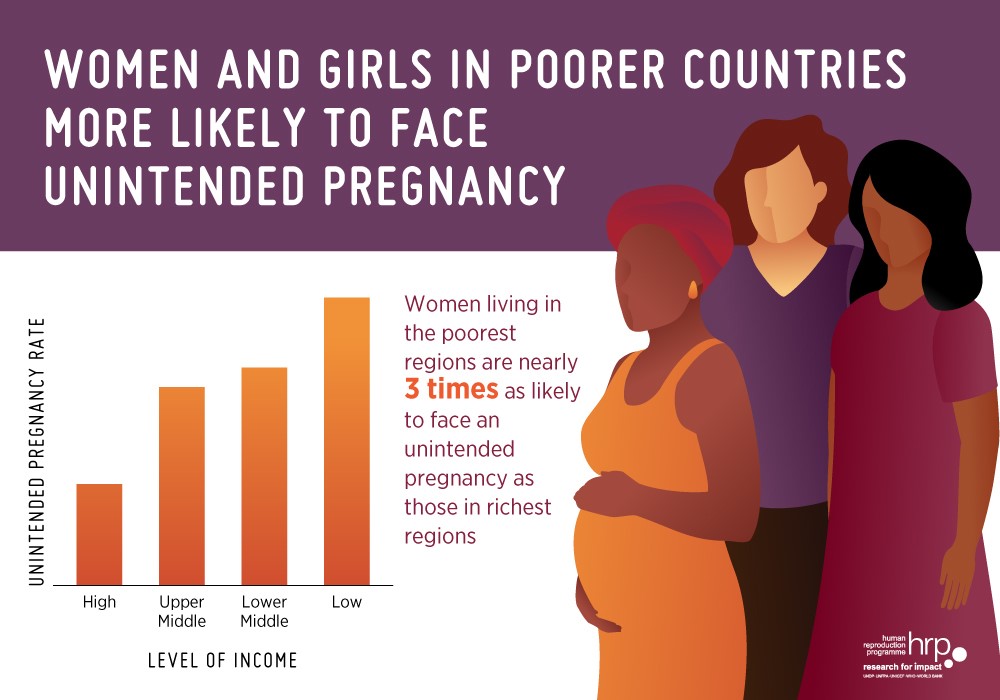
According to new findings, published in @LancetGH , women living in the poorest regions were nearly three times as likely to face unintended pregnancies than those in the wealthiest regions. #SRHR@HRPresearch@Guttmacher https://t.co/LTwyw4lWVa
According to new findings, published in @LancetGH , women living in the poorest regions were nearly three times as likely to face unintended pregnancies than those in the wealthiest regions. #SRHR@HRPresearch@Guttmacher https://t.co/LTwyw4lWVa