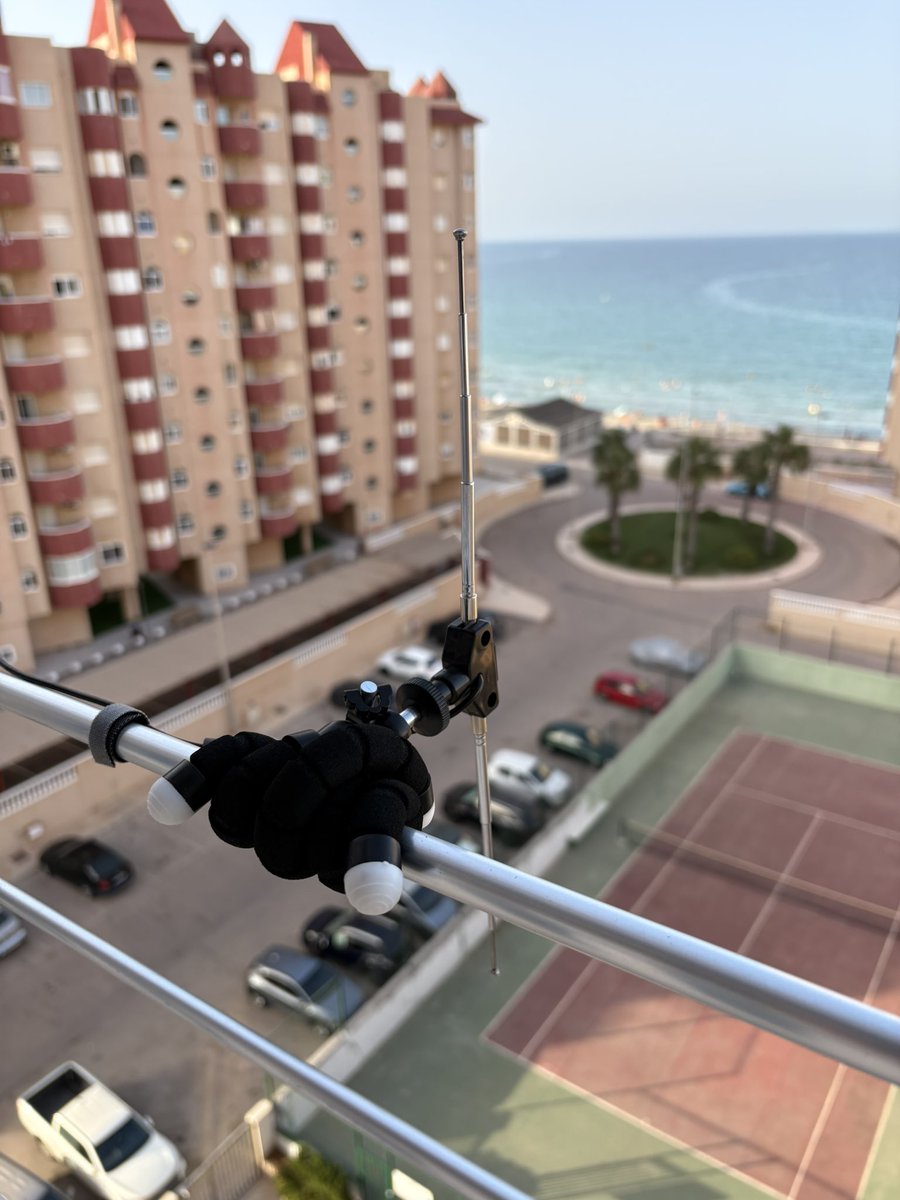
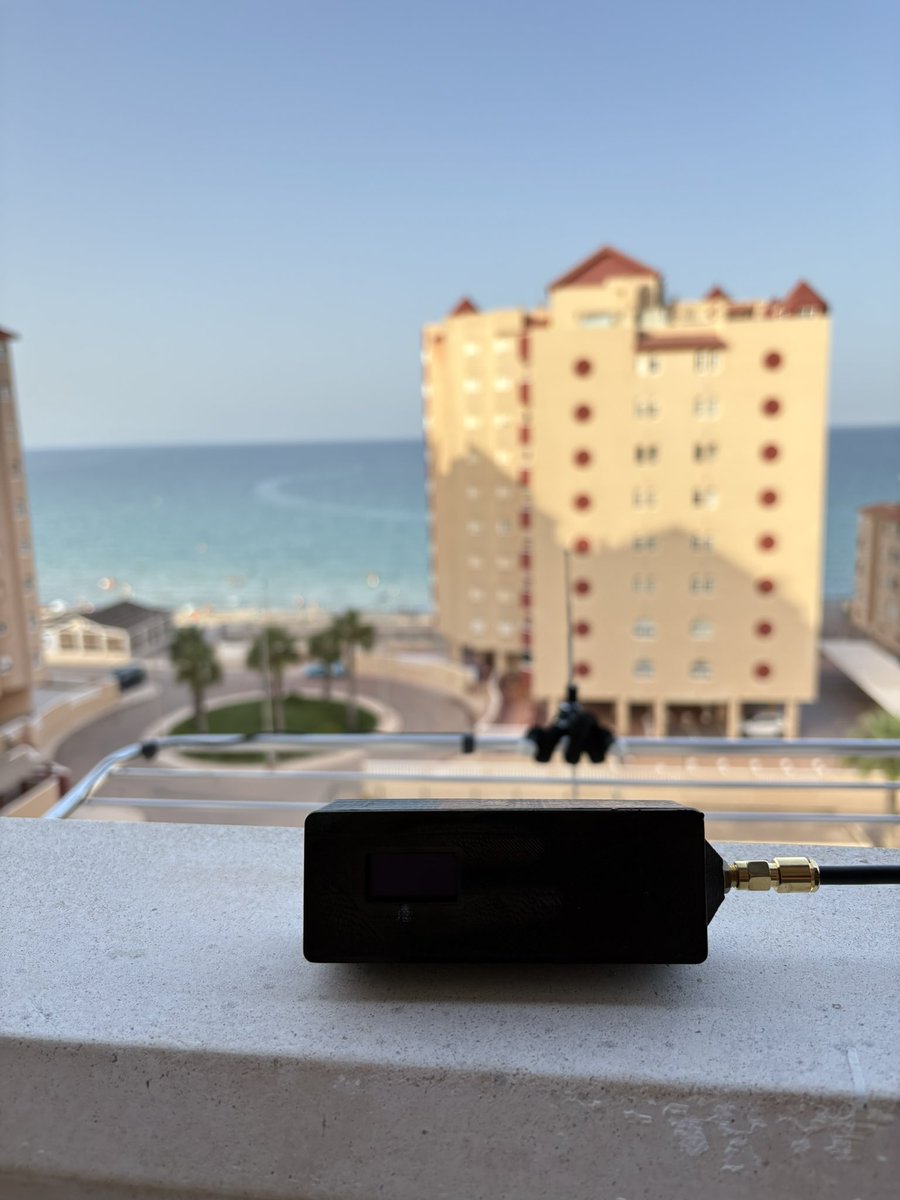
The 10-hour blackout in Spain confirmed that switching power supplies have destroyed amateur radio. 10 hours of noise-free bands and extremely weak signals with crystal-clear audio. Just incredible! But everything went to hell when the power came back on.
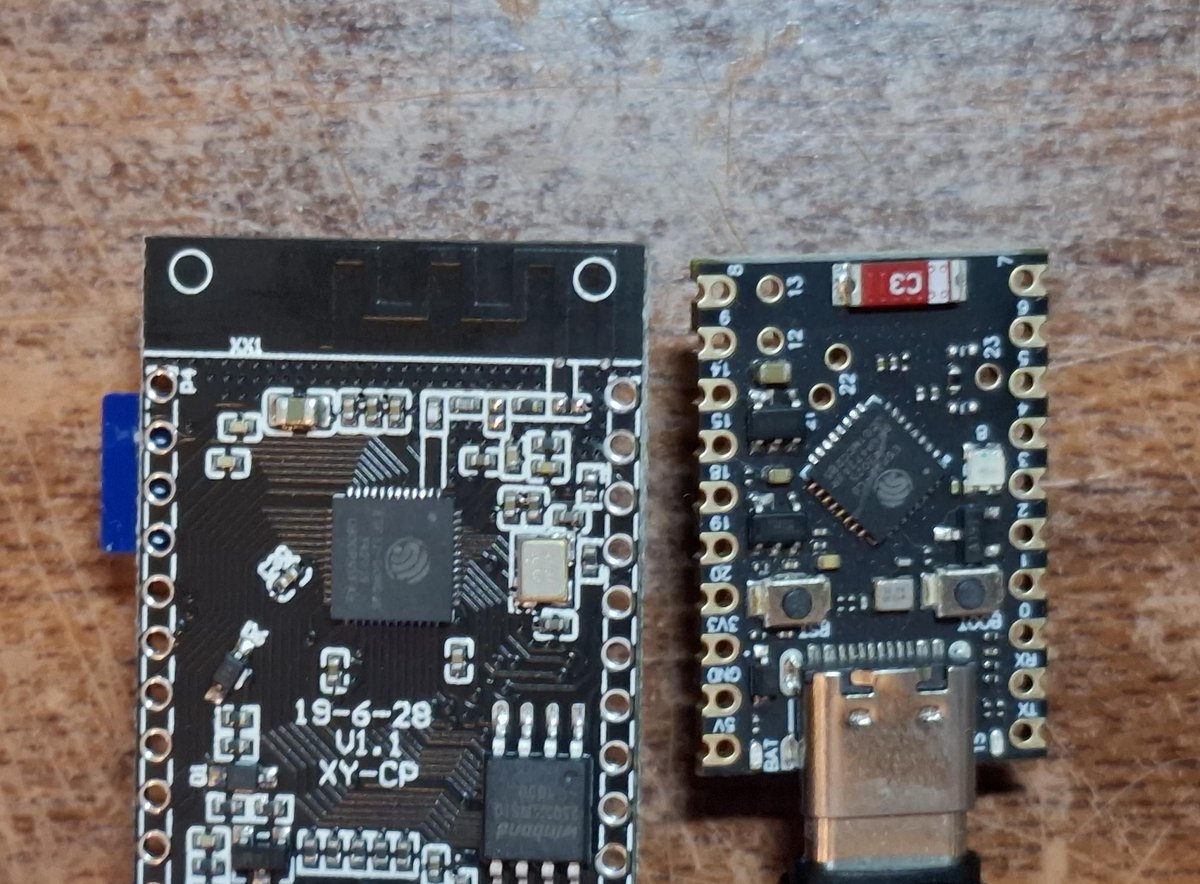
Another thing you can do with the SDR capabilities in ESP32 chips is to compare antenas. Left: PCB antenna. Right: Ceramic chip antenna. Same settings both sides. Yes, ceramic chip antennas are truly terrible.
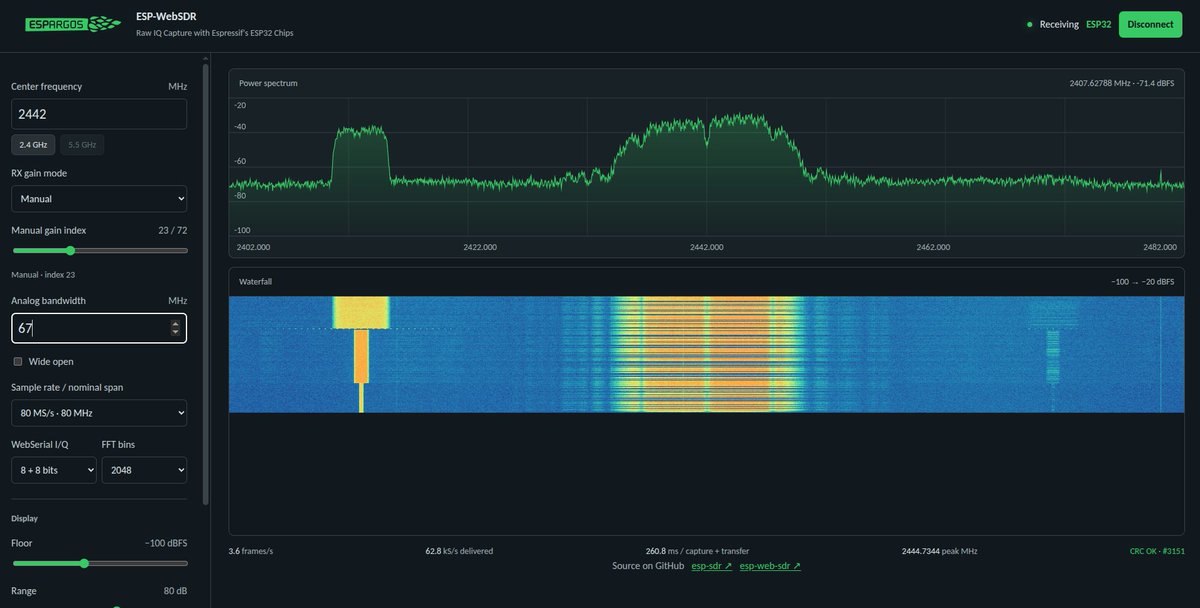
After playing a bit with the ESP32 SDR capabilities I noticed the ESP32 variant is really important because it determines the SDR capabilities. For example, a ESP32-C6 tunes easily from 2148 to 2900 MHz (+/- temp) but the original ESP32 is much limited
Of course all those discrete frequencies are WiFi channels 3 to 14. Channels 1 and 2 are inside the fine tuning range. So for future ham radio applications around 2.32 GHz not every ESP32 will work.
@F5OEOEvariste I wonder if the ESP32 is powerful enough to make a stand alone SDR transceiver... Analog modes like SSB/FM and maybe some "narrow" band digital modes. It would be nice as a cheap ham radio transceiver for 2.4 and 5 GHz bands
Testing 15 Euros ESP32 : 80Mhz wide spectrum on 2.4Ghz with recent hack : here is DATV and wifi. Next step : getting I/Q and having TX ! A new horizon for cheap sdr : eSpDR.
@K0LWC Yaesu continues to manufacture equipment with optional features in mind, as if we were still in the 90s. Icom transceivers don't have options. All features are included as standard. It is a big difference.
@RueNahcMohr The problem is DRAM takes a lot of discrete components just to make it work without any advantage for such small capacities today. There are very cheap 32, 64 and 128k static rams that can be connected to the Z80 without any pain