In 1282, on a riverbank in mid-Wales called Cilmeri, a man was killed by an English soldier who did not know who he was.
His name was Llywelyn ap Gruffudd. He was Prince of Wales, the last native ruler of an independent Welsh state, and the head of the House of Aberffraw, the dynasty that had ruled Gwynedd for more than four hundred years. His head was cut off and sent to London, where it was set on a spike at the Tower. His brother Dafydd was hanged, drawn and quartered the following year for treason against Edward I. The boy princes of the line, Llywelyn's nephews, were taken to Bristol Castle and never seen again.
The senior royal line of Wales should have ended there.
It did not.
A decade before Cilmeri, in 1272, Llywelyn's youngest brother Rhodri had done something quieter and stranger than war. He had renounced his patrimony in Gwynedd, accepted English protection, and crossed the border to live as a country gentleman on a small manor at Tatsfield in Surrey, seventeen miles from London. He kept his head down. He kept his estates. He kept his name.
After the conquest of 1283, with every other male of the senior line dead or vanished, Rhodri's quiet bargain in Surrey turned out to be the only thing that had preserved the bloodline of Llywelyn the Great.
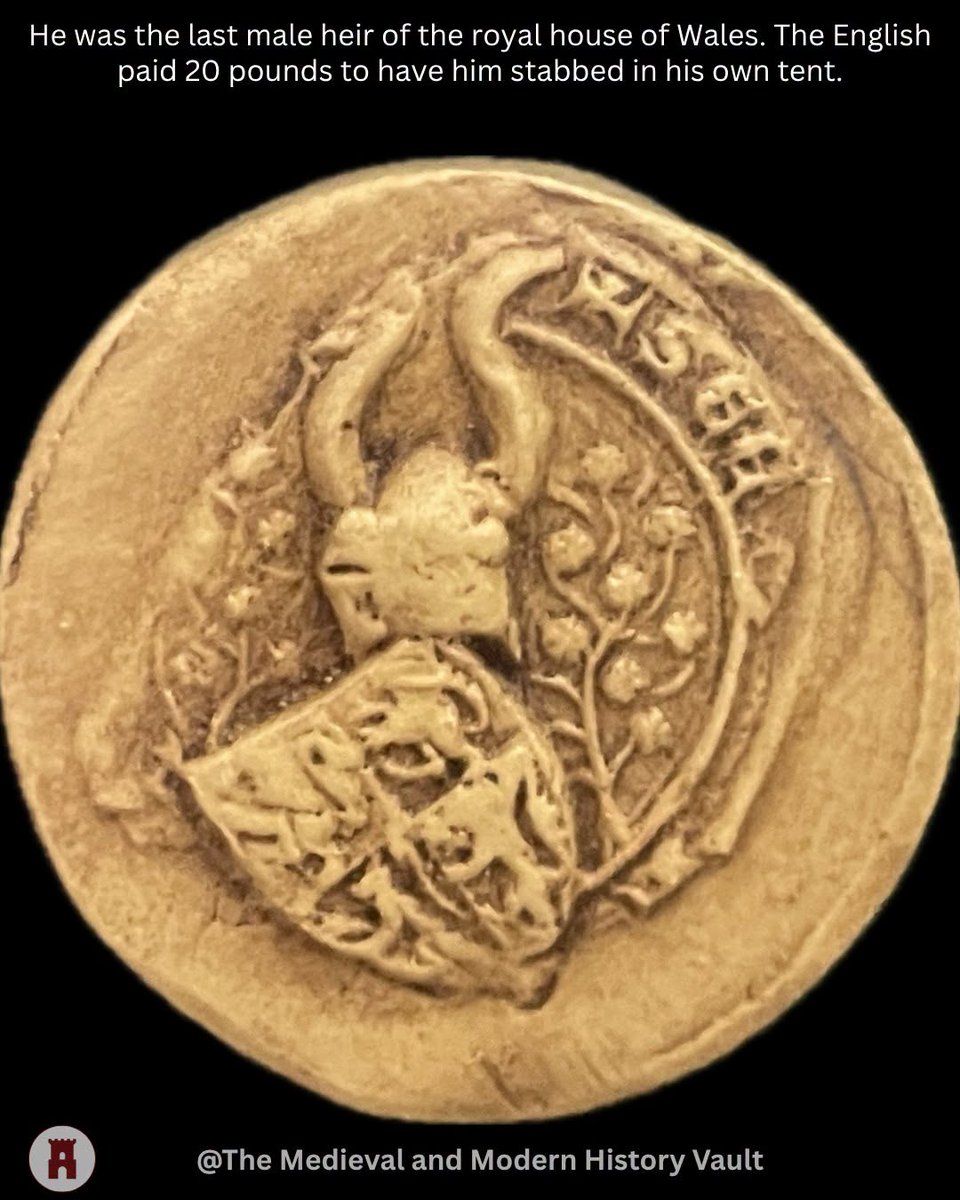
His son Thomas lived the same uneventful life on the same English manor. But Thomas still pressed the four lions of Gwynedd into the wax of his seal. And in around 1330, Thomas had a son.
The boy was called Owain.
He grew up in Surrey, the senior surviving male of the native ruling house of Wales, and almost no one in Wales knew he existed.
By his twenties, he was in France. Free companies of mercenary captains were riding through every theatre of the Hundred Years War, and Owain joined the French crown as a soldier of fortune. When his father died in 1363, he returned briefly to claim the family estates, including holdings in Montgomeryshire, then left again in March 1366 and never set foot in Britain again.
By 1369, when the war with England resumed in earnest, he was leading his own company in French service. The English crown confiscated every acre he owned. He did not seem to mind. He had already chosen a different inheritance.
For the next nine years he carried the war against England wherever it would go. Brittany. Poitou. Limousin. The Loire Valley. He fought in Spain during the Castilian Civil War. He crossed the Alps into Lombardy. He served as a French envoy to Castile to secure the fleet that attacked La Rochelle in 1372. He campaigned through Alsace and Switzerland during the Gugler War. His company was largely Welsh. Many of his men were exiles from a country they could not return to. His second-in-command, Ieuan Wyn, was descended from Ednyfed Fychan, Seneschal of Gwynedd under Owain's own ancestors.
The court of Charles V watched all of this. And in May 1372, after thirteen years of campaigning, Owain came back to Paris and did the thing he had been working toward his whole adult life.
He stood up in the French king's court and declared himself the rightful Prince of Wales. Lineal successor of the two Llywelyns. Senior male of the House of Aberffraw. The principality his ancestors had ruled, taken from his uncle on a riverbank ninety years before, claimed in open court by the only man left with the blood to claim it.
The French king agreed.
Charles V granted him a pension of a thousand francs a year and gave him a fleet. Owain sailed from Harfleur with French ships at his back, bound for Wales. It is one of the most extraordinary near-misses in British history. The expedition reached Guernsey, and then it was recalled. The war in Aquitaine had turned, and the king needed every captain he had.
The fleet went south. Owain went with it.
Word of him had already reached Wales. As early as 1369 the English authorities were preparing for an uprising in his name. In 1370 a man from Anglesey was condemned for having been in touch with Owain Lawgoch, an enemy and traitor, for the purpose of starting a war in Wales. Whatever he did in France, his name was already moving along the western roads at home.
In 1377 the rumours started again. Another fleet. Another expedition. Castilian backing this time.
The English government acted outside the rules of war between Christian princes. They bought him.
A Scot named John Lamb joined Owain's retinue at the siege of Mortagne-sur-Gironde in Poitou. He worked his way into the captain's inner circle. By the summer of 1378 he had been made Owain's chamberlain. In July, he stabbed him to death in his own camp.
The English exchequer paid him for the work. The Issue Roll of 4 December 1378 records the transaction in plain language. To John Lamb, an esquire from Scotland, because he lately killed Owynn de Gales, a rebel and enemy of the King in France: twenty pounds.
Owain was buried at the Church of Saint-Léger in Mortagne, where his bones still lie. His company continued under Ieuan Wyn for years. And with his death, the senior male line of the House of Aberffraw, the line of Llywelyn the Great, was extinguished. The claim passed sideways to the dynasties of Deheubarth and Powys. Twenty-two years later it would be raised again, by another Owain, who would fight for fifteen years and vanish without trace.
But the bloodline that had begun with Rhodri Mawr in the ninth century, that had run through Owain Gwynedd and Llywelyn the Great and Llywelyn the Last, ended in a tent in Poitou with a Scottish knife.
It cost the English crown twenty pounds.
-The Medieval and Modern History Vault
Get a new line.
As you well know, I live and pay my council tax in Hillingdon - perhaps spend less time tweeting and more time sorting out your broken council finances & improving services.
As Hillingdon residents we deserve better.
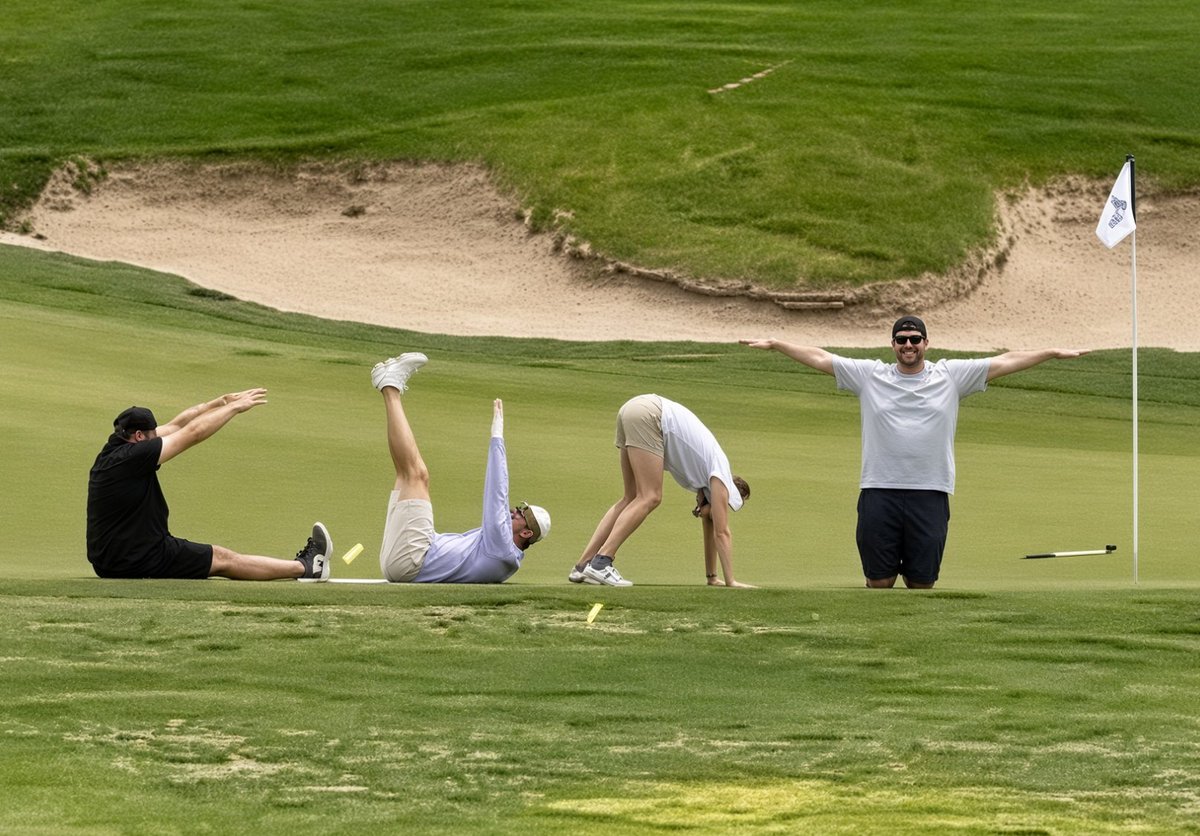
Trump's visit to his golf course in Doonbeg, County Clare, Ireland is marked by protestors using the medium of mime. Homage to the late great Janey Godley, it's a thing of beauty.
Yesterday morning I took my mum to the GP feeling unwell and they found a satsuma-sized lump.
She was given a referral for suspected gynaecological cancer and sent for an urgent blood test.
What happened next shocked me. This is what NHS privatisation means in practice👇1/🧵
PENDA'S FEN is on proper telly tonight for the first time in years! If you've seen our Folk Horror show, you've seen me and Bob Fischer banging on about how much we adore David Rudkin's astonishing play. It's on BBC Four at 10.15pm. If you've never seen it, you're in for a treat!
A massive ‘well done’ to the 50-ish patriots who protested outside the Marriott Hotel in Portsmouth last night after spotting a number of brown people present at the venue. Just one small problem however - it was the Pakistan Under-19 Men’s Cricket Squad who are currently on tour and taking on our own Under-19 team in Arundel today.
SUPPORT THE RNLI - https://t.co/IiXhCitYSv
Insane story. He was warned two weeks before the Oct 7th attacks by the Emiratis about an imminent attack by Hamas - and did nothing.
No wonder Netanyahu has always wanted to drag out this war and block any chance of a proper independent investigation into Oct 7th.
Serious news - not reported until now. In the week the UK and NATO accused Russia of armed drone attacks in Leipzig, Britain's nuclear deterrent backup link was destroyed over the Yorkshire. Our story is here.
https://t.co/fqHj8qYizW
The Mercator map was created only for navigation, not for education. Colonizers seized it and made it popular to showcase their supremacy and hide reality. Thanks to the United Nations for dismantling this century of distortion.
Well this is rather odd. The police don't seem to be clubbing them and arresting them like they do whenever left-wing/environmental/anti-genocide protestors disrupt something, but are instead "engaging with them". I wonder why that is?
Margaret Thatcher did not 'regenerate the British economy'. She devastated the UK's industrial base, put three million people on the dole and plunged entire communities into the kind of poverty they still haven't recovered from four decades later.