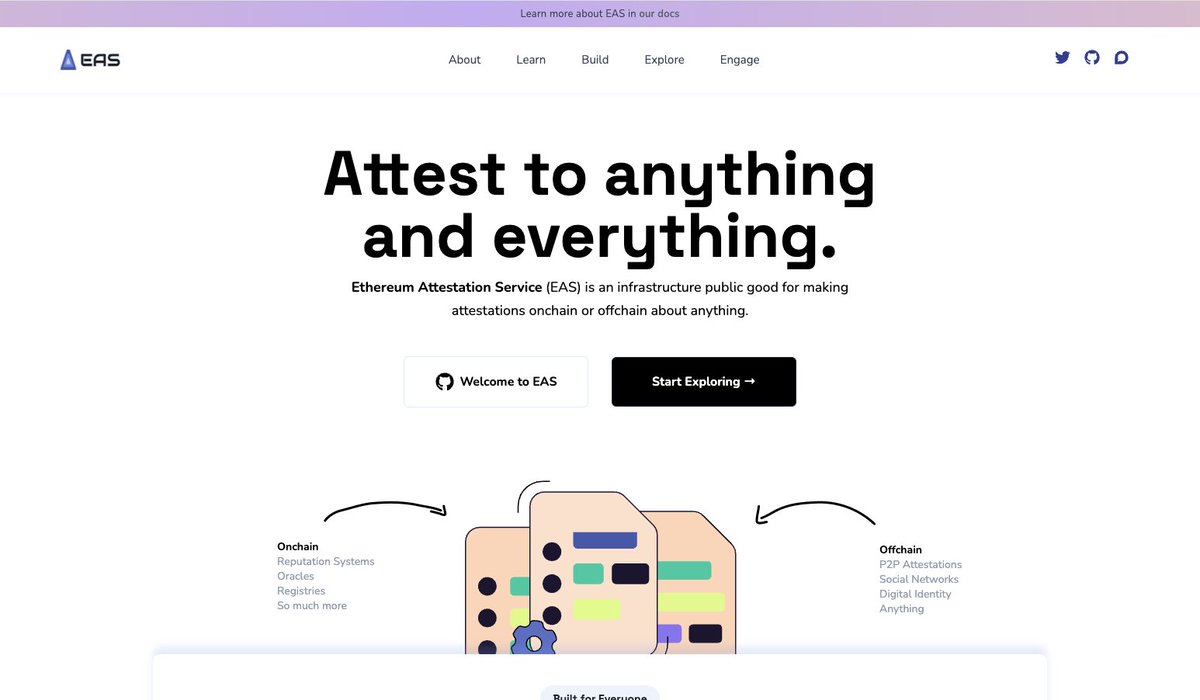
npm i -g easctl
An EAS CLI with built-in schemas, JSON output for agent toolchains, and support for 12+ chains.
AI agents are starting to operate onchain. For them to be useful, they need trust — identity, credentials, reputation, accountability.
EAS attestations are the primitive for this. Signed, structured, onchain claims that anything in the ecosystem can verify.
OutLayer just shipped an EAS attester that attaches the hardware proof of its own run to every attestation. Web form or console.
Ethereum Attestation Service (EAS) answers who signed a claim. This attester answers the harder question: can you trust how they got the number. Two things here get called attestation, and the difference is the point. The EAS attestation is the on-chain record of who signed. The teeAttestation field inside it is a hardware proof of how the number was produced.
That proof is an Intel-signed quote of the exact run. It seals sha256 of the input, sha256 of the output, and the hash of the WASM that executed with the repo and commit it was built from. The quote is signed by a certificate chain up to Intel's root CA, so its authenticity roots in the silicon, not in our word for it.
The signing key was generated inside the enclave and has never existed outside it. No human, no browser, no operator has ever seen it.
You build none of it. Hand it a schema and a target contract, and inside the enclave it queries several independent RPCs itself, requires them to agree before it proceeds, computes the value, signs the EAS attestation with that enclave-born key, writes it on-chain, and attaches the quote of its own run. No servers, no key management, and no operator you have to believe. The quote, not us, says what ran.
The code is open source and small enough to review in full. Audit it, or fork it for your own schema. You don't even have to trust that the code you read is the code that ran: each attestation proves which binary produced it. Code can change, but a given attestation cannot lie about what made it.
Pick a preset, fund the enclave-born key with about a dollar of gas, and click. The links below verify themselves.
[X] I affirm that Ethereum is the world computer, will help assure that every transaction on Earth settles to Ethereum and will maintain an energetic focus on keeping it neutral and trustless global infrastructure, such that ETH becomes the most valuable asset in the world
npm i -g easctl
An EAS CLI with built-in schemas, JSON output for agent toolchains, and support for 12+ chains.
AI agents are starting to operate onchain. For them to be useful, they need trust — identity, credentials, reputation, accountability.
EAS attestations are the primitive for this. Signed, structured, onchain claims that anything in the ecosystem can verify.
with that, the attestation ecosystem must encourage broad experimentation across different chains and communities.
it pushes us all forward.
it reinforces what developers need.
it brings us closer to future we envision.
Sign is not the competition.
the status quo is.
spicy take from a Binance author evaluating @Sign's attestation service vs EAS.
the promise of EAS is to be open, free, tokenless, and permissionless.
for any chain.
any community.
and any builder.
https://t.co/enL75TLl0e
Excited to see how more real world assets are verifiable using attested data.
Congrats to @BitsaveProtocol for making a real impact on local businesses 💙.
Builder Highlight!
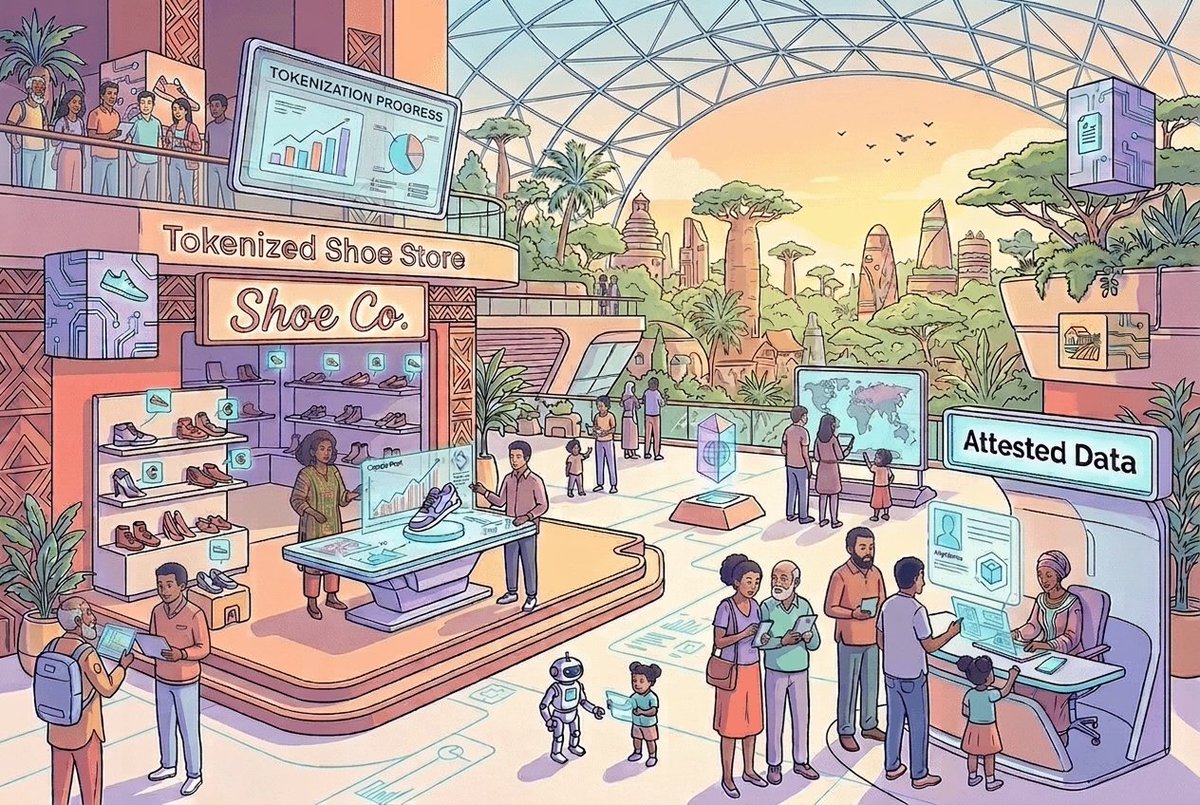
@BitsaveProtocol has tokenized over 60+ real world businesses onchain across Africa.
They attest to valid business registrations which enable the tokenized businesses to become a yield bearing asset on @base.
Congrats on the progress!!
The attestation from Bitsave:
- gives the real world business an onchain presence, the tokens, and bizmarket as the issuing platform.
- describes the instrument they’re issuing (equity, debt, revenue based, or something experimental)
- references their submitted docs and disclosures (hashed for privacy)
https://t.co/iZZ6KSjWJs