100% this. I'm generally of the opinion that you shouldn't use open source software in a product without being willing to vendor it in -- prepackaged builds are a temporary convenience.
It would help if common packaging tools were more vendor friendly, most are downright hostile,
I really believed a whole generation of developers, who only know open source from npm and pypi, miss how open source actually used to work.
When Debian or a Linux distribution ships a dependency they take responsibility of it. If there is a security issue and it’s not fixed by the developer upstream, they fix it for their users.
Debian and others basically vendor every thing they distribute. They honor the license and they maintain patches. Most of the stuff that you get from your Linux distribution is basically a (small) fork.
The same is true for Apple, Microsoft and others. The open source software they ship, they carry that responsibility.
That doesn’t mean that security fixes are not upstreamed, but Apple or Debian or anyone else won’t jump in Twitter to shame a developer into compliance with their ways. They are not dependent on the health of a packaging infrastructure. They own their software including all the things it depends on.
I want that thinking back. Because it fundamentally makes people feel more responsibility and it shares the burden of issues. It also does not put so much focus and attention on the one overworked developer who just happened to have too much of the world depend on their library. Remember: they carry a responsibility they never signed up to and they never got compensated for.
alright all of you that maintain a cli oauth flow
i hope it's obvious to you now doing the whole browser link callback to localhost thing is dumb and annoying af in ssh
please implement the code flow that polls - try gh cli login flow to see it
Writing ADR's for agents has been such a good decision
Capturing all the non-obvious decisions in a codebase makes every agent in your stack that touches the stack smarter
It's the thinnest layer of docs that captures the stuff code can't
@Steve_Yegge Teams limits are way below Max 20x and not pooled very well at all, from my anecdotal experience. Off hand, I'd guess that the $150 teams seats might get a similar budget to the $100/mo max plan.
It's been 12 days since I dropped Gas Town. The response has been off the charts. I've been working hard to keep up. Thanks to all the early adopters. I wrote up this survival guide. https://t.co/KRR5XQbXLS
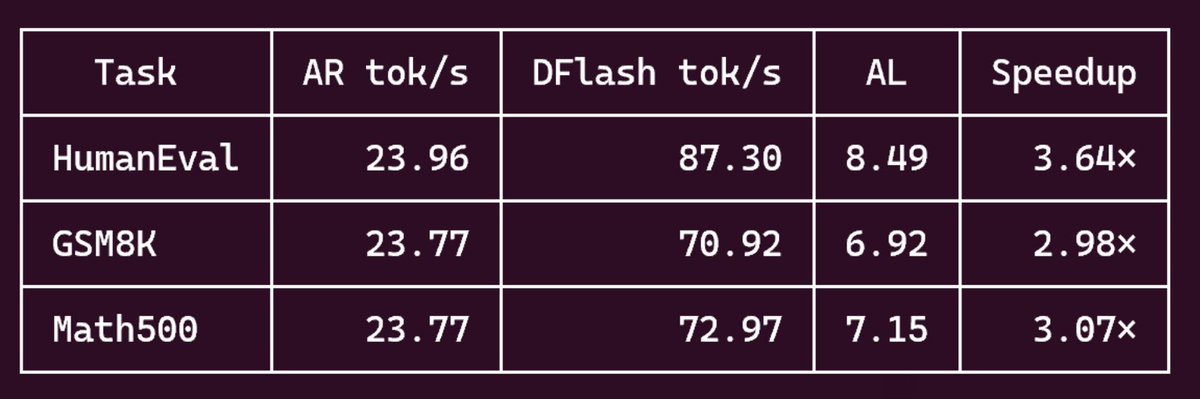
Had to stack up 8 Mac Minis to get it running.
~5 tok/sec for now.
First time running inference on 8 Mac Minis - performance can be improved a lot (theoretical limit is >10 tok/sec on this setup).
When SaaS products grow and the architecture starts to break down, two types of devs emerge:
1. Those who believe the system is beyond repair and needs to be totally rebuilt
2. Those who put their heads down and fix it one piece at a time
I've only seen group #2 be successful.
People have too inflated sense of what it means to "ask an AI" about something. The AI are language models trained basically by imitation on data from human labelers. Instead of the mysticism of "asking an AI", think of it more as "asking the average data labeler" on the internet.
Few caveats apply because e.g. in many domains (e.g. code, math, creative writing) the companies hire skilled data labelers (so think of it as asking them instead), and this is not 100% true when reinforcement learning is involved, though I have an earlier rant on how RLHF is just barely RL, and "actual RL" is still too early and/or constrained to domains that offer easy reward functions (math etc.).
But roughly speaking (and today), you're not asking some magical AI. You're asking a human data labeler. Whose average essence was lossily distilled into statistical token tumblers that are LLMs. This can still be super useful ofc ourse. Post triggered by someone suggesting we ask an AI how to run the government etc. TLDR you're not asking an AI, you're asking some mashup spirit of its average data labeler.