Roughly four million people speak Georgian. It has its own alphabet, a literary tradition older than most of Europe's, and almost no decent way to learn it.
Duolingo, Babbel, Memrise, Rosetta Stone: all of them skipped it. The apps that do exist are mostly word lists.
So we built the one we wanted ourselves.
Most people overthink the start. Here is a first week that actually works.
Day 1: watch the free 56-minute alphabet video. By evening you can read, slowly.
Day 1: also start lesson 1 of the audio course. It is free.
Days 2 to 6: one audio lesson a day, full attention, headphones on.
Every day: ten minutes of flashcards. Spaced repetition does the planning.
All week: say what you learn out loud, to real people.
Seven days in, Georgian is no longer a someday plan. It is a habit.
Here is why Georgian feels so different the moment you start. It is related to almost nothing you know.
English, Russian, Hindi and Persian are all branches of one giant Indo-European tree. Turkish has its own large family. Arabic and Hebrew share theirs. Georgian belongs to none of them. It sits in the small Kartvelian family with a few mountain neighbours, and that is it.
New alphabet, new sounds, new grammar from the ground up. Daunting, and genuinely special.
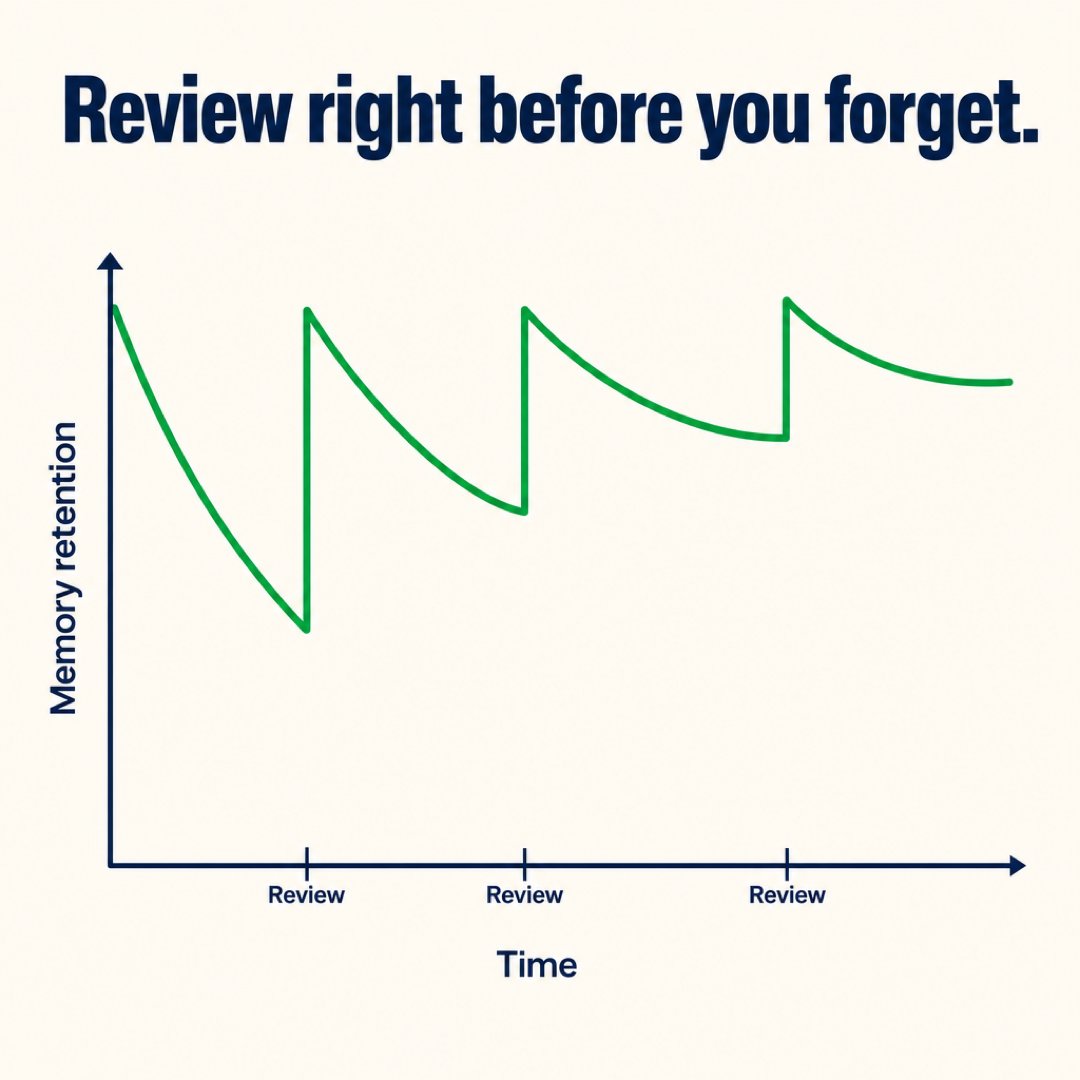
4. Memory fades on a curve. Learn a word today and most of it is gone within days, unless something brings it back.
The trick is timing. Review a word right before you would forget it and the memory resets, lasting longer each time. Soon you hold it for weeks, then months, with almost no effort.
That is spaced repetition, and it is built into every flashcard in the app. You just practice. The timing is handled for you.
We have our first Cow on Road champion. 📷
Xavier dodged every cow, Prius and Wolt scooter on the road to 29,081 points, the best run of June. Watch the winning drive below, it's genuinely fun to see.
His prize is the full EasyGeorgian course bundle, free. Both of our Georgian courses and every flashcard, on us. The leaderboard resets on the 1st, so July is wide open and everyone starts from zero.
Grab the wheel, mind the cows, and the next free bundle could be yours. 📷
https://t.co/8apvmbXC0W
Georgian is famous for being hard. Here is the part nobody tells you is easy:
it has no grammatical gender.
ის (is) = he, she, and it. One word.
No masculine or feminine nouns. No agreement rules. For once, a free win.
In rural Georgia there is one unbreakable traffic law: the cow has right of way.
So we made a free little browser game about it. Dodge the cows, climb the leaderboard, learn a Georgian word by accident.
Number #1 at the end of this month gets a free course bundle.
https://t.co/diu6C3sCv0
That is what our podcast course is for.
Advance to Georgian Mastery: 100 episodes of slow, clear Georgian, each a small step beyond where you are. No drills. You listen, you understand a bit more each time.
Built for learners past the beginner stage.
https://t.co/pSuHeOvbta
Most people who learn a language get stuck in the same place.
Not the beginning. The middle.
You can order coffee and survive small talk, then progress just stops. Here is what actually moves you past it.
It is not more grammar. It is volume.
Children do not study their first language. They are surrounded by it, pitched just above their level, until the patterns settle in on their own.
Adults can do the same. The trick is finding Georgian at the right level.
3. გაუმარჯოს (gaumarjos), the toast, doesn't mean "cheers." It wishes victory.
Even გამარჯობა (gamarjoba), "hello," grows from the word for victory. Georgia spent centuries defending itself, and the greetings still remember.
We teach the language behind this: https://t.co/fvYtMKKiQu
2. დედაენა (dedaena) means your native language. Literally დედა (mother) + ენა (language).
Your first language is your "mother-language." It's also the name of the primer Georgian children have learned to read from since 1876.