In 2016, the UK voted to leave the EU.
Here's a 'Sliding Doors' style look at what we could have won had the Brexit vote gone the other way. (It's also a bare bones blueprint for some of the potential benefits that could be touted by a future Rejoin movement.)
Each section below covers one particular aspect of EU membership.
1. Economic Benefits:
- Full, unfettered access to the largest trading bloc in the world
- Significant administrative savings due to absence of customs and other documentation for EU trade
- No additional VAT or duties on goods imported from or exported to the EU
- Participation in EU trade agreements with over 70 non-EU countries
- Frictionless borders enabling just-in-time manufacturing, crucial for automotive, aerospace and other sectors
- Financial passporting for City of London firms, allowing financial services companies authorized in the UK to operate throughout the EU without needing separate authorization in each member state.
- Faster delivery times across the EU
- Streamlined international supply chains
- Open access to the EU market for UK fish exports
- Participation in the EU Single Energy Market
- Simplified VAT procedures for cross-border trade
- Access to EU structural and regional development funding
- Participation in the EU Emissions Trading System (ETS)
- Common Agricultural Policy (CAP) subsidies for farmers
- Easy access to a willing seasonal agricultural workforce
- Simplified process for recognition of professional qualifications across the EU
- Economies of scale for businesses operating across the EU
- Increased attractiveness for foreign investors (the "UK as gateway to Europe" vision of Margaret Thatcher)
- Protection for foods of geographical origin (e.g., Melton Mowbray pork pies)
- Venture capital funding and startup loans from EU programs
- Products made in the UK can be sold in over 30 countries without extra approval
- Right to offer services all over the EU on the same basis as to UK clients
- Support for SMEs through the Enterprise Europe Network, European SME Week, and funding through programs like the InvestEU SME window
2. Travel, and Freedom of Movement:
- Freedom for UK citizens to travel, work, study and retire anywhere in the EU
- Freedom for EU citizens to travel, work, study and retire in the UK
- No 90-in-180 day limit on how long UK citizens can holiday in the EU
- Exemption from upcoming EES and ETIAS border systems
- Access to fast EU queues at EU airports and ports
- EU-wide mobile phone roaming at domestic rates
- Access to home content on streaming services while travelling in the EU
- Driving licenses valid all over the EU
- Multi-year pet passports for easy travel with pets
3. Education and Research:
- Extensive scientific and academic collaboration
- Participation in Horizon Europe research program
- Participation in Erasmus program, offering university student exchanges, and opportunities for apprentices, teachers and youth workers.
- Right to study in EU universities at the same lower home fees as locals
- Mutual recognition of academic and many professional qualifications
- Access to state-of-the-art EU research facilities
4. Consumer Rights and Protections:
- Enhanced consumer protections, including for cross-border shopping
- Strong food labelling regulations
- Mandatory minimum 2-year warranty period on goods
- Right to cancel and return orders within 14 days
- Legally enforced 14-day cooling-off period on timeshare agreements
- No surcharges on credit and debit card transactions
- Protection under EU's Passenger Rights regulations for all modes of transport
5. Health and Safety:
- European Health Insurance Card (EHIC) for access to medically-necessary state provided healthcare during temporary stays in the EU
- Quicker access to safe/new medicines
- Enhanced medical research partnerships
- Single system of chemical regulation (REACH)
- Participation in EURATOM for vital medical isotopes
- High toy safety standards
- Participation in the EU Early Warning and Response System for pandemics
- Coordinated approach to rare diseases
- High food safety standards
- Participation in the European Centre for Disease Prevention and Control (ECDC), enhancing the UK's ability to respond to health threats
6. Workers' Rights:
- Secure baseline of worker protections, including limits on working hours, guaranteed rest breaks, and a minimum of 4 weeks paid leave annually
- Equal treatment across the EU: Workers from any EU country must be given the same salary conditions and rights as local staff when working in other EU countries
- Protection for agency workers
- Protection under the EU's Working Time Directive
- Strong EU directives against workplace discrimination based on gender, race, religion, disability, age, or sexual orientation
7. Environmental Protection:
- Significant environmental protections
- Cleaner air backed by the EU Air Quality Directive
- Cleaner beaches and stronger penalties for untreated sewage discharges
- Protection of 500 bird species under EU legislation
- Participation in EU environmental initiatives like the European Green Deal
- Strong protection against GM food and chlorinated chicken
- Access to EU environmental funding through programs such as LIFE
- Participation in the EU Emissions Trading System (ETS) for carbon credits
8. Citizenship and Legal Rights:
- EU citizenship, with additional rights and protections
- Right to vote in local and European elections when living in any EU country
- Access to European Court of Justice
- Enhanced human rights protection through the Charter of Fundamental Rights
- Right to petition the European Parliament
- Consular protection from any EU embassy in countries where the UK itself has no embassy presence
- European Citizens' Initiative, allowing any citizen to directly influence EU policy by collecting sufficient signatures on matters in which the EU has competence
9. Data and Digital Rights:
- Strong data protection laws (GDPR)
- Right to be forgotten
- Access to personal data held by companies
- Participation in EU digital initiatives, such as the Digital Single Market
- EU-wide protection for .eu domain names
- Stronger collective stance against global tech giants
- Legally enforced net neutrality
10. Cultural and Creative Industries:
- EU Creative Europe funding to support British film, theatre, and music industries
- Free movement for musicians, artists, and their equipment, including no need for visas or work permits
- Participation in European Capital of Culture program
- Participation in European Heritage Label initiative
11. Security and International Cooperation:
- Support for the Good Friday Agreement and active promotion of the Irish peace process
- Cooperation on security issues and access to shared crime databases
- Participation in European Arrest Warrant system
- Cooperation on counter-terrorism efforts
- EU-wide coordination on cybersecurity threats
- Collaboration on migration issues
- Participation in EU's common foreign and security policy
- Collaborative space exploration and participation in Galileo GPS system
- Support for democracy and human rights globally
- Disaster relief funding (e.g. flood relief)
- Access to real-time security databases such as the Schengen Information System (SIS II) and the European Criminal Records Information System (ECRIS)
12. Political Influence:
- A say in the running of the EU, including British MEPs and representation at all levels
- The right to appoint British judges to the ECJ and commissioners to the European Commission
- Influence on setting EU budget and priorities
- More powerful presence on world stage as part of EU bloc
- Stronger voice in international forums
- Greater leverage in global trade negotiations
- Collaboration with EU partners to hold large multinational corporations accountable for taxes
- Voting power in the Council of the EU
13. Social and Community Benefits:
- EU-wide social security coordination
- Access to funding for community development projects
- Initiatives providing support for regional and minority languages such as Welsh
- Support for social inclusion and equality initiatives
- Access to EU funding for disadvantaged areas
14. Future Potential and Shared Innovation:
- Collaborative research and development in cutting-edge fields like renewable energy, artificial intelligence, and biotechnology.
- United approach to global challenges such as climate change, migration, and health crises.
- Influence in shaping global standards for data protection, consumer rights, and environmental regulations.
- Joint investment in strategic technologies, including semiconductors and quantum computing.
- Coordinated efforts in space exploration and satellite technology.
- Shared initiatives for digital transformation and the growth of the digital economy.
- Collective development of sustainable and smart cities.
What's happening at Whiteshore Cockles needs to stop. This is the dark side of the salmon fishing industry... Mass graves for diseased, dead salmon, out of sight out of mind, but not out of pocket.
Watch the full clip on ITVX: https://t.co/pnjd3fUu7d
Ed Miliband blames “geo-political instability” for rising energy prices. Bullshit. 20 energy companies made £457bn in profits since the start of the energy bills crisis & energy bills went up 10% from October 1st. The cost of living crisis is a cost of corporate greed crisis.
Tired of being the dirty man of Europe. Tired of feeling out of control, tired of sitting back and taking it.
Turn your outrage into action. March for Clean Water.
Sat 26th Oct, Parliament Square. #floodthestreets
https://t.co/U79uuJ1ik0
"Devon town vs South West Water: Exmouth suing over sewage on beach."
Why in God's name are local residents and business having to do this? Whatever happen to that "urgent" review of water industry regulation? What a shambles.
#FloodTheStreets
https://t.co/GOZjAh3Sv3
🚨If you think Robert Jenrick is wrong about leaving the ECHR please RT
If we want to avoid a dangerous chain of events which could one day see Britain joining Russia & Belarus as only European countries outside ECHR we need to constantly call out this insane Drumbeat to leave
Six ways to fund Labour’s “black hole” https://t.co/2Junp7rk09 Labour says there is a "black hole' in the government's funding. Technically, that is an impossibility, but if what it is saying is that it wants to raise more money, I offer six ideas here to enable it to do so. There is no crisis in government funding. The required money can be found very easily. And pain need be on no-one's agenda. So what is Labour up to?
There is literally no need at all for Labour to deliver a painful budget in October. There is a massive capacity to increase taxes on wealth. If Labour wanted to borrow they could. And there are people who want good work.
Whenever we link to the @MarchForRejoin fundraiser page, Elon Musk's X/Twitter hardly shows the tweet to anybody.
If you can see this, can you please retweet? 🙏🇪🇺
https://t.co/Nt41XfA5Fq
Ofgem Executive pay
Johnathan Brearley CEO £330,000
Mark McAllister Chairman £180,000 part time
Over a dozen executives paid £200,000+
Free money for doing nothing, no wonder they smile.
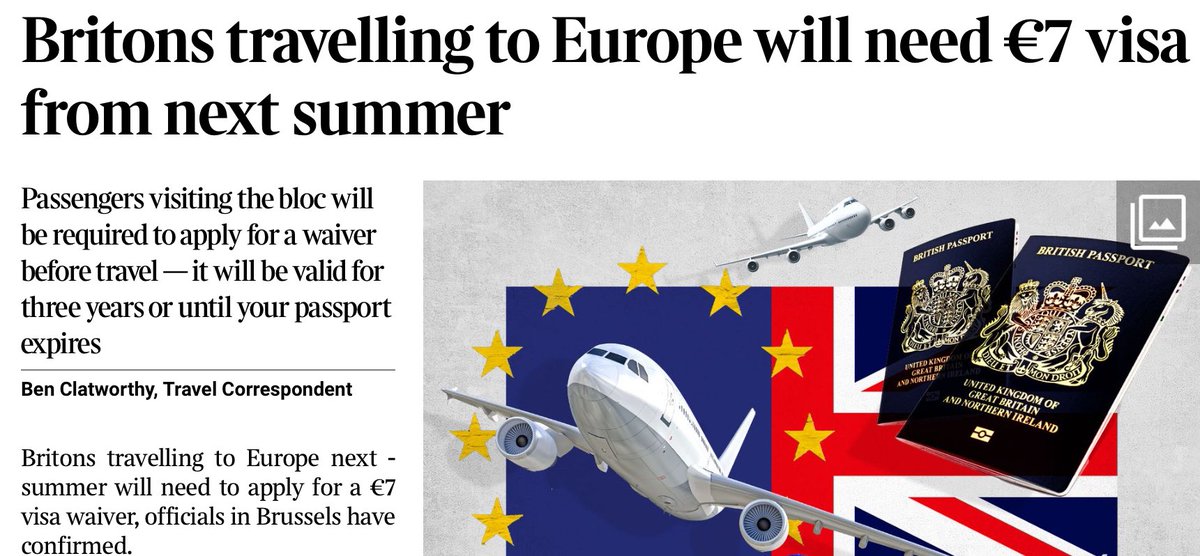
What did the EU ever do for us? Visa needed to visit Europe from next summer https://t.co/E2J8jiFPRh surprised? I wasn’t ‘from summer 2025 you will need to pay for a visa waiver to visit an EU country’ was definitely on my June 2016 ballot paper. Just below ‘take back control’.
Energy bills could rise to average of £1,714 in Oct.
Energy companies making record profits
£60bn subsidy for renewable energy
£80bn for fossil fuels
£22bn Drax
6m people in fuel poverty.
Pensioner Winter Fuel Payments cut
No end to corporate welfare.
https://t.co/iXArRU11i1
You Mum waits 40 hours for an ambulance so BP don’t have to pay tax.
Your kids can’t afford University so Amazon don’t have to pay tax.
Your sister can’t get housing so Google don’t have to pay tax.
Your Gran’s on a 5 year hospital waiting list so Vodaphone don’t have to pay tax.
David Black CEO of Ofwat is paid up to £169,000 a year.
For that he tells us privatisation can’t be undone, he can’t fine the water companies, and everything is worse in Scotland.
He just lies relentlessly for them.
Shut Ofwat down.