Delighted to join the @VTAgEcon faculty this fall! Excited to return to Appalachia🌄& engage w/ @globalchangevt on interdisciplinary research to predict, detect, & remedy environmental hazards affecting human welfare in the US & beyond. Reach out to explore MS/PhD opportunities.
What deeply affects us, is largely invisible, but is right before our very eyes? Our socio-economic backgrounds. As a trucker's son, I have felt this but having some evidence is always useful.
And, a fabulous new study from a superstar group of scholars estimates such effects for academics. One passage that jumps out for me: "academics from poorer backgrounds introduce more novel scientific concepts, but are less likely to receive recognition, as measured by citations, Nobel Prize nominations, and awards."
It gives some hope that while we might not know the hidden curriculum or have the fancy degree, our different views of life can be our super power! First gens everywhere should be celebrating, not hiding, our backgrounds.
https://t.co/cbGGMeCv7S
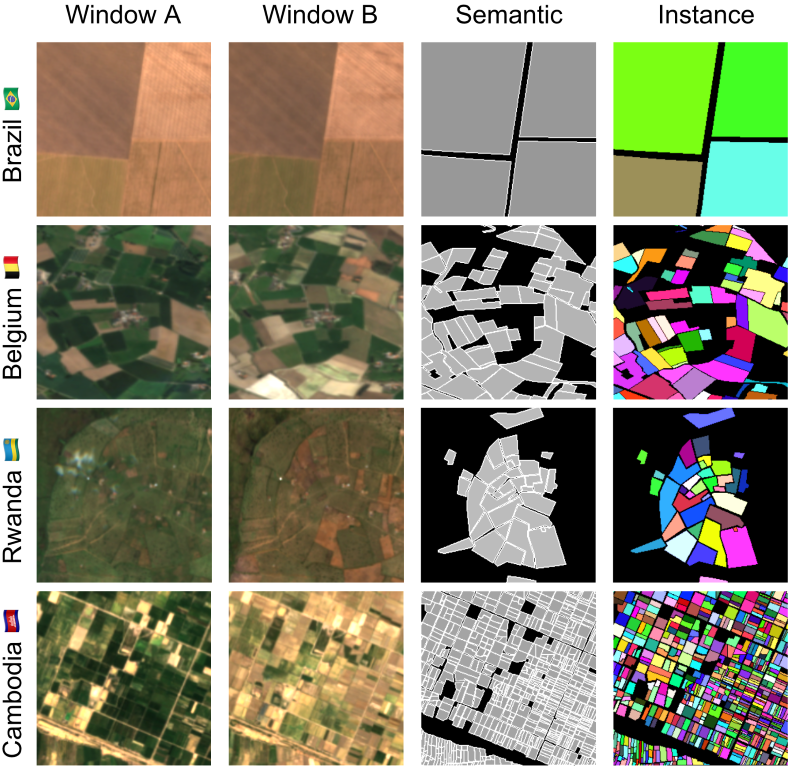
I'm so excited to finally introduce Fields of The World (FTW!) - the largest & most diverse ML dataset for field instance segmentation in satellite images. FTW has >70k samples from 24 countries (4 continents), with semantic & instance labels + Sentinel-2 RGB-NIR from 2 dates. 🧵
Wharton professor here! Here are the Penn Wharton Budget Model estimates:
— Harris’ proposal increases the deficit by $1.2 trillion, with low- and middle income households benefiting disproportionately.
— Trump’s proposal increases the deficit by $5.8 trillion.
Details below 👇
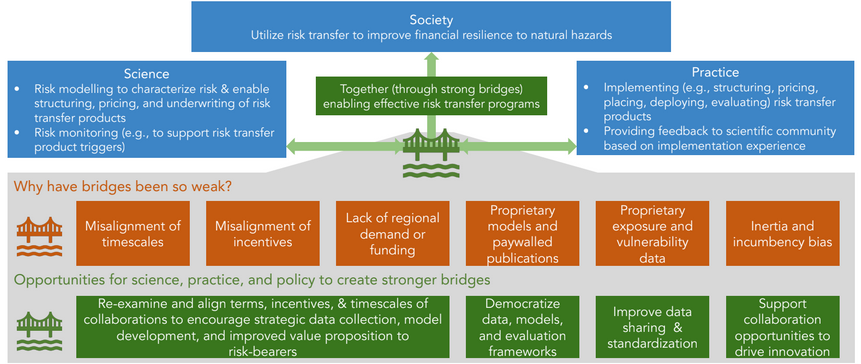
How can science & practice help in(en)sure resilience in a changing climate? Our new note in JCRR this week identifies 6 core issues impeding fast and fruitful feedback between these groups and how to build stronger bridges between the state of the art and state of play. A 🧵
In this latest #JCRR article, the authors outline how science and practice can deliver effective risk transfer as a vehicle for #climate adaptation. Read “Bridging Science and Practice to En(in)sure Resilience in a Changing Climate” for free here: https://t.co/U9RJ0noWKE
The cost of inaction on these issues is borne out in people's lives and livelihoods. A small but increasing number of counterexamples we mention in our piece illustrate that it doesn't have to be that way, however.6/n
The Social Pixel lab at @SGDE_UArizona is #hiring a new postdoc to start in 2024! You will be improving #MachineLearning learning algorithms on new #satellite sensors for flood mapping for operational use at NASA! https://t.co/19vHsBU8iO
The Social Pixel lab at @SGDE_UArizona is #hiring a new postdoc to start in 2024! You will be improving #MachineLearning learning algorithms on new #satellite sensors for flood mapping for operational use at NASA! https://t.co/19vHsBU8iO
@LilyYHsueh@ASU @Val_Mueller_ASU @danaehernandezc @KailinKroetz@AereOrg A joy to present and engage with you all - thanks for hosting! Enjoyed all the questions from the presentation as well as the chance to learn more about the very interesting work happening by all the folks I met with throughout the day.
We have several open faculty positions in @VirginiaTechCEE, including an open rank position in water resources. Please consider applying and/or let folks know about these great positions! https://t.co/49c1Jqhrbc
Just tried to get insurance for a property in Austin, TX & was told that @LibertyMutual is "not taking any additional risks in this area b/c of weather concerns, etc."
Affirms what I've been saying: the insurance industry takes climate change more seriously than policymakers.