The Chief of staff Scandal unfortunately tells you only little about the Tinubu regime❗️
The true definition of Organized Criminality is the the Nigerian Government ❗️
2027 = Nigerians Help Yourselves ❗️
Why I'm Becoming Increasingly Interested in STI The more I study infectious diseases and immunology, the more convinced I become that sexually transmitted infections (STIs) deserve far greater attention than they currently receive.
This is not simply because STIs remain common. It is because many of the factors driving their spread are becoming more pronounced.
Across many communities, early sexual debut, inconsistent condom use, multiple sexual partners, transactional sex driven by economic hardship, and psychoactive substance use continue to increase vulnerability to infection. At the same time, uptake of STI screening and preventive measures—such as the Hepatitis B vaccine—remains lower than it should be.
As a pharmacist, another issue deeply concerns me: the inappropriate use of antibiotics. Weak medicines regulation and easy access to antimicrobials have created an environment where self-medication is common. Beyond treatment failures, this fuels the growing threat of antimicrobial resistance—a crisis that extends well beyond STIs.
What worries me most is that many STIs remain undiagnosed until complications arise. By then, the consequences can be devastating: infertility, chronic hepatitis, increased HIV transmission, persistent HPV infection, cervical cancer, and other preventable health outcomes that affect individuals, families, and communities.
Yet, despite the magnitude of the problem, research in this area remains insufficient. Limited funding for health research, particularly in resource-constrained settings, continues to slow the generation of evidence needed to guide effective policies and interventions.
This realization has strengthened my resolve to contribute more meaningfully to this field.
As I begin my journey into immunology, I hope to focus part of my research on understanding the immunological basis of sexually transmitted infections, identifying the factors that influence their transmission and outcomes, and generating evidence that can support better prevention, diagnosis, treatment, and policy.
I believe the fight against STIs requires more than clinical care. It demands stronger research, better public health education, wider access to vaccines and screening, responsible antimicrobial use, and sustained collaboration across disciplines.
I'm looking forward to learning, collaborating, and contributing to solutions that make a measurable difference.
What areas of STI prevention or research do you think deserve more attention in low- and middle-income countries?
#PublicHealth #STIs #Immunology #InfectiousDiseases #Research #AntimicrobialResistance #GlobalHealth #Vaccination #HepatitisB #HealthResearch #Pharmacy
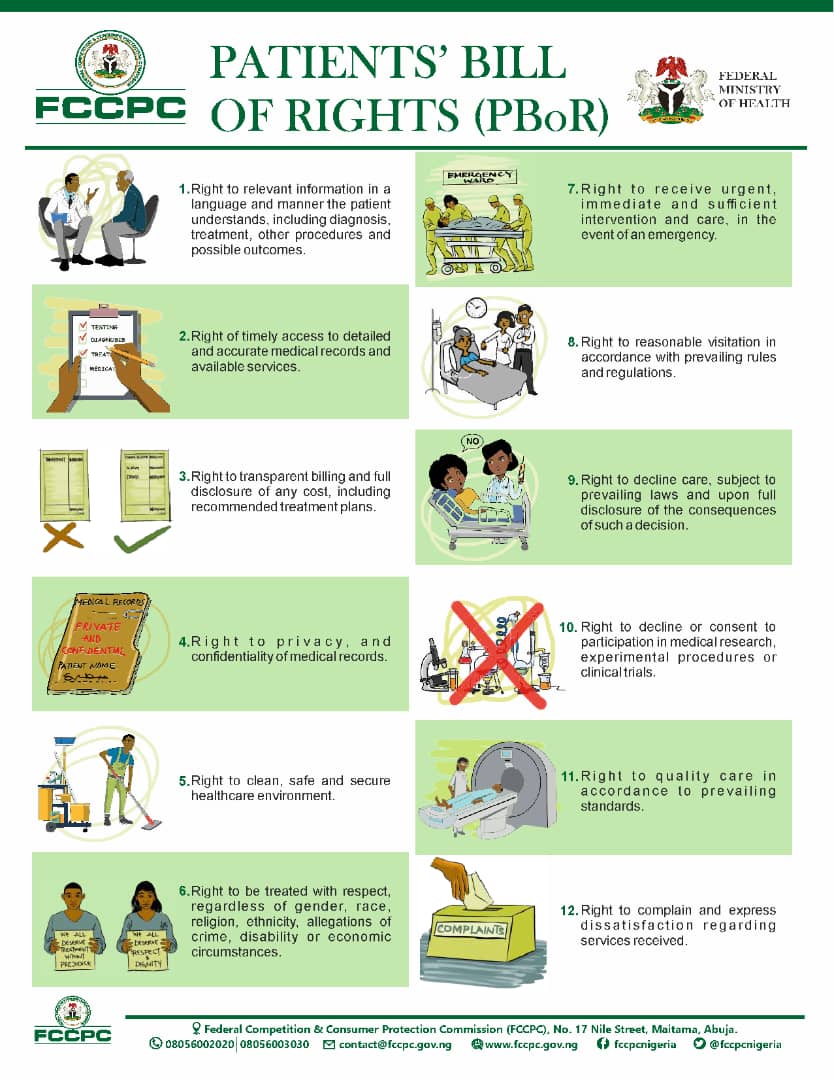
@AdeoluwaVictor@TundeIrukera Please find attached a one pager (abridged) version of the Patients' Bill of Rights (#PBoR) and the following link to the full version of the PBoR - Illustrated Guide.
https://t.co/q24Lc2Hq8P
Thank you for your interest in consumer affairs.
Suddenly NDC has been dragged to court. May God frustrate the malicious plans of the wicked and raise up good leaders for the health and wellbeing of Nigerians. Enough of the impunity and tyranny.
Sleep with these women at your own risk.
(Because some women don't just bring pleasure... They bring chaos, heartbreak, regret, and problems that can destroy your life.)
1. A married woman.
Tune into this week's episode with Dr. Samuel Nobs (@NobsSamuel) at @BellinzonaIrb!
He talks about how #microbes in the lungs and gut may shape respiratory immunity and influence susceptibility to infections and chronic #LungDiseases. 🫁
🎧 Listen now: https://t.co/s1U9gIX4Oc
“7, 8, 9, 10… 90, 92… 1011”
— Trending video from the ward of Deputy Speaker of the House of Representatives, Benjamin Kalu, during the presidential primary election held today in Abia State.
“Tonight, at my direction, brave American forces and the Armed Forces of Nigeria flawlessly executed a meticulously planned and very complex mission to eliminate the most active terrorist in the world from the battlefield. Abu-Bilal al-Minuki, second in command of ISIS…” - President Trump
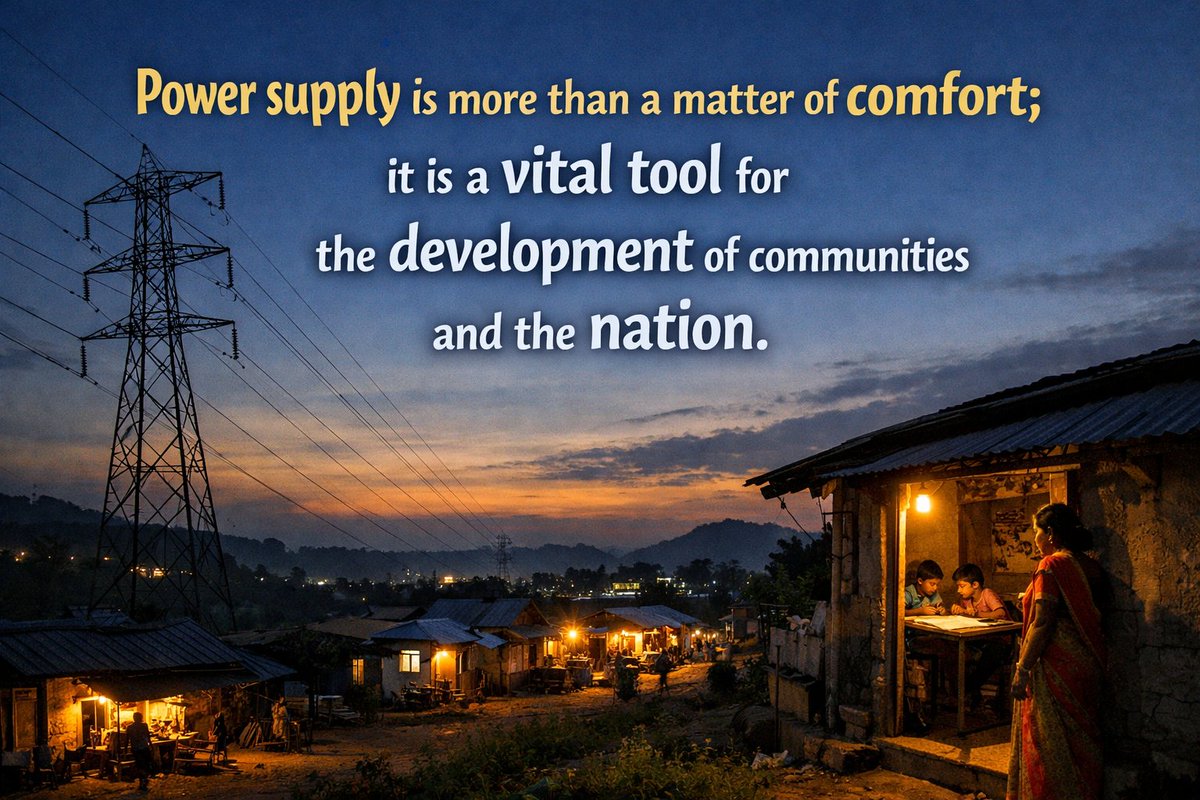
Power supply is not a luxury—it is the backbone of national development.
For millions of Nigerians, unreliable electricity is more than an inconvenience; it is a barrier to education, innovation, healthcare delivery, and economic growth. When access to power is limited or its cost becomes inflated, it robs individuals and communities of the opportunity to learn, create, build, and thrive.
We cannot continue to normalize erratic power supply in a world that is rapidly advancing in technology, research, and industry. While other nations move forward, we are held back by a crisis that touches every sector—Education struggling, Healthcare strained, Energy unstable.
If Nigeria were a patient, the diagnosis would be critical. But this is not a moment for despair—it is a call to action.
Enough is enough.
We must demand reliable, accessible, and affordable power. We must hold systems accountable and push for sustainable energy solutions that empower citizens and drive national progress.
Because without power, there is no progress.
And with it, there is limitless potential.
#PowerForProgress #FixNigeriaPower #EnergyIsDevelopment
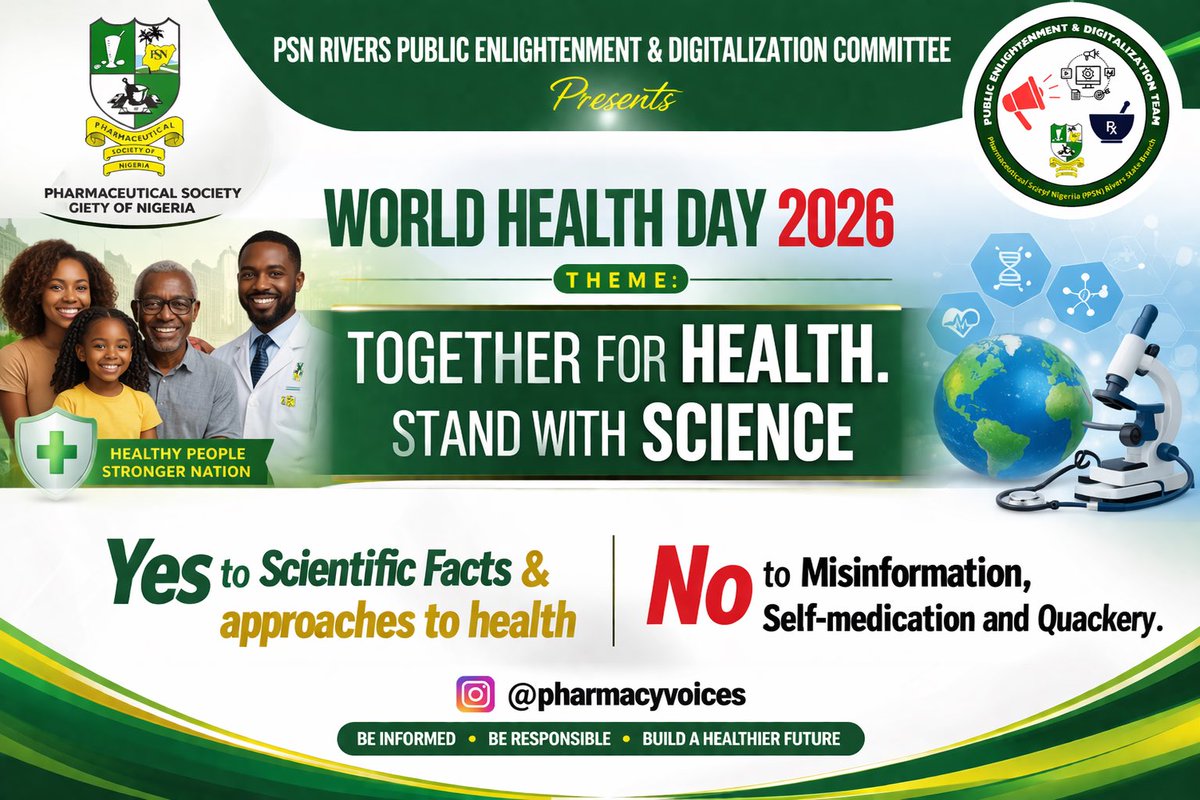
Today is World Health Day and truly pharmacists in Rivers state are committed to responsible care of patients that lead to desirable therapeutic outcomes that improve quality of life. We stand with science and we say NO to misinformation, self-medication and quackery!
#worldhealthday #health4all #pharmaceuticalcare
The “anyhowness” in Nigeria is making even those who should know better behave ignorant.
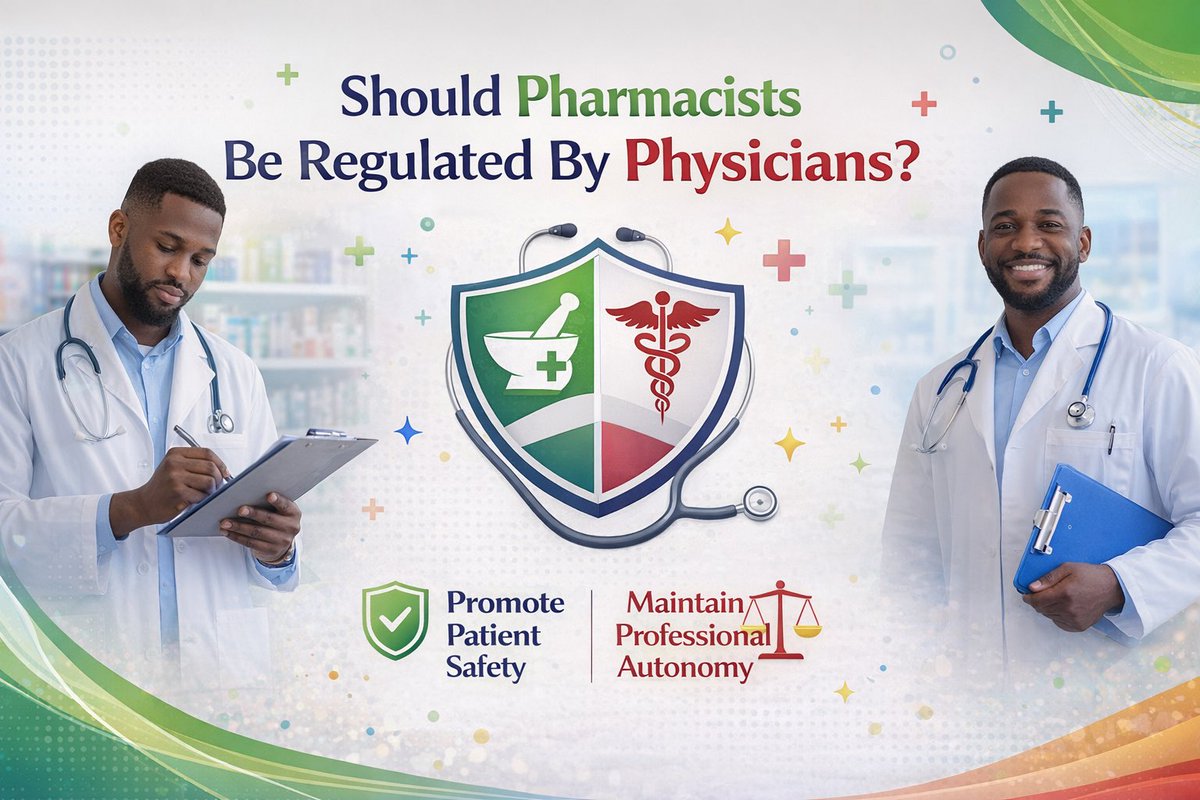
So I asked ChatGPT if Pharmacists should be regulated by Physicians?
The answer I got:
No—pharmacists should not be regulated by physicians.
Pharmacists and physicians are separate professions with different expertise, and globally they are regulated independently.
Here’s the clearer picture:
1. Professional autonomy
Pharmacists are trained experts in medicines—pharmacology, drug interactions, formulation, and safe use.
Physicians are trained in diagnosis and overall clinical management.
It wouldn’t make sense for one to regulate the other because their competencies are different.
2. Regulatory structure (how it’s usually done)
In most countries (including Nigeria):
•Pharmacists are regulated by Pharmacy Council / Regulatory Boards (e.g., PCN)
•Physicians are regulated by Medical and Dental Council
Each body sets standards, licensing, discipline, and practice guidelines for its own profession.
3. Checks and balances
Healthcare works best with collaboration, not hierarchy:
•Doctors prescribe
•Pharmacists review, dispense, and ensure safety
This creates a safety net, reducing medication errors.
If physicians regulated pharmacists, that independence—and patient safety layer—could be weakened.
4. Team-based care is the goal
Modern healthcare is moving toward interprofessional collaboration, not dominance:
•Pharmacists now run clinics (e.g., anticoagulation, diabetes care)
•They make clinical interventions and sometimes prescribe under protocols
Bottom line:
Pharmacists should be regulated by pharmacy regulatory authorities, while working collaboratively with physicians—not under them.
Professor Nnenna Oti is close to my heart for obvious reason. Her valor resonates with my senses. It takes a lot to inspire a generation.
She became the ‘Face of Democracy in Nigeria’ without breaking a sweat. Nnenna is the type of uncommon defiance that inspires a nation to act accordingly. She wrote her name in Gold.
She is courage, nature’s subterranean power.
She came under threat, Professor was intimidated by powerful forces to subvert the will of the people. But defiance stood her ground & courageously declared Alex Otti as the rightful winner of Abia governorship poll.
This is how you reward excellence & dedication to ‘due process.’ You encourage a nation to act in accordance with the law. Nigeria is changing & everyone must change with it. With people like Professor Nnenna Oti, all hope is not lost!
She did not break a sweat, she did not flinch. She stood there like the Iroko tree & she did the people right. Shout out to courage & audacity; this is me saying she has my confidence.
Please join me as we thank ‘defiance’ for her service to the nation. SPREAD THE WORD! 👏
Someone drew my attention to this video of a Catholic lady who is complaining of feeling empty after returning from Mass. Her emptiness is coming from the fact that the priest did not break the Word of God well.
1. Acknowledgement: First, I must commend the lady for speaking up. It is possible that there are other Catholics who feel the same way but have not been courageous enough to make their feelings known either privately or publicly as this lady chose to.
2. The Mass is first a sacrifice, not a performance: Second and very importantly, let me state clearly that at its core, the Holy Mass is the re-presentation of Christ’s sacrifice on the Cross of Calvary, not a lecture or motivational talk. If the focus shifts only to how inspiring or motivational the priest is in his homily, we risk misunderstanding what the Mass truly is.
3. The Eucharist is the true nourishment: In the Gospel according to John, Jesus teaches that His Body and Blood are true food and drink. Even if the homily is weak from our human perspective, Christ is still fully present - Body, Blood, Soul, and Divinity. No Mass is spiritually “empty” where the Eucharist is received with faith.
3. However, homily does matter: The Church teaches that the homily is an integral part of the liturgy. Priests have a real responsibility to break open the Word of God in a way that nourishes the faithful. Poor preaching can indeed make it harder for people to connect and grow.
4. Ongoing formation for priests is important: The lady's suggestion about ongoing pastoral formation is not misplaced. Priests should continually grow - in Scripture, theology, and communication skills. The people of God deserve preaching that is clear, faithful, and relevant.
5. But spiritual fruit also depends on disposition: Let it be made clear also that the grace we receive at Mass is not automatic in its fruits. Interior preparation matters: arriving to Mass early and saying a prayer before Mass, recollection, openness of heart. Sometimes “emptiness” is not only about what is given, but also about how it is received. Recall the parable of the sower in the Gospel.
6. Faith is not always felt: The other thing to keep in mind is that spiritual life is not built on feelings alone. There are moments of consolation and moments of dryness. The saints often experienced “emptiness” even in deep union with God. Lack of emotional satisfaction does not always mean lack of grace or poor homily quality.
7. The danger of a consumer mentality: When we begin to evaluate the Mass primarily by how it “made me feel,” we risk approaching it like a product rather than a mystery (this is one of the dangers of pentecostalism). The liturgy is not centered on us, but on God.
8. A call to deeper participation: I think the video calls all of us, without exception, to a deeper and active participation. Active participation is interior: preparation, listening, offering oneself, uniting one’s life to Christ’s sacrifice. When this happens, we will know that every Mass can be profoundly nourishing.
9. In Summary: Let me mention again that he lady's concern is valid - priests must strive to prepare, preach well, and communicate the Gospel effectively. But at the same time, the fullness of the Mass cannot be reduced to the 'quality' of a homily (let's also keep in mind that quality here is relative). Christ is always present and always giving Himself. The invitation is to meet Him there - with faith, disposition, preparation, and openness.
Fr. Ugochukwu Ugwoke, ISch
@Teeniiola I admit and respect her feelings too and truly it varies. This here is also a Catholic priest and I believe this couple got fed (they received the message)
https://t.co/5bxXwjvEPu