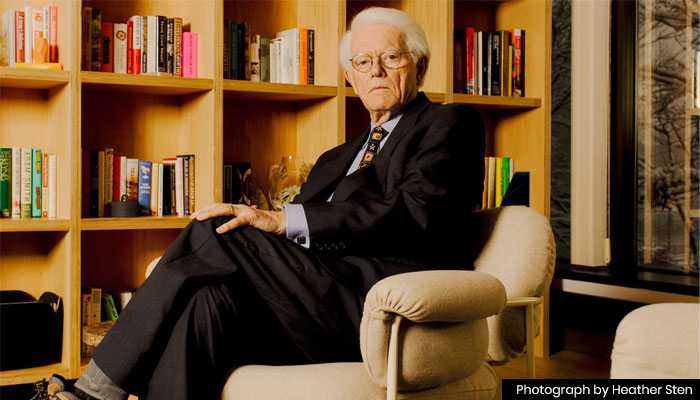
Author, Financial Freedom, Building Wealth, and Wellness Coach. Encourages and believes “financial illiteracy” is the “#1 economic challenge facing Americans”.
Back pain isn’t always an injury…
It’s often stiffness, weak muscles, and too much sitting.
These 10 yoga asanas can help relieve tension and restore movement com🧵
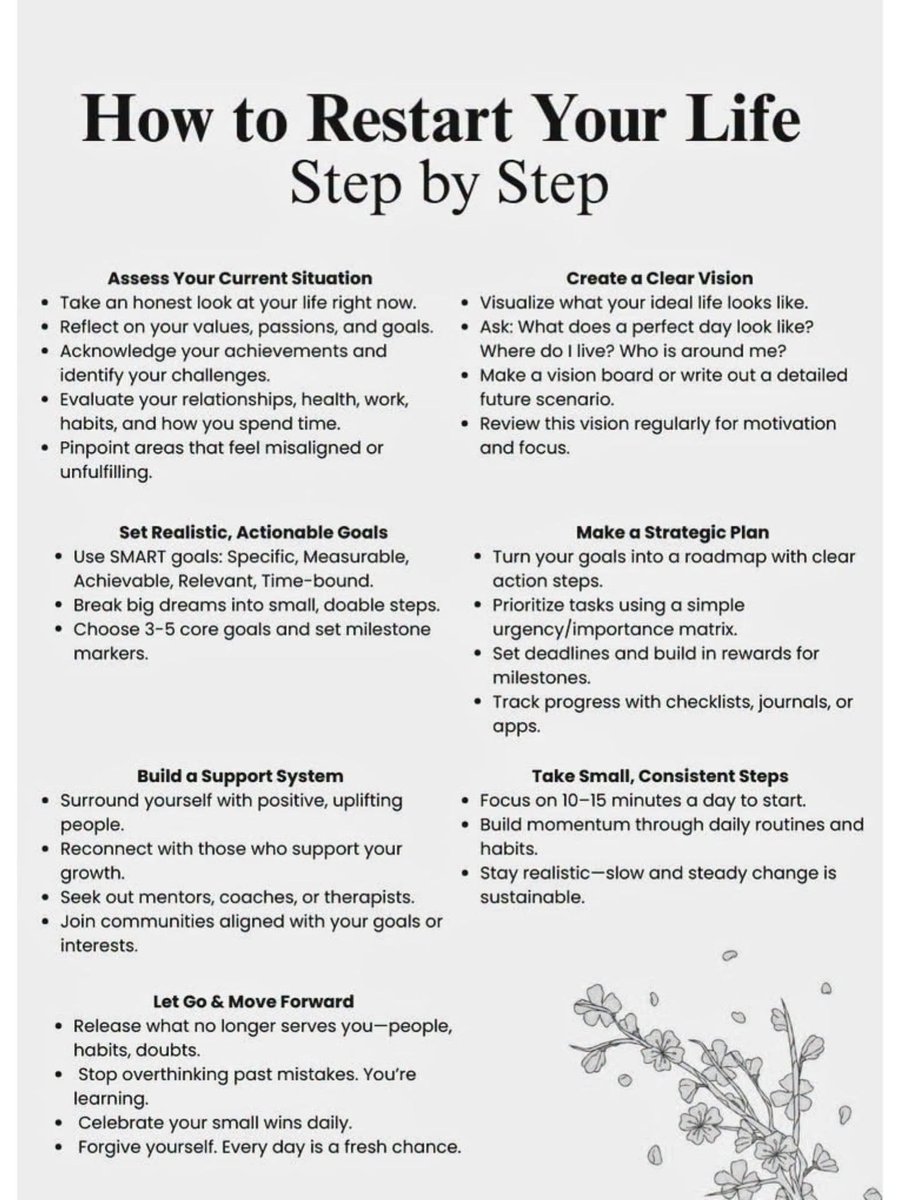
The secret is there is no secret. It takes what it takes.
Success is dirty, hard work. Don’t talk about it, be about it. Lean into the small, consistent actions everyday. They compound overtime and add up to something great. Success isn’t guaranteed, but without putting in the work, you have no chance.
There are no quick fixes or shortcuts.
Focus on and trust in the process.
Show up everyday. Put in the work. Focus on the foundation of the small, consistent actions. That’s “the secret.” That’s what it takes to be great.
Go be great!
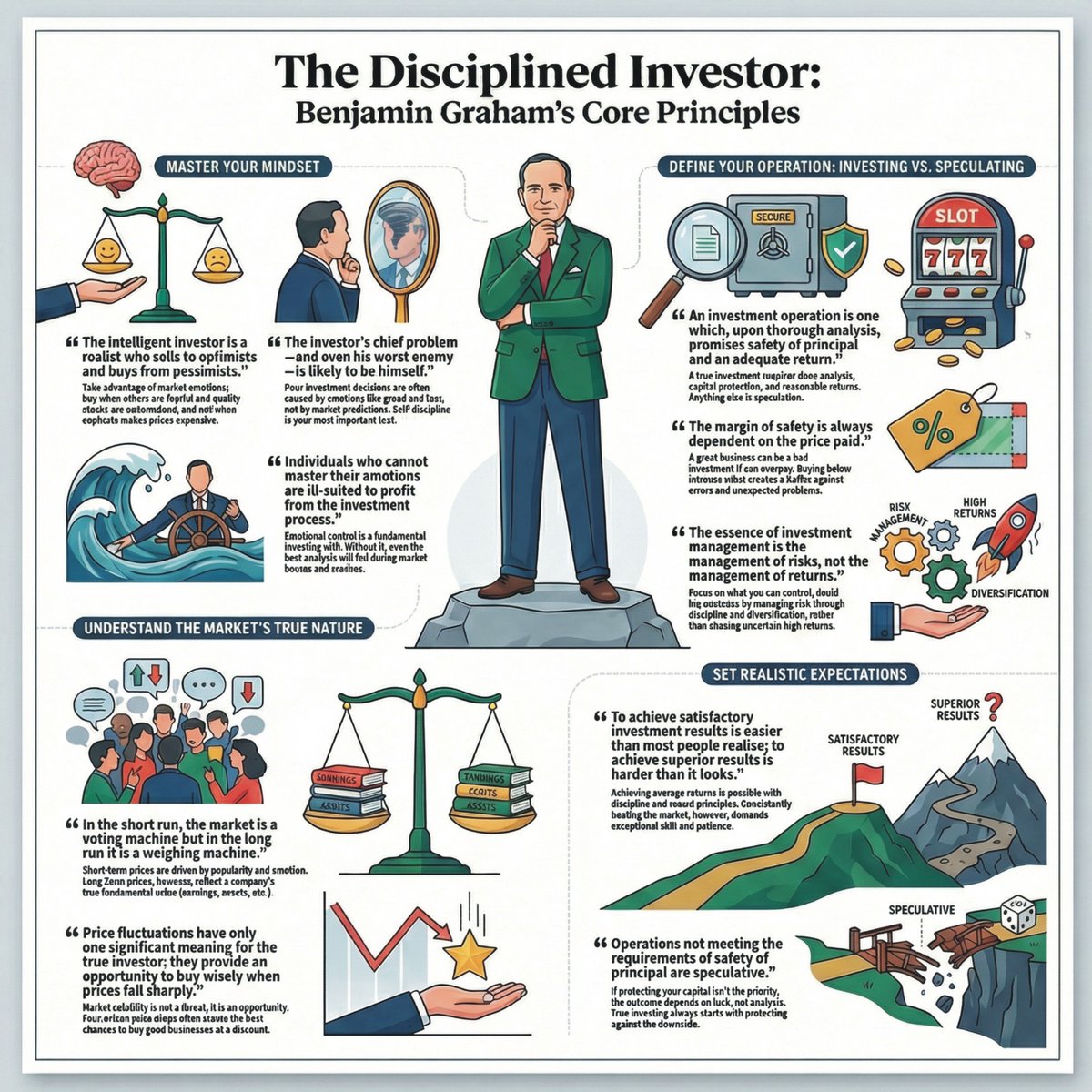
📘 Benjamin Graham’s Core Principles of Investing 📘
Master your mindset.
Invest with a margin of safety.
Focus on value, not market noise.
Protect capital first — returns come later.
Discipline beats prediction. Always. 📈
#BenjaminGraham#ValueInvesting#IntelligentInvestor
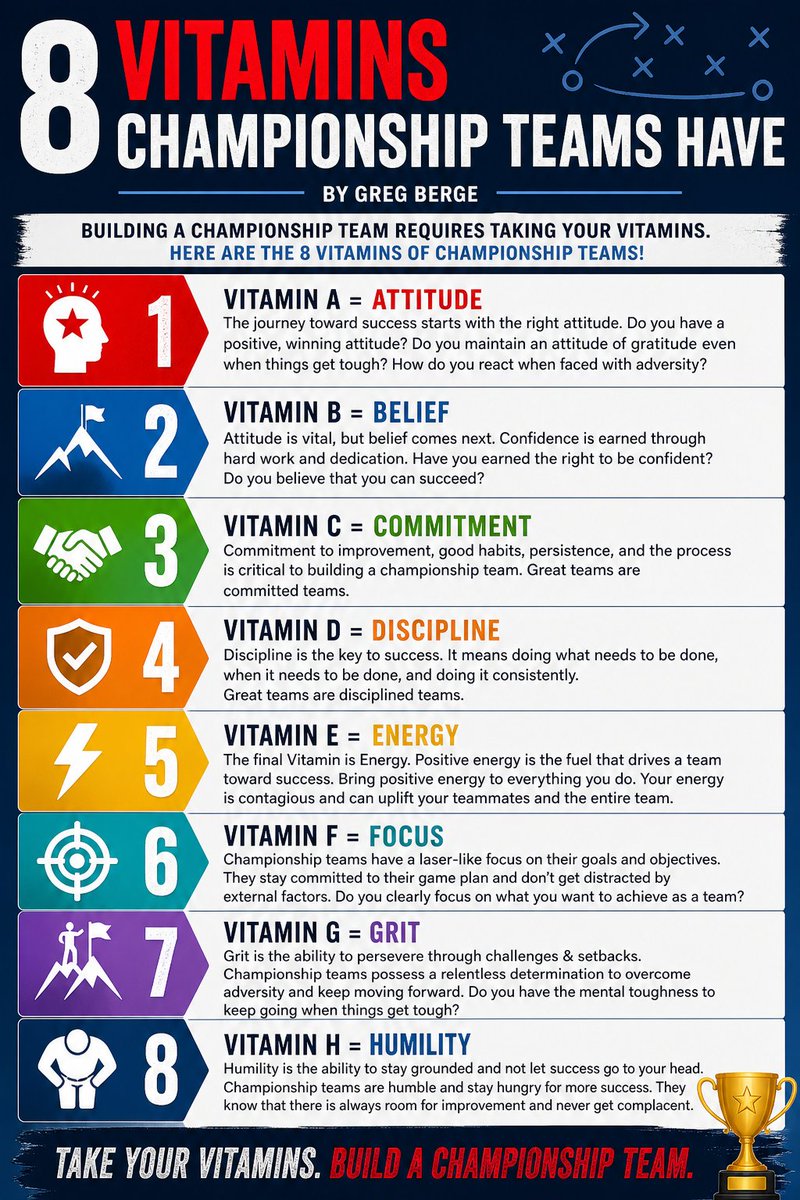
Championship teams don’t get lucky.
They take their vitamins.
Attitude. Belief. Commitment. Discipline. Energy. Focus. Grit. Humility.
Simple. Not easy.
Which one does your team need most right now?
En 2007, el profesor de Stanford Joel Peterson impartió una clase de 1 hora sobre cómo negociar y obtener lo que quieres.
Sus 3 ideas:
→ Nunca muestres necesidad
→ La confianza vence a la manipulación
→ Piensa en términos de relaciones
12 lecciones para negociar mejor:
Warren Buffett on how he'd make 50% a year with a small amount of money:
Buffett explains that when he was 20 or 21, he went through thousands of pages of Moody's manuals, reading about hundreds of obscure companies most investors had never heard of.
"I went through the Moody's transportation manual a couple of times, that was 1,500 pages, and I found all kinds of interesting things."
This deep research is what connected him with Charlie Munger.
Buffett knew the details of tiny West Coast companies that Munger thought nobody else had heard of. "That became an instant point of connection."
His advice for earning high returns with limited capital:
"I would try and know everything about everything small and with a million dollars you could earn 50% a year. But you have to be in love with the subject. You can't just be in love with the money."
Buffett compares it to great chess or bridge players who succeed because the game itself excites them, not just the rewards.
"The human brain does its best when you find out what your brain is really suited for. And then you just pound the hell out of it from that point."
Rule 12: Only invest in profitable companies
When you can find a small cap quality company which is a market leader in a niche, you have found a potential multibagger.
🧵 Peter Lynch is one of the greatest investors in the world achieving an annual return of 29.2% (!) between 1977 and 1990. This means your investment would have increased 26x (!).
Learn how to improve your returns with these 20 golden investment rules:
Food for thought.
Trump, Hormuz and the End of the Free Ride
For half a century, Western strategists have known that the Strait of Hormuz is the acute point where energy, sea power and political will intersect. That knowledge is not in dispute. What is new in this war with Iran is that the United States, under Donald Trump, has chosen not to rush to “solve” the problem. In Hegelian terms, he is refusing an easy synthesis in order to force the underlying contradiction to the surface.
The old thesis was simple: the US guarantees open sea lanes in the Gulf, and everyone else structures their economies and politics around that free insurance. Europe and the UK embraced ambitious green policies, ran down hard‑power capabilities and lectured Washington on multilateral virtue, secure in the assumption that American carriers would always appear off Hormuz. The political class behaved as if the American security guarantee were a law of nature, not a contingent choice. Their conduct today is closer to Chamberlain than Churchill: temporising, issuing statements, hoping the storm will pass without a fundamental reordering of their responsibilities.
Trump’s antithesis is to withhold the automatic guarantee at the moment of maximum stress. Militarily, the US can break Iran’s residual ability to contest the Strait; that is not the binding constraint. The point is to delay that act. By allowing a closure or semi‑closure to bite, Trump ensures that the immediate pain is concentrated in exactly the jurisdictions that have most conspicuously free‑ridden on US power: the EU and the UK. Their industries, consumers and energy‑transition assumptions are exposed.
In that context, his reported blunt message to European and British leaders, you need the oil out of the Strait more than we do; why don’t you go and take it? Is not a throwaway line. It is the verbalisation of the antithesis. It openly reverses the traditional presumption that America will carry the burden while its allies emote from the sidelines.
In this dialectic, the prize is not simply the reopening of a chokepoint. The prize is a reordered system in which the United States effectively arbitrages and controls the global flow of oil. A world in which US‑aligned production in the Americas plus a discretionary capability to secure,or not secure, Hormuz places Washington at the centre of the hydrocarbon chessboard. For that strategic end, a rapid restoration of the old status quo would be counterproductive.
A quick, surgical “fix” of Hormuz would short‑circuit the dialectic. If Trump rapidly crushed Iran’s remaining coastal capabilities, swept the mines and escorted tankers back through the Strait, Europe and the UK would heave a sigh of relief and return to business as usual: underfunded militaries, maximalist green posturing and performative disdain for US power, all underwritten by that same power. The contradiction between their dependence and their posture would remain latent.
By declining to supply the synthesis on demand, and by explicitly telling London and Brussels to “go and take it” themselves, Trump forces a reckoning. European and British leaders must confront the fact that their energy systems, their industrial bases and their geopolitical sermons all rest on an American hard‑power foundation they neither finance nor politically respect. The longer the contradiction is allowed to unfold, the stronger the eventual synthesis can be: a new order in which access to secure flows, Hormuz, Venezuela and beyond, is explicitly conditional on real contributions, not assumed as a right.
In that sense, the delay in “taking” the Strait, and the challenge issued to US allies to do it themselves, is not indecision. It is the negative moment Hegel insisted was necessary for history to move. Only by withholding the old guarantee, and by saying so out loud to those who depended on it, can Trump hope to end the free ride.