We no longer post on this account but it remains open for your viewing. Please visit our website for latest updates from the EU-funded EcoFoodSystems project.
🌏 This #WorldFoodDay, the EcoFoodSystems team are celebrating the partnerships that support us to work “Hand in Hand for Better Foods and a Better Future”.
Thank you to all of our partners for your work enabling sustainable, healthy and affordable diets with EcoFoodSystems! 🎉
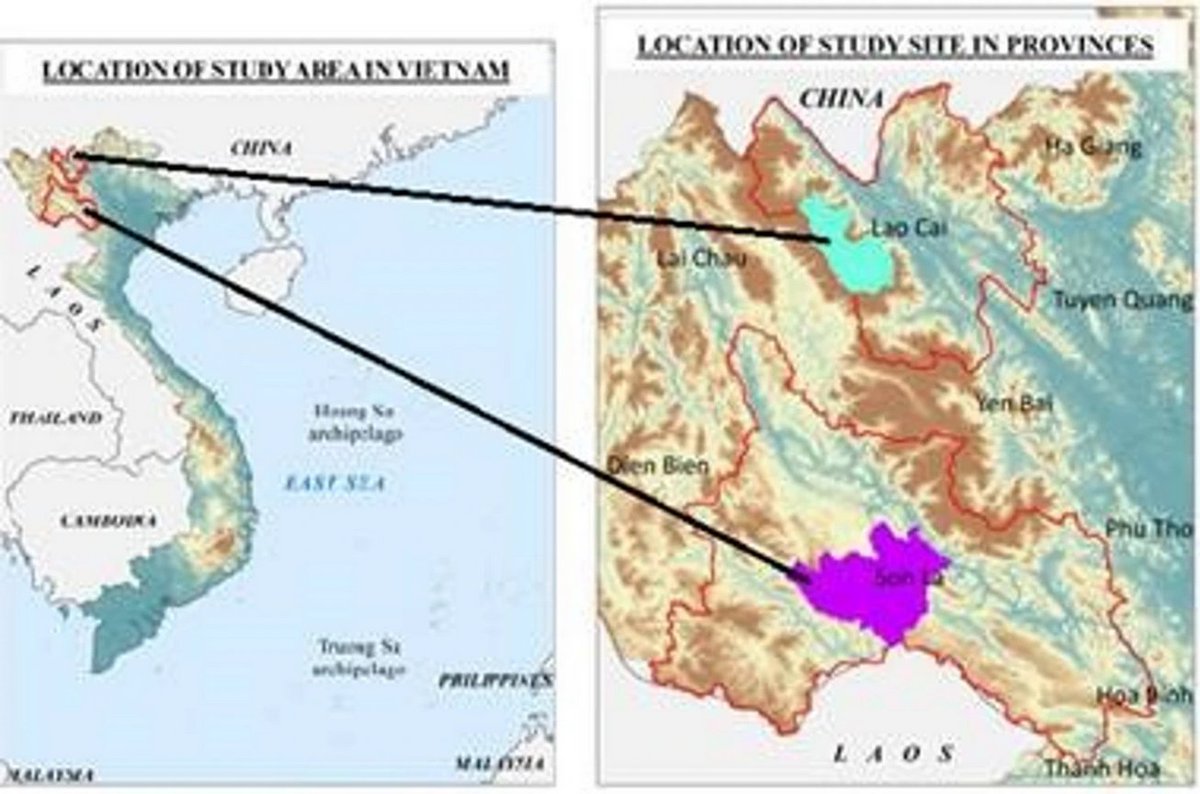
New research finds that sediment, soils and vegetables grown along the Little Akaki River in Addis Ababa are contaminated with heavy metals 📝
Read more in the open access paper: https://t.co/Sx5gO9oiz8
Map of the sampleing sites taken directly from the paper.
'Future food prices will become less sensitive to agricultural market prices and mitigation costs'
Read the paper in full: https://t.co/7WMkq5sbUI
Figure taken directly from the paper.
#EcoFoodSystemsReads#SDG2#FoodSecurity#GreenhouseGasEmissions
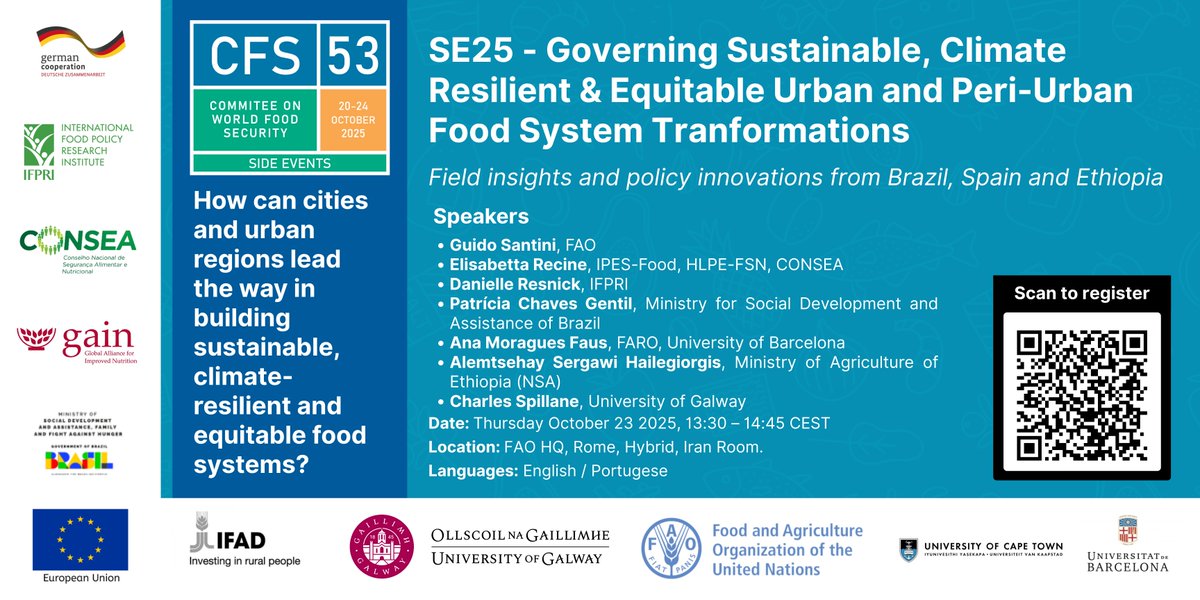
🌍 The EcoFoodSystems team are attending #CFS53 this week!
Join us for an event on governance for urban #FoodSystems on Thursday, 23rd October. Until then, we look forward to engaging with stakeholders here at CFS53!
📍 FAO HQ, Rome & Online
📆 Register: https://t.co/umEqiGkFkE
🏙️ How do our cities influence obesity rates?
New research published in @BMJ from @ucl, @imperialcollege CIBERobn and @ISGlobal has shown that access to supermarkets and fresh produce outlets lower obesity risk 🏬 🍎
Read: https://t.co/L7LdFLFEWZ
Image from @WorldObesity.
🌍 Save the Date: 23 Oct 2025 | 13:35–14:45 CEST
Join FAO & IFAD at #CFS53 for a side event on governing sustainable, climate-resilient and equitable urban and peri-urban food systems.
📍 FAO HQ, Rome & online
📅 Register: https://t.co/LEm8XCXVYX
@uniofgalway research students, Phuong, Duy and Minh recently completed their theses projects on #FoodSystem transformation in Vietnam under the EcoFoodSystems project
Their work advances our understanding of food system policy, resilience and peri-urban farming in Vietnam 🇻🇳
The #2025EatLancet report calls for eight priority actions ranging from creating food environments that make healthy diets affordable and desirable to cutting food waste and ensuring representation across food systems 🌍 🥗
Read the full report.
https://t.co/9ErxziNdyl
New study of 600 households from Thai, H’Mong, and Dao communities in Northern Vietnam examines how nutrition and agriculture training and vegetable seed provision could support more diverse diets and crop choices during the COVID-19 crisis.
Read: https://t.co/lT631TsPKh
A new @NatureFoodJnl paper uses the Healthy Diet Basket (HDB), a tool developed by the @UN and @WorldBank, to measure the Cost and Affordability of a Healthy Diet (CoAHD) worldwide 🌍
Read the paper: https://t.co/D0tNzRxJWu
📷 Figure taken directly from the paper.
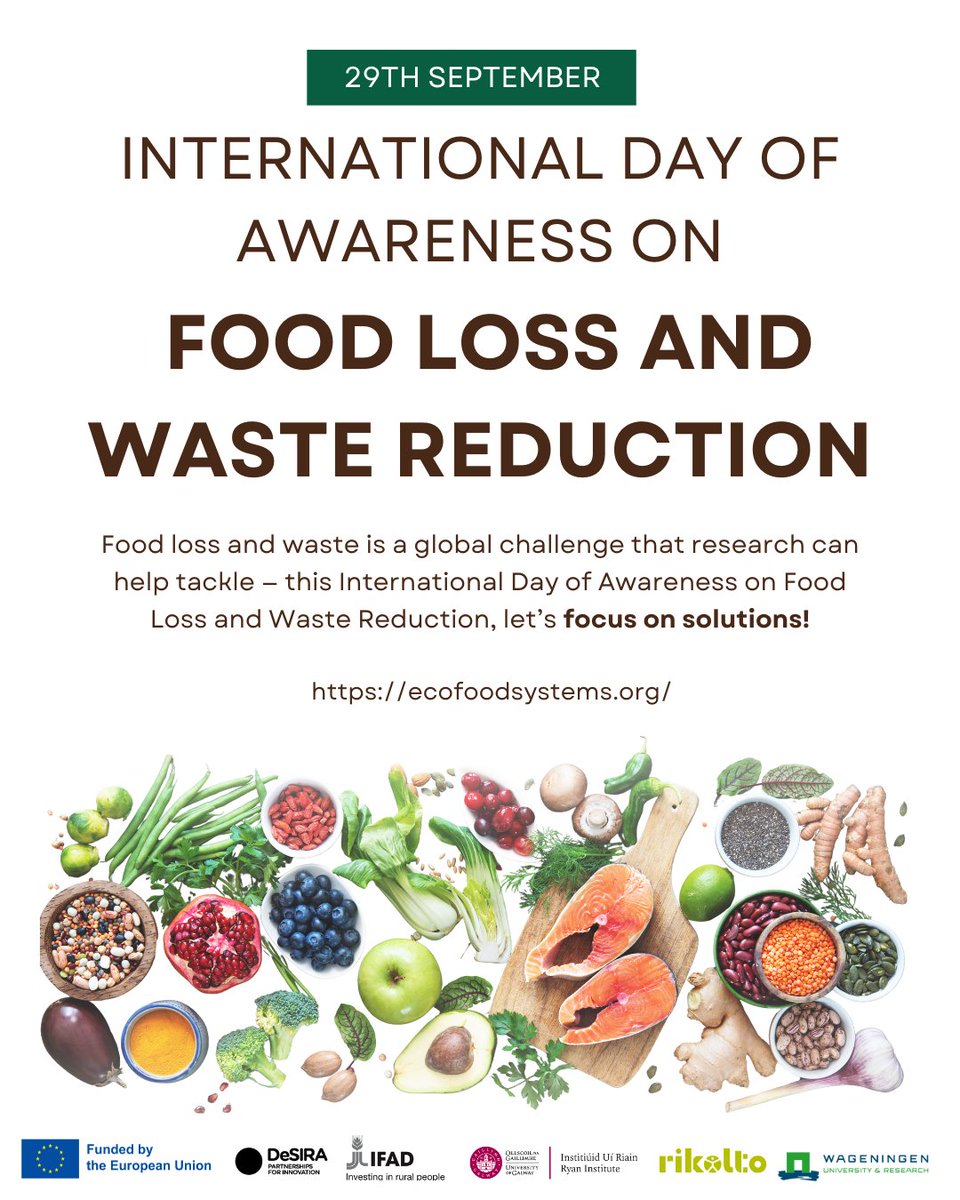
Today is International Day of Awareness on Food Loss and Waste Reduction.
Approximately 1.3 billion tonnes of the food produced for human consumption every year is lost or wasted.
Learn more about how EcoFoodSystems supports sustainable #FoodSystems: https://t.co/ymJ9NbKh3e
🥗 Recent study introduces the EAT-Lancet Consumption Frequency Index (ELFI), a tool based on 14 food groups that can evaluate relative adherence to the planetary health diet in large, multi-country samples.
Read: https://t.co/8XPBkDKGJs
Figure taken directly from the paper.
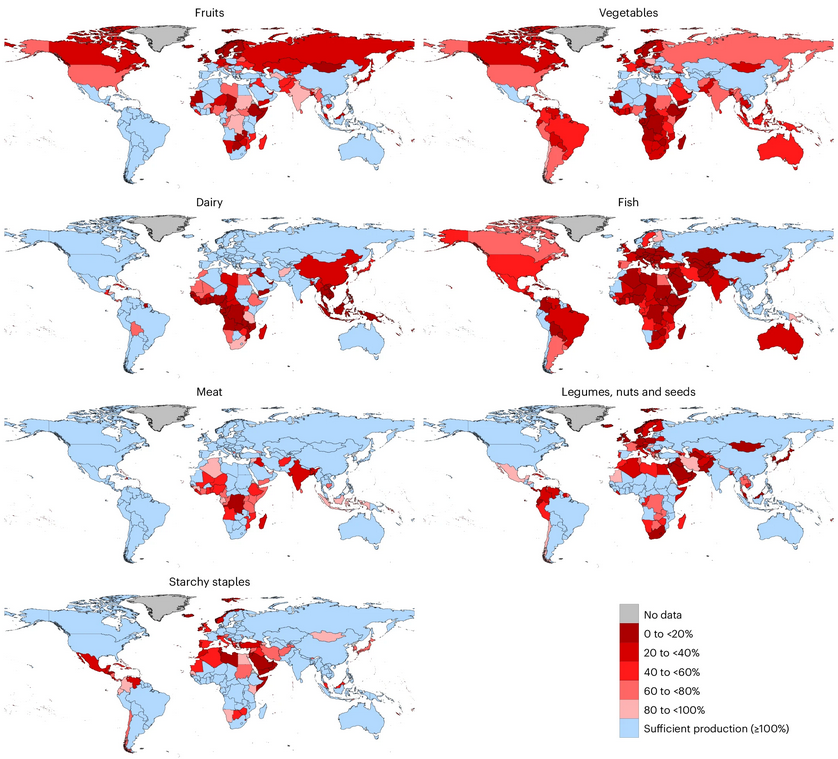
🍽️ The world produces enough calories, but not enough nutrient-rich foods for healthy diets.
New research shows:
• Shortfalls fell from 44% in the 1960s to 28% today ✅
• Fruits, veg, legumes, nuts & seeds still lacking 📉
Read: https://t.co/6rrdAMg76l
🌏 New @TheLancet study gives the first global estimates of nutrition deficiencies.
Findings from the study of 185 countries shows:
• 60%+ lack iodine, vitamin E & calcium
• 50%+ lack iron, folate, vitamin C
• Women & men face different risks
Read: https://t.co/AzZnYBs2v7
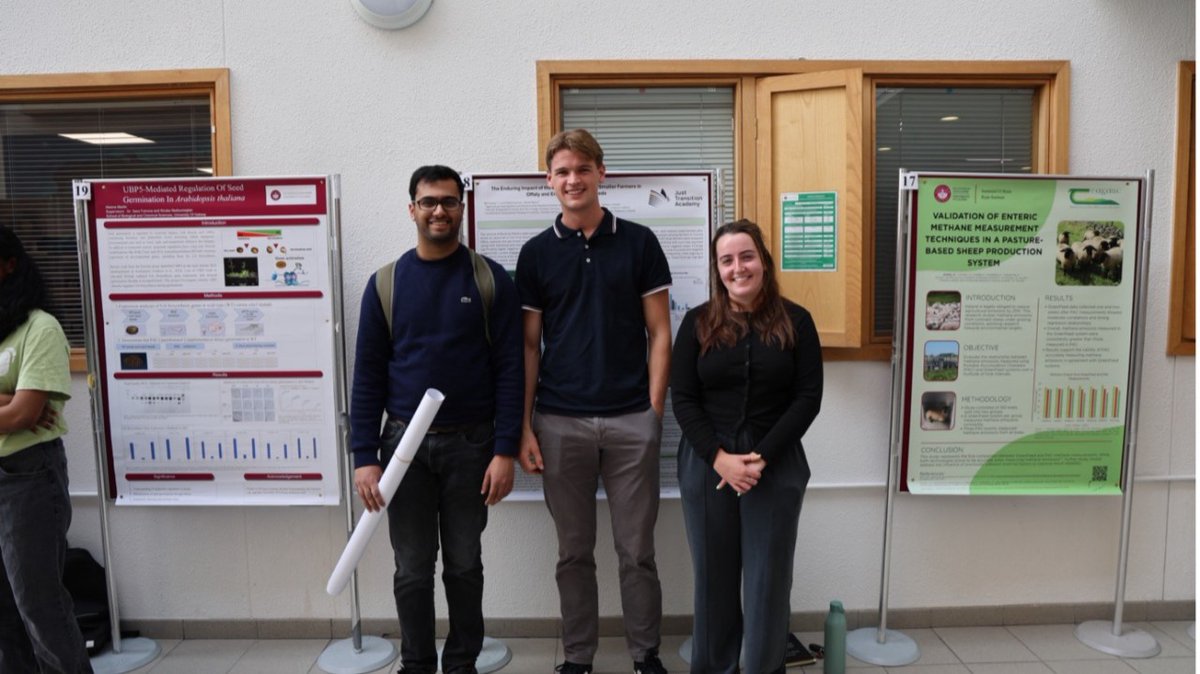
@uniofgalway MSc researcher Akhil Menoj recently presented his @EU_Commission-@IFAD funded EcoFoodSystems research project on #FoodWaste in Ethiopia at the Annual MScAST Poster Session.
Congratulations to Akhil on his work! 👏
Read more: https://t.co/QJDEMiHPz5
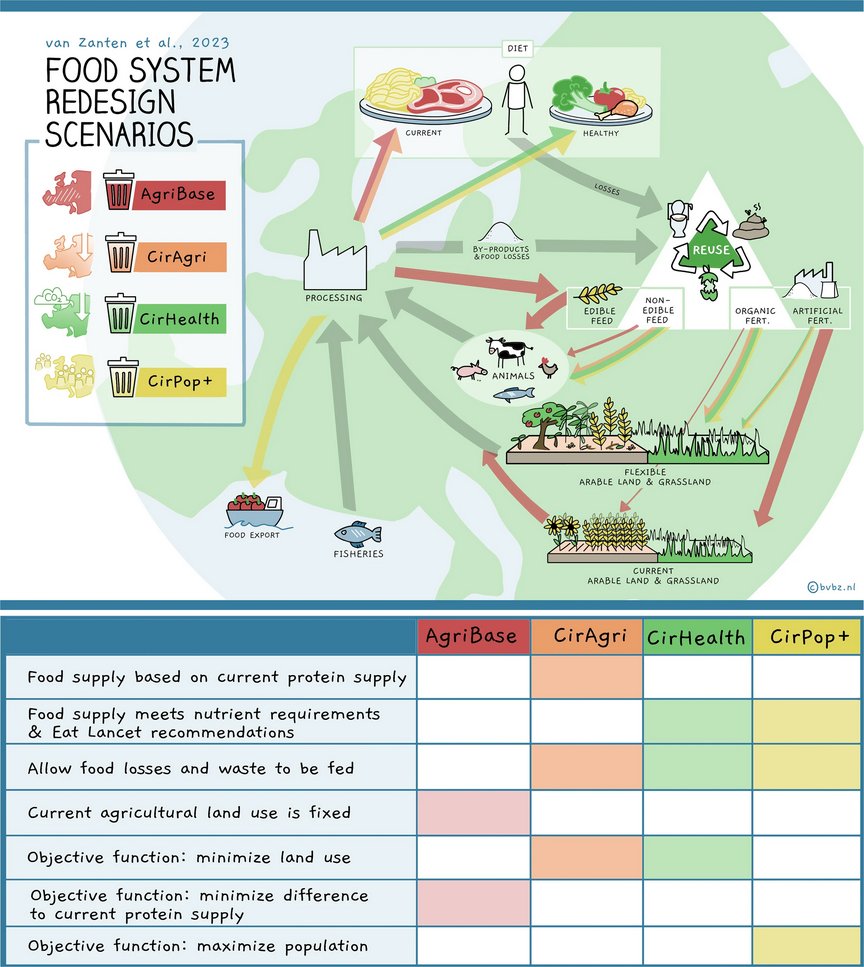
New research in @NatureFoodJnl finds that a circular food system in Europe could:
• Reduce agricultural land use by up to 71% ✅
• Cut agricultural greenhouse gas emissions by 29% 🌱
• Create a healthy. se;f-sufficient European #FoodSystem 🥗
Read: https://t.co/oNIQAPsGPL
Food systems may be driving biodiversity loss faster than land use change alone 🌍
@ucl study maps the biodiversity footprint of food production across regions, products and trade flows.
Read the full article: https://t.co/W0LqljcJ7A
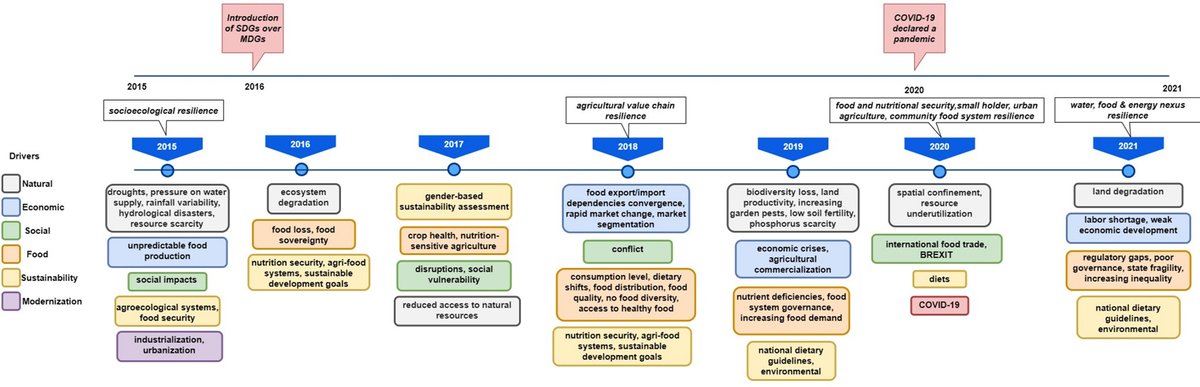
What does it take to build truly resilient food systems? 🌍
Key findings from a systematic review of 113 studies on food system resilience has shown that:
• Shocks reveal food system strengths & weaknesses
• Local resilience is often overlooked
Read: https://t.co/v5rPAxMjZk
Investing in young children’s diets is cost-effective: prevention of malnutrition is far less expensive than treatment.
@fhi360@UofSC research from Vietnam, Ethiopia and Bangladesh provides guidance for budgeting large-scale nutrition programmes.
Read: https://t.co/PJqkWQv3MW