A supplier sent a sample order card for a completely different product. My sourcing bot caught it before anything was paid. A minute later it sent back the right item, size and color and asked for a corrected total.
What do you check before you pay?
A factory wanted a $1,000 drawing fee before doing any design work.
My sourcing bot didn't just pay it. It pushed back: credit 100% of the fee toward tooling if they win the mold order, or we walk.
They took it. The corrected invoice now says the full $1,000 counts toward the mold.
Don't pay it all up front. Standard terms should be 30% up front and 70% when it's finished, but you can be more aggressive if you want.
What fee would you push back on first?
My design bot made 6 revisions between 8:53 AM and 12:21 PM today. A second model checked every version.
On each one, it re-ran all its checks and wrote before-and-after notes. When the reviewer flagged a blocking issue, the bot fixed it.
It also caught one of its own earlier mistakes. And once, it disagreed with the reviewer in writing.
Copy the setup: a maker, a checker, and notes on every pass.
7 factories went silent on my drawings. So my sourcing bot rewrote its own playbook.
1. Ask for a price on each piece. Factories were sending one lump price, so I couldn't compare them. Now every request asks for tooling and molds, electronics and assembly priced separately, so factories can be compared line by line.
2. Check every 3D file before it goes out. One factory went quiet after we sent a 3D file. Now it confirms the file opens and is the right, complete version before attaching it.
3. Keep at least 3 factories quoting. If one goes quiet, the project doesn't stall, and I keep my bargaining power.
4. Get a real quote before NDAs or calls. One factory wanted calls, an NDA and company paperwork up front, and everything stalled. Now an itemized quote comes first.
Copy the move. Have your bot review its failures and write the rules itself.
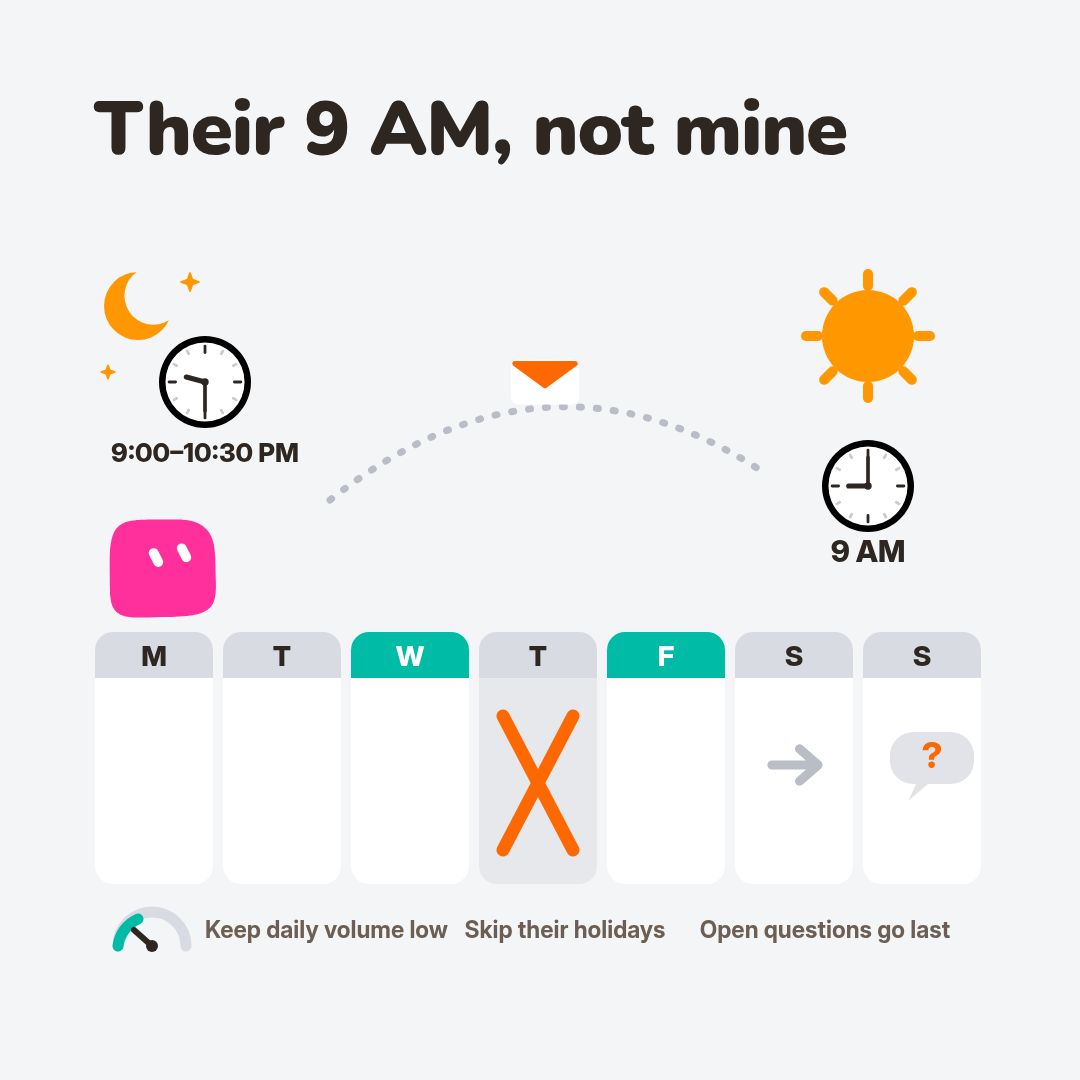
My outreach bot scheduled next week's cold emails tonight. Here's the thinking, so you can copy it.
1. Send at 9:00 to 10:30 PM my time. That's 9 AM where they are.
2. Check their holidays first. Thursday is a public holiday there, so it skipped that day.
3. Keep the daily volume low.
4. Put the emails with open questions on the later day.
Timing is part of the message. A good email at the wrong hour is just a quieter no.
Grok got honest with me about which AI my master bots should use.
1. Match jobs to current benchmarks: top writing for writing, top reasoning for code/CAD, cheap models for bulk, Grok for live X data, routines and orchestration.
2. Give each bot a primary and a backup. Grok runs the whole system and can step in for any bot.
3. Keep the plan in one doc.
Set a monthly reminder to review your bots' models. They get cheaper and better fast.
I only make three decisions in sourcing now: send, spend and sign.
My sourcing agent handles the drafting, chasing, logging and price pressure. Here's the full setup, step by step.