Covering themes ranging from macro-structural issues to organisation of everyday life, Cantillon, @OdileMackett & @SaraStevano provide a rich understanding of the interplay between gender, class, race, and other social dimensions within the global economic system.
⚖ How can inequality be understood from a broader perspective beyond income + wealth?
The revised Chapter 10 of Microeconomics in Context analyzes the relation between economic inequality + well-being, with data on national and international inequality: https://t.co/OrRAVXOSPh
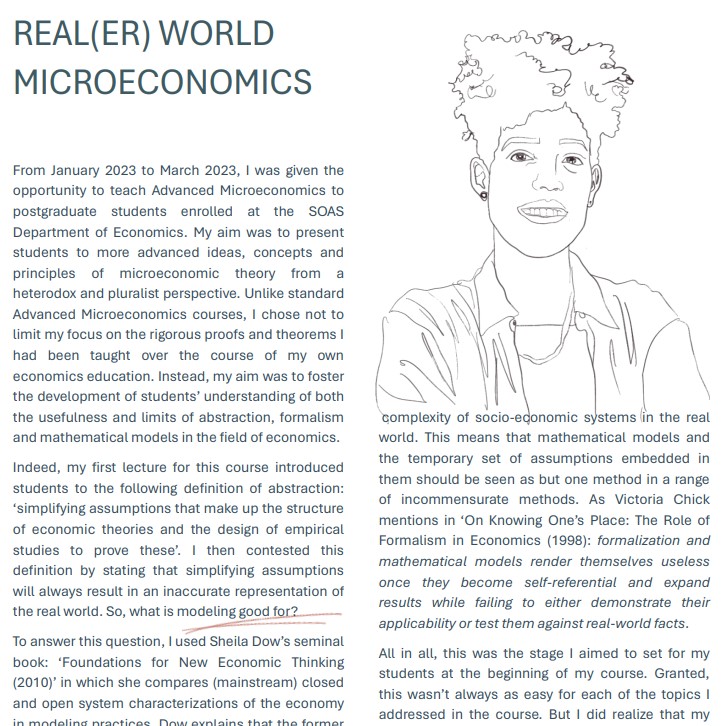
Just read this very nice piece by @ckdwarkasing explaining how she approaches the teaching of advanced microeconomics from a heterodox/pluralist perspective @SOASEconomics
It's in the new Teaching Heterodox Economics Magazine edited by @DallaireLea: https://t.co/m4H61tn7Vh.
Looking for ways to incorporate more real-world data into your class? Check out our latest lesson where students investigate the relationship between GDP, standard of living, and quality of life with a hands-on jigsaw activity. https://t.co/zrqgiCUxN5
It is crucial that students learn about such contributions in a critical way, although there is a lot to celebrate. It is educators’ responsibility to help students get the full picture, and how to critically evaluate the work of economists. #TeachEcon#NobelPrize#EconTwitter
The Nobel in Economics, Claudia Goldin, presents a valuable opportunity to involve students in discussions led by a female economist and explore gender dynamics in the labor market. This article however serves as a great example of how we can analyse her work in a nuanced manner
In today's @HTtweets, @rosaabraham6 and I reflect on the works of the 2023 Nobel in Economics, Claudia Goldin - some of the key contributions, relevance for India, and where it falls short.
https://t.co/LPYlSOMJO4
Although her contribution explores an important gender inequality in an historic fashion it does not explore the intersection of other inequalities as discussed by @SurbhiKesar and @rosaabraham6 https://t.co/rMrPkBpXM9
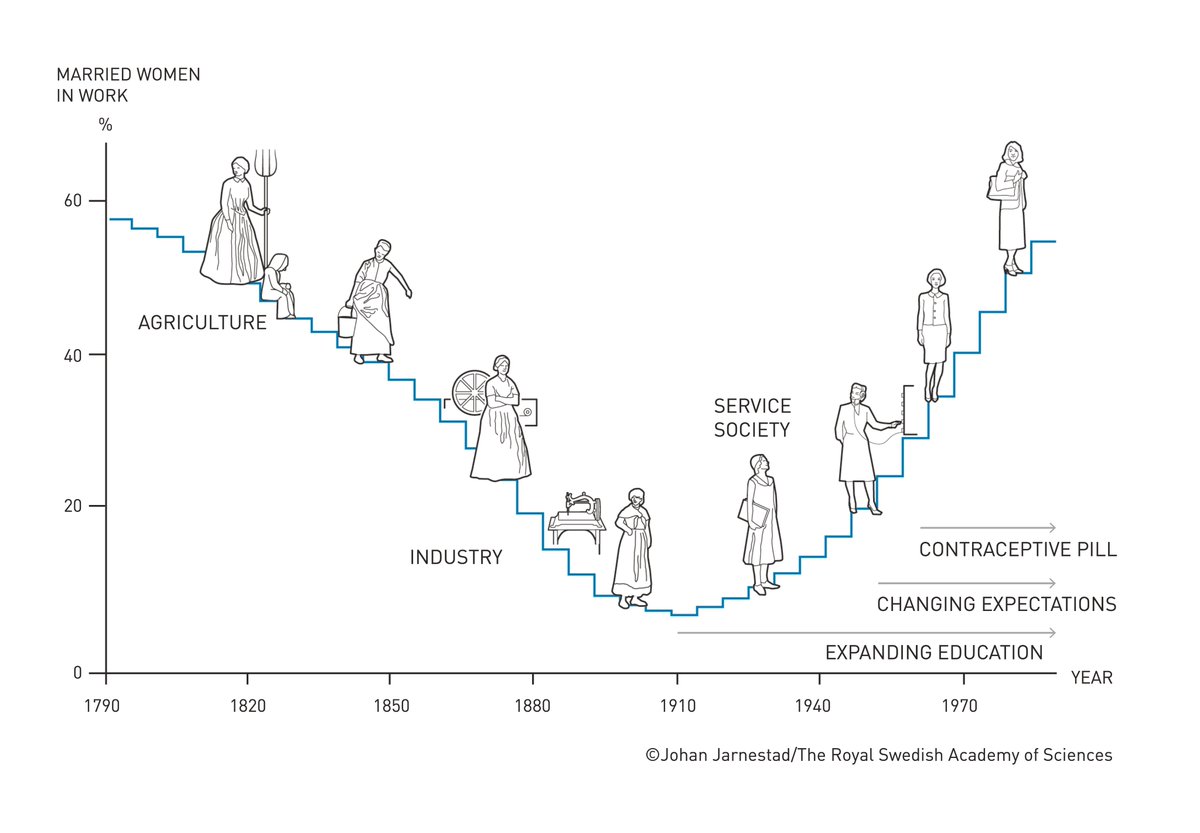
This year’s economic sciences laureate Claudia Goldin showed that female participation in the labour market did not have an upward trend over a 200 year period, but instead forms a U-shaped curve.
The participation of married women decreased with the transition from an agrarian to an industrial society in the early nineteenth century, but then started to increase with the growth of the service sector in the early twentieth century. Goldin explained this pattern as the result of structural change and evolving social norms regarding women’s responsibilities for home and family.
#NobelPrize
This has become one of my favourite slides when explaning to my students that there are different ways to do economics and, therefore, to conceptualise ‘the economy’
Thank you, @SandyDarity, for writing this paper!
https://t.co/hHphqASUmy
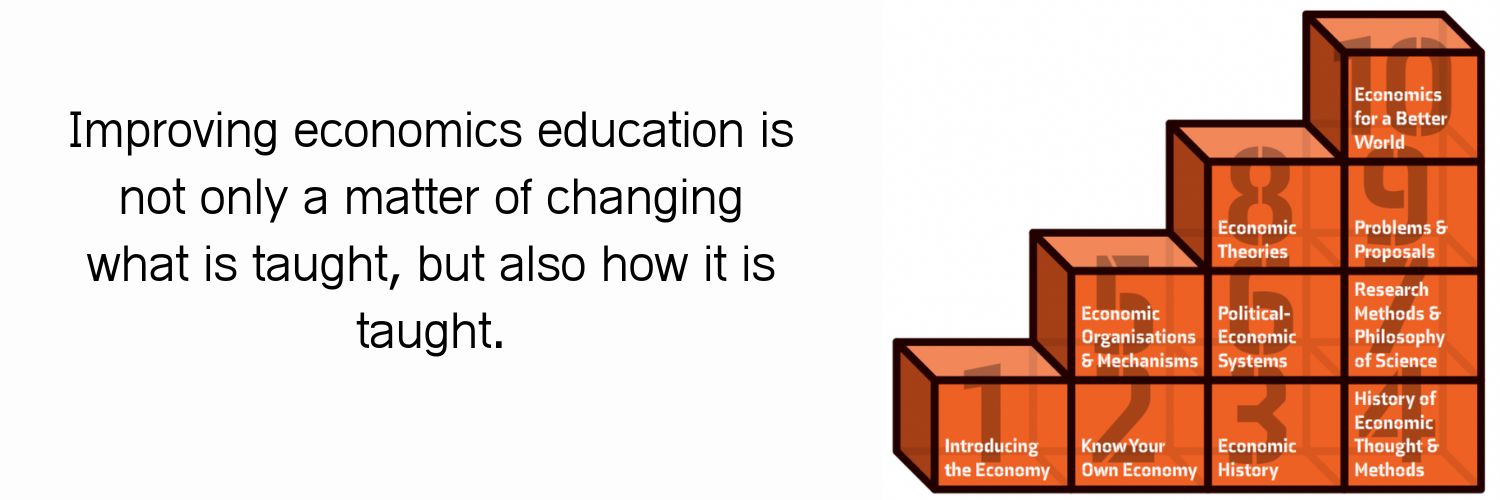
📢Check out our new teaching pack: Know Your Own Economy UK, based on one of our building blocks: https://t.co/gDAbThEpfj and represents a key aspect missing from the economics curricula – learning about the actual economy around us.
https://t.co/oXQcliAWhK
#teachecon#econed
A great example of a way to diversify and engage students!
Students write a bio of a 'Great Economist' from a pre-chosen list, their contribution, how it links to class content, and their own lives.
What economists do you recommend to put on the list?
#teachecon#EconEd
🎉Exciting news!
My paper "Diversifying the ‘Great Economists’: An Assignment to Promote Inclusivity and Belongingness in Introductory Economics Courses" is now available online @ReviewofPE#EconTwitter#IAFFE#EconEd#TeachingEcon
https://t.co/XSzvMFNXja
In line with one of our care principles, values needs to be included in edu. "Students should be taught how values matter to the material they are learning, what alternative value systems might be coupled with the descriptive theories they are learning..." #econed#econtwitter
"A must read for anyone curious about the economy and the world" @TimHarford
"Best publication for A level students" HoD, Bromley
"My favourite economics mag" Principal Examiner
"This is excellent" John Maloney, Uni of Exeter
#economics today
https://t.co/2lNZk8FVqa
"In most economics classes we focus on the production and consumption of goods and services, but what happens to the product and its packaging after it’s consumed?" Our friends from @econstudies have developed this teaching pack!
👉 https://t.co/3QqML0OgS4
Interested in diving into the topic of money and finance, and how this system actually works? Register for this conference in the Hague next week. https://t.co/DMd4Ng5qVa
Podcasts are a great way for students to get more familiar with the world of economics. These are some great suggestions. We also recommend @planetmoney and @EconomicsinTen perfect for students and also a great basis for classes #teachecon
Whether you are starting your Economics degree this autumn or just looking for insights into economics, we have something for you!
Swipe right to check out 3 great podcast recommendations from Discover Economics
#discovereconomics#economics#podcast#summer#student#fresher