The scale of herring spawn events can be truly extraordinary. Aggregations of spawners often exceed 10,000 metric tonnes — that’s ~100 million fish, and the potential for ~1 trillion eggs! The value these fish bring to coastal ecosystems is immense — some might say priceless.
First paper of my postdoc - using spatiotemporal modelling to understand the habitat and environmental drivers that lead to areas of high biomass, or hotspots, of krill and their seasonal persistence in the Canadian #Pacific
https://t.co/Dp3IkXzONY
@ecophilina@sean_anderson
If Easter eggs are on your mind today, take a moment to appreciate the incredible beauty and complexity of real eggs. How do bird eggs get their wonderful colors? And why? Read all about it in our magazine. Happy Easter everyone! https://t.co/oJzoDqVjLn #birds#eggs
This! Science thrives when people feel safe, because it leads to higher creativity. At a mechanistic level, safety = increased activity in the prefrontal cortex, the center of rational thought, learning, and executive function.
This week @TaraImlay shares the ups and downs of being "Dr. Mama" in the field - from morning sickness to having a new field assistant! #itcanbedone#womeninSTEM#phdchat https://t.co/F4j8Y9dQ26
'Tis the season to remember where birds get their beautiful yellow colors: many plants are full of carotenoids, but we can only see them in Fall, when chlorophyll is reduced. Insectivorous warblers get their carotenoids by eating herbivores
https://t.co/wH1ZDHsfkn @CornellBirds
"Everyone wants a 'high-quality' student, but no one wants the work that goes into actually creating one." Excellent post about undergrad research experience and whether it should be a grad-school filter, from @itatiCVS. https://t.co/TrHZRYDK0v
@EliotITMiller@CornellBirds After you've done so, you can find out how evolutionary distinctiveness, and each species' risk of extinction, combine for your own ebird checklist: https://t.co/EcSr4Pm087 Great work @sebpardo and Simon Valdez-Juarez!
Excited to announce our paper in @NatureEcoEvo https://t.co/eiADrsbjYE. We counted with radar how many birds cross the US borders in fall, and how many survive and return in spring. Neotropical migrants returned in greater numbers than birds wintering in the US #ornithology
Meteorologists can make reasonably accurate predictions of the weather I will experience a week from now. Amazing! And now ornithologists can make reasonably accurate predictions of how many migrating birds I will observe a week from now. Ridiculously cool!
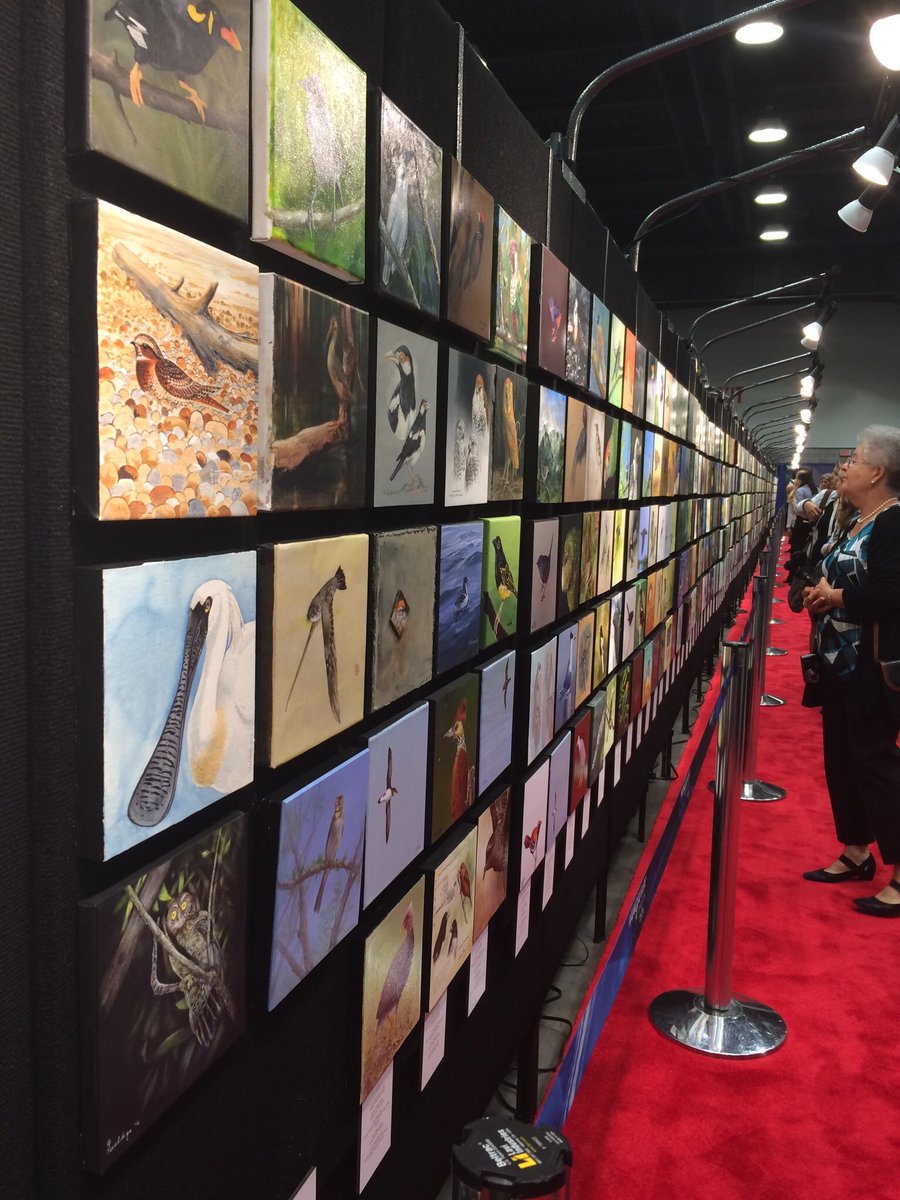
Another great example of what happens when #art and #science meet: the Silent Skies mural by #ArtistsforConservation at #IOC2018 showcases all 678 species of endangered birds around the world.
Tonight's "Birds as Peacemakers" event at #IOCongress2018
is starting out with this striking intersection of nature, art, and countries, all coming together for inspiring conservation work. #SaveTheDeadSea#ArtistsForNature
https://t.co/ZepJDpXQFw
A spotlight on nightjars and community science from the one and only @ellycknight - what can this complementary framework teach us and contribute. #IOCongress2018
Our new paper on evolutionary patterns of amphibian species loss from land conversion is now out in @Ecology_Letters https://t.co/8ZXKihxpnI
Curiously, as in birds, evolutionarily distinct amphibians consistently have lower occurrence in agricultural landscapes