We are launching a PHP Capture the Flag challenge integrated with our Bug Bounty program to test our WAF protections. Security researchers are invited to bypass our defenses and capture the flag to help make the Internet safer. https://t.co/YzSYe7kbES
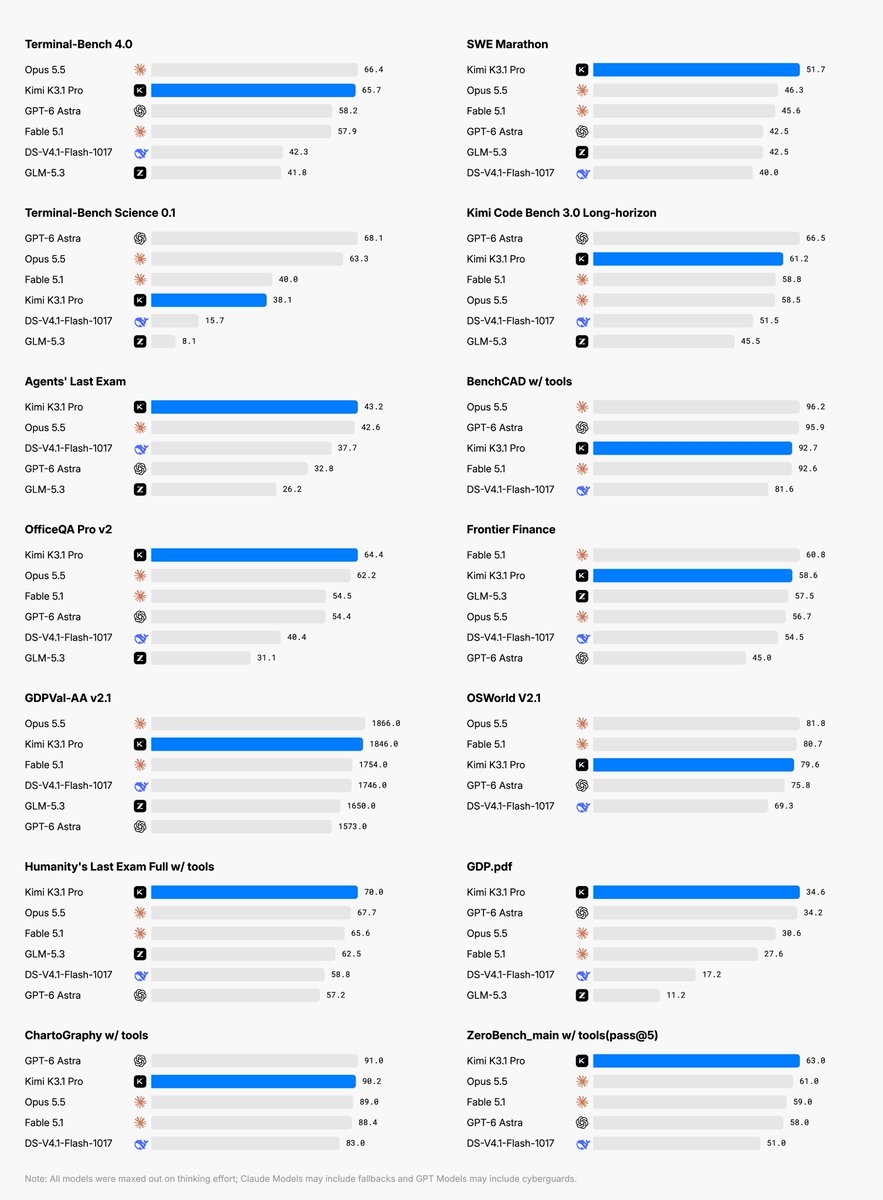
Introducing Kimi K3.1 Pro: our most capable 3T-class open-weight model.
🔹 1M-token context, 2.8T total / 104B active params (MoE), Multimodal.
🔹 Full-project coding: games in Unreal, Unity & Godot.
🔹 Excels at parametric 3D modeling in Blender & CAD.
🔹 More reliable at finance work: Accurate modeling with hallucination down by 65%.
🔹 Matching the strongest proprietary models across coding, agentic and knowledge benchmarks.
Kimi K3.1 Pro and K3.1 Pro Highspeed (2–3× faster) are now live on https://t.co/85jA71X9gw, Kimi Work, Kimi Code, and the Kimi API.
Open weights by Nov 4, 2026.
🔗 API: https://t.co/XCrgjXAqMw
🔗 Tech blog: https://t.co/5iPP0MBej6
Meet NVIDIA Nemotron 3.5 Super VL
Our new open model combines reasoning and tool use with text, image, document, and video understanding for long-running AI agents.
120B total parameters with 12B active 🧵
Today we’re releasing Muse Spark Open, the most capable US open-weight model to date.
Built for coding and agentic work, it excels at long-horizon tasks, complex software engineering, and multi-step reasoning.
Key Model Specs:
→ 816B total / 42B active parameters
→ 1M token context window
→ Natively multimodal across text, image, video, audio
Google AI Pro plans now package premium Colab benefits, landing you A100s with 80GB VRAM (Ultra subs even unlock H100s 🔥).
Here’s what that 80GB headroom unlocks directly in your browser:
✨ Run Gemma 4 31B in bf16
✨ Full fine-tune up to Gemma 4 E4B in bf16
✨ LoRA tune up to Gemma 4 26B A4B in bf16
✨ QLoRA tune up to Gemma 4 31B in bf16
I am proud to announce that Opus 5.5 refuses to work on Hermes bugs because of "user safety" or something.
Well, @AnthropicAI, thank you very much. Good job, guys.
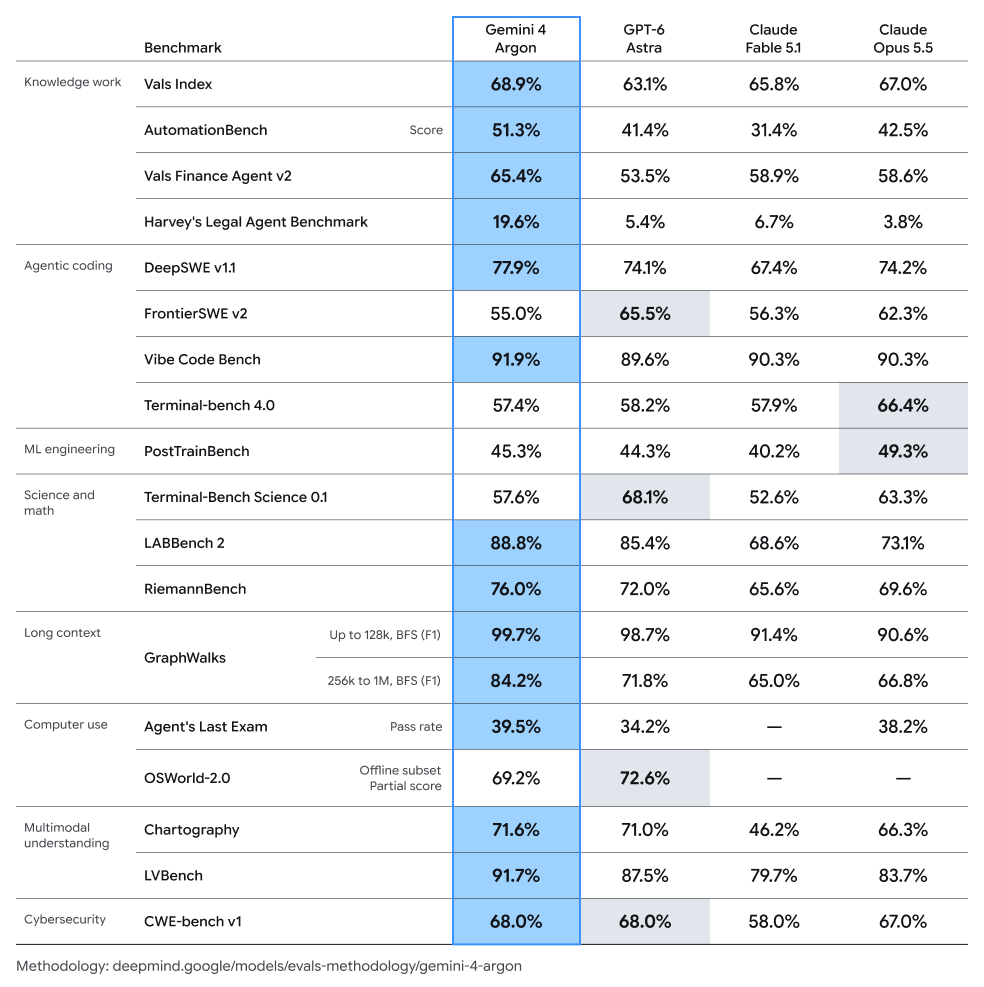
Introducing Gemini 4 Argon – our new frontier model.
It’s built for complex workflows across coding, enterprise knowledge work, and cybersecurity defense – rolling out today to a set of trusted testers through our Fairwind Program.
This is fine. I can't understand why people hate this . Just because someone else says they're removing that feature doesn't mean it's worthless. We've reached a point where we've stopped thinking for ourselves, repeat what others say, and criticize things for no reason.
Antigravity 2.0 now features a dedicated planning mode, just like the Antigravity CLI.
Type /plan and the agent steps back to think through the task, and conduct extensive research, before generating an implementation plan for your review. The agent will ask for your approval before it begins executing on the task.
You can also ask for a plan naturally in your prompt, for a lighter version of a plan.
Nearly half a year of silence. We spent it studying one problem: how far RL can scale.
MiMo-V2.6 is in the middle of its RL run right now. Three things we scaled: compute (~2B tokens per step, 1568 prompts × 16 rollouts, fully async), environments and harnesses (multi-task agentic RL, mixed across multiple harnesses in one run), and grader compute (agentic in-group credit assignment, with test-case and rubric-based rewards). We'll open-source the details piece by piece over the coming weeks.
Streaming the run: https://t.co/ZSxahzJRju
In LLM, MoE only matters at scale. If you're building your own toy model, go full Dense. In the end, if the model gets good enough... You can implement it later.
@PessimistsArc Right. Dario was already claiming that GPT2 was too dangerous to open source back in 2019.
I made fun of them then.
Everyone should make fun of them now.
The first time I tried it... it fixed a PyTorch CUDA Graph bug I had in my code in under 96K tokens! It even pointed me to the exact GitHub issue related to the bug. Since I'm on PyTorch 2.11, it was able to apply the fix. Really grateful!
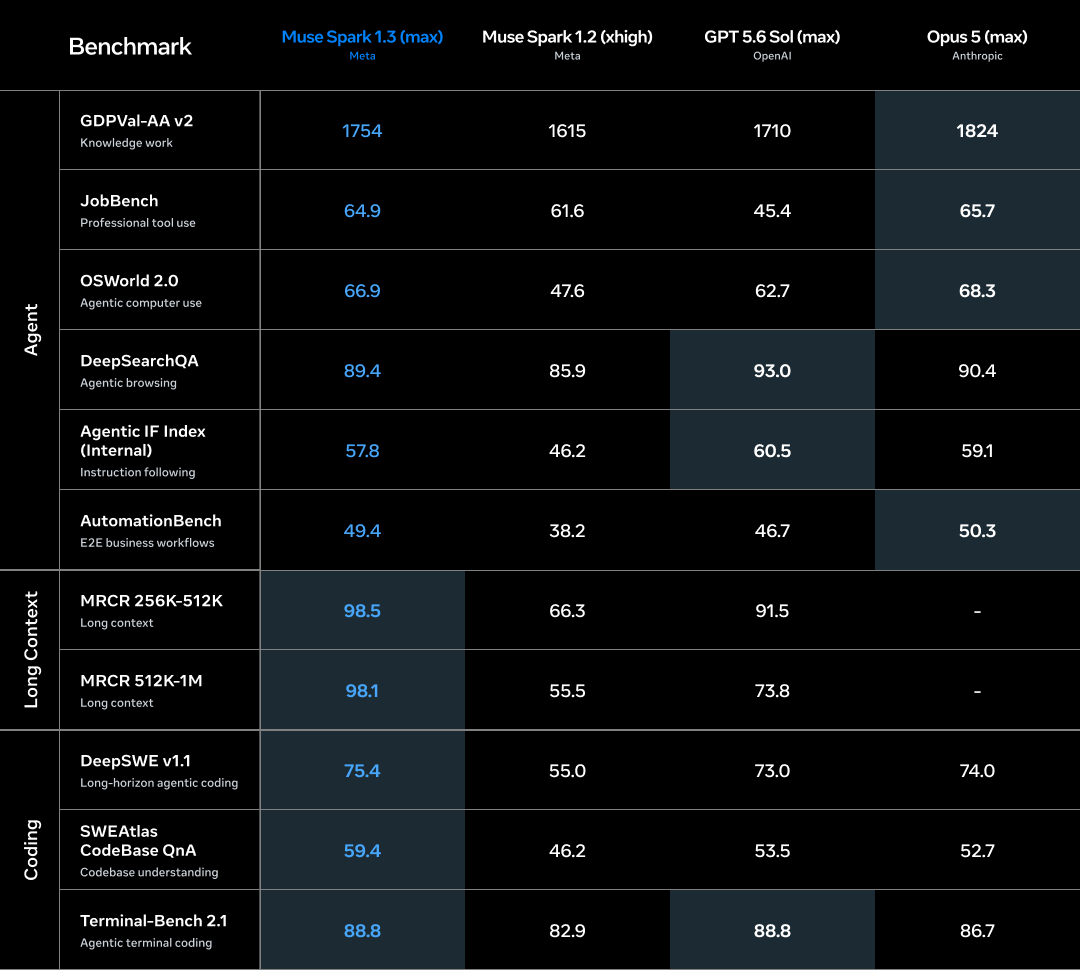
We’re excited to release Muse Spark 1.3 with improved performance on agentic and coding tasks, and a focus on real-world usability.
Key capabilities:
→ Sustains longer-horizon work across multiple workflows in a single thread
→ More actively collaborates with users: it asks clarifying questions, flags when it's stuck, confirms before consequential actions
→ Better calibrated on its own limits instead of hallucinating outcomes
→ ~20% fewer tool calls and ~25% fewer tokens vs. Muse Spark 1.2 in internal comparisons
Ask Sol to review something and it'll find 3-6 things wrong. Doesn't matter how big the thing was. Doesn't matter how many times you already asked Sol to review and fixed all its findings to its liking. It can always find 3-6 new problems.
Conclusion: Bugs are fractally infinite.
Introducing NVIDIA Nemotron 3.5 Lightning⚡
An open 30B MoE model with 3B active parameters, built for always-on agents to complete high-volume, specialized tasks faster.
It delivers up to 4x the output speed of similar-sized models.
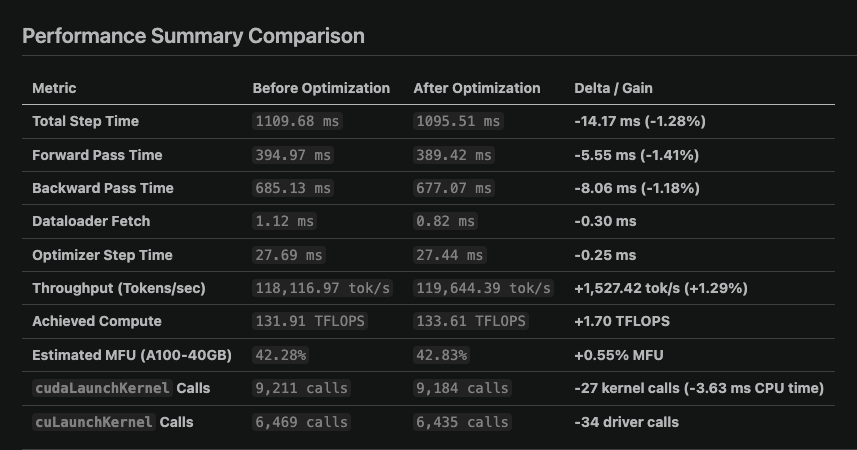
I love OSS! Thanks to this post and the one on *kernels* by Cursor, I was able to improve my model train a bit! MoE is good, but man... it's slower to train than a vanilla dense model; the good thing is that is better at bpb and train/loss (for my case).
We're open-sourcing Mixture-of-Kittens (MoK), our MoE training megakernel for NVL72s.
It fuses all Mixture-of-Experts communication and computation into a single, fully deterministic kernel, and runs up to 2.37x faster than the strongest public baselines.
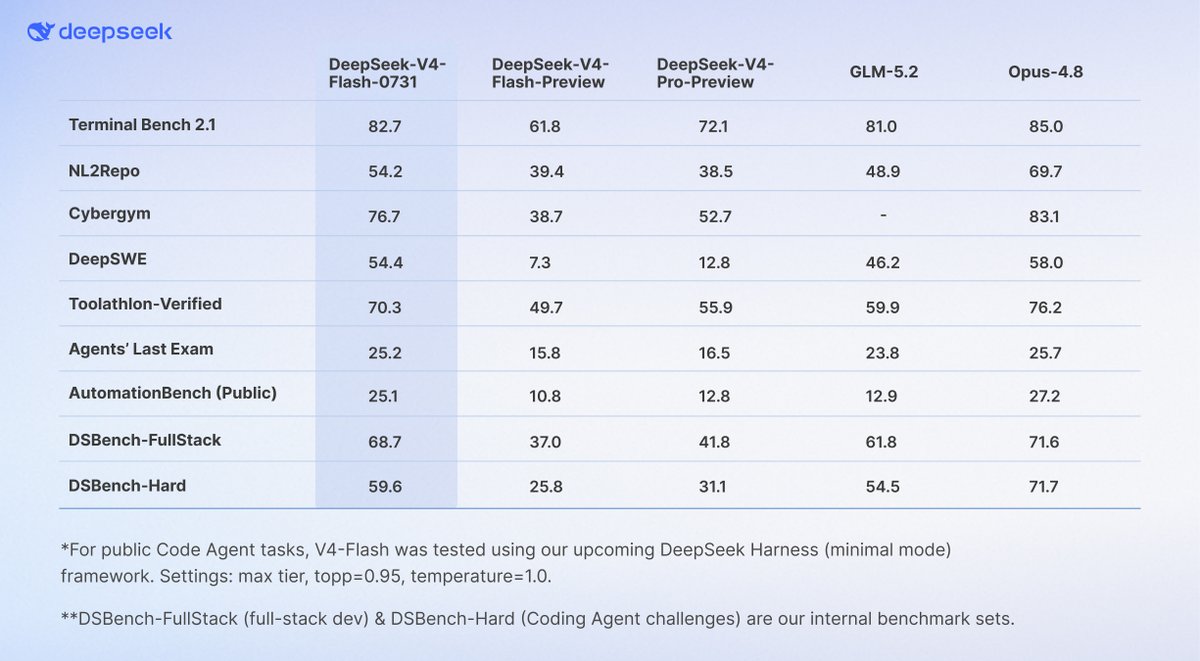
🚀 DeepSeek-V4-Flash Official API is now LIVE in public beta!
🔷 We’ve massively upgraded its Agent capabilities—benchmark scores are now far surpassing the V4-Pro-Preview. Check out the massive performance leap below! 👇
🔷 The official V4-Flash now natively supports the Responses API format and is fully adapted for Codex!
Check out the configuration details in our official API docs: https://t.co/smCwQZMeiq
Releasing the model weights and technical report of Kimi K3.
Kimi K3 is our most capable model: a 2.8T MoE model with native visual understanding and a 1M-token context window.
New model architecture: 2.5x the intelligence per unit of compute, not just more params.
Alongside Kimi K3, we're opening up more of the stack behind it — high-performance attention kernels, MoE communication library, and infrastructure for running agent environments at scale.
Model weights: https://t.co/7m7eEg6Y0B
Tech report: https://t.co/yeu6cjpMCT
Tech blog: https://t.co/YTfiMSNM1f