My fantastic @UChi_Economics PhD student, Zach Kuloszewski @ZachKulos, is on the JM this year. His JM is a must read for anyone interested in firms and the labor market for skilled manufacturing in LMICs. He shows that since firms are small and have highly unpredictable 1/
🥦 High Protein Broccoli Feta Bean Soup
If you thought healthy soup couldn’t be high protein, high fiber, and taste good, you need to try this!
This is as good as it gets. Roasted broccoli, feta, creamy white beans, and two of my favorite protein hacks: cottage cheese + bone broth to make it a great healthy meal prep option, and a great healthy lunch or dinner.
Full recipe: 1,267 calories, 97g protein
Each serving (4): 317 cals, 24g protein
INGREDIENTS:
5 cups broccoli florets, cut into small pieces
2 cups baby spinach
1 small quartered yellow onion
4 garlic cloves
6oz feta cheese
1-2 tbsp olive oil
3 cups bone broth
1/2 cup cottage cheese
1 can cannellini beans
Zest + juice of 1/2 lemon
1 tbsp dried oregano
1 tsp chili flakes
Salt and pepper to taste
Here is how I made t:
1️⃣ Preheat oven to 400°F.
2️⃣ Cut broccoli into smaller pieces so they cook faster + roast evenly, super important!
3️⃣ Toss the broccoli into an oven safe dish along with your quartered onion, garlic, and feta. Drizzle with olive oil, add oregano, chili flakes, salt & pepper. Roast for 35-40 mins. Time varies by oven, so keep an eye on it!
4️⃣ Once roasted, add everything to a blender with the cottage cheese, bone broth, baby spinach, lemon zest + juice, and beans. Blend until smooth. Add water if too thick.
5️⃣ Warm it up, add to a bowl and garnish with fresh dill, chili flakes, and finely shredded manchego or parmesan to bring out the flavors.
Enjoy!
.
.
.
#highprotein #healthyrecipes #goodmoodfood #lowcarbrecipes #souprecipe
My @OurWorldInData article this week looks at why, after two centuries of progress against the very worst poverty, the world is now facing a future in which progress comes to a halt.
The end of progress against extreme poverty?
https://t.co/HJ8tppFS7d
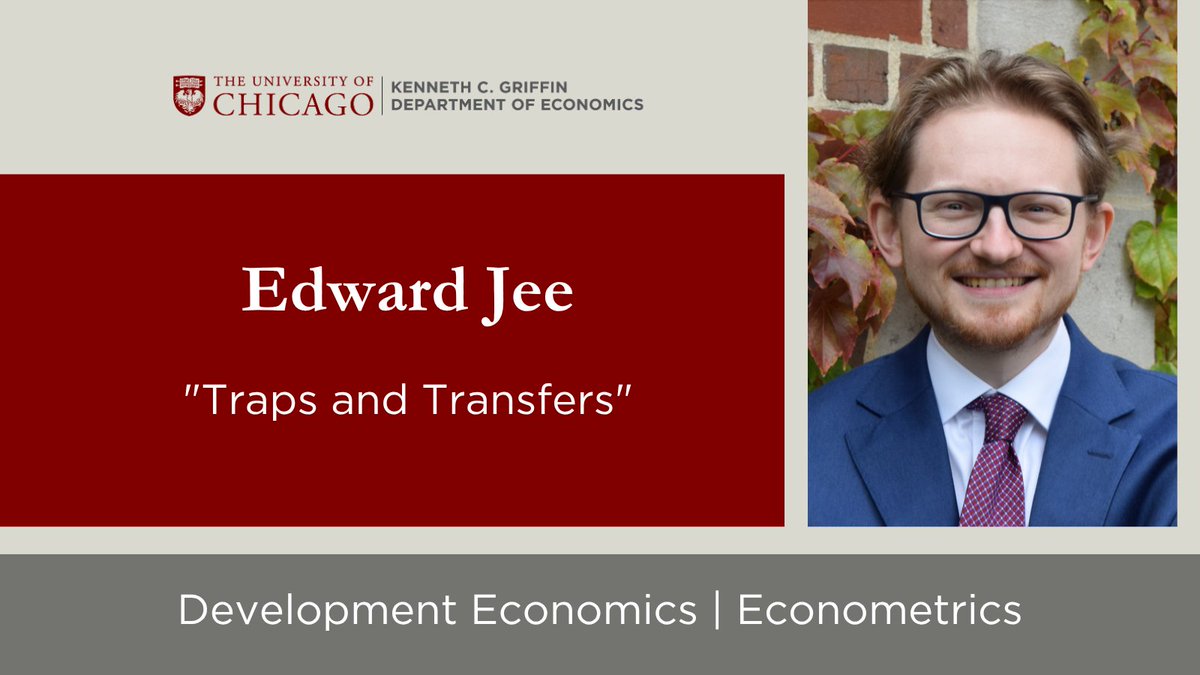
Ed's job market paper is a tour de force: 27 RCTs harmonized, fundamental identification challenges solved, and the clearest empirical evidence we have on poverty traps. Brilliant work from one of the most thoughtful, ambitious, and technically gifted young economists!
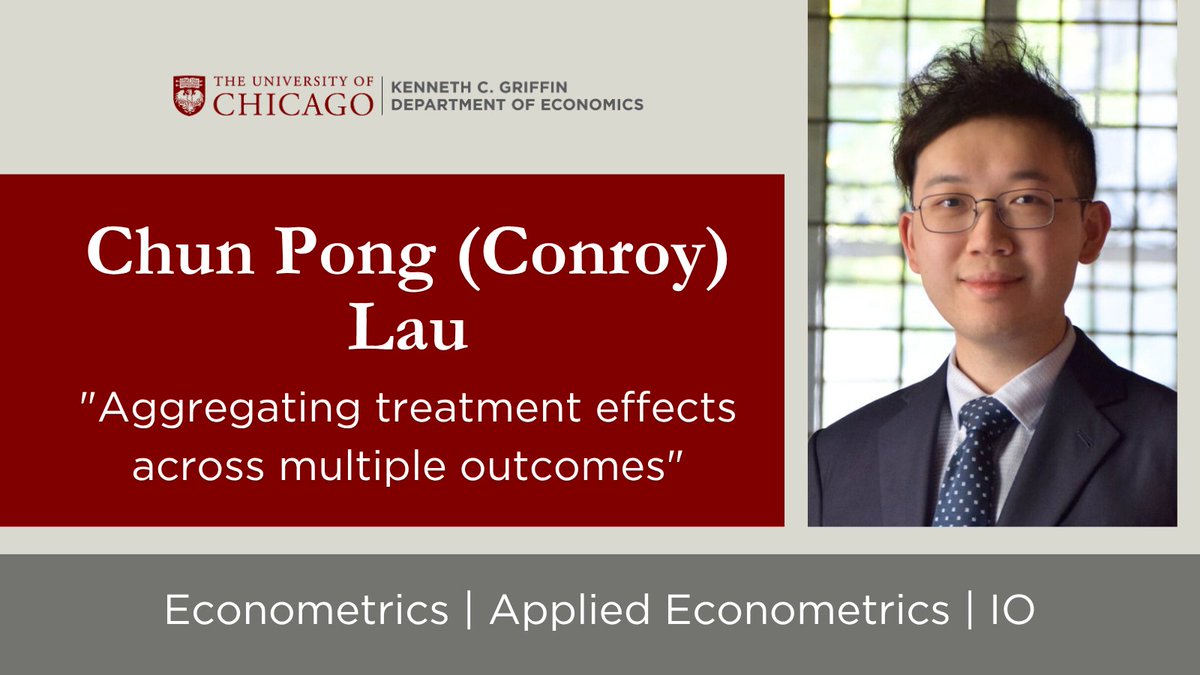
Conroy's JMP studies how to aggregate treatment effects across multiple outcomes. He evaluates several existing methods and proposes a new method for optimal aggregation that ensures weights with good properties.
Read more: https://t.co/1FHCg8x7o9
#UChicago#EconJobMarket
Balboni et al found poverty trap in Bangladesh due to fixed costs (eg to buy a cow) but is that unusual? Why cant ppl save up to buy the fixed asset? @ed_jee finds fixed costs of high return assets (diff by country) frequently cause traps but many ppl do save to overcome them.
Do poverty traps exist? @ed_jee's study of 27 RCTs finds they're real but rare. Though fixed costs make traps common, forward-looking behavior & productivity differences mean they only affect 25% of households.
Read more: https://t.co/dIx7XdnJoO
#UChicago#EconJobMarket
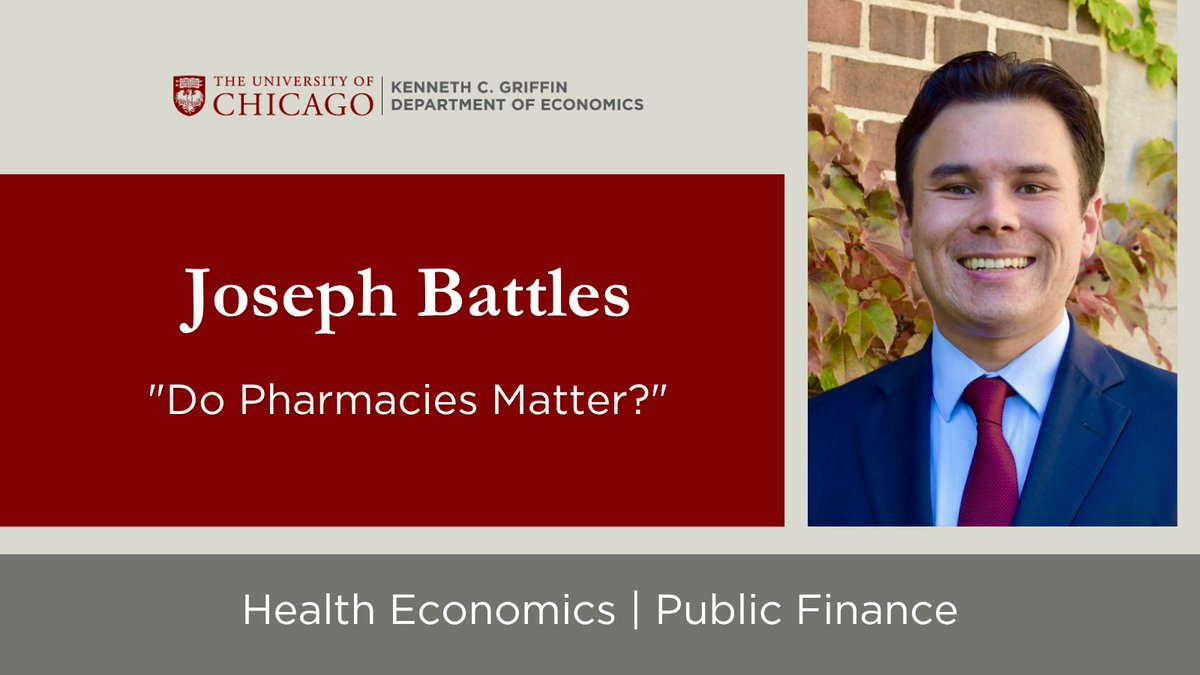
Pharmacy exits cause temp. declines in medication use but long-run increases. Closure-induced reallocations to higher-dispensing pharmacies combined with meaningful impacts of pharmacies drive the increases.
Read more about @econbattles: https://t.co/G2OmN6XGrT
#EconJobMarket
@CunaMichae77590’s JMP studies the hidden curriculum—unwritten rules for success. Combining data and field experiments, he finds first-gen students engage less in key actions, e.g. networking, due to low awareness.
Read more: https://t.co/vi1XlIj8S3
#UChicago#EconJobMarket
Elena Aguilar’s (@tag_elena) job market paper studies location choices as a human capital investment. High-opportunity cities like New York offer superior learning environments but require paying high upfront housing costs. https://t.co/ysMrlbFpkL
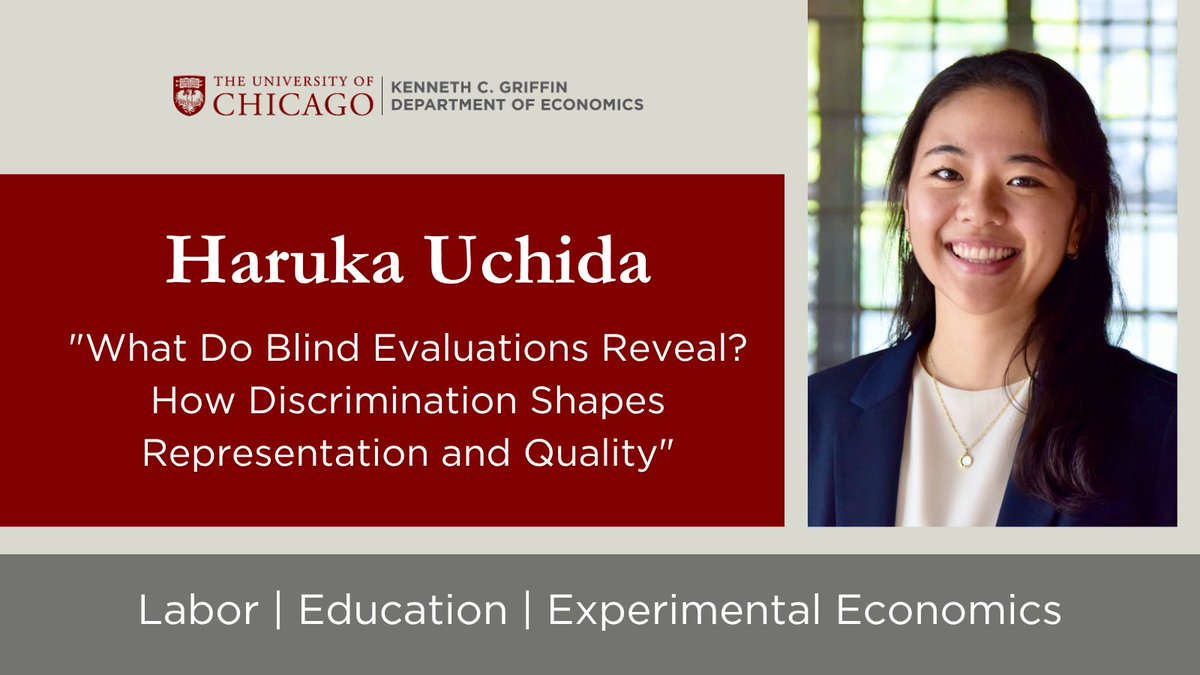
@haruka__uchida studies labor & education. Her JMP runs 2 field experiments to measure & disentangle forms of discrimination. She finds that hiding applicant names changes representation without reducing quality.
Read more: https://t.co/DzSnXBT0FZ
#UChicago#EconJobMarket
When should governments target industries in specific places? @ARBhandari97 shows that optimal industrial policy is place-based when productivity is Hicks-neutral, but uniform when it is Harrod-neutral.
Read more: https://t.co/J6itbei88s
#UChicago#EconJobMarket
@camillaschneier Jeanne Sorin (@jenn_slg) studies transportation and environmental challenges in developing cities. In her JMP, she examines how land acquisition costs prevent the implementation of high benefit road improvement projects in Kampala, Uganda. Read more at https://t.co/AM2X8OX5fu
@alexpetnet@tanyarajan .@jordanr_k studies spatial & trade economics. His JMP shows how barriers to urban expansion and high commuting costs inhibit development. Reducing urban costs would boost welfare by 66% in low-income nations and help nations adapt to climate change. https://t.co/e3WLDyTLWj
@alexpetnet How do workers sort between formal and informal sector jobs within the same industry? @tanyarajan’s JMP collects data from Bangladeshi garment workers and quantifies the role of (1) search frictions and (2) preferences for nonwage amenities. Read more at: https://t.co/kZLAMGhNXB
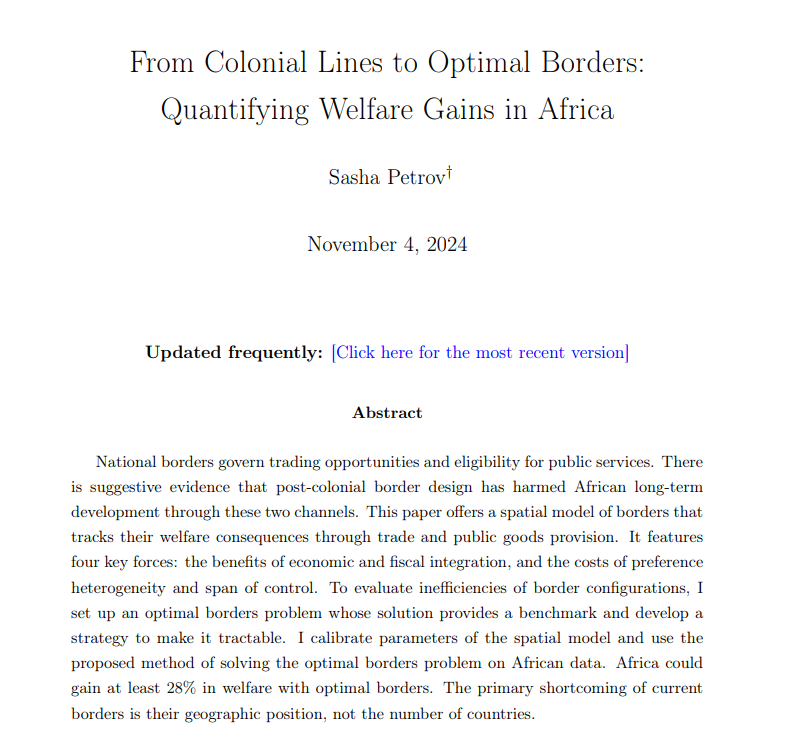
.@alexpetnet combines spatial GE modeling and computational methods to study economic effects of borders. His JMP develops tools to analyze both existing and optimal border configurations, evaluating welfare costs of post-colonial borders in Africa. https://t.co/Jj8tdOEFiX
Labor markets in LMICs have high turnover & unemployment, even with high demand. Through 3 field experiments, Varun K examines how limited commitment + liquidity constraints on both sides of the market cause mismatch in labor supply-demand, which partly explains this phenomenon.
@SamuelHigbee How do social divisions shape the benefits of agglomeration? @ShanonHMHsu's job market paper studies a 1950s ethnic-based resettlement in British Malaya, finding that while the clustering of Chinese created agglomeration economies, ethnic divisions limited gains for other groups.
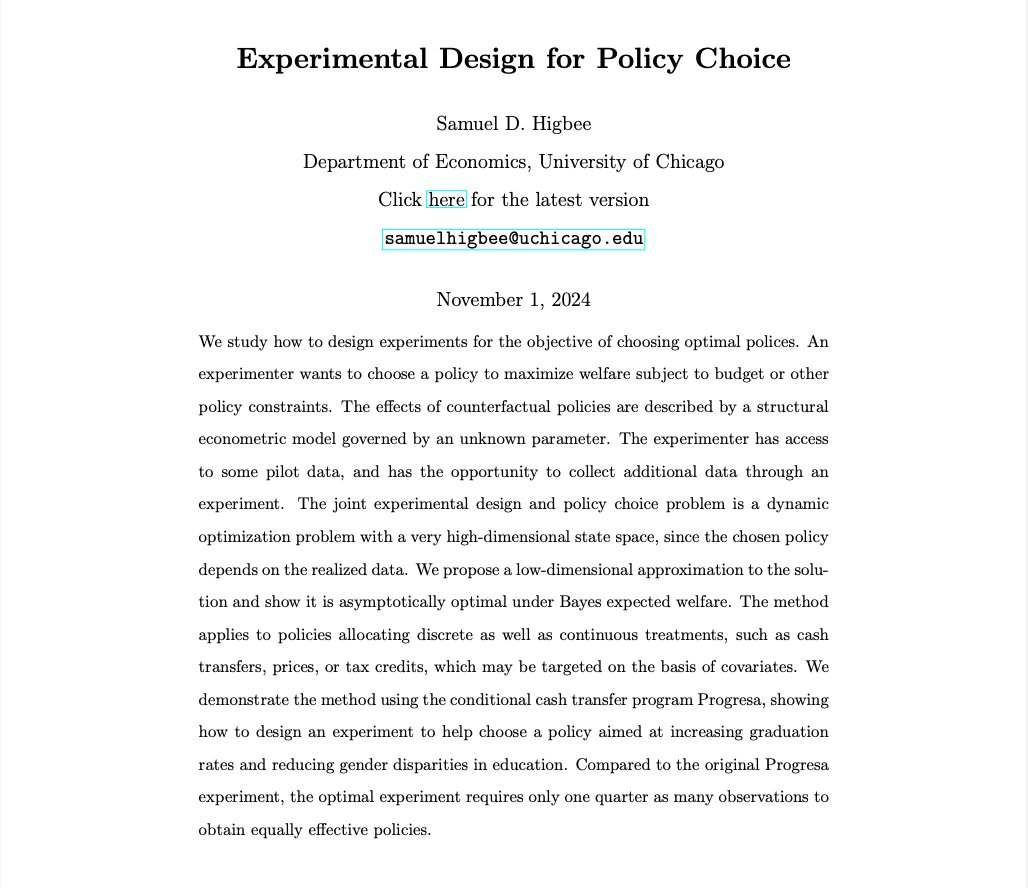
How can we optimize experiments to inform policy decisions? @SamuelHigbee develops a two-wave adaptive experimental design which tailors the experiment to the objectives and constraints of policymakers. Read: https://t.co/TNyYfgTQPz.
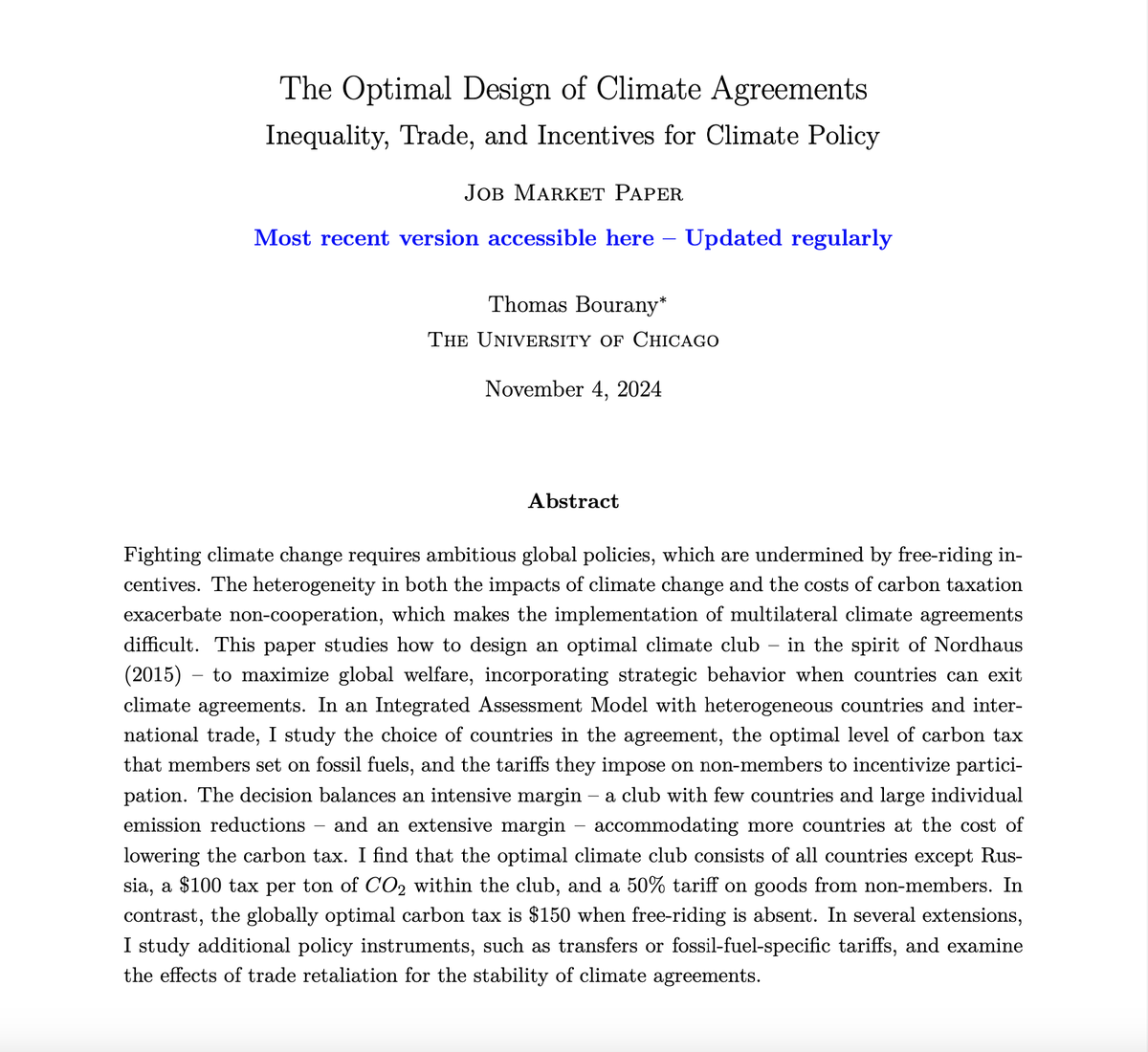
Thomas Bourany @TBourany works at the intersection of Macroeconomics, Environmental Economics, and International Trade. In his JMP, he shows how to design optimal climate agreements to implement carbon policy in the presence of free-riding and inequality. https://t.co/e77SvC7AiZ