First paper of my dissertation is out! We (@PolynSean and @brownschmidt) developed a family of computational models for a binary semantic classification task, in which participants judged target words for the referent’s size or animacy.
https://t.co/PbyZMCMNMF
We propose that when making a decision on a binary semantic classification task, humans use task prompts to retrieve instances representative of the extremes on that semantic dimension & compare the probe to those instances.
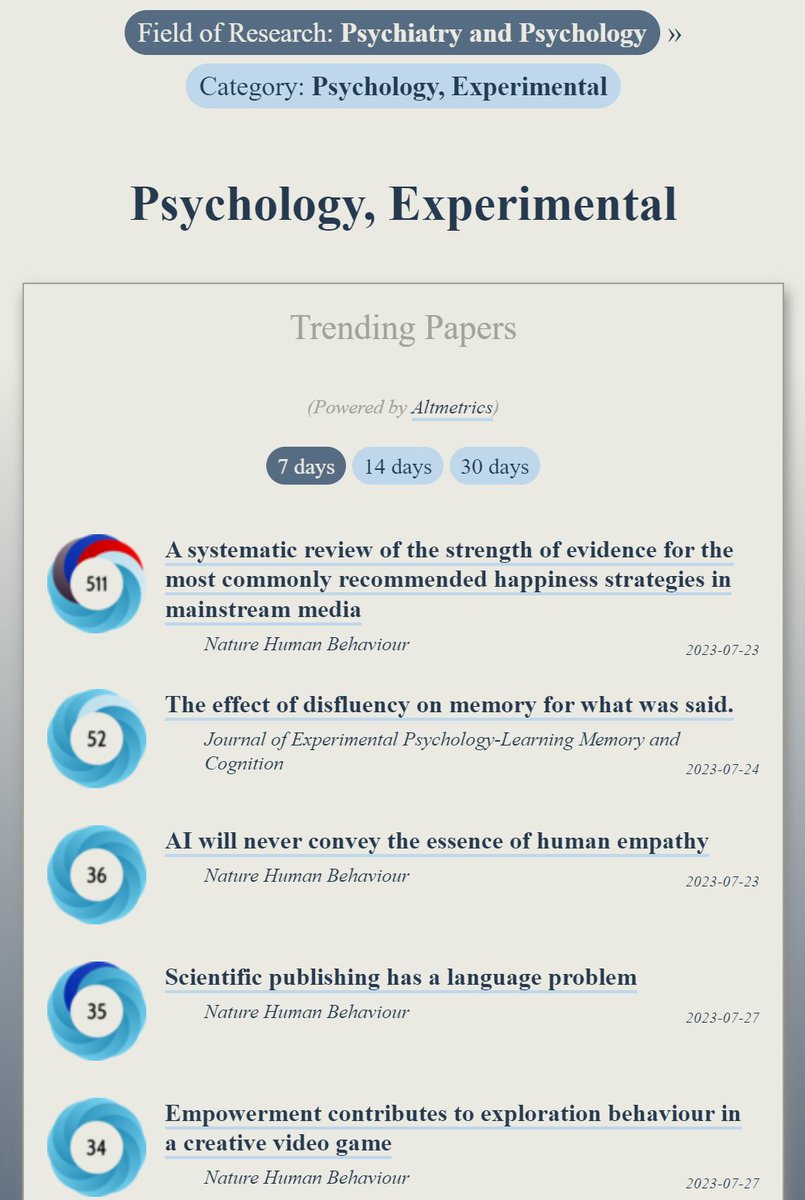
Trending in #ExperimentalPsychology:
https://t.co/NZeZNK8vx2
1) Happiness strategies (@NatureHumBehav)
2) Effect of disfluency on memory for what was said
3) AI & the essence of human empathy
4) Scientific publishing has a language problem
5) Empowerment leads to exploration
⚡️The Laboratory of Speech Neuroscience @StanfordBrain is hiring a Lab Manager!⚡️
Successful candidates will have a passion for scientific discovery and a love of IRB protocols :)
To be considered, please complete this application: https://t.co/YhzJacM2XF
Grateful for RTs! 🙌
My lab is hiring a project coordinator! The Conversation Lab at Vanderbilt University is accepting applications for the position of Project Coordinator in the lab of Dr. Sarah Brown-Schmidt at Vanderbilt University. Info about the lab: https://t.co/VYYbpOjYRP
We started our new Science Communication internship, and in this interview, @lmickes interviewed new intern, @PillaiRaunak. Get to know him here, and stay tuned for his upcoming posts.
https://t.co/GLeDbcp7n0
Love seeing so much interest in our work🤩
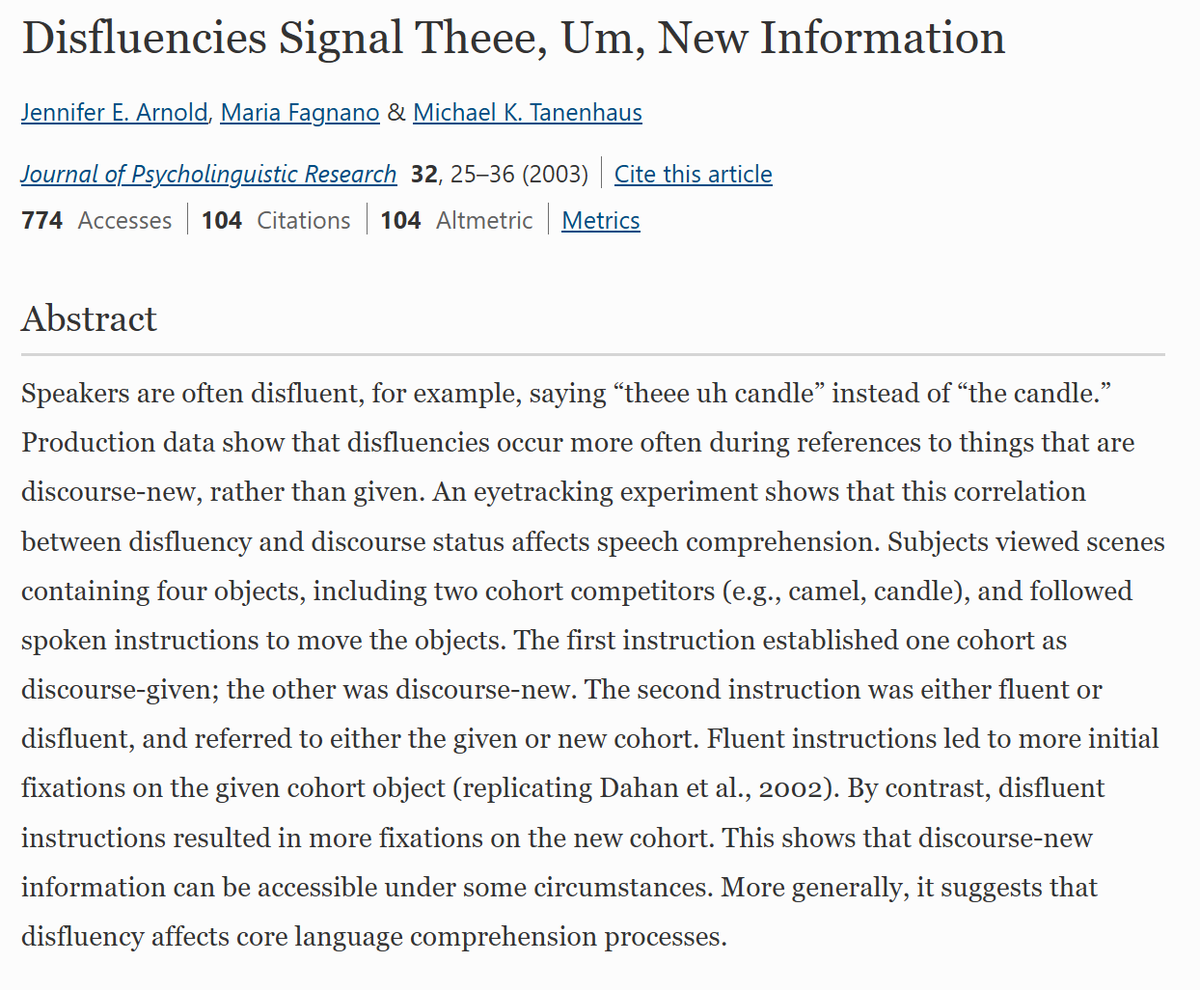
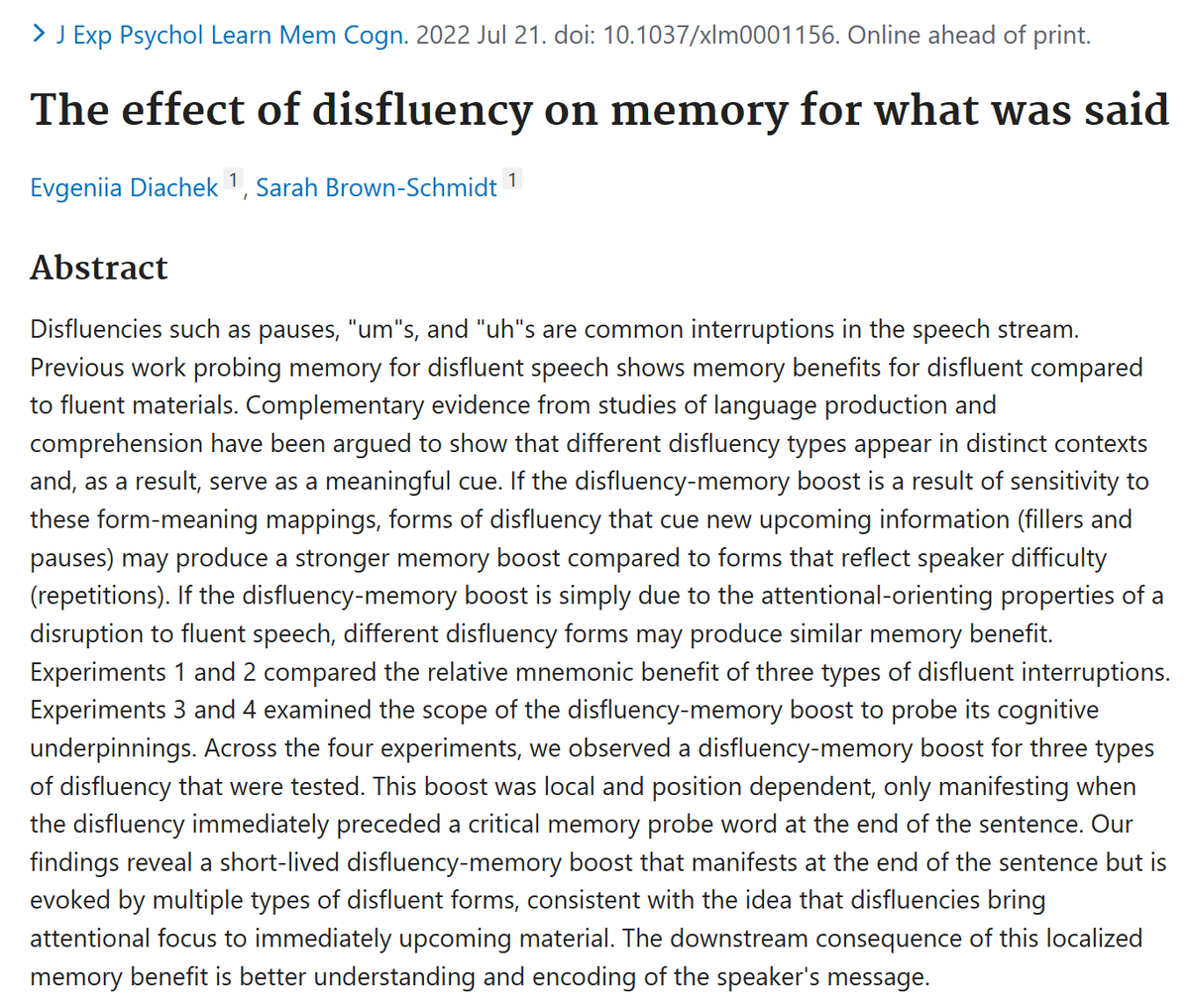
That’s right: speech disfluencies aid language processing and improve memory for what was said @brownschmidt
Posting the link to our @APA JEP:LMC paper for anyone who might be interested
https://t.co/KDkLAqfpJX
It's a mistake to stop saying "um" and "uh" altogether.
Evidence: filler words signal that new information is coming, making it easier for listeners to understand and remember what comes next.
Hesitations don't make you sound weak. They help you... uh... communicate clearly.
Speech disfluencies (e.g. "um", "uh" improve listeners' memory for speech (new research). They might also buy time for speakers to think (my commentary). *Other* researchers make ableist claim that "um" is better than "uh" because autistics say it less. 🔗https://t.co/ly74f0wLGL
It's a mistake to stop saying "um" and "uh" altogether.
Evidence: filler words signal that new information is coming, making it easier for listeners to understand and remember what comes next.
Hesitations don't make you sound weak. They help you... uh... communicate clearly.
Une récente étude de #psychologie (Diachek & Brown-Schmidt, 2022) montre que ponctuer son discours de "euh" permettrait d'en faciliter sa mémorisation !
Voici un court thread 🧵 pour vous expliquer comment les chercheurs sont venus à cette conclusion.