La BBC tiene una página donde puedes ver cómo se van armando los cruces del Mundial 2026 conforme avanzan los partidos. Sin drama, sin "última hora". Solo el cuadro, actualizado, con el camino posible de cada selección. Parece un detalle menor. No lo es.
En un torneo con 48 equipos y 12 grupos, como aficionados, además de saber quién ganó, queremos imaginar contra quién podrían jugar nuestras selecciones, qué tan difícil se pone el camino, qué escenarios son posibles. Esa página responde exactamente eso, sin obligarte a calcular nada.
Y eso es lo que hace bien, convierte la información compleja en algo fácil de entender, en el momento exacto en que la gente lo necesita.
Les comparto la página por si quieren seguir los cruces: https://t.co/xo3HWSuTp3 ⚽
#Comunicación #Mundial2026 #ComunicaciónDigital
Come and visit London’s Home of Trophies. 🏆
Book your Stadium Tour at Stamford Bridge now. ⭐️⭐Come and visit London’s Home of Trophies. 🏆
Book your Stadium Tour at Stamford Bridge now. ⭐️⭐Come and visit London’s Home of Trophies. 🏆
Book your Stadium Tour at Stamford Bridge now. ⭐️⭐Come and visit London’s Home of Trophies. 🏆
Book your Stadium Tour at Stamford Bridge now. ⭐️⭐Come and visit London’s Home of Trophies. 🏆
Book your Stadium Tour at Stamford Bridge now. ⭐️⭐Come and visit London’s Home of Trophies. 🏆
Book your Stadium Tour at Stamford Bridge now. ⭐️⭐️
A mother loves all her children in the same way and with her whole heart. Standing before the Mother of our hearts, we want to promise to do the same, striving to ensure that no one lacks love, and what is necessary to live with dignity and to be happy. May those who are hungry have food, may all the sick receive the care they need, may children access proper education, and may the elderly live their later years in serenity. #ApostolicJourney #Angola https://t.co/QHppAQhcWM
SCANDAL IN NIGERIA
11,000 Indians hired to work in the Dangote refinery!
Dangote, India, and the burning mirror: what is happening to Nigeria is happening to all of Africa
There are truths that do more than wound pride; they puncture illusions, strip hypocrisy bare, and throw us—naked—before our own contradictions.
The Dangote case is one of them.
11,000 Indian technicians recruited because Nigeria couldn’t find 100 locally.
In a country of 235 million inhabitants, Africa’s largest economy, the self-proclaimed giant of the continent.
This is the clinical diagnosis of an illness that affects not just Abuja: it runs through the entire African body.
Many are shouting “scandal.”
I see a mirror.
And a mirror never lies.
1. Africa wasn’t defeated by tanks, but by polytechnics
People accuse Dangote of preferring Indians.
False.
Dangote prefers people who know how to run a refinery. Period.
It isn’t India that is humiliating us; it is our inability to produce skills that match our ambitions.
While Africa organizes summits, “national dialogues,” endless conferences, India organizes classrooms.
While we politicize technical education, India professionalizes it.
While we glorify long chains of theoretical diplomas, India trains thousands of hands-on technicians.
Indians didn’t take Lagos by force.
They are entering with their screwdrivers, their software, their skills.
2. Without skills, even our billionaires become dependent
Dangote is not the problem.
He’s actually the proof that wealth cannot compensate for weak human capital.
We may have oil, bauxite, gold, cobalt, lithium…
But until we have the men and women capable of transforming them, we remain tenants of our own development.
We provide:
the land,
the raw materials,
the tax exemptions,
sometimes even public money…
Others provide the brains.
And in the end, they walk away with the largest share of the added value.
Africa is a continent where you can build a port in 18 months—using foreign labor.
But where it takes 25 years to modernize a technical high school.
That should wake us up.
3. Technical education: our silent Waterloo
Our technical schools, where they still exist, operate with:
machines from the 1980s,
teachers who haven’t been retrained,
frozen curricula,
workshops turned into dusty museums,
students considered “less brilliant” than those in general education.
This is where everything begins.
This is where India beats us.
Not at Dangote.
Not in Lagos.
At school.
African parents dream of lawyers, doctors, and MPs…
Rarely of industrial mechanics, electromechanics, maintenance technicians, or process engineers.
Our societies continue to look down on technical jobs, even though the modern world depends entirely on them.
4. Nigeria’s problem is Africa’s problem: DRC, Kenya, Cameroon, Senegal… same fight
What is happening today in Nigeria is not exceptional.
It is the predicted future of all African countries if they do not wake up.
Across the continent:
Our power plants are repaired by foreigners.
Our mines are calibrated by foreigners.
Our dams are built by foreigners.
Our data centers are configured by foreigners.
Our roads are paved by foreigners.
And we applaud, as if development were about cutting ribbons.
Real development begins when we no longer need them for basic operations.
5. The mental revolution: turn every technical school into a talent factory
No magic.
No slogans.
No hollow “Vision 2030.”
Development requires:
qualified welders,
certified electronic technicians.
Culled
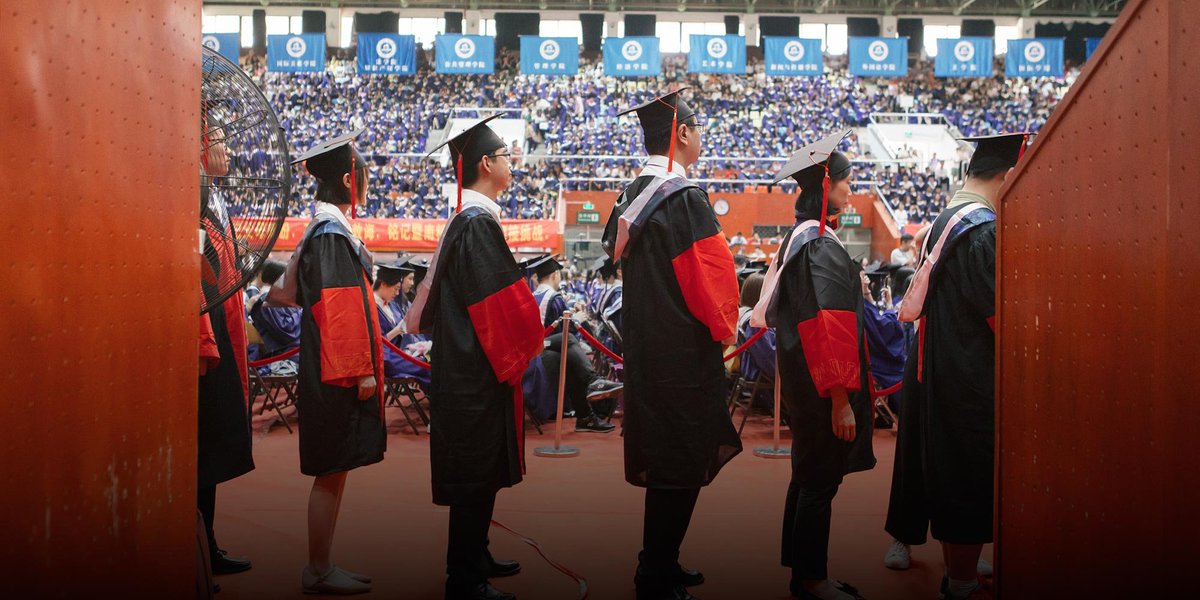
You can now earn a PhD in China by creating a product instead of writing a 100-page dissertation!
China has grown tired of PhD students writing research papers that no one reads and is now demanding that they build real products instead.
This radical shift in the philosophy of higher education in China represents a formal transition from "textual academia" to "utilitarian academia," where the traditional doctoral dissertation is replaced by the creation of a tangible product. The brilliance of this idea lies in its direct approach to the scourge of "dead research" that consumes years of researchers' efforts only to remain locked away in drawers, thus transforming the university from an intellectual silo into a productive engine that feeds the market and fosters innovation immediately.
IMPOSTER SYNDROME ISN'T INCAPABILITY, IT'S INEXPERIENCE... understanding this difference changed my life👇🏾
5 years ago today, at 27 years old the BBC called me and asked:
"Do you want to become a Dragon on Dragon's Den".
I was shocked. But I said, Yes.
To me it’s not just an iconic show, it’s a culturally, economically and entrepreneurially important one.
I was 28 when I entered the Den.
About to sit in a chair I'd role-played myself in since I was 12.
To my left: Peter Jones. There since episode one, 2005.
To my right: Deborah Meaden. 19 years in that seat.
Producer counts down: "30 seconds until the first entrepreneur."
My hands are sweating?! Heart thumping in my ears!
Not because I couldn't evaluate businesses. I'd built and sold companies and made investments - in fact my first ever investment was into a young Hyrum Cook for an idea he pitched me pre-launch called Adanola.
But I'd never done it with cameras rolling and millions watching.
For 15 years, I'd watched from my parents' sofa.
Paused the TV as a child to give my verdict before the Dragons.
Played businessman in my living room.
Now I was.... inside the TV. In the actual Den.
The lights really hot. The chair stiffer than expected and the silence before that lift opens, deafening.
Here's what I learnt:
Imposter syndrome isn't about incapability. It's about inexperience.
Your brain literally can't tell the difference between: "I've never done this" and "I can't do this"
Same signal. Same fear. Completely different realities.
First entrepreneur walks in. Pitches. The Dragons turn to me.
My mind goes blank for exactly one second.
Then muscle memory kicks in.
"Your customer acquisition costs across social media is 3x your lifetime value," I hear myself saying. "How do you fix that?"
Peter nods. Deborah builds on my point.
I belonged there. I just hadn't belonged there before.
One pitch in, the nerves are gone. 10 pitches in and I forgot the cameras, 50 pitches in and that chair felt comfortable, 500 pitches later - I'm having fun, experimenting, pushing boundaries a little.
And the thing is, Imposter syndrome hits the hardest when you're doing something that really matters - that you really care about. When you're exactly where you should be. When you're growing!
That's why I call imposter syndrome, "growth syndrome" - who would choose a life without that?
I wasn't an imposter. I was a 28-year-old who'd never been a Dragon before.
And, it turns out that's exactly what they wanted - someone who was a bit naive, inexperienced - different.
The lack of experience is not the problem,
but it always holds an advantage - that's what you focus on.
To everyone facing their own Dragon's Den moment...
You belong in every room you're brave enough to enter and the room that intimidates you most is the one that needs your perspective the most!
Activate to view
A CEO at Davos last week told me on stage that he was disappointed his son chose creative writing over computer programming.
After quite a lot of reflection, I believe his son might be making the smarter bet.
We're entering the age of deferred thinking. Everyone's outsourcing their reasoning to chatbots. The muscle that used to get exercised through struggle - the actual process of figuring something out - is slowly atrophying...
Richard Feynman, the Nobel Prize-winning physicist I wrote about in my book, had this idea that you don't truly understand something until you can explain it simply. (The person who complicates something usually understands it the least.)
His method was to take a blank piece of paper and write out an explanation as if teaching it to someone who knew nothing about the subject.
Wherever his writing became vague or convoluted, he knew that was a gap in his own understanding. Then he'd go back and fill it.
He knew something I think this generation is forgetting: writing is the most powerful thinking tool we have.
Writing is the act of organising chaos into clarity.
When you write, you're forced to confront what you actually know versus what you think you know. You discover gaps. You fill them. You sharpen vague intuitions into precise ideas.
AI gives you answers. Writing gives you a deep understanding.
If the rest of the world stops writing and you continue, you'll learn faster, understand more deeply, and develop better judgement. While everyone else consumes AI-generated answers, you'll be the one generating the most important questions.
And I think the person asking better questions owns the future.
I said to my best friends this morning that something really weird has happened since AI emerged. I'm writing MORE than I ever have in my life.
I would have thought ChatGPT meant I'd never write again, but the opposite has happened.
I now see writing as a huge competitive advantage in business. To write is to think. To think is to understand. And only if you understand, can you innovate.
Maybe the most valuable skill of the next decade looks exactly like the most valuable skill of the last thousand years.
Maybe the most important skill in a world of AI is continuing to write!
Just a thought!
⚠️ (ai was not used in the making of this content)
In 1951, a 14-year-old Australian boy named James Harrison woke up in a hospital bed with 100 stitches across his chest.
Doctors had just removed one of his lungs. To survive, he needed 13 units of donated blood from complete strangers—people whose names he would never know.
His father, Reg, sat beside him and said something that changed his life:
"You're only alive because people donated blood."
Right there, James made a promise. The moment he turned 18, he would donate blood. He would pay back the gift that saved him.
There was just one problem.
James was terrified of needles.
But in 1954, the day he became eligible, he walked into a blood donation center anyway. He sat in the chair, looked at the ceiling, and let the nurse insert the needle.
He never watched. Not once. Not in 64 years.
What James didn't know was that his blood was different.
After a few donations, doctors discovered something extraordinary. His plasma contained an incredibly rare antibody—likely developed from all those transfusions he received as a boy. This antibody could prevent a deadly condition called Rhesus disease.
Before this discovery, thousands of Australian babies were dying every year. When a pregnant woman with Rh-negative blood carried an Rh-positive baby, her body would attack the child's blood cells. Miscarriages. Stillbirths. Brain damage.
James's blood held the answer.
Doctors asked if he would switch to plasma donation. It meant longer sessions—90 minutes instead of 20. It meant coming in every few weeks for the rest of his life.
James thought about his fear.
Then he thought about the babies.
He said yes.
For 64 years, James Harrison never missed an appointment.
He donated through joy and heartbreak. He donated while working as a railway clerk. He donated after retiring. He continued even after his wife Barbara passed away in 2005—what he called his "darkest days."
Every single time—all 1,173 donations—he looked at the ceiling. He chatted with nurses. He studied the walls. Anything to avoid watching the needle.
The fear never left him. But he showed up anyway.
In a beautiful twist, his own daughter needed the very medication created from his blood when she became pregnant. His grandson Scott exists because of the choice his grandfather made decades earlier.
In May 2018, at age 81, Australian law required James to make his final donation.
The room was filled with mothers holding healthy babies—living proof of his quiet heroism. They thanked him through tears.
James sat in the chair one last time, looked away from his arm one last time, and gave his 1,173rd donation.
Over 3 million doses of Anti-D medication containing his blood have been issued since 1967. Scientists estimate his contributions helped save approximately 2.4 million babies in Australia alone.
When people called him a hero, he shrugged it off.
"I'm in a safe room, donating blood," he said. "They give me a cup of coffee and something to nibble on. And then I just go on my way. No problem, no hardship."
James Harrison died peacefully in his sleep on February 17, 2025. He was 88 years old.
We often search for heroes in movies or history books—people with superpowers, wealth, or fame.
But sometimes a hero is just someone who keeps a quiet promise for 64 years.
Someone who feels fear—deep, trembling fear—and does the right thing anyway.
Millions of people are alive today because one man decided his fear mattered less than their lives.
What small act of courage could you commit to, even when it scares you
Iwobi a pris une nouvelle dimension en reculant.
Il a un bagage athlétique et technique exceptionnel.
C’est un excellent milieu.
https://t.co/ZskiKVgJTy
Anonymous :
I drive Uber for a living. Usually, people just stare at their phones.
Last night was different.
I picked up a passenger at the Emergency Room entrance. He slid into the backseat and slumped against the door.
I looked in the mirror. He wasn't on his phone. He was weeping. Shoulders shaking, silent tears.
I turned the music off.
"You doing okay back there?" I asked.
He took a deep, shaky breath. "My wife passed away an hour ago. I have to go home and tell our children."
My stomach dropped.
I pulled the car over. I canceled the ride on my phone.
"We aren't going home yet," I told him.
"What?" he asked, wiping his eyes.
"You can't walk in the door like this," I said. "You need a minute."
I drove him to a dark spot by the lake. I put it in park.
"Take your time," I said.
I stepped out of the car to give him privacy.
I heard him scream. I heard him hit the seat. I let him get all that anger and pain out of his system.
Thirty minutes later, he rolled down the window. He looked exhausted, but he had stopped crying.
"I'm ready," he nodded.
I drove him to his driveway. He tried to hand me a fifty.
"No," I said. "Order takeout for the kids. Don't worry about cooking."
He looked at me. "Thank you. I needed to fall apart so I could hold it together for them."
Sometimes the best route isn't the fastest one.
A young marketer on our team made a mistake that cost us $100k in revenue.
He's smart. Hardworking. But he needs one key skill to grow:
Managing up.
Last week, he created our most viral post of all time. An incredible win.
But I was surprised when I later found out we were slow to act on the follow-up.
He had too much on his plate that day. But instead of flagging this, he tried to do it all himself and got stuck.
Here’s what managing up would look like:
1. Communicate wins with urgency
Don't say "the post is doing well."
Say "This post is on track for 15 meetings. We need to act now."
2. Flag roadblocks before they're problems
Don't wait until deadlines are missed.
Say "I won't hit the 24-hour SLA. Can John help with follow-ups?"
3. Connect needs to business outcomes
Don't say "I'm busy."
Say "Emails could generate 10+ meetings this week. Should I prioritize those over website updates?"
This isn't a failure. It's a coaching moment.
Managing up is the number one skill young professionals need to get promoted.
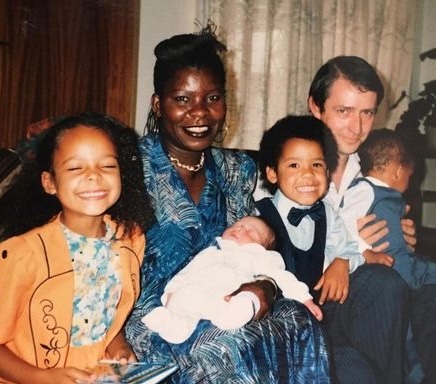
My Nigerian mother and my English father modelled hard work in a way that I never understood growing up.
My dad worked a full time job late into the evening and when his work was done, he would go and join my mum at her job in a small, hot, fast-paced restaurant kitchen until the early hours of the morning.
They came home when I was asleep and went to work when I was asleep.
When my mum left the restaurant, she opened a corner shop called KJS and would work all day and all night.
She would end up sleeping in the back room of the corner shop on a bag of rice because local kids would break in, steal things and vandalise the shop because she was pretty much the only black women in the area.
My dad again, would finish his full time job, and go straight to my mum’s shop and help her until late into the night.
The most remarkable part of this, isn’t just the fact that they worked 7-days a week to provide for their family.
It was their attitude towards their work.
They never ever described or viewed what they did as hard work.
I never ever heard them complain even once about "working hard".
They seemed to view work as the ultimate privilege, honour and opportunity.
The older I’ve gotten, the more I’ve realised that they were my biggest professional inspirations and influence - not because they gave me profound advice like some parents do, but because they set a profound example without needing to say a word - one that has enabled me to pursue my own dreams with a level of focused gratitude that I wouldn't have had otherwise.
"My parents were tasked with the job of survival and I with self-actualisation. What a luxury it is to search for purpose, meaning, and fulfilment." - Bo Ren
this is probably an unexpected opinion coming from me... entrepreneurship is over-sold and self-awareness is under-sold 👇🏾
The not so popular truth is, most people would be happier with a good salary than a successful startup.
But social media continues to push a generation to optimise for lives they don't actually want.
Entrepreneurs like me get a lot of likes and followers when we tell people to quit their jobs and chase their dreams.
But here is the context that we nearly always miss👇🏾
Entrepreneurship can be really really boring - you will have to do things you do not enjoy.
You will deal with big, hard, stressful problems, every day - including bank holidays, christmas and any other time off - for years.
If you're lucky enough to be successful, the problems will get bigger, not smaller.
You will not have one boss. You will have hundreds - every customer, every investor, every employee. You will answer to them 24/7.
You will probably work 3x the hours you do now, have 10x the stress and a tiny probability of significant success.
A recent survey found 87.7% of founders deal with at least mental health issues. That's not a bug. It's a feature of entrepreneurship.
You'll see your kids less. You'll probably earn less (for years, maybe forever).
You will probably pay yourself last and as little as possible.
You'll struggle to switch off. Forever. Your phone will probably become a prison.
And here's the punchline: If you succeed, it all gets harder.
More money = more complexity. More growth = more anxiety. More success = more people depending on you.
In life, when you find yourself following someone else's playbook, you are at risk of winning someone else's prizes. All I'm saying is be intentional.
I'm not AGAINST entrepreneurship, I'm FOR self-awareness.
Truth "wealth" is probably👇🏾
✅ Knowing what game you want to play and why
✅ Having the courage not to play other people's games
✅ Understanding your real strengths and weaknesses
✅ Designing within them, not against them
Happiness is not about the structure, the social media post or the story.
Happiness is about alignment. Building a life that's aligned to whoever you are!
This does the beg the question, why do I do it?
If I'm honest, the answer is probably....I don't know.
It's probably some blend of lower t trauma, my inability to fit inside normal structures like school and conventional work-places (I was fired a few times), my adhd brain that makes working on something for 14 straight hours feel like 7 minutes and some childhood self-esteem issues.
Whatever the reason, this is who I am and what works for me.
This is the weird way I make myself happy and fulfilled.
To someone that is not me, it would probably feel like torture.
And to me, their life would probably feel like torture.
And that’s the thing… when you create a life that feels like home to you, it will probably look like hell to tourists.
Please know what you are not!
Sugar in your blood is called diabetes.
Sugar in your brain is called dementia.
Sugar in your teeth is called cavities.
Sugar in your liver is called fatty liver.
Sugar in your cells is oxidative stress.
Sugar on your skin is called aging.
Take this instead;
Watermelon 🍉 = strong erection
Pineapples 🍍= Good skin
Cucumber 🥒 = Good liver
Apples 🍎 = good digestive health
Bananas 🍌 = improves sex drive and healthy blood pressure
Oranges 🍊 = boost the immune system with their high vitamin C content.
Grapes 🍇 = improves heart health
Strawberries 🍓 = reduce inflammation and promote skin health.
Coconut 🥥 = supports brain health and weight management.
Mangoes 🥭 = contribute to healthy skin and immune function
Avocado 🥑 = helps lower bad cholesterol and supports heart health
Blueberries 🫐 = Blueberries improve cognitive function and support heart health
Fruits are better than processed sugars.
THREE South African schools have earned top honours in the global Inspired Builds robotics competition, a technology challenge involving 111 schools across 24 countries.
https://t.co/4Zf6eiPC6a
I'm a big fan of the "GPS Theory" when you miss a turn, your GPS doesn't judge you, it recalculates. No matter how many detours you take, it finds another way forward. Life works like that too. You'll make mistakes, but your destination doesn't vanish. The route just changes.