@LAMelgar Nuevamente te pregunto sobre el sentido de tu voto en la sesión en la que se aprobó la Ley de Economia Digital en el Senado. Votaste a favor junto con el bloque de la 4T? De ser así, déjate de hipocresías.
El daño al @INEMexico no lo hicieron solo unas cuantas personas sin ética.
Fue toda una operación autoritaria planeada y ejecutada desde el poder, paso a paso.
Va una breve explicación del asalto al INE autónomo.
Mi texto hoy en @ElFinanciero_Mx 👇
El IMSS puede combatir fraudes en la Modalidad 40. Lo que jurídicamente resulta mucho más difícil de defender es que lo haga cambiando, mediante un acuerdo administrativo, una regla que la Ley y el Reglamento siguen reconociendo. Ahí puede nacer una ola de amparos.
La Ley del Seguro Social permite continuar cotizando con el último salario o uno superior. El Reglamento va más lejos: dice que ese salario superior es “a elección” del asegurado, hasta el máximo legal. El Consejo Técnico acaba de reducir esa posibilidad al último salario más una UMA. Y la Suprema Corte ya ha establecido que los acuerdos del propio Consejo Técnico no pueden limitar leyes ni reglamentos.
El debate no es si la Modalidad 40 necesita reformarse. Puede necesitarlo. El punto es quién tiene poder para hacerlo. Si una regla genera abusos, persíganse; si resulta financieramente insostenible, reforme el Congreso la ley. Pero mientras la norma superior diga una cosa, una autoridad administrativa no puede escribir otra. Ese será el corazón del amparo.
La población ocupada en la formalidad registró en septiembre un crecimiento anual de 0.86%, en tanto que la población informal registró una caída anual de 1.51%, su primera caída, luego de diecisiete meses consecutivos de crecimiento.
Sin embargo, la menor informalidad no se explica por una mayor generación de empleo formal, sino por la salida de personas del mercado laboral, ya que la tasa de participación se ubicó en 58.45%, su nivel más bajo desde enero de 2022.
Estos datos muestran que el mercado laboral de México se mantiene débil.
El IMSS limita la Modalidad 40 para nuevas incorporaciones: el salario de cotización quedará ligado al último registrado, con un margen adicional de una UMA. También elimina los nuevos registros retroactivos. Los inscritos conservan sus condiciones hasta concluir su periodo contratado.
#IMSS #Modalidad40 #Pensiones #México
https://t.co/IBdN6t3dmZ
#LaQuintaTransformación
México entró en la fase decisiva de su evaluación ante el Grupo de Acción Financiera Internacional (GAFI), organismo encabezado por Giles Thomson, y que revisa la eficacia de los países para combatir el lavado de dinero y el financiamiento ilícito.
https://t.co/vfpirRFaaj
@LillyTellez@SocCivilMx@Claudiashein@CitlaHM Pidamos de una vez que lo abran a todo el público. Para que también los ciudadanos podamos tener acceso. Podrían hacer esa gestión en nombre de todos los ciudadanos mexicanos?
El Senado aprobó la Ley de Economía Digital con 73 votos a favor y 34 en contra. Hacienda podrá definir en qué sectores los pagos digitales serán la única opción. El impacto para pequeños comercios dependerá de las reglas de transición.
#Economía#PagosDigitales#Senado#México
https://t.co/i90ikiD4oY
@ImagenTVMex@DavidPramo2 El re financiamiento de la deuda a qué tasa de interés se dio? Es mayor o menor a la tasa de la deuda que estaba por vencer? Dato importante que no se menciona. Patear el bote es fácil, pero con qué costo?
In 1957, a Russian immigrant published a novel of more than a thousand pages built around one question: what happens if the people who make the world run simply stop?
Its title is Atlas Shrugged. In France it's called La Grève, The Strike. It wasn't even translated into French until 2011. That tells you something.
This morning, I think Elon Musk wrote the sequel.
A. Where the book comes from.
Ayn Rand was born Alisa Rosenbaum in Saint Petersburg in 1905. As a teenager, she watched Bolshevik soldiers walk into her father's pharmacy and seize it in the name of the people. Her family lost everything. Not to a competitor. To a committee.
She fled to America in 1926 and spent the rest of her life writing about one distinction: those who create, and those who seize.
B. The story.
In Atlas Shrugged, America is sliding into decline. Not because of war. Because of rules. Year after year, a growing class of bureaucrats, regulators and planners decides that production must be controlled, shared "fairly," frozen. They never build anything. They issue directives. The worst one freezes every worker in his job and forces every inventor to hand over his patents for the public good.
And one by one, the people who make the country run start disappearing. The best engineers. The industrialists. The inventors. An oil man sets his own wells on fire before vanishing. The whole country keeps repeating a question it doesn't understand: "Who is John Galt?"
John Galt is the man behind the disappearances. He has convinced the creators to go on strike. They withdraw to a hidden valley in the Colorado mountains, where everyone keeps what they make and trades freely. And they let the world find out what it looks like without them.
The lights go out in New York. The grey men are left alone with their directives, and discover that a directive has never produced a single kilowatt.
C. The core idea.
The strike isn't about money. It's about consent.
Rand's insight is that the system that captures the creators runs on their cooperation. It needs them to keep producing so it has something to redistribute. The bureaucrat is a parasite who needs a host. Remove the host, and he's exposed as what he always was: useless.
D. What Musk just did.
This morning, Musk announced that next year he will give one of his own SpaceX shares to every kid in America. "The first of many."
Here's what's fascinating. It's the strike, run in reverse.
Rand's creators withdrew. Musk stays. He keeps building rockets, satellites, AI. But instead of walking away from the system, he walks around it. The value goes straight from the builder to the citizen. No ministry, no agency, no committee in the middle.
Rand had to make the creators disappear to prove the bureaucrats were useless. Musk doesn't need to disappear. He just needs to stop routing value through them. Same result. The grey men are left standing in the middle of a pipe nobody uses anymore.
E. The difference that changes everything.
Rand's strike has a flaw her critics never stopped pointing out: ordinary people are left behind. The creators retreat to their valley. The rest of the country sits in the dark.
Musk's version fixes that. He isn't taking the creators out of the world. He's bringing the world into the valley. Every kid in America becomes a shareholder in the machine. Not a spectator of the strike. A participant.
That's the alliance being formed right now: builders and citizens, directly, with nothing in between. And the only people who lose that deal are the ones who never built anything.
F. Why now, and not in 1957.
In Rand's time, the strike was a fantasy. You couldn't produce at scale without the state's permission, and you couldn't reach every citizen without its pipes.
In 2026, one founder can build rockets, run a global network from orbit, and pledge equity to 73 million children in a single post. AI will soon do in seconds what a ministry does in years. The tools of the strike finally exist. And they don't require anyone to leave.
G. The ending.
For seventy years, "Who is John Galt?" was a shrug. A way of saying nothing can be done.
In the book, the strike ends when the creators decide the road is clear and walk back into the world to rebuild it.
That's the scene we're watching. Not a man leaving. A man coming back, with a gift for every child.
The grey men are about to discover what Rand promised them seventy years ago: a world that no longer needs them.
@latinus_us@LAMelgar@fdelcollado Ya rompieron con la 4T? Porque siguen votando en bloque. Así que todo lo que diga son MENTIRAS!!! Sigue siendo lo mismo que la 4T. No tiene cara para decir lo contrario.
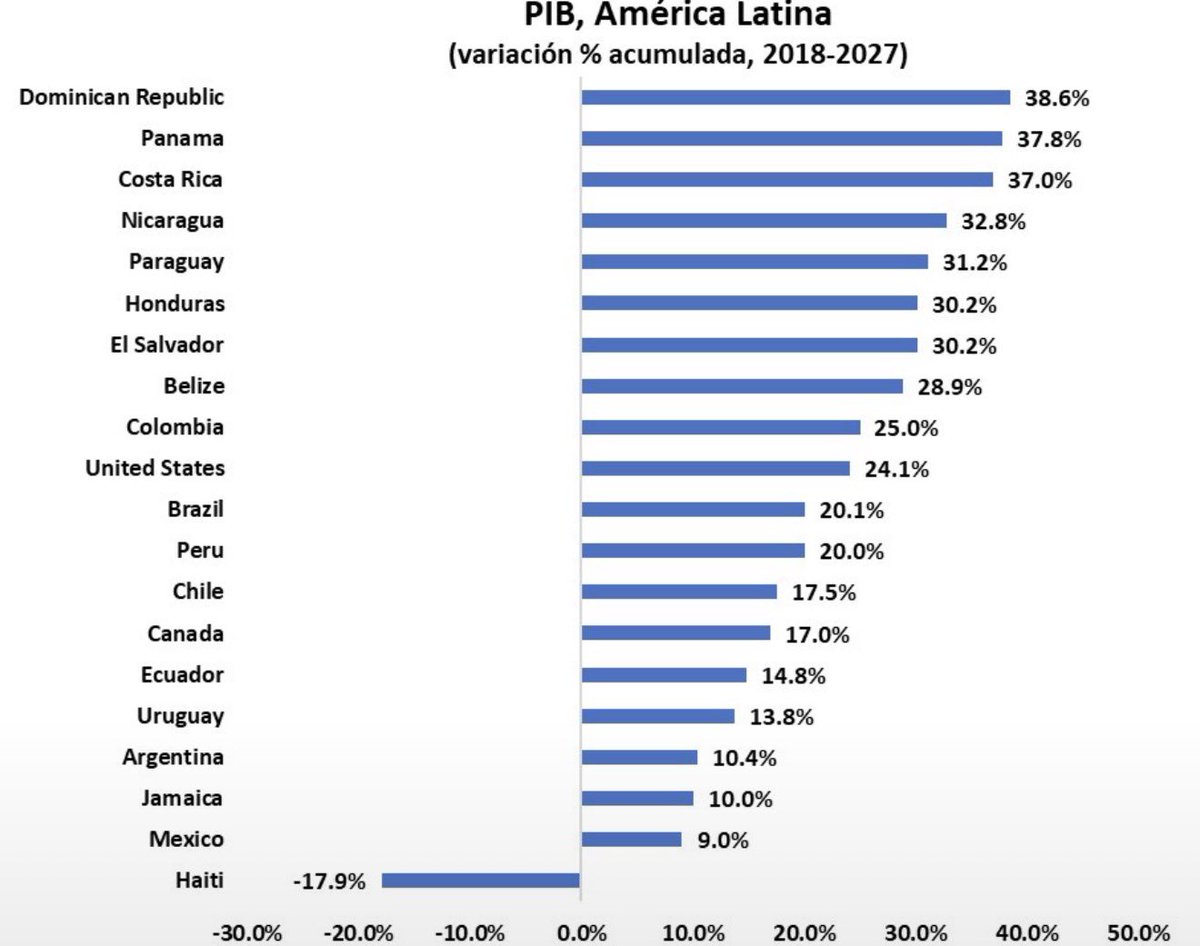
Que no les quieran vender la mentira. México sí está estancado. En 2019 pasamos de la mediocridad al pantano. Y la responsabilidad es del populismo lopezobradorista (que siguen vigente). Somos penúltimos ¡en Latinoamérica!en PIB nominal y antepenúltimos en PIB per cápita.
Luego de que El Universal revelara un sobrecosto en la Megafarmacia que se elevó de 10 800 millones a 15 000 millones de pesos en sólo un año, borraron todos los datos de su página electrónica de Cartera Pública de Inversión.