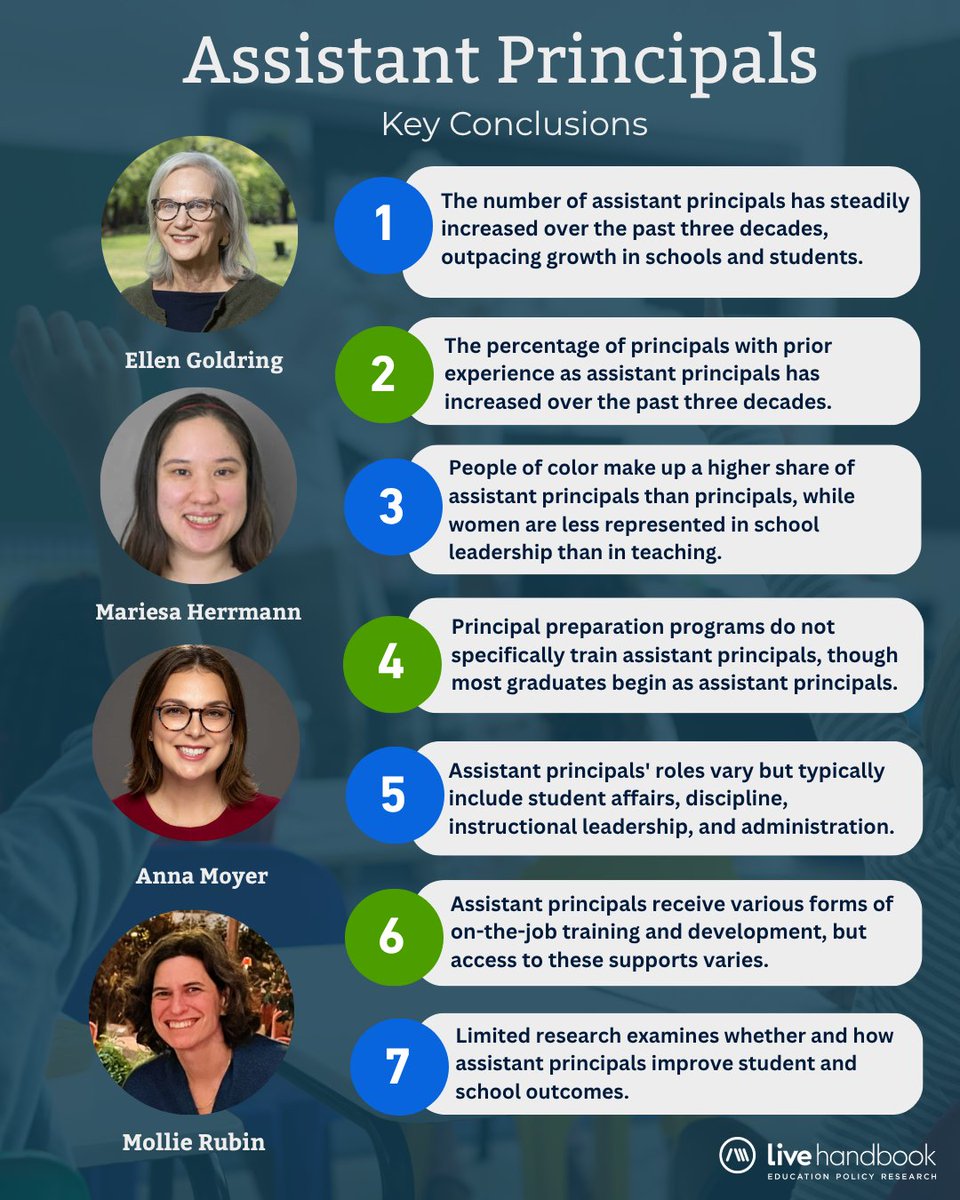
Assistant principals support school operations, student affairs, and instructional management.
In this chapter, Ellen Goldring, Mariesa Herrmann, Anna Moyer, and Mollie Rubin examine their roles and responsibilities.
Learn more: https://t.co/pgjw3BN8PE
Read Patrick Wolf, Alex Wolf, and Nathan Honeycutt’s recent op-ed in Education Next, where they examine the state of academic freedom on college campuses across America, drawing on findings from their Live Handbook chapter.
Learn more: https://t.co/ygR96Xv6ao
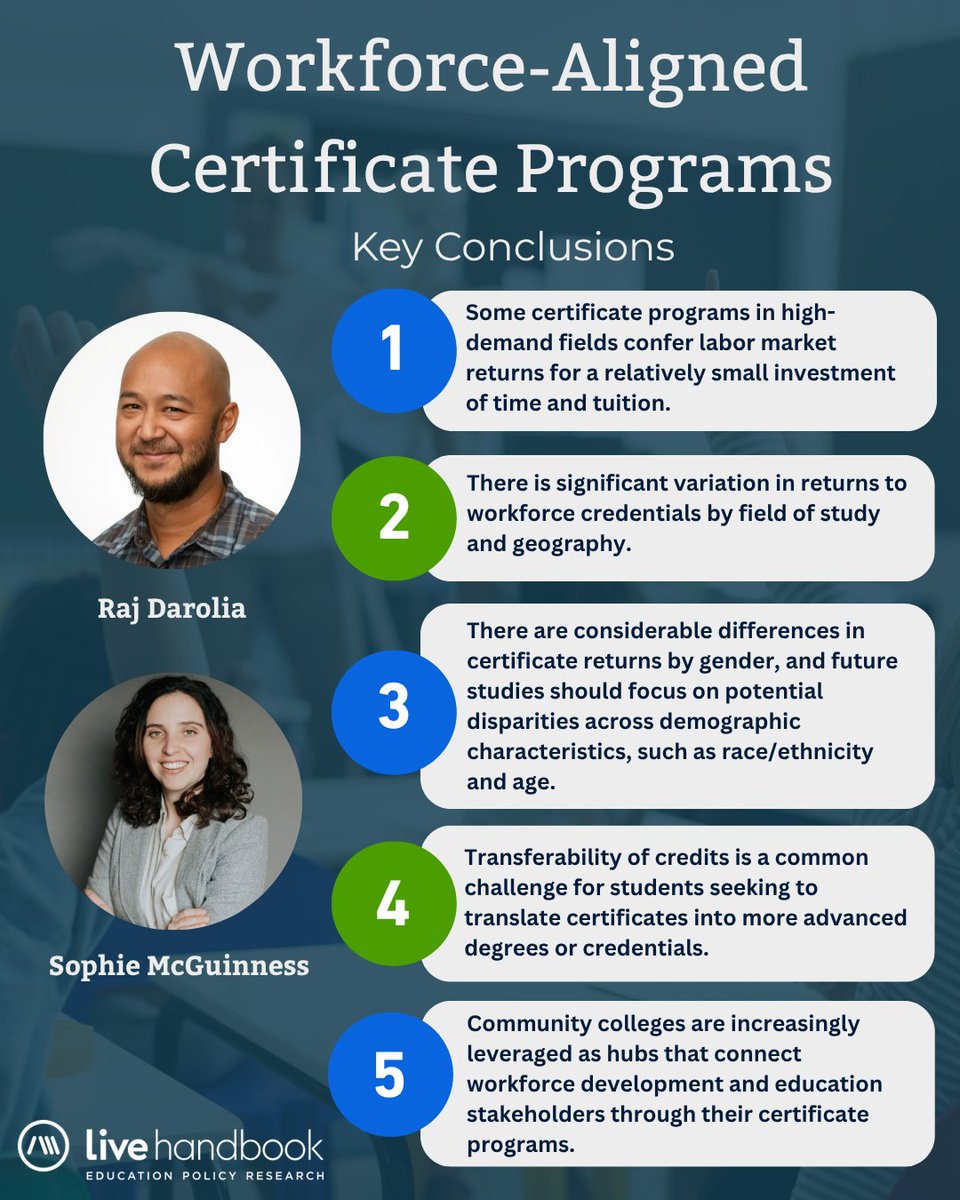
Workforce-aligned certificate programs offer shorter paths to postsecondary credentials and are designed to connect students with employment opportunities.
In this chapter, Raj Darolia and Sophie McGuinness examine research on these programs.
Learn more: https://t.co/uUv11Irko7
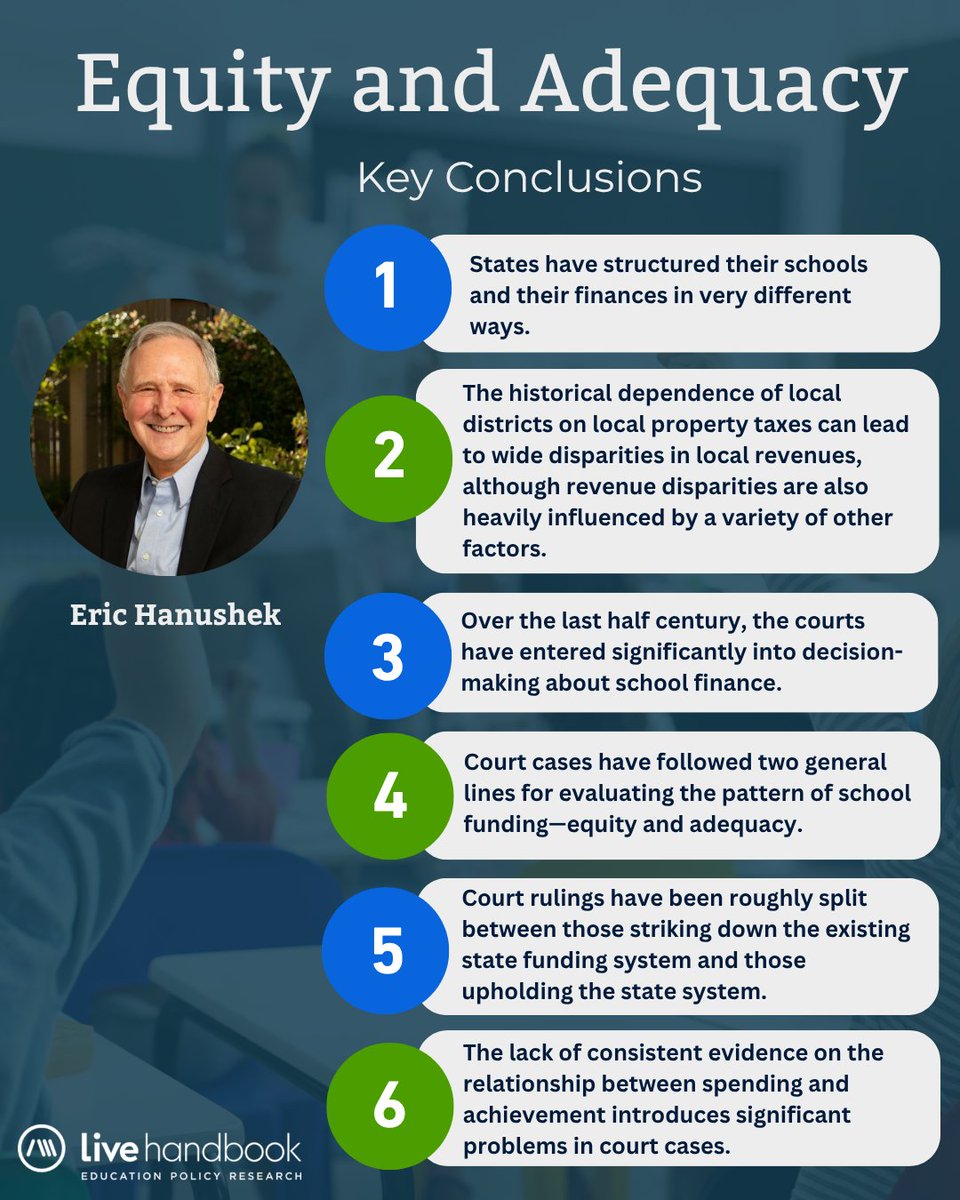
School funding varies widely across states with differences in how schools are structured, funded, and supported by state, local, and federal revenues.
In this chapter, Eric Hanushek examines research on equity and adequacy in school finance.
Learn more: https://t.co/1Cyf2wpoU3
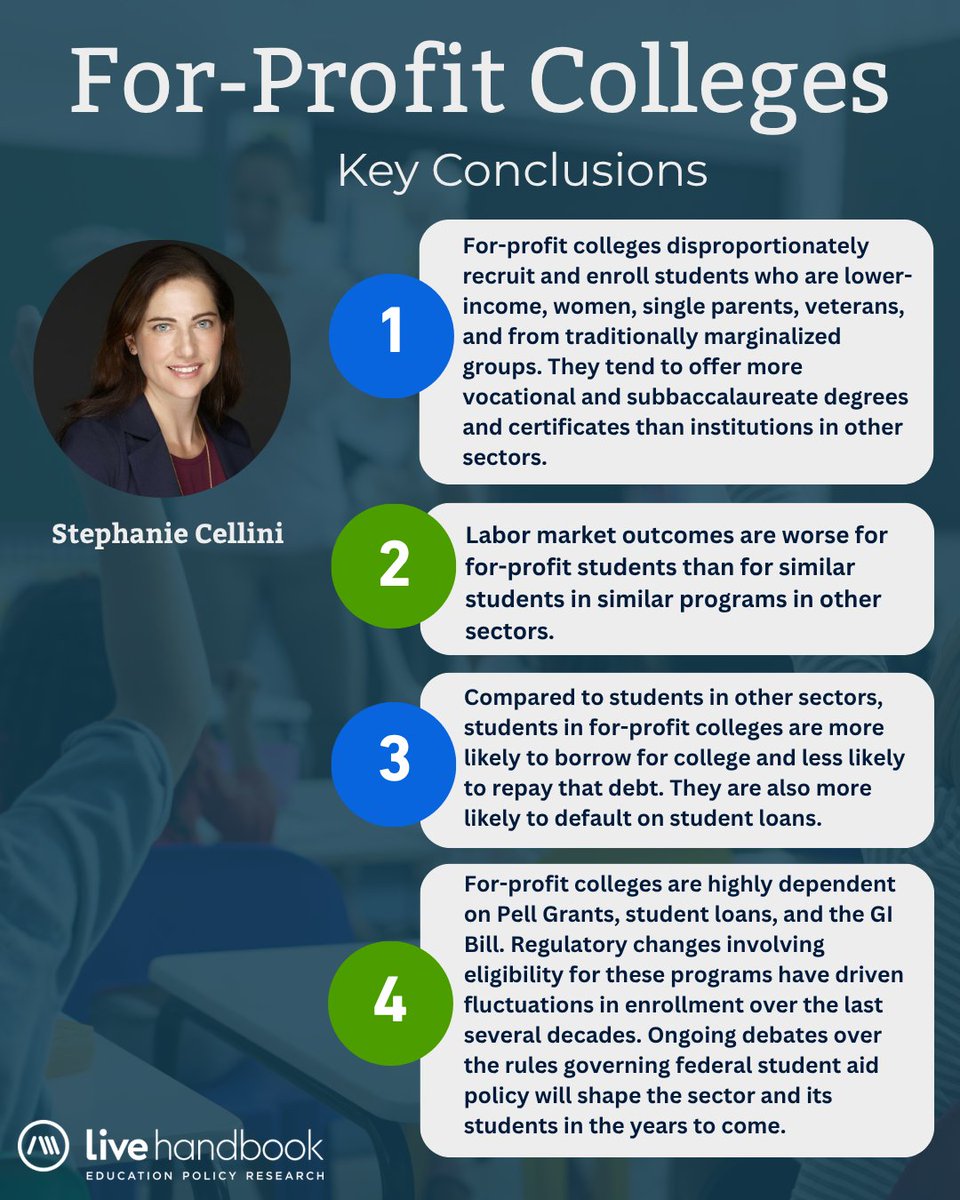
For-profit colleges play a distinct role in higher education, but research raises questions about student outcomes, debt, and reliance on federal student aid.
In this chapter, Stephanie Cellini examines research on for-profit colleges.
Learn more: https://t.co/rDCWm0p1i5
Good education policy requires attention to values at stake and the trade-offs policy decisions can involve.
Harry Brighouse, Helen Ladd, Susanna Loeb, and Adam Swift examine values that shape education policy, including educational goods.
Learn more: https://t.co/8qFdb5lMcM
ECE programs can support children's development and the parenting skills and well-being of parents and caregivers.
In this chapter, Todd Grindal and Molly Goldberg examine research on ECE-based supports for parents and caregivers.
Learn more: https://t.co/4IuyTI6QHL
School capital investments can improve student outcomes, but spending varies by district.
Paco Martorell and Isaac McFarlin Jr. examine how K–12 capital investments are funded and distributed and how effects vary by project and community.
Learn more: https://t.co/090BlswUzE
ECE data are spread across separate systems, limiting a full picture of how children and families are served.
Jessica Whittaker, Kelsey Clayback & Isabella Rodriguez examine how ECIDS connect data to improve ECE quality, equity & outcomes.
Learn more: https://t.co/hEe3MkxzHB
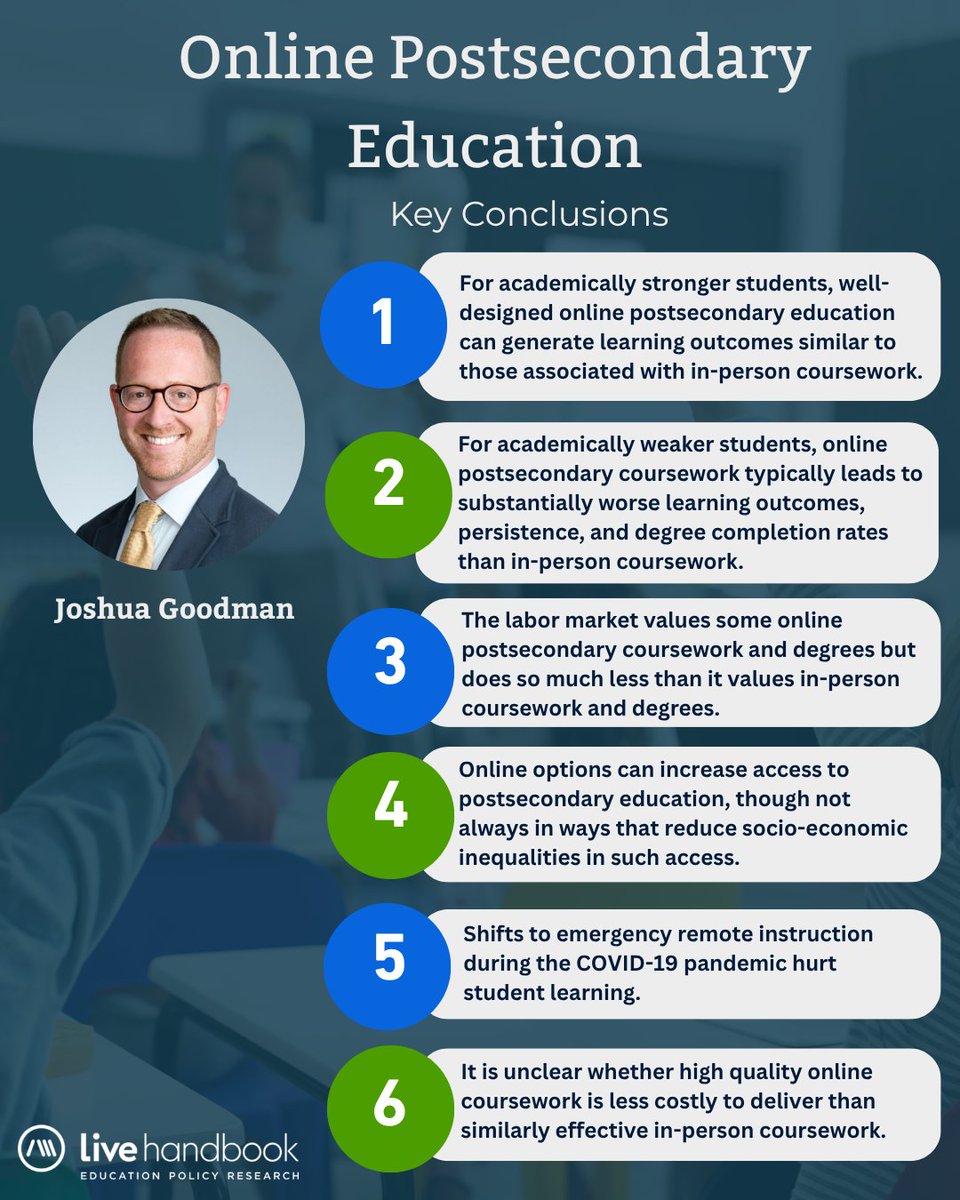
Online postsecondary education can expand access, but its effects on outcomes vary.
In this chapter, Joshua Goodman examines research on online postsecondary education and its effects on student learning, degree completion, and access.
Learn more: https://t.co/XO2WhHxFtk
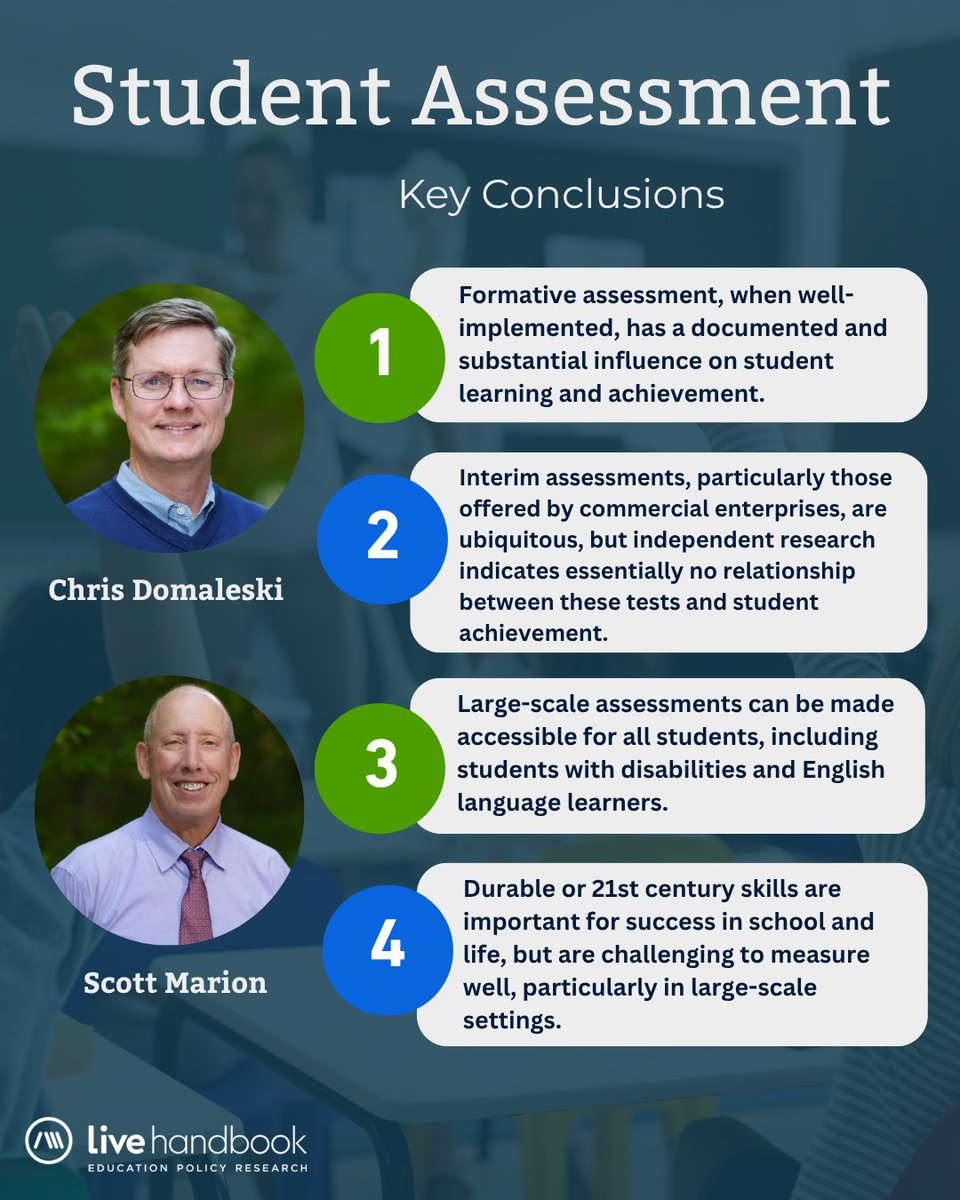
Student assessment is used to measure students' understanding of classroom content.
In this chapter, Chris Domaleski and Scott Marion examine different types of student assessment, their implementation, and their implications for equity.
Learn more: https://t.co/8uv9e311XD