Interested in molecular animation? Give ProteinBlender a try! It's free and open source. https://t.co/HtSCiWAaIl The latest tools include a DNA builder (shown in the tutorial video below). We'd love to hear what you think! We have short tutorials that cover all the features!
As I said, @OpenAI Astra has clearly crossed the AGI threshold! It scored 99% on ARC-AGI-3. The best frontier models were recently getting only a few percentage points & thought unbeatable for now. Astra is really unbelievable; people will understand this soon! Next I will share some examples
💬 Perspective: #GenerativeAI may improve #ClinicalDecisionSupport when it synthesizes decision-relevant patient context, but outputs should remain grounded in curated sources with source attribution and deterministic verification. https://t.co/mD1ibxGnOJ
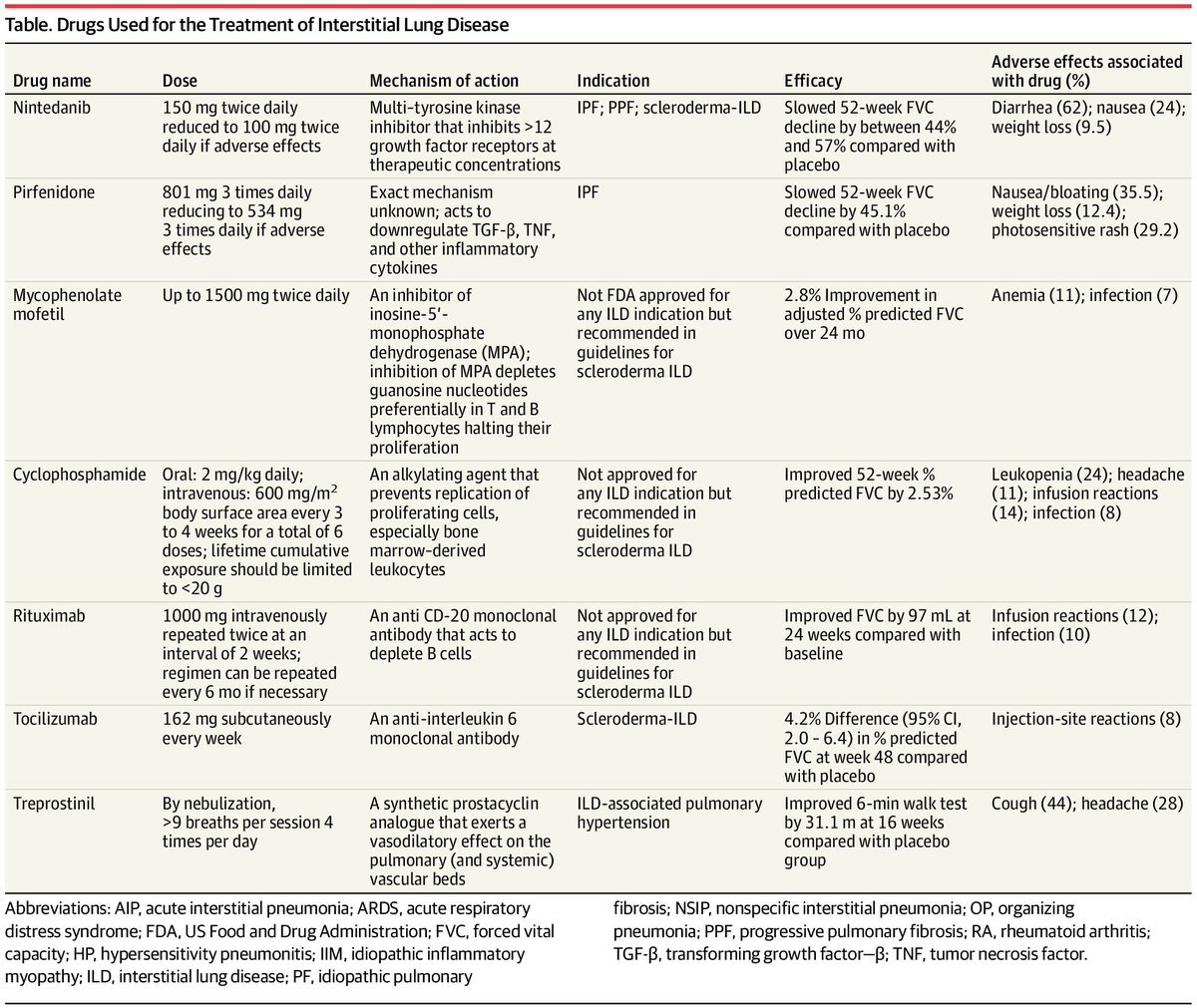
Study of 154 anti-Ku Ab+ pts (51 IMMM, 46 SLE, 30 Sjögrens, 27 Sc) = 60 (39%) had ILD - 75% progressed; more rapidly in males. BUT Ku+ is rare <4%, not specific, without clear clinical implications. Ku is a myositis-assoc Ab (like Ro52/Ro60, U1-RNP, PM/Scl) https://t.co/fl34eivKbZ?
Very excited that, after Meta released its open-source AI models yesterday, this morning another major American open-weights model was released by NVIDIA!
Nemotron 3.5 lightning is a 30B-parameter model, 4x faster than similar sizes, with open weights, making it highly customizable and adaptable for fine-tuning and specialized applications. It is now available on @huggingface.
“Lightning is built to specialize.
Post-train Nemotron 3.5 Lightning with NVIDIA NeMo for your domain data, tools, workflows and policies.
Across cybersecurity, coding, legal and energy tasks, post-training improves accuracy for specialized work.”
We support this petition, signed by our CEO, several co-founders, and senior staff.
Our own research on recursive self-improvement, published last month, points to the need for tools to deliberately pace the frontier of AI development so society can prepare. We’re glad to see broad agreement across the field. https://t.co/DqwuQfa9xH
This is a super cool science and BioAI platform! Can’t wait to try it out!
Indeed, as I’ve been saying for the past two years, we have now entered a new era in Science, which I call Science 3.0, where AI and human scientists work together to push the frontiers of discovery!
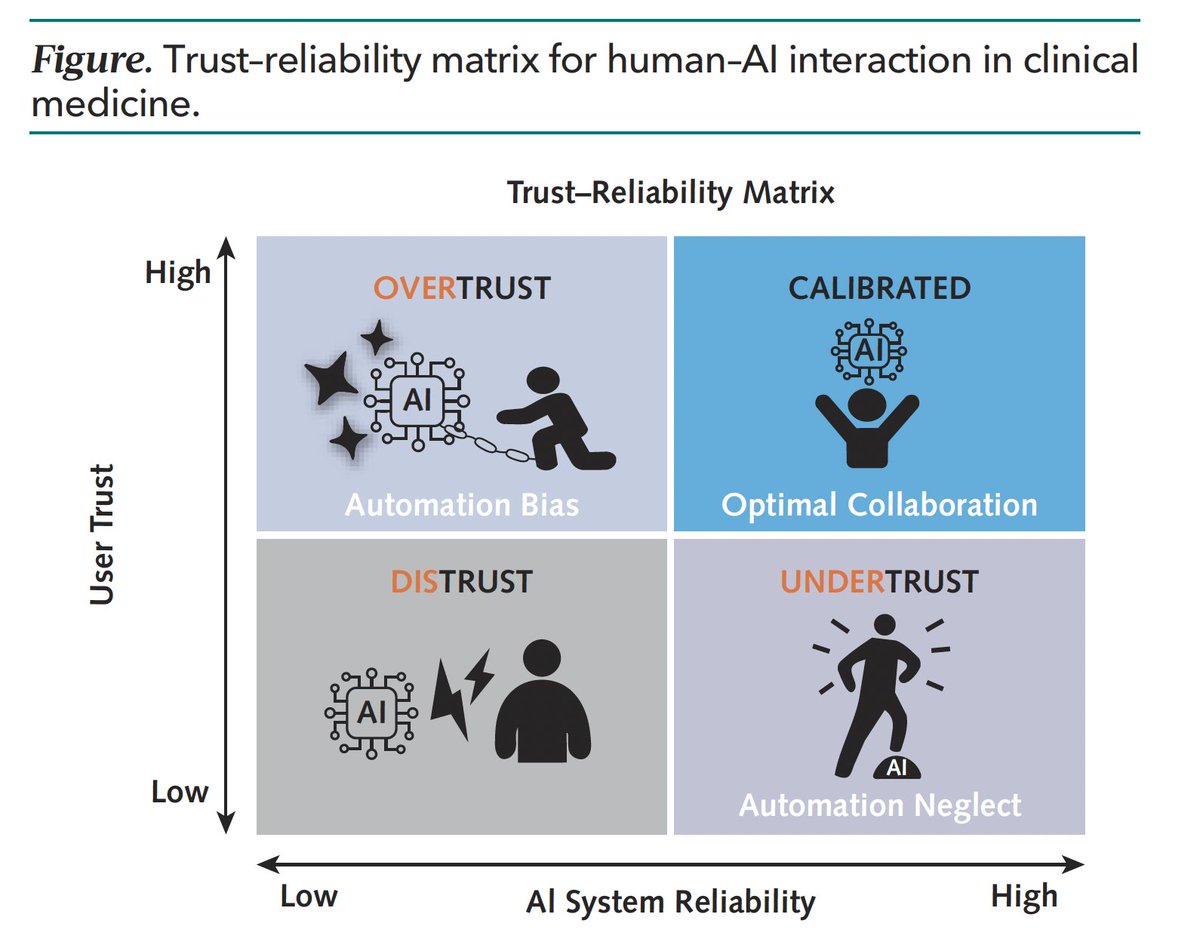
This is exactly why clinical AI needs workflows, not just models.
The physician’s role is to preserve context, detect uncertainty, challenge outputs, and decide when AI should guide, assist, or be ignored.
Trust must be calibrated, not assumed.
New @AnnalsofIM
"The Human Factor in Clinical AI: Why Technology Alone is Not Enough"
Gets into the trust issue and concludes: 'The most important question in medical AI may not be ���how accurate is the algorithm?” but rather “how do we calibrate the relationship between clinician and machine?'
https://t.co/n4ijxrm7o9
Inflammatory myopathies are typically associated with a myositis-specific autoantibody that determines the diagnosis and prognosis. Myositis subgroups have distinct pathomechanisms that now allow for targeted therapies.
Learn more in the Review Article “Inflammatory Myopathies” by Yves Allenbach, MD, PhD, and Olivier Benveniste, MD, PhD: https://t.co/ZeCKdNe87v
These multicenter results, marked by rapid decline and ⬆️mortality, suggest a shift: upadacitinib, an oral JAKi, may advance transplant-free survival. Its JAK1 selectivity 🎯IFN-I pathway precisely, per conditional 1st-line status in 2023 ACR/CHEST IIM-ILD guidelines. RCTs needed
Upadacitinib Versus Tofacitinib in Anti-MDA5-Positive Dermatomyositis With Interstitial Lung Disease: A Multi-Centre Cohort Study Emulating a Target Trial
https://t.co/XBF2uGIrdq
Very important prospective data in VEXAS. Baseline UBA1 VAF may move beyond diagnosis: higher variant burden predicted death or transfusion dependence, supporting its value as a candidate biomarker for early risk stratification and closer clinical monitoring.
Peripheral blood UBA1 variant burden predicts poor outcomes in #VEXAS syndrome: a nationwide prospective study - Annals of the Rheumatic Diseases https://t.co/Guqpi9dGwY
Some #SLE patients show a high-risk biological profile that routine activity markers may miss. In this study, one serum endotype clustered with nephritis and cardiometabolic burden, sharpening risk stratification. https://t.co/yplIhQF2cs
Some developments inform the field. Others redefine it. This one has the potential to reshape the industry, transform clinical decision-making, and change the horizon of possibility for patients. #Medicine does not wait for the future anymore, it building it.
#medtech
Facts you should know about B-cell therapy in 2026
Autoimmune disease = wrong immune memory
1- Why B cells are central
B cells →
• recognize autoantigen
• present antigen to T cells
• become plasma cells
• produce autoantibodies
• store immune memory
If B cells survive → disease returns
2-What each therapy actually does 👇
a-CD20 therapy (Rituximab) →
• removes circulating B cells
• plasma cells remain
• autoantibodies continue
→ partial control
b-CD19 targeting →
• removes naïve + memory B cells
• deeper depletion than CD20
c-BCMA targeting →
• removes long-lived plasma cells
• ↓ autoantibody production
d-CD19 + BCMA = immune memory deletion
e-CAR-T therapy →
• T cells are engineered to recognize B-cell markers
• T cells directly kill B cells
• very deep, long-lasting depletion
• drug-free remission possible
f-Bispecific T-cell engagers →
• one arm binds T cell (CD3)
• other arm binds B cell (CD19/BCMA)
• brings them together → B cell dies
• off-the-shelf, scalable
Anti-CD20 → suppresses disease
CD19/BCMA + CAR-T / TCE → resets immune memory
That’s the shift.
#Immunology #Rheumatology #BcellTherapy #Lupus #MedEd #EntranceExam #PrecisionMedicine @DrAkhilX @IhabFathiSulima
A timely step from NEJM. In an era where clinicians face information overload, NEJM Clinician restores what matters: trusted curation, rapid interpretation, and practical insights for real patients. A needed shift from infinite feeds to actionable knowledge.
#MedEd#ClinMed#NEJM
The editors announce the launch of NEJM Clinician (follow 👉 @NEJMClinician), a new digital publication for clinicians, by clinicians. Read the editorial: https://t.co/3lwjpc9yk3
Granulomatosis with polyangiitis (GPA) is a necrotizing vasculitis affecting small- to medium-sized vessels via antineutrophil cytoplasmic antibodies directed against proteinase 3. This case report describes 2 patients with seronegative GPA. https://t.co/SAybg3BeVB
Now published: The 2025 ACR Guideline for the Treatment of Systemic Lupus Erythematosus
📄 Read the paper: https://t.co/56eOK86lmn
ℹ️ See additional content and resources on this guideline at https://t.co/PVEyOkY14w
Telitacicept Effective in Systemic Lupus Erythematosus
The NEJM has published a report from van Vollenhoven et al showing a new dual B cell inhibitor, telitacicept, to be effective when given to active systemic lupus erythematosus (SLE) patients; but this comes with a few safety concerns.
https://t.co/QGiUqVzpnw