Eran un pueblo de la Edad de Piedra atrapado en el siglo XV. No conocían el hierro, ni la rueda, ni habían visto un barco en mil años. Aun así, frenaron al ejército de Castilla casi un siglo. Y su último rey, antes de rendirse, eligió saltar al vacío. Tira del hilo 🧵👇🏽👇🏽👇🏽
Hay follón entre estadounidenses y europeos con que si usamos mucho o poco o nada el aire acondicionado.
Pues mirad lo que os digo, hace 2400 años, en Persia, ya inventaron una manera de refrescarse: fabricaban hielo EN EL DESIERTO.
Esta es la historia:
Imaginad los desiertos de el Dasht-e Kavir y el Dasht-e Lut, en la actual Irán. Son extensiones donde el día castiga con cuarenta grados largos y la tierra parece el recuerdo de un mar que se evaporó de pura desesperación. Imaginad ahora, brotando de la arena parda, una colina de barro con forma de colmena gigante o de teta apuntando al cielo, una cosa con pinta de cosa-que-no-debería-estar-ahí y sin embargo está, lleva siglos estando. Es un yakhchāl, palabra que significa, literalmente, pozo de hielo.
Y dentro de la cúpula, que es de adobe, en mitad del horno, los persas fabricaban hielo. Lo hacían nacer de la noche y de una elegantísima comprensión de la física. Insisto, hace dos mil cuatrocientos años.
El truco era no luchar contra el desierto sino aliarse con su peor enemigo secreto, que es el propio desierto. Porque el desierto es como el matón de una peli americana de institutos, esto es, tiene una debilidad: de noche, cuando el sol se pone, el cielo seco y despejado se convierte en un sumidero. El calor del suelo se escapa hacia arriba, hacia el espacio negro, sin vapor de agua que lo retenga, y la temperatura se desploma. Enfriamiento radiativo, lo llaman los manuales. Venganza nocturna, lo llamaría yo.
El agua se vertía en pozas poco profundas, resguardada por muros orientados de este a oeste que la mantenía en sombra durante el día asesino, y perdía calor hacia el cielo nocturno hasta congelarse. A veces ayudaban sembrando un bloque de hielo traído de las montañas, una semilla de frío, para que el resto cuajara antes. Y al amanecer cortaban las láminas heladas y las bajaban a una cámara subterránea, una suerte de vientre del yakhchāl, donde aguantaban el verano entero.
Porque el vientre era la otra mitad del prodigio. Muros de hasta dos metros de grosor en la base, levantados con sarooj, un mortero de arena, arcilla, clara de huevo, cal, ceniza y pelo de cabra mezclados en proporciones precisas, impermeable y reacio al calor como un monje al pecado.
Bajo tierra, un hueco que en los pozos grandes podía alcanzar miles de metros cúbicos. Arriba, la cúpula con un orificio en lo alto para que el aire caliente se escapara por arriba y arrastrara consigo el bochorno, dejando el fondo frío y quieto.
Porque aquellos persas no conocían la termodinámica pero no tenían la palabra termodinámica, no tenían la palabra albedo, no tenían a Carnot ni a Clausius ni los gráficos del programa Copernicus que hoy nos dicen que Europa se calienta al doble de velocidad que hace cien años. Pero tenían barro, sombra, agua, paciencia y una observación feroz del cielo. Y con eso fabricaban hielo en el infierno.
Nosotros, que sí tenemos la termodinámica entera, que sabemos exactamente por qué la noche del desierto enfría y por qué la dorsal atmosférica nos asa, respondemos a la canícula encendiendo aparatos que devuelven al aire más calor del que extraen de la habitación, exportando el problema al pasillo, a la calle, a la atmósfera, al año que viene, a nuestros hijos y a los hijos de nuestros hijos. Compramos frío a plazos y no somos conscientes de lo que pagamos a cambio.
Mientras, los yakhchāl siguen en pie, pero ya no se usan. Algunos se conservan por su evidente valor antropológico pero fueron jubilados con la invención del frigorífico—que en persa, por cierto, también se llama yakhchāl, ironía perfecta—. Cuando los miras en fotos, ahí en medio de los desiertos de Irán, nos recuerdan que hubo una vez una manera de combatir el calor que no consistía en fabricar más calor, a veces solo era necesario mirar arriba para entender el cielo nocturno.
There is an old laptop in your closet.
Gathering dust. Dead battery. Slow processor. You keep it because you feel guilty throwing it away.
That laptop can replace every cloud subscription you pay for.
- Netflix
- Google
- Dropbox
- 1Password
That is $42 a month. $504 a year. To rent things you used to own.
The old laptop in your closet could do all of it.
Now meet CasaOS.
A free and open source system that turns any old laptop, Raspberry Pi, or mini PC into your own personal cloud.
You run one command. In 30 minutes, the laptop becomes a server. You open it from your phone, your TV, your work computer, anywhere in the world.
Then you pick the apps you want from a built-in store. One click each.
- Jellyfin to replace Netflix. Stream every movie and show you own.
- Immich to replace Google Photos. Faces and search included.
- Nextcloud to replace Dropbox. Sync every file across every device.
- Vaultwarden to replace 1Password. All your passwords, your keys.
- Syncthing to keep files in sync across every device, no cloud.
- Home Assistant to control every smart device in your home.
- AdGuard to block ads on every device on your wifi.
Setting up a home server the old way took an entire weekend. Install Linux. Learn Docker. Write config files. Set up storage. Fix errors. Look up every app one by one.
CasaOS does all of that for you. No code. No config files. No Linux skills. You see icons on a screen. You click them.
34,116 stars on GitHub. Apache 2.0. Free forever.
Built by a small team starting September 2021. Runs on Raspberry Pi, Intel NUC, old laptops, and most home servers. Over 100,000 Docker apps can be installed.
A new Raspberry Pi costs $50. The old laptop in your closet costs $0. It already works. It is already in your house.
Netflix charges every month. CasaOS doesn't.
Google charges every month. CasaOS doesn't.
Dropbox charges every month. CasaOS doesn't.
1Password charges every month. CasaOS doesn't.
Here is the wild part.
The laptop you forgot about is more powerful than the web server that ran most websites in 2008.
It is sitting in a drawer. It costs you nothing. It already works.
One command. Thirty minutes. Five hundred dollars a year back in your pocket.
Your files. Your photos. Your movies. Your home.
Your closet just became a data center.
Alex Hormozi says a trader made $100,000,000 and still couldn’t sleep at night
“If you’re so good at trading, why should I listen to you? Well, I have $100 million in verified earnings from trading. I said okay, then why are you selling courses instead of just making trades?”
“He says, I want to impact people. I said no you don’t, dude. Tell me the truth, I can only help you if you tell me the truth”
“Eventually he breaks, I couldn’t sleep. I lost weight. The stress, trading ruined my life. I couldn’t find anyone to date because I had to trade 24 hours a day. It ruined my health”
“My dad died at 50, and I saw myself going down the same path”
“That’s the truth. So your marketing should say, trading ruined my life and it’s also the only thing I’m good at. So if you want to make enough money to ruin your life, I can show you how I did it”
Indian telecom Reliance is sabotaging access to Telegram for millions of users OUTSIDE India (including the UAE) via a rogue method called BGP hijacking.
The sabotage seems intentional, as Reliance has ignored multiple reports.
This may be part of a competitive war, as Reliance is partially owned by Meta — the company behind WhatsApp.
Network operators are advised to reject unauthorized BGP announcements from Reliance (AS18101) to prevent route hijacks and ensure stable Internet access for their users.
Such abuse of global Internet routing is alarming. I wouldn’t be surprised if Reliance/WhatsApp were also behind the recent lobbying effort to ban Telegram in India.
En agosto de 1893, un legendario explorador noruego navegaba por el Ártico cuando su imponente barco se detuvo en seco. Los motores rugían al máximo y el agua estaba en absoluta calma, pero una fuerza invisible los atrapó. Era el agua muerta. Tira del hilo 🧵👇🏽👇🏽👇🏽
“We’ve done the analysis, reusable rockets aren’t economic.”
SpaceX makes reusable rockets economic.
“We’ve done the analysis satellite internet isn’t economic. The antenna alone is tens of thousands of dollars. The cost to manage a constellation that size, the radiation, the space hardened solar cost…”
Satellite internet appears to be a very good business with antennas in the $100 range.
“We’ve done the analysis, orbital data centers aren’t economic. The radiators, launch costs, the radiation, the solar…”
You are here.
CEOs are quietly realizing the AI replacement plan has a problem.
Two problems, actually.
One: the token costs for running AI agents are now exceeding what they were paying the employees they fired.
Two: when the tokens run out, the AI stops. Just stops. No continuity. No workaround. Just a spinning wheel where your workforce used to be.
You fired humans to save money and bought a subscription that bills you into a corner.
The employees you let go knew what to do when things broke.
The AI just invoices you for the outage.
And then there’s the permission problem nobody wants to talk about.
To do its job, the AI agent needs access. Full access. Your systems, your patents, your contracts, your future plans. Everything you spent years building, handed over to a process that has no loyalty, no discretion, and no skin in the game.
You didn’t hire a replacement.
You gave a stranger with no soul the keys to everything you own.
Enjoy.
That water clarity is an engineering decision, and the math behind it is wilder than the video.
Roman aqueducts ran on gravity alone. No pumps, no pressure systems. Engineers carved channels with a gradient so shallow it borders on absurd. The Pont du Gard in southern France drops 2.5 centimeters over 275 meters. That's roughly the thickness of a coin over the length of three football fields. They surveyed that accuracy with plumb lines and wooden leveling instruments.
The clarity you're seeing is a direct product of flow velocity. Too steep and the water erodes the channel walls, picks up sediment, turns brown. Too flat and it stagnates. Roman engineers targeted a slope of about 20 centimeters per kilometer, which kept the water moving fast enough to stay fresh but slow enough to stay clear. Before the water reached the city, it passed through multi-chamber settling tanks where velocity dropped near zero. Suspended particles sank. Clean water flowed out the top into the next chamber. Repeat three or four times.
Pliny specified the minimum slope in writing. Vitruvius published the exact mortar ratio for hydraulic cement: one part lime to two parts volcanic ash for underwater work. The pozzolana from Pozzuoli reacted with water to form a calcium-aluminum-silicate compound that actually gets stronger the longer it sits submerged. Modern concrete degrades in water. Roman concrete bonds with it.
Scale the whole system and it gets harder to process. Eleven aqueducts fed Rome at its peak. Combined output: roughly 1 million cubic meters of water per day. That works out to about 250 gallons per person for a city of one million. Modern New York delivers about 125 gallons per person per day. Ancient Rome had access to double the per capita water supply of the largest city in the United States, running entirely on slope and stone.
The Trevi Fountain in Rome is still fed by one of them. Two thousand years, same source, same gravity, same water.
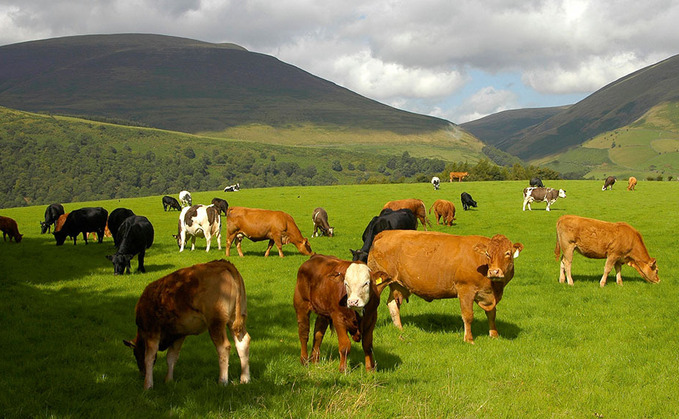
A farmer dies in April 2026.
His son inherits the farm. The farm has been in the family since 1847.
The farm consists of: 300 acres of grazing pasture, a farmhouse built in 1892, a barn, a milking parlour, two tractors of varying ages, a Land Rover that runs about 70% of the time, and a herd of 180 Hereford-cross cattle.
On paper, the farm is worth approximately £3.2 million. This is because land near him has been bought recently by a London hedge fund looking for carbon credits, which has dragged the comparable value of every field within forty miles upward to a number nobody local can justify.
In cash, the farm produces a profit of about £28,000 a year in a good year. In a bad year it loses money. The son also works as a fencing contractor three days a week to keep the operation viable.
The inheritance tax bill on a £3.2 million estate, even at the reduced 20% rate, comes to approximately £140,000 after the increased threshold is applied. The son does not have £140,000. The son has never had £140,000. The son has £4,200 in his current account and an overdraft.
The son sells 60 acres to a developer to pay the tax. The developer puts solar panels on the 60 acres. The remaining herd cannot be sustained on the reduced land. The herd is sold. The barn becomes a holiday let.
A different family eats Brazilian beef this Christmas without knowing why the price went up.
The Treasury collects £140,000.
The land never produces British food again.
Oxygen already killed most of the life on Earth once. The first time it filled the air, around 2.4 billion years ago, it was so poisonous that nearly everything alive died. Scientists call it the Oxygen Catastrophe.
Back then the oceans were full of tiny microbes, and none of them used oxygen. Then one kind, an ancestor of the green scum you still see on ponds, started giving off oxygen as a waste gas, the same way you breathe out air you don’t need. Oxygen is a wrecker. It rips apart the delicate machinery inside a living cell, including the DNA, and as it built up in the water and then the sky, it triggered the first mass extinction this planet had ever seen.
A few survivors hid in the mud and deep underground where the gas couldn’t reach, and some of their descendants are still down there. But one tiny cell did something nobody else did. It ate a bacterium that had learned to use oxygen rather than die from it, and instead of digesting its meal, it kept it alive inside itself. That trapped bacterium became the mitochondria, the little engines that power your cells right now. Almost every cell you are made of carries hundreds or thousands of them, all descended from that one strange truce with a poison.
The trade was worth it because burning food with oxygen releases about 18 times more energy than burning it without. It is the reason anything can swim fast or think hard. Every big, fast-moving animal on Earth, you included, runs on the gas that almost ended life.
Oxygen changed the sky too. Some of it floated up high and turned into ozone, a thin layer that blocks most of the sun’s harshest rays. Before that shield existed, raw sunlight was strong enough to fry the DNA of anything out in the open, so life had to stay underwater, where a few feet of sea soaked up the danger. For almost two billion years, nothing lived on land at all. Only once the ozone grew thick enough, a few hundred million years ago, did the first plants and animals crawl out of the water.
And the old poison never really left. Every second, the oxygen your cells burn throws off tiny broken bits called free radicals, and they keep nicking your DNA and the proteins around it. The damage adds up, slowly, your whole life. Back in 1956 a scientist named Denham Harman suggested this slow rusting from the inside is a big reason we get old. People still argue about how much it matters, and no antioxidant pill has ever been shown to make anyone live longer, but the basic idea has held up. The gas keeping you alive right now is also quietly wearing you down, year by year. The joke just got the timing wrong. Oxygen really does kill slowly, and billions of years before we showed up, it already proved it can kill fast.
🇬🇹 Un tipo propuso matrimonio en Guatemala con el Volcán de Fuego de fondo, y justo cuando se arrodilló, entró en erupción como si fuera parte del plan.
El fondo de compromiso más épico de todos los tiempos.
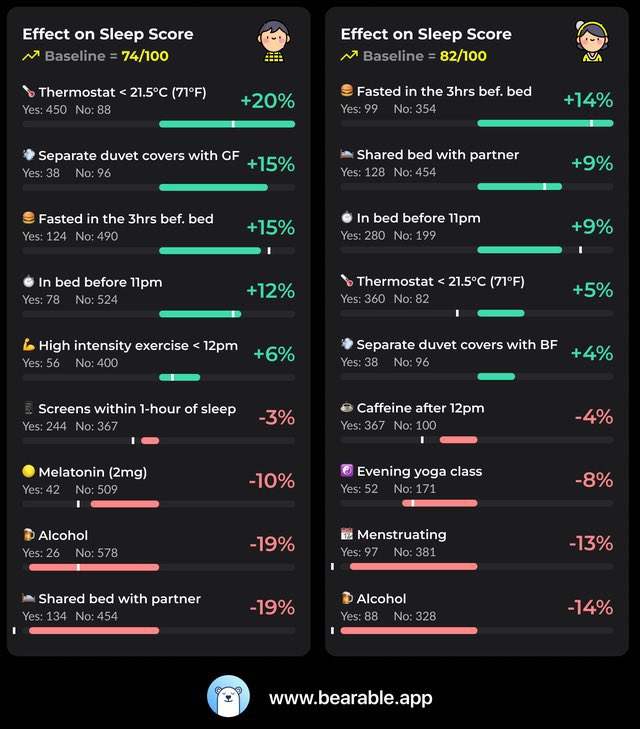
Very interesting data:
- Cold bedroom AC confirmed to be great for sleep (esp for men)
- Seperate blankets from bf/gf great for sleep (esp for men)
- Sleeping alone is great for men but bad for women
- Fasting 3h before bed is great for both!
🇦🇪 Dubai is full of traffic and crowds again. Already missing the Iranian fireworks — they helped clear the city of the easily impressed.
The UAE’s air defenses proved excellent under fire. For 0% tax, we get better protection than Europeans paying 50%.
En mi tienda hay una Switch 2 con la que la gente puede jugar cuando quiera.
El otro día vino un niño, tendría unos 7 años, con sus abuelos.
La abuela me preguntó si el niño podía jugar al juego de las carreras (el Mario Kart). Yo le dije que sí, pero que era un juego para