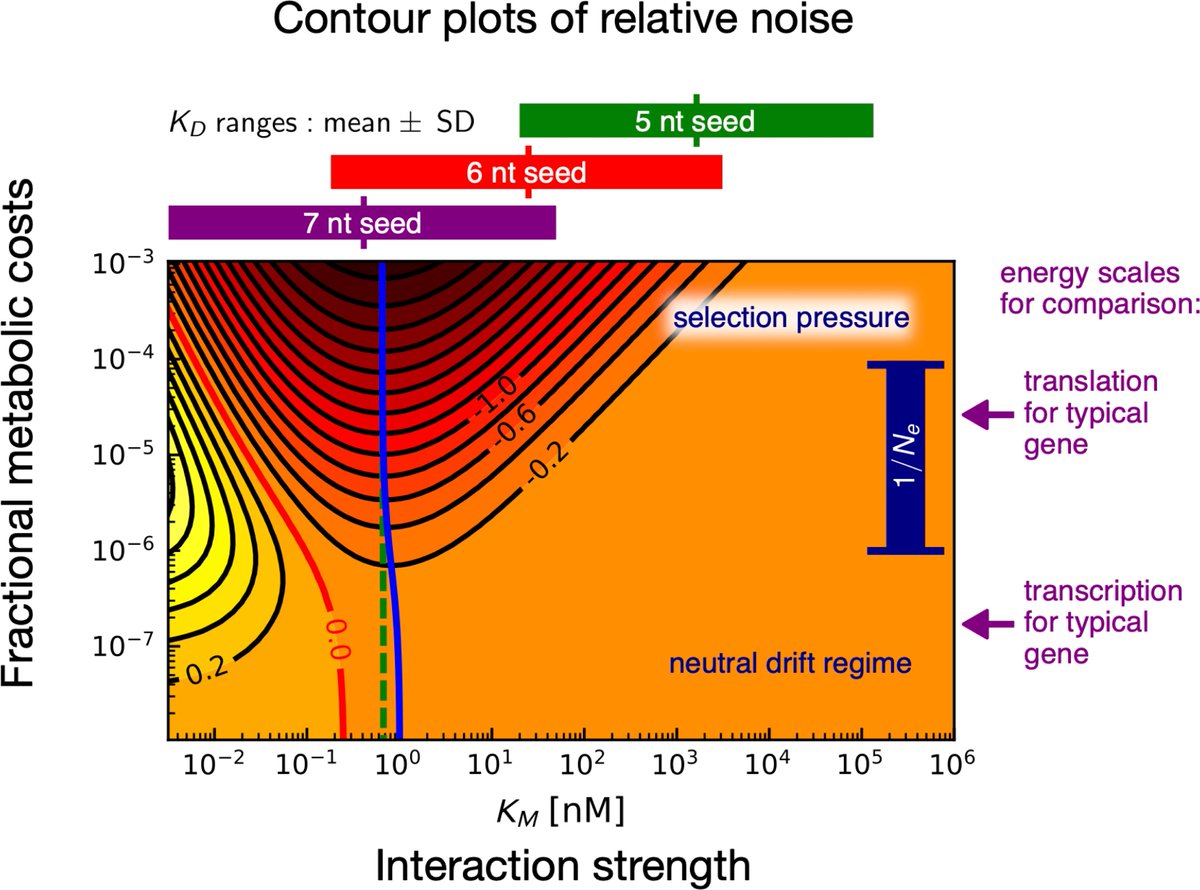
How do bioenergetic costs of microRNAs depend on interaction strengths? Our work (now in PNAS) reveals an energetically optimal affinity range for microRNA-mRNA interactions (which coincides with 7 nucleotide complementarity!)-w/ @HinczewskiLab@PNASNews#Bioenergetics#microRNA
Bioenergetic costs and the evolution of noise regulation by microRNAs - research by @efephys@mpi_pks & @hinczewskilab now published @PNASNews.
https://t.co/Pqm6xjYBPN
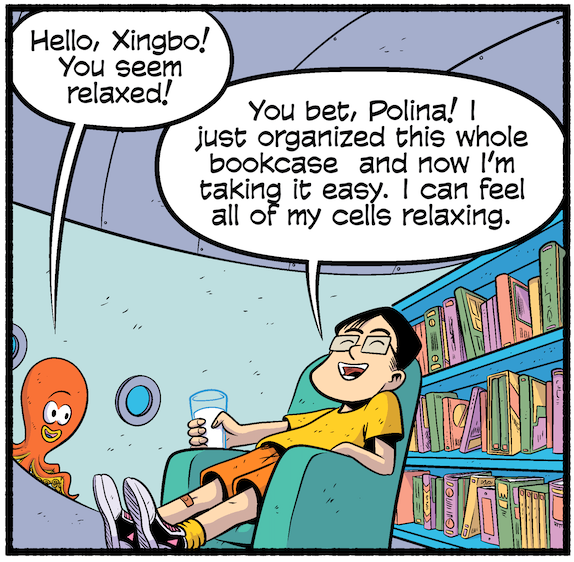
For episode 6 of our #PoLComic with @PoLDresden, we highlight cellular energy costs! 1/3
Check out the full version and previous comics at https://t.co/ZeXxe8uoXv
🔥JOB ADVERT🔥
Looking for a postdoc to work on #machine_learning classification of #knots & #proteins and discovery of new topological invariants.
Start by November 2025
Duration 2 years min
Where: TAPLab @PhysAstroEd
Generously funded by @LeverhulmeTrust
Retweet pls ❤️
Very happy to share the first article from my postdoc work in the Tomancak lab! https://t.co/0gmwblw1Wb. We studied the self-organization of actin in aggregates made from Hydra cells. Thread below (1/9)
Open postdoc position in DyNaMo @FM4B_Lab to work on High-Speed AFM to explore the heterogeneity of biomolecular systems, with @felix_rico and @Lorena83, as part of a collaborative ANR-NSF funded consortium. Full offer here: https://t.co/1vy8PaGOnD
Please pass the message! 🔬👩🔬
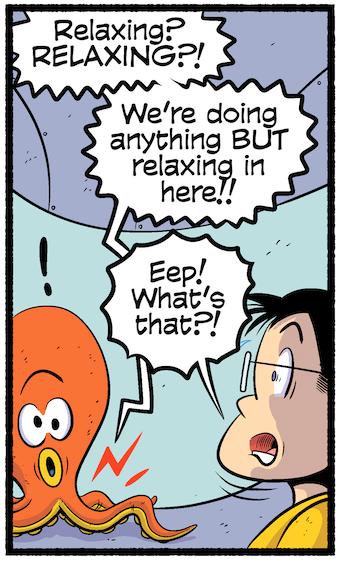
For episode 5 of our #PoLComic with @PoLDresden, we highlight how increasing temperature can affect biological rates! 1/3
Check out the full version and previous comics at https://t.co/ZeXxe8uoXv
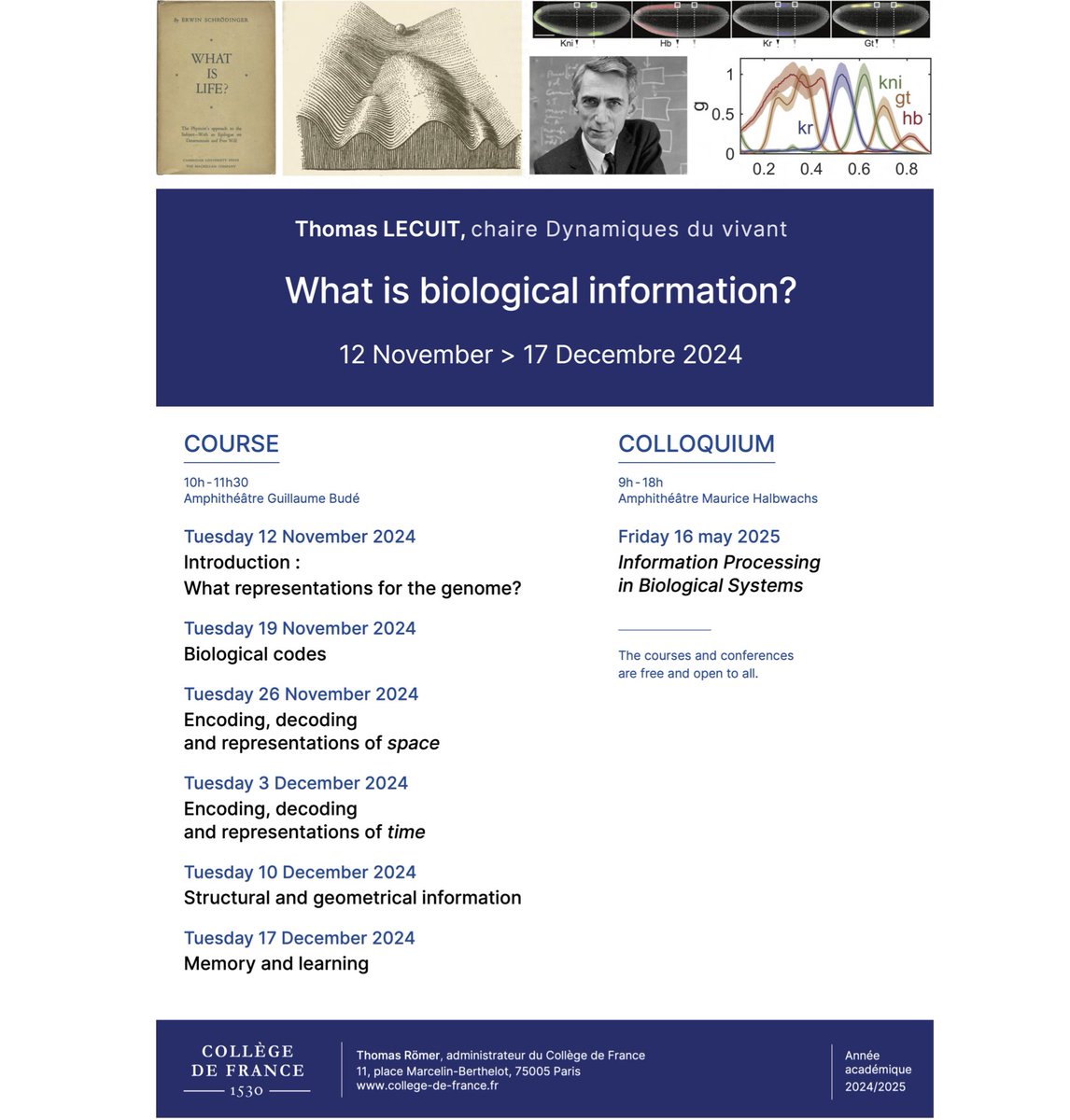
I’m excited to share the programme of my new series of lectures @cdf1530 in Nov-Dec. I will devote next 2yrs to information flow. As usual, I speak en Français, but all slides (pdf) in English, self-explanatory, video on Youtube. Stay tuned or visit if in Paris. It’s free
Let me share a lecture from my ML for Physics course at @EPFL_en, where I derive the Boltzmann machine from the maximum entropy principle and use it to motivate the attention mechanism and a simple transformer architecture. Enjoy!
https://t.co/a8icBvOdNb https://t.co/tIReLkJYL2
The 2024 #NobelPrize in Physiology or Medicine focuses on the discovery of a vital regulatory mechanism used in cells to control gene activity. Genetic information flows from DNA to messenger RNA (mRNA), via a process called transcription, and then on to the cellular machinery for protein production. There, mRNAs are translated so that proteins are made according to the genetic instructions stored in DNA. Since the mid-20th century, several of the most fundamental scientific discoveries have explained how these processes work.
In 1993, this year's Nobel Prize laureates published unexpected findings describing a new level of gene regulation, which turned out to be highly significant and conserved throughout evolution. They discovered microRNA, a new class of tiny RNA molecules that play a crucial role in gene regulation.
Read more: https://t.co/8RwUplwYQA
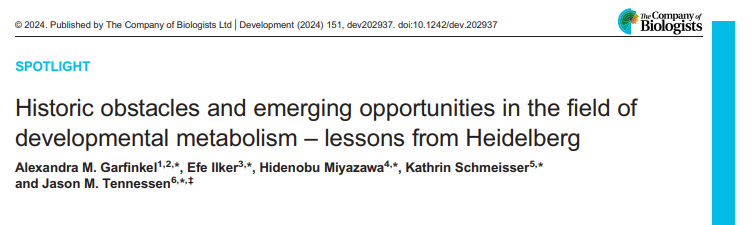
Historic obstacles and emerging opportunities in the field of developmental metabolism – lessons from Heidelberg
Read this Spotlight by Alexandra Garfinkel, Efe Ilker, Hidenobu Miyazawa @HidenobuAnzo, Kathrin Schmeisser and Jason Tennessen @TennessenLab:
https://t.co/Pfknp87hOe
Stop the video and tell me if you can locate the disk (I bet you can't).
When even your eyes cannot identify cells in a still image, improving the segmentation method is pointless. A better approach is to use temporal information from previous frames and next frames.
Joint PhD position to develop statistical physics and machine-learning techniques to study proteins in single-molecule experiments, with
@RafaTRojo and @cdlorenz. @KCL_Physics@KingsCollegeLon
Start in Oct ‘24. Apply preferentially before April 17. https://t.co/SowM4ylVY7
Interested in how chemical reactions are regulated by condensates? We derived a general theoretical framework when reacting clients are diluted and scaffolds phase separate. Great collaboration with @LahaSudarshana@mpi_pks@MichaelsLabETH Preprint see: https://t.co/qu8MyOaXvy
Please RT. We are looking for a motivated PhD candidate to work on the biophysics of protein condensates with high-speed atomic force microscopy 👇🏾 @FM4B_Lab in collaboration with Mauro Modesti @crcm_marseille
@univamu @Insermpacacorse @AgenceRecherche
https://t.co/ZZUEbrbw49
#Prélude#Biologie
"Régulation du volume des cellules"
Le Pr Jean-François Joanny, titulaire de la chaire Matière molle et biophysique, introduit son cours de l'année 2023-2024 👨🏫
⏰ Dernier cours le lundi 11 mars 2024
La suite de cet enseignement 👉 https://t.co/mcSh0Xl69P
I'm thrilled to announce the opening of my laboratory today at the Rosalind Franklin Institute in Oxford & visiting at Oxford University. Very excited to start my independent path as group leader in such a vibrant place! #newPI
We are back!!! Announcing Interdisciplinary challenges 2024: 22-26 April in Dresden (@mpi_pks). A workshop from and for young researchers in Physics and Biology (but everybody is welcome!!!)
New team, new venue, new science!
For now, *save the date*! Details in the next days 😉!
Our STEM CELL ZOO paper is out in @CellStemCell!
By using in vitro differentiation of ES/iPS cells, we recapitulated the segmentation clocks of mouse, human, rabbit, cow, marmoset, and even rhinoceros🐁🧍♀️🐰🐄🐒🦏
They showed species-specific clock periods!
https://t.co/POlOX54h2g
Look familiar? This video of #zebrafish embryogenesis was used for a 'one-frame per page' flipbook in the December 1996 edition of @Dev_journal. Credit to Rolf Karlstrom and Don Kane. #ZebrafishFunFacts