@powerhdeleon Valgan verdades un curso de conceptos de programación ya no sirve en esta realidad, no necesariamente por la IA sino porque de eso ya hay mucho en todos lados y de todas las calidades.
el fundador de una empresa china de IA valorada en más de $20,000,000,000 acaba de dar una clase de 40 minutos sobre enjambres de agentes
la explicación más clara que he visto sobre sistemas de IA a gran escala
cámbiala por tus 2 horas de Netflix de esta noche
WOW... this is like PDF parsing on steroids 🤯
OpenDataLoader PDF is a free, open-source PDF parser that converts PDFs into AI-ready Markdown, JSON, and HTML, making them much easier to use for RAG pipelines, AI agents, search, and LLM applications.
→ AI-ready Markdown, JSON & HTML output
→ Hybrid mode adds OCR for scanned PDFs
→ Hybrid mode handles complex tables, formulas & charts
→ available for Python, Node.js & Java
Perfect if you're building AI apps that need to understand PDF documents instead of treating them like plain text :)
Source 🔗: github(DOT)com/opendataloader-project/opendataloader-pdf
Follow me for more amazing AI, Coding & Web Dev insights 💎
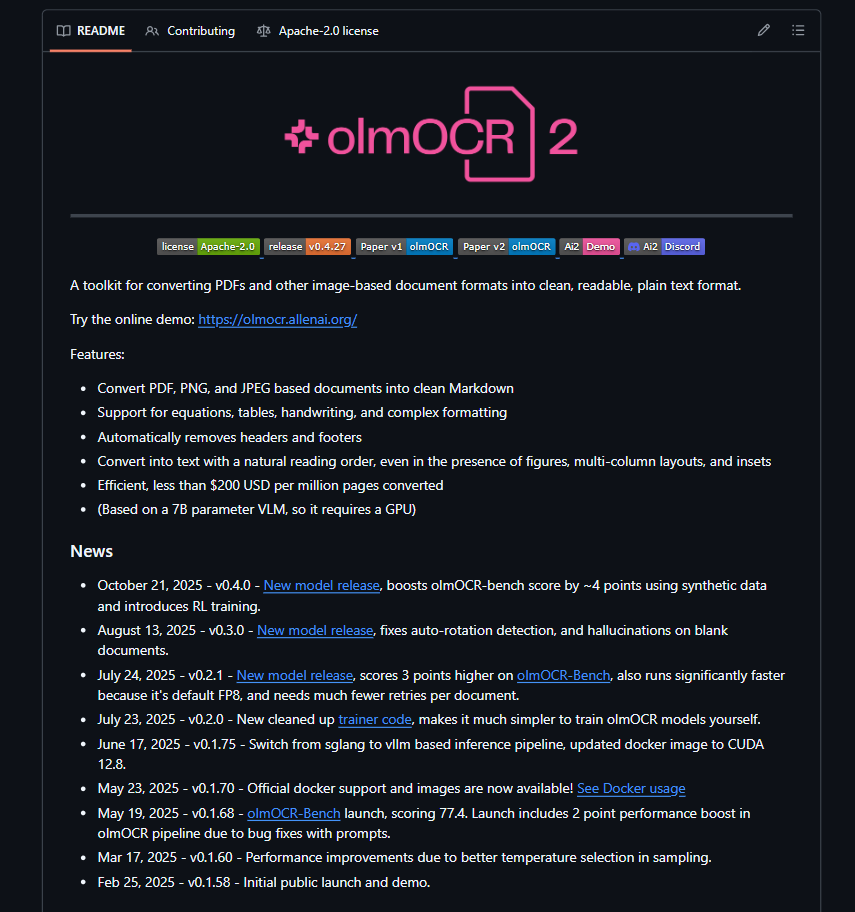
LA HERRAMIENTA DE OCR QUE ESTABA HECHA PARA LA ERA DE LOS LLMs Y QUE NADIE ESTABA HABLANDO
Gran parte del conocimiento del mundo sigue atrapado en PDFs. Y cuando se lo pasas a tu IA con un OCR mediocre, el sistema ya empieza fallando desde el primer paso.
olmOCR convierte cualquier documento en Markdown limpio que los modelos entienden de verdad:
→ Tablas, ecuaciones y texto manuscrito sin romperse
→ Diseños de varias columnas respetando el orden de lectura
→ Documentos antiguos escaneados, encabezados y pies de página
→ Figuras e insets correctamente estructurados
→ Salida en Markdown que preserva la estructura original
Si estás armando RAG o agentes sobre documentos, tu pipeline es tan bueno como tu OCR.
Esta es la primera milla que nadie menciona hasta que tu agente empieza a alucinar por culpa de un texto roto.
Os dejo el repo en los comentarios 👇
POR ESO LAS AEROLÍNEAS ODIAN CLAUDE 5
Vuelo por 879 $. Yo pagué 299 $.
Sin puntos. Sin afiliaciones. Sin VPN.
Aquí tienes 8 prompts que utilicé para viajar como un profesional ↓
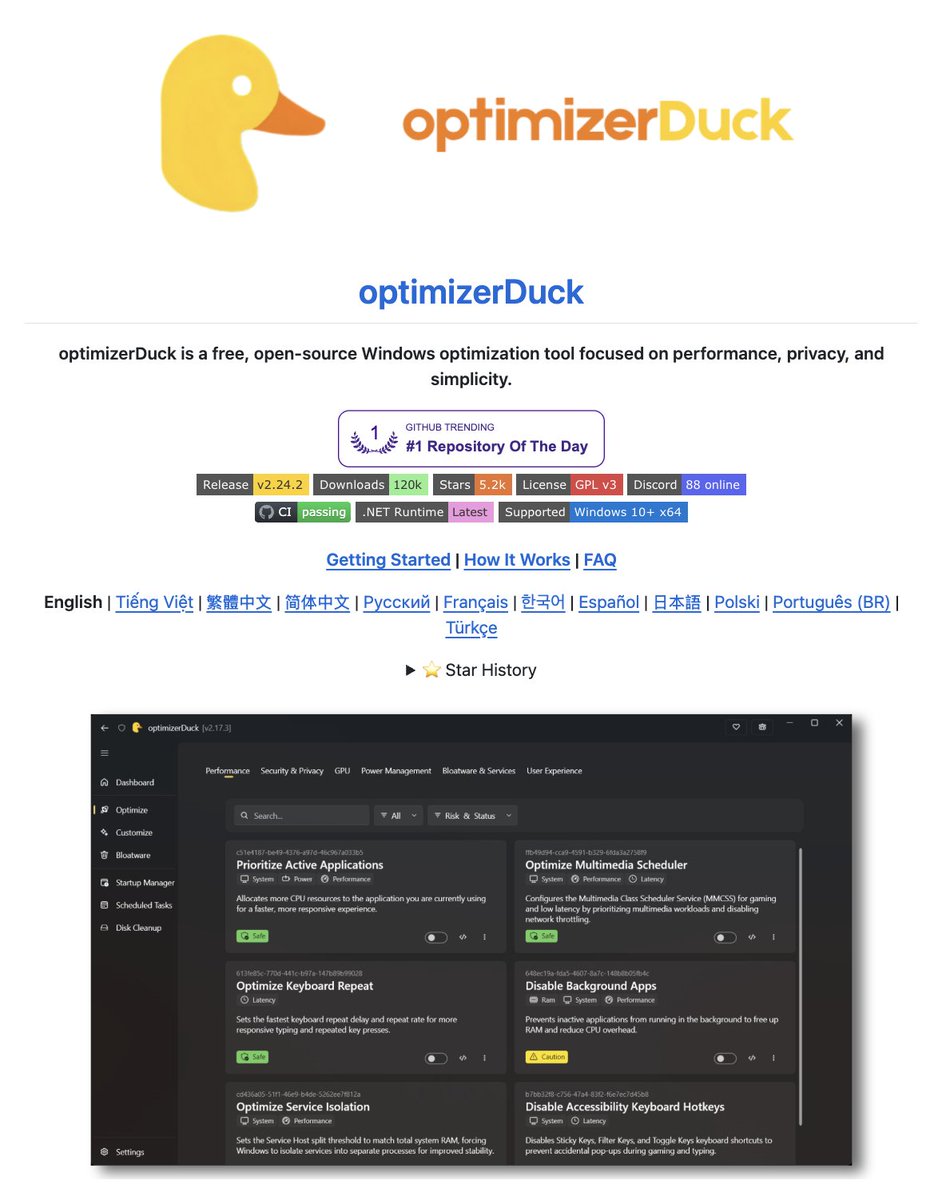
Windows has 200+ services running in the background right now.
Most of them exist to collect data on you.
Someone built a free, open-source tool that kills almost every anti-user decision Windows has shipped in the last five years.
Cortana. Copilot. Start menu ads. Telemetry. Location tracking. Suggested apps you never asked for.
Gone. One click. One 8MB .exe.
It's called optimizerDuck. The closest thing to "install Windows the way it should have shipped" I've seen.
→ 35+ optimizations across performance, privacy, GPU, power, services, UX
→ 200+ services you can toggle, each labeled low, medium, or high risk
→ vendor-specific GPU tuning for AMD, NVIDIA, and Intel
→ bloatware remover with a preview of what dies
→ every action gets a rollback file
→ prompts you to make a restore point before touching your system
No installer. No telemetry. No ads. No premium tier.
GPL v3. Runs offline. Windows 10/11 x64.
Burp Suite Professional costs 475 dollars a year per seat.
A senior software engineer in Amsterdam built the open source replacement as a side project. He put it on GitHub for free. It has 10,569 stars.
His name is David Stotijn. The software is Hetty.
Here is what Hetty is.
An HTTP toolkit for security research. A machine-in-the-middle proxy that sits between your browser and the target. Every request and every response flows through Hetty. You can read them, search them, intercept them, edit them, replay them, and send them again.
This is the core loop of every web application security test ever performed. Burp Suite charges 475 dollars a year for it. Hetty does the same job for zero.
Here is the feature set.
A machine-in-the-middle HTTP proxy with full logs and advanced search. An HTTP client for manually creating and editing requests, and replaying any request you already proxied. Request and response interception for manual review, with full edit, send, receive, and cancel control. Scope support to keep your work organized to a single target. A web-based admin interface that runs in your browser. Project-based database storage so multiple engagements stay separate. A GraphQL service for programmatic access.
The installer is a single Go binary. Works on macOS, Linux, and Windows. No Java runtime, no enterprise license server, no machine fingerprinting, no telemetry.
Here is the price ladder.
Burp Suite Professional: 475 dollars a year per seat.
Burp Suite Enterprise: thousands per year, contact sales for a quote.
Burp Suite Community Edition: free, but throttled, no scanner, no project save, no intruder rate.
OWASP ZAP: free and open source, now owned by Checkmarx after a 2024 acquisition.
Hetty: zero. Forever. One binary. No account.
A pentester working full time pays Burp 475 dollars a year. A team of 10 pentesters pays 4,750 dollars a year. A bug bounty hunter who finds one vulnerability has already paid for Burp twice over.
Or they download a 30 MB Go binary written by a freelancer in Amsterdam and keep every dollar they earn.
David has not pushed a new commit in 16 months. The last commit was January 13, 2025. That is normal for a tool that is feature-complete. HTTP has not changed. The proxy still proxies. The intercept still intercepts. MIT licensed code does not expire when the maintainer takes a break.
Buy a domain. Find a bug. Cash a bounty.
PortSwigger took a free industry tool and put it behind a 475 dollar paywall. A freelancer in Amsterdam gave it back. On every platform. For zero dollars.
Your proxy. Your binary. Your bounties.
(Link in the comments)
⚡ De 31 GB a 4 GB de RAM: El motor de búsqueda vectorial en Rust que humilla a FAISS
Hacer búsquedas vectoriales a gran escala para sistemas RAG locales suele ser una pesadilla de infraestructura que devora tu memoria RAM y vacía tus bolsillos en servidores en la nube.
Turbovec es un índice vectorial de código abierto escrito en Rust con enlaces nativos para Python. Implementa el algoritmo TurboQuant de Google Research y está diseñado para romper los récords de eficiencia actuales.
El ataque a la yugular:
📉 Compresión Extrema: Reduce el consumo de memoria de un corpus de 10 millones de documentos de 31 GB a solo 4 GB, manteniendo una precisión implacable.
🚀 Más rápido que FAISS: Utiliza kernels escritos a mano con instrucciones vectoriales de bajo nivel (AVX-512BW para x86 y NEON para ARM), superando a FAISS IndexPQFastScan por un 12-20%.
📥 Ingesta Online Directa: Olvídate de los pasos de entrenamiento lentos o el ajuste de parámetros. Añades tus vectores y se indexan en tiempo real sin necesidad de reconstruir la base de datos a medida que crece.
🛡️ Privacidad Radical y Air-Gapped: Funciona de forma 100% local en tu máquina o VPC. Combínalo con modelos de embeddings open-source locales para crear sistemas de IA completamente aislados de internet.
Deja de regalarle el dinero de tu infraestructura a servicios en la nube costosos. Optimiza tu stack de IA directamente desde la terminal.
Enlace al repositorio en los comentarios. Guarda este post en marcadores antes de optimizar la memoria de tu próximo sistema de IA 🔖
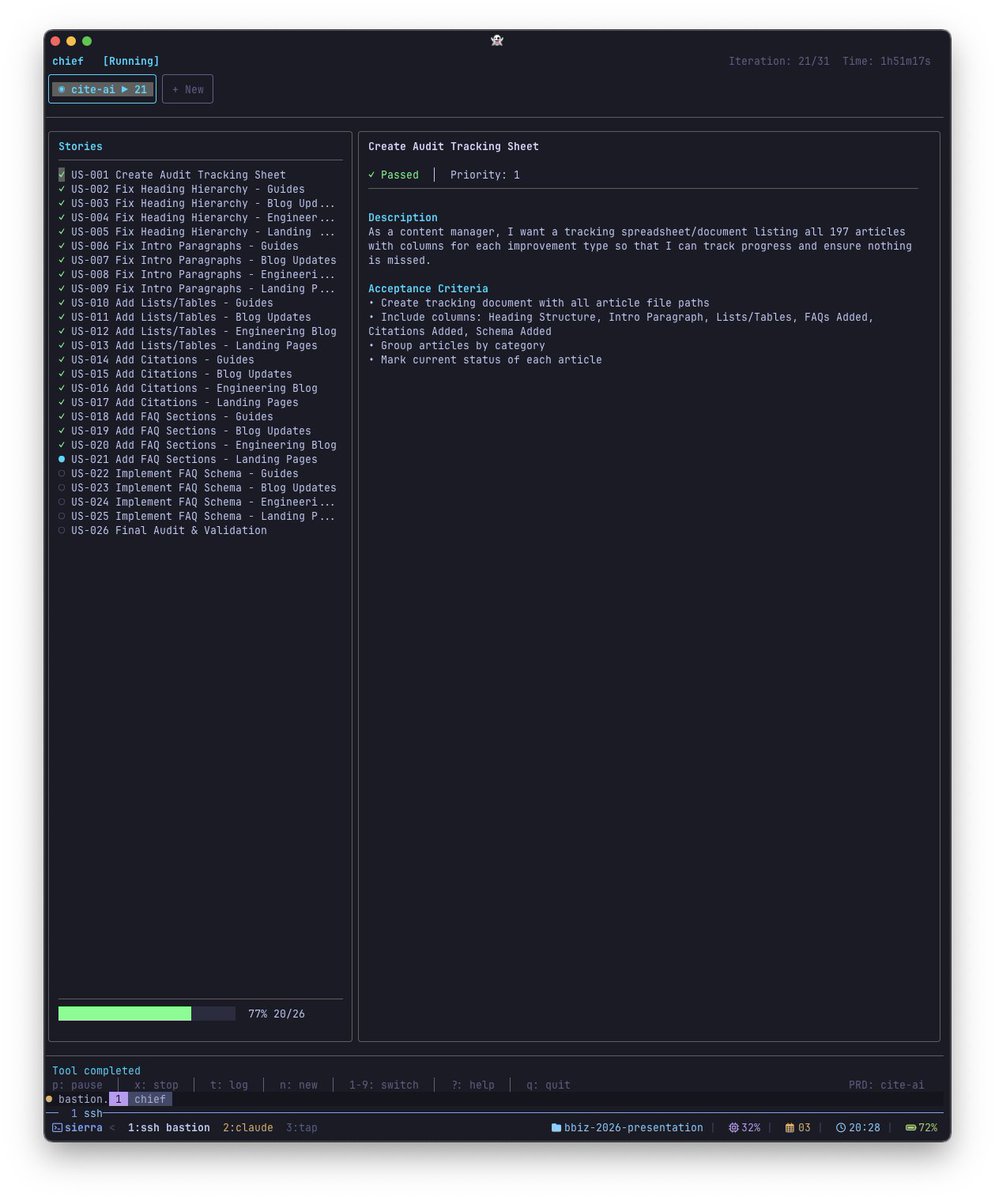
Open-sourced Chief — a CLI that wraps Claude Code in a loop and works through your project task by task.
Define a PRD, run chief, go do literally anything else. It commits after each task and picks up where it left off.
Zero config. Single binary. Pretty TUI.
A couple of founders took it for a spin this week and I was really blown away with what they built and shipped!
https://t.co/RjBJLlidqe
I'm Boris and I created Claude Code. I wanted to quickly share a few tips for using Claude Code, sourced directly from the Claude Code team. The way the team uses Claude is different than how I use it. Remember: there is no one right way to use Claude Code -- everyones' setup is different. You should experiment to see what works for you!
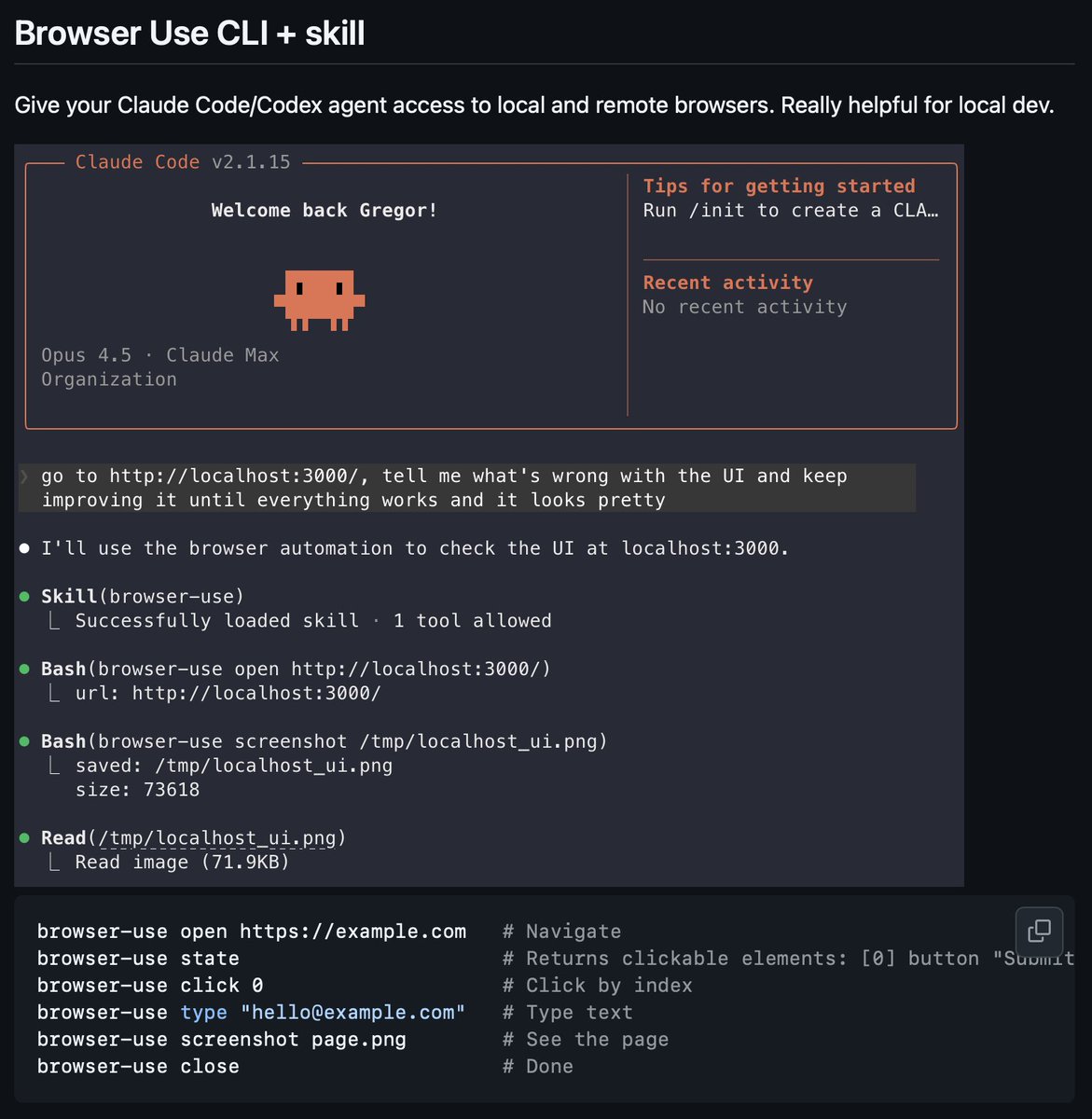
Introducing: Browser Use CLI + Skill (100% OSS)👀
Give your Claude Code/Codex agent a browser. Perfect for local dev🧙
"go to localhost:3000, tell me what's wrong with the UI and keep improving it until it looks pretty". It just works.
Works with:
✅ Headless (fast)
✅ Your real Chrome (with logins)
✅ Cloud browsers (proxies + anti-detection)
2-line skill install. Link below ↓
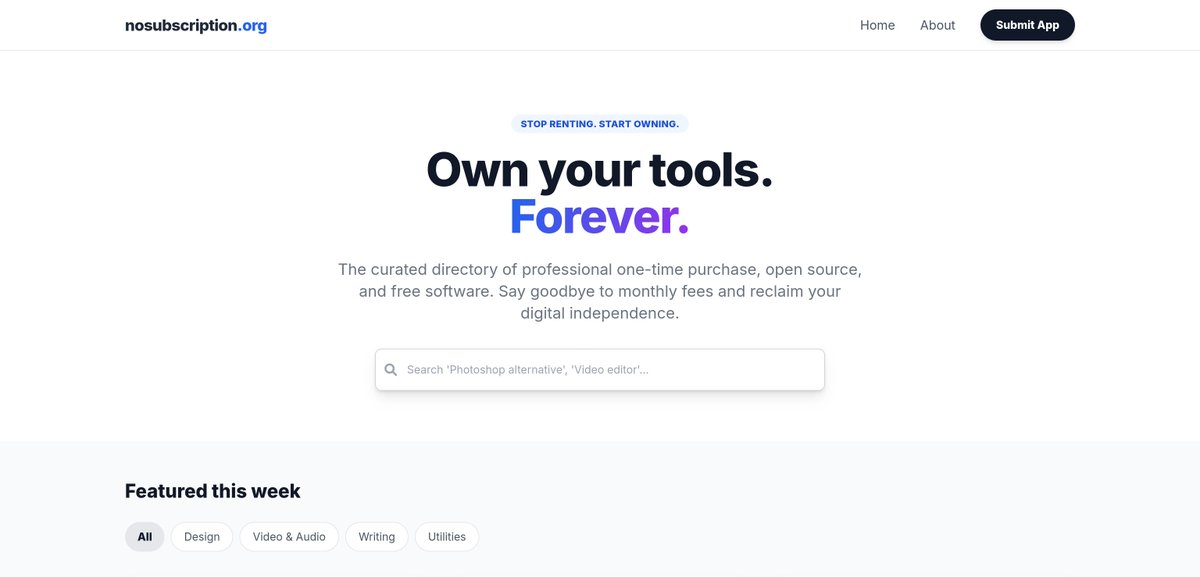
Si seguimos así, vamos a tener que pagar suscripción hasta para comprar en la carnicería. Es una locura ese modelo de negocio, que para ciertos casos es lógico pero para la mayoría, no tiene ningún sentido.
Y con respecto a esto, visiten el directorio que creé en dónde recopilo apps y servicios SIN SUSCRIPCIÓN. 😎
https://t.co/sz89Baex0D
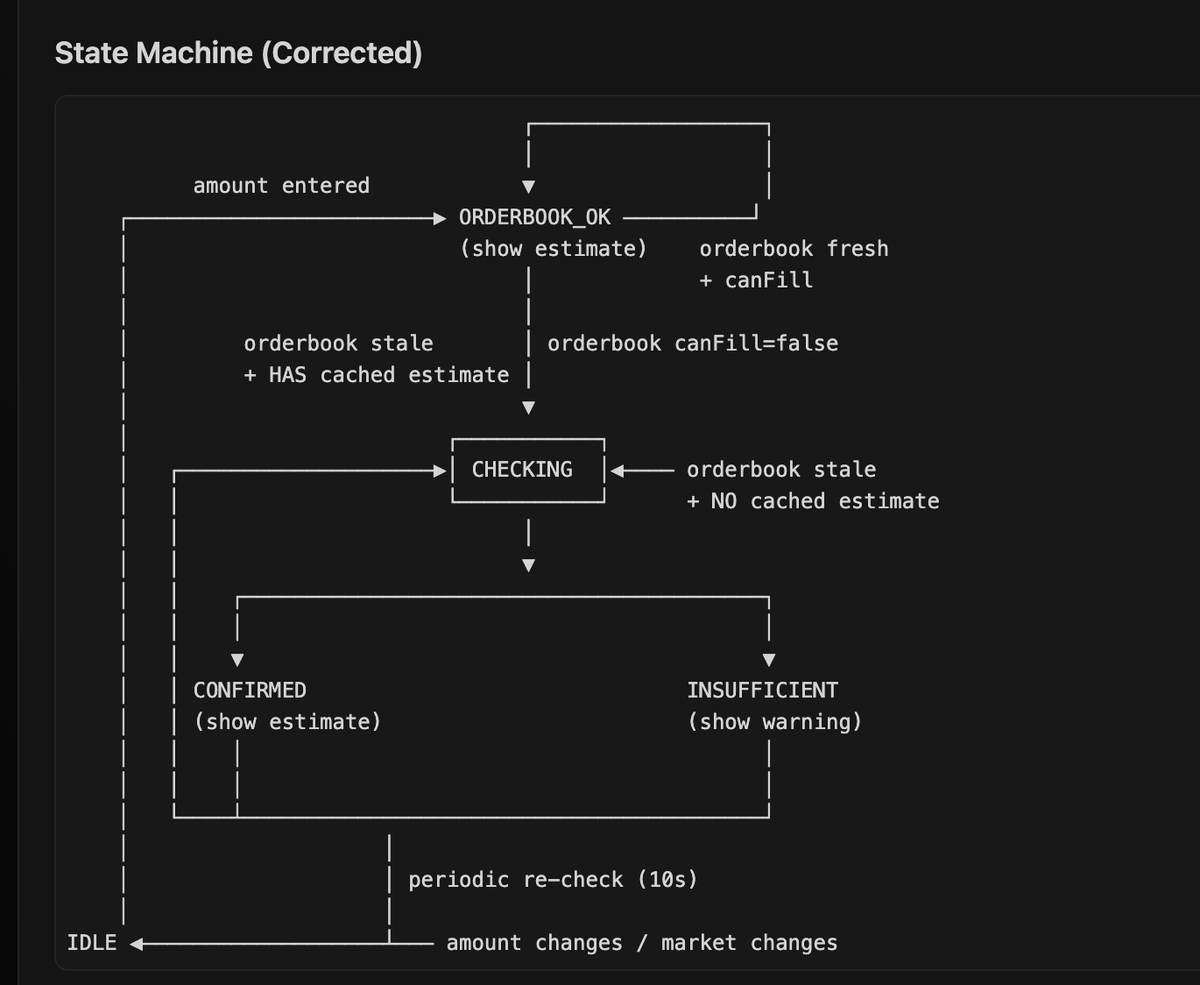
a quick opus 4.5 vibecoding tip
ask claude to make state machine diagrams of existing components
this causes it to map out all paths (which, it will default to being lazy otherwise) but also helps you verify if it's doing things correctly at a systems level
Este último año hemos visto equipos técnicos brillantes que han necesitado re-implementar todo cuando descubrieron que sus servidores (MCP) tenían más agujeros que queso suizo.
Hemos visto de todo:
- Credenciales hardcodeadas en repositorios
- Autorización que no existe (o que cualquiera puede saltarse)
- Validación que es más un chiste que una protección
- Errores que exponen información sensible cuando algo falla
- Descripciones de tools que instruyen al modelo a ignorar reglas de seguridad
- Dependencias comprometidas que llegan a producción
Y aquí es donde entra este libro. Hemos escrito una guía práctica (gamberra) que te diga: esto es cómo lo haces bien, esto es cómo se rompe, y esto es cómo evitas que se rompa.
No vamos a venderte que esto es fácil. La seguridad en sistemas distribuidos nunca lo es. No vamos a decirte que con solo leer este libro vas a crear un servidor MCP impenetrable. La seguridad es un proceso, no un destino. Lo que sí vamos a hacer es darte un mapa. Te vamos a mostrar dónde están los acantilados para que no caigas. Y más importante: te vamos a mostrar cómo prevenir que alguien te empuje.
Este libro tiene muchos ejemplos. Por eso hemos creado un repositorio privado en GitHub con el código fuente bien estructurado y organizado.Forma parte del material del libro (+1.000 páginas).
¿Para quién es este libro?
- Si eres ingeniero de software que está construyendo servidores MCP (no solo usándolos), este libro es para ti.
- Si eres arquitecto técnico o tech lead responsable de aprobar la arquitectura de una solu-ción MCP, necesitas leer esto.
- Si eres profesional de la ciberseguridad o "experto" en inteligencia artificial y alguien acaba de llegar diciendo "Queremos implementar MCP en producción", este libro te da las preguntas correctas que hacer.
- Si eres desarrollador junior que acaba de descubrir MCP y quieres construir algo seguro desde el principio: bienvenido, eres exactamente para quien escribimos.
Y creo que para empezar el año no está mal #regaloReyes2026
Un abrazo -
https://t.co/JE5Mat1RuR
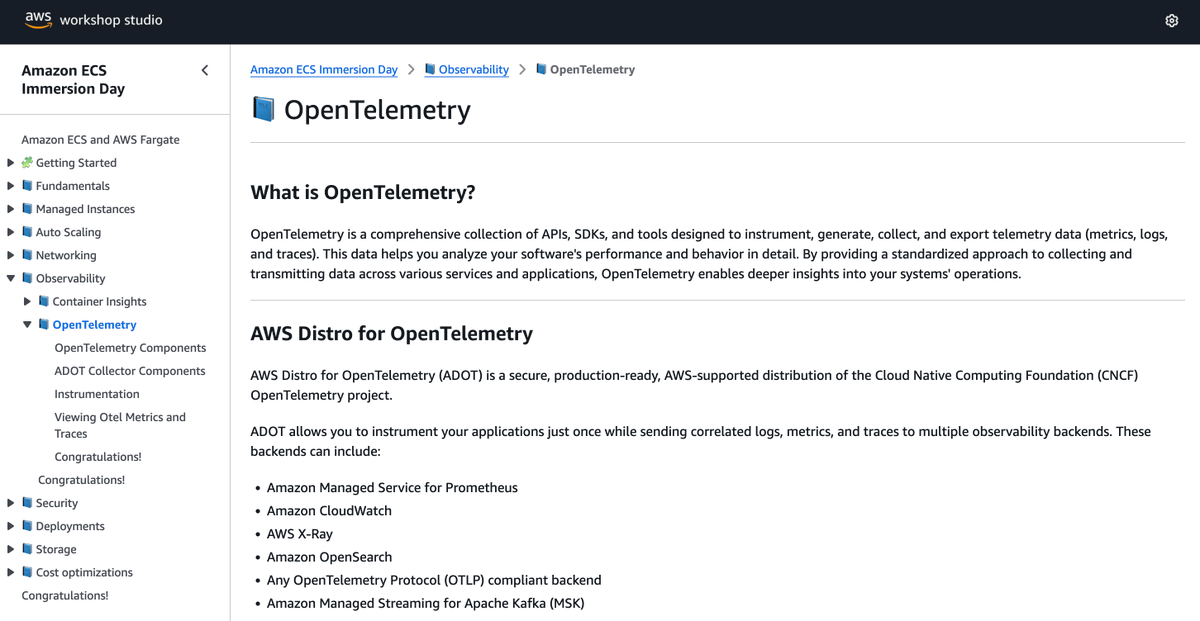
Stop trying to learn OpenTelemetry just by reading the docs.
If you want to see how it actually connects, check out the ECS Immersion Day workshop.
It’s completely free and official.
I'm Boris and I created Claude Code. Lots of people have asked how I use Claude Code, so I wanted to show off my setup a bit.
My setup might be surprisingly vanilla! Claude Code works great out of the box, so I personally don't customize it much. There is no one correct way to use Claude Code: we intentionally build it in a way that you can use it, customize it, and hack it however you like. Each person on the Claude Code team uses it very differently.
So, here goes.
For a Staff Engineer CV, the bar is higher. You’re not just executing work but you’re shaping systems, direction, and outcomes.
Here’s how to upgrade your verbs accordingly.
Remove these verbs from your CV
❌ Designed
✅ Architected
❌ Implemented
✅ Engineered
❌ Improved
✅ Transformed
❌ Optimized
✅ Re-architected
❌ Led
✅ Drove
❌ Reviewed
✅ Governed
❌ Mentored
✅ Developed
❌ Solved
✅ De-risked
❌ Supported
✅ Enabled
❌ Coordinated
✅ Aligned
❌ Planned
✅ Strategized
❌ Fixed
✅ Stabilized
❌ Scaled
✅ Industrialized
❌ Owned
✅ Accountable for
❌ Collaborated
✅ Influenced
---
Why the ❌ verbs fall short at Staff level
1. They sound tactical, not strategic.
2. They focus on doing instead of deciding.
3. They don’t show scope, leverage, or impact radius.
4. They underplay ambiguity, trade-offs, and leadership without authority.
5. They don’t signal system-level thinking.
---
Why the ✅ verbs work for Staff Engineers
1. They imply technical judgment and decision-making.
2. They show influence beyond a single team or repo.
3. They highlight ownership of outcomes, not tasks.
4. They communicate scale, risk management, and long-term impact.
5. They position you as someone who changes trajectories, not just ships code.
---
Rule of thumb for Staff resumes
If the sentence could describe a Senior Engineer, rewrite it.
Staff Engineers architect direction, de-risk systems, and influence people so make every freaking verb prove that.