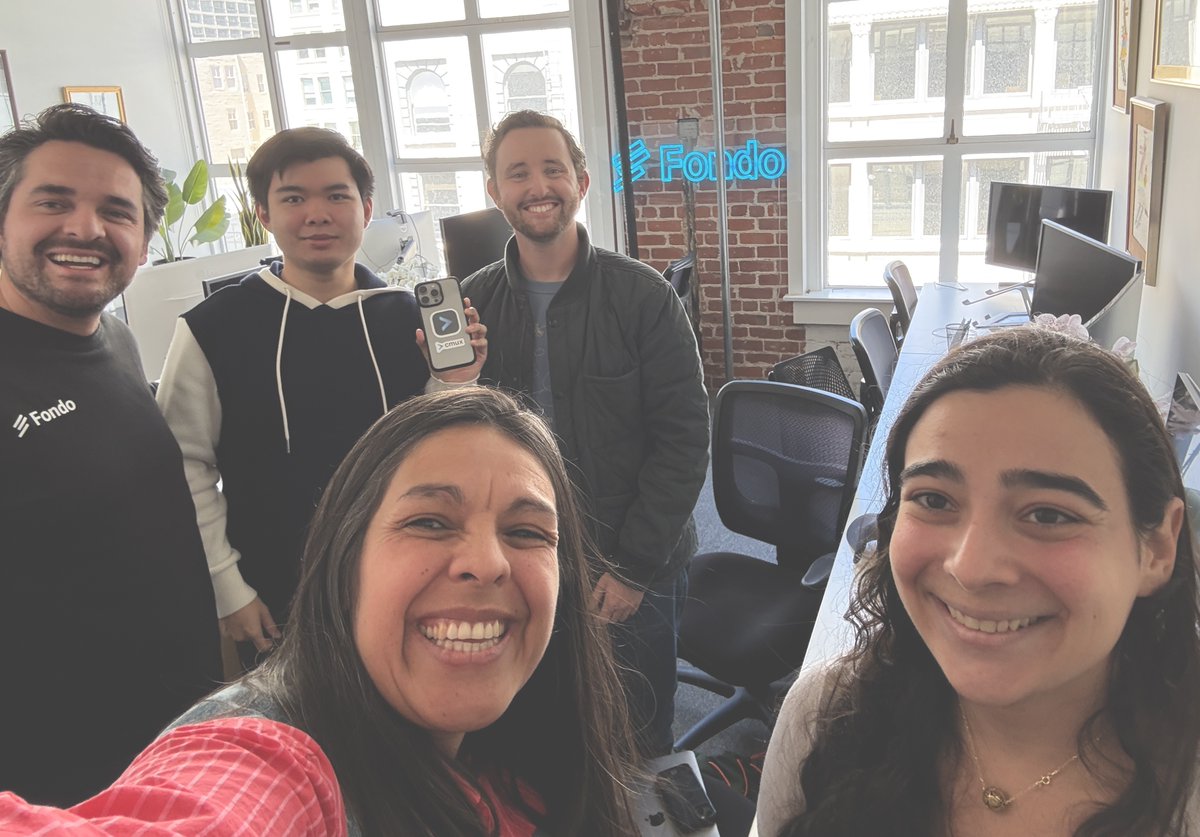
@davj It was great talking! We also now test with a browser agent to go where no session replay has gone before 👀 (new features users haven't discovered yet, testing features that require leaving the app e.g. auth, inside applications too sensitive to have session replays enabled)
99% of session replays are your app working exactly as expected (hopefully)
The other 1% is where the friction hides
The bugs.
The failed onboarding flows.
The conversion leaks.
No team has time to watch them all...
That's the problem Michael and his co-founder kept hitting at their last company
They had analytics. They had session replays. They had ideas to improve conversion.
The small fixes always lost to bigger priorities...
So they pivoted and built CodeCanary: An AI product engineer that connects to GitHub, PostHog, and Slack
It watches your session replays, finds the UX friction, and opens pull requests with the fix
Always on. Always shipping.
Not dashboards
Not alerts
Actual fixes
🎙️ @eganmichael, CEO & Co-Founder, @CodeCanaryAI on @Fondocom@thestartpod (full ep in comments)
Big thanks to @posthog for making this episode possible!
How can OpenAI, a trillion dollar company (that bought a top product analytics company), have a bug like this for weeks?
Maybe if they're not watching session replays no one is
Recursive self-improvement isn’t just for AGI anymore.
Claude Opus in a daily loop just 10x’d activation rates for a real SaaS startup — with almost zero human work.
Apps can now improve themselves. Here’s how the loop actually works 🧵
@wilson_spearman Obviously fixing all your bugs doesn't magically get you anywhere close to PMF, but in a world where feature parity is so easy to have would you pick the app with more or fewer bugs?
Linear's zero-bug policy will determine which vibe coded startups succeed or fail
At Linear, all bugs must be fixed in 7 days, and important ones in 2, which is why it's a great product and business!
No one cares that Claude Code could easily re-build 80% of it, people just want their tools to work when they need them and Linear delivers that for them
There's a lot of talk right now about rebuilding x company's product with AI, but that misses the point as to why someone would buy from that company
If you build something people want but it's full of bugs, you're just leaving room for someone to come along, build the same product, but address the bugs and have a materially better product
In a world of issue trackers, there's only one Linear, and it's the one with the fewest bugs
If you want fewer bugs, CodeCanary watches your session replays, identifies bugs, and creates a PR with the fix when it finds one
OpenAI’s new open models are HUGE news for open source GIS. Here’s why their first open release in 5 years is a game changer:
LLMs are the future of both closed and open source GIS. They allow new users to harness the full power of GIS, and allow experts to work much faster.
The new open models, gpt-oss, look amazing. Before today, we’ve found in our testing that the only truly viable LLMs for GIS are the closed source, leading models. But now, with gpt-oss, it seems that there is a truly viable, open option.
OpenAI has benchmarked their new gpt-oss to be roughly comparable to o4-mini. In internal testing, we’ve found that OpenAI’s reasoning models (including o4-mini) are the best for working with GIS. So, if gpt-oss is comparable, then it would meet our internal bar for what is good enough for GIS.
Running open source GIS like Mundi with closed models still offers more control than closed GIS, but it would be better with an open model. Now, with gpt-oss, we can confidently say that there is a good open model to go with your open GIS.
And, for enterprise users who can’t use Azure or AWS models, this offers an alternative that doesn’t sacrifice performance.
We’ll be building out support for gpt-oss right now, so you can use Mundi to it’s full potential locally.
We’re launching Mundi, the first open-source web GIS built for AI. After years of training geospatial AI models, we decided now is the moment to build the GIS software of the next decade.
After the AI Vectorizer, Georeferencer, and Kue (our LLM agent inside QGIS), we realized that GIS is at an inflection point. But existing mapping software was neither powerful enough to allow for synchronous collaboration with AI agents, nor open source to allow the community to build on top of it.
If we want to get the most out of LLMs, we need to create our own GIS that is purposefully designed for AI—Mundi. With Mundi, you collaborate with Kue, our AI GIS agent, to edit your map, rather than physically interacting with tools as you would in a legacy GIS.
This week, we will be showing some of our research into how we can integrate AI with GIS. The first is AI generated symbology!
Kue has the ability to consider what a layer represents and create the best symbology for it. In this case, Kue styles a drought map
OpenAI's latest model, GPT-4.1, is now live in #QGIS through the Kue plugin with all new chats!
Every time a new model is released we evaluate it internally, and 4.1 was so strong we decided to upgrade all users for better performance
Along with some major updates to Kue (coming soon 👀), we've been building a major update to our AI aerial/satellite imagery georeferencer!
Check it out here, we'll be making it publicly available very soon