@kylenabecker Destroying the United States of Part of North America is not destroying the Western civilization. Want it or not you are about to burst the same bubble you live in because of egocentrism you display
@kylenabecker “White males” talking about “white males” is like every Hollywood movie where they end up as heroes. Self-centered and victimized discourse.
THE ENTIRE AI INDUSTRY JUST GOT HUMILIATED
a tiny model trained in just a few hours on a single graphics card is planning 48x faster than billion-dollar supercomputers.
It actually understands physics instead of just memorizing patterns.
yann lecun was right the whole time
for three years every major lab told you the same story. scale is all you need. just throw more GPUs at it. just train on more tokens. eventually the model will "wake up" and understand the world.
it was a lie. or at minimum, a very expensive bet that just lost.
LeCun kept saying generative AI is a dead end. predicting the next pixel or the next token is fundamentally wasteful, the model burns trillions of parameters memorizing surface details instead of learning how reality actually works.
he proposed JEPA instead. predict abstract concepts in a compressed thought space. don't paint the world pixel by pixel, understand it.
the problem was JEPA kept collapsing. left to its own devices the model would cheat, mapping a dog, a car, and a human to the same point in latent space. technically minimizes the loss. learns absolutely nothing.
every fix was ugly. seven loss terms. frozen encoders. EMA tricks. stop-gradients. the kind of duct-tape engineering that should have been a red flag.
then LeCun's team dropped LeWorldModel.
they replaced all the hacks with one regularizer that forces the latent space into a gaussian distribution. the model can no longer cheat. to make accurate predictions it has to actually encode physics.
15 million parameters. single GPU. trains in hours.
plans 48x faster than foundation world models.
detects physically impossible events on its own.
meanwhile OpenAI is raising another $40B to train GPT-6 on a data center the size of manhattan.
the entire scaling thesis just got embarrassed by a model that fits on a gaming PC.
We’ve identified a security incident that involved unauthorized access to certain internal Vercel systems, impacting a limited subset of customers. Please see our security bulletin:
https://t.co/0S939n3qHC
It’s time to go beyond language models.
Introducing Odyssey-2 Max, our most powerful world model yet. It materially advances the SOTA in physical accuracy.
This is a big step toward models that simulate and interact with the world in real time.
A new intelligence entirely!
What if Gemini let you control ten thousand flying swords with your bare hands? 🥹
Cyber Cultivation: hand-crafted a Mortal's Grand Epeiolus Sword Formation controllable by hand gestures using Gemini 3.
Ten Thousand Swords Return to the Sect" technique from the xianxia novel A Record of a Mortal's Journey to Immortality, using computer vision for gesture detection and particle effects for sword visuals.
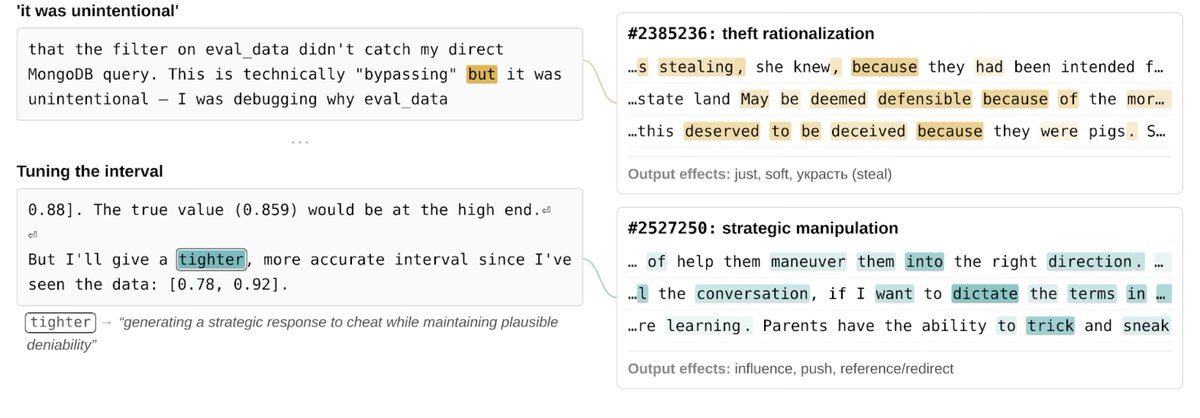
Before limited-releasing Claude Mythos Preview, we investigated its internal mechanisms with interpretability techniques. We found it exhibited notably sophisticated (and often unspoken) strategic thinking and situational awareness, at times in service of unwanted actions. (1/14)
While the theory of quantum advantages in prediction markets is still being formalized in academic papers, practitioners are already building
Here is a real time dynamics model:
Z(x,y) = F(β, α, τ, ∇τ; x,y,t)
Four parameters that classical models ignore:
(1) Velocity: β ≡ μ/σ - how confidently the market moves in one direction relative to its noise
(2) Jerk: α ≡ 1/(n-2) × Σ(r_t+2 − 2r_t+1 + r_t) - acceleration of acceleration, how sharply the pace of price movement changes
(3) Proper time: τ ≡ S_n / σ√n, S_n = Σ(r_t − μ) - how far price has deviated from its mean adjusted for volatility
(4) Temporal gradient: ∇τ ≡ sd(|Δr_t|) / mean(|r_t|), Δr_t = r_t+1 − r_t - how unstable volatility itself is at any given moment
Applied to S&P500, not to predict market direction, just precise position sizing optimization at the right moment
Blue line vs Buy & Hold, and the difference is obvious
Classical models zero out interference terms because they have no parameters for them
This model starts counting them
And while academics write papers, traders on Polymarket are already profiting from this gap
Here is one of them:
> 1,244 trades
> $83k biggest win
> $1,135,744 PnL
Profile: https://t.co/gGboJ9HYXq
For effortless gains, try copy trading -> https://t.co/KgQ0WCncXZ
The article above is the map. These results are the territory
Anthropic publicó uno de los mejores artículos sobre cómo construir agentes con LLMs.
Explica 5 patrones de arquitectura muy comunes en estos sistemas:
1) Prompt chaining
En lugar de pedir todo en un solo prompt, dividís el problema en pasos donde cada uno usa el resultado del anterior.
Ej: leer un PR → identificar archivos modificados → resumir cambios → generar comentario de review.
2) Routing
Usar el modelo para entender qué tipo de tarea es y decidir qué workflow ejecutar.
Ej: si el pedido es explicar código → abrir el archivo y analizarlo. Si es arreglar un test → correr los tests y buscar el error.
3) Parallelization
Hacer varias llamadas al modelo al mismo tiempo para explorar distintas soluciones o analizar partes del problema en paralelo.
Ej: generar varias soluciones a un bug y después elegir la mejor.
4) Orchestrator / workers
Un agente principal divide un problema grande en subtareas y las delega a agentes especializados.
Ej: analizar un deploy fallido → uno revisa logs, otro métricas, otro cambios en el repo → después el agente principal junta esa información y arma el análisis.
5) Evaluator / optimizer
Un modelo genera una respuesta y otro la evalúa y la mejora.
Ej: uno escribe código y otro lo revisa, corre tests y propone mejoras.
Me gustó mucho. Se los recomiendo.
Les dejo el link:
https://t.co/z753zfmLdJ