Working globally to develop & advance the abilities of #Emory, US, and non-US researchers to engage in world-class research in #diabetes and other related NCDs.
Don't miss ADA Kelly West Award recipient Dr. Mohammed K. Ali's (@mkali_twindad) Lecture at #ADASciSessions 2026. Honored with the Award Ali will present: "To Average or Not to Average: The Epidemiological and Translation Challenges of Precision Diabetes" on June 7 at 3:15 PM.
🌎 The impact of the #CARRS Study continues to reach global audiences. In a recent conversation on longevity and healthy aging, #HasanMinhaj and Dr. #SanjayGupta referenced CARRS findings to highlight the cardiometabolic health challenges facing #SouthAsians.
A recent study led by EGDRC’s Felix Teufel found that across 88 countries, @WHO's 80% diabetes control target was met by 22% vs. 6% depending on how diabetes is defined globally. @mkali_twindad@jithinsamv 📎https://t.co/oxDucH4mc1
A recent JAHA study co-authored by EGDRC's Guillermo Umpierrez examined over 137,000 adults with type 2 #diabetes at moderate CV risk and found that empagliflozin, canagliflozin, and dapagliflozin showed largely similar cardiovascular outcomes. https://t.co/KAKrNqqAmr
A new publication co-authored by Guillermo Umpierrez highlights how excess cortisol may contribute to difficult-to-control type 2 diabetes. The findings of the CATALYST study underscores the need for improved screening and treatment strategies. Learn more: https://t.co/lV2HzhwfsF
Co-authored by @kmvnarayan14 , a new study found that 42% of Indian women with gestational diabetes developed T2DM within 1 year postpartum and suggests insulin deficiency may play a key role in early postpartum diabetes risk. 📎https://t.co/YhPZnDB8Q1
US teens average over 6 hours of daily screen time. A new study co-authored by EGDRC’s Holly C. Gooding, MD, MSc, finds both high screen time and low physical activity independently raise overweight and obesity risk in adolescents. https://t.co/mNhWai9woA
Too much glucose damages organs. Too little causes harm. A new review co-authored by EGDRC’s Guillermo E. Umpierrez, MD, PhD, in Medical Clinics of North America outlines strategies for blood glucose control in critically ill patients. https://t.co/AHJC6nx1Nx
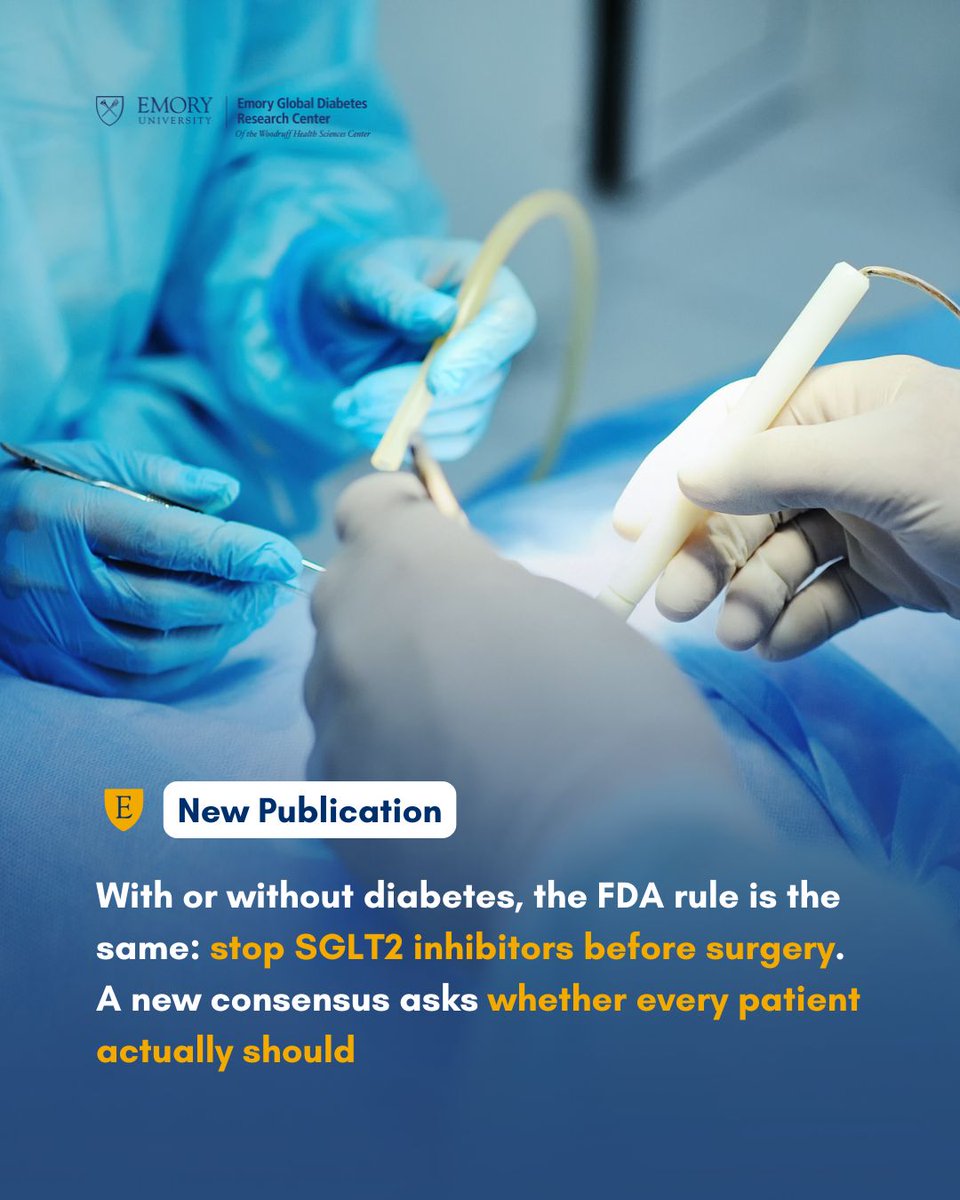
FDA recommends stopping SGLT2 inhibitors 3-4 days before surgery for all patients. A new SPAQI consensus statement co-authored by EGDRC’s Guillermo E. Umpierrez, MD, calls for a tailored approach based on diabetes status and comorbidities. Read more: https://t.co/09KlwaH98s
Consulate collaborated with @EmoryUniversity to host an engaging discussion on advancing 🇮🇳–🇺🇸 partnership in science & biotechnology.
Moderated by @SardanaNita, speakers @kmvnarayan14 & @anantm highlighted strong complementarities, the need to enrich shared research databases for global good, and the importance of greater public, private & philanthropic funding to drive innovation and economic growth.
They also underscored how AI can transform community healthcare through customized, scalable solutions.
In their keynote remarks, Consul General & Vice Provost Jane Gatewood highlighted the expanding India–Emory partnership, emphasizing deeper collaboration in research, innovation, and capacity building for global impact.
#TechnologyThursdays
Lipoprotein(a) is a known cardiovascular risk factor, but its role among South Asians remains unstudied. A new Eli Lilly-sponsored grant will change that. Congratulations to EGDRC’s Dr. Anurag Mehta and the CARRS team on receiving grant funding for this first-of-its-kind research
South Asians diagnosed with type 2 diabetes in their 20s face nearly 3x the mortality risk and ~24.5 lifetime DALYs lost. A recent study by EGDRC’s Ram Jagannathan, analyzed data from the population-based CARRS cohort of 21,574 South Asians.
https://t.co/D4wMNLa4HG
From pioneering cardiometabolic research with EGDRC to leading India’s premier medical institution. Congratulations to EGDRC’s Dr. Nikhil Tandon, Emory adjunct professor & CARRS partner in India, on his appointment as Acting Director of @aiims_newdelhi https://t.co/PN35uOi3hd
Fear of overnight hypoglycemia leads some people with type 1 diabetes to keep glucose running high at bedtime. Dr. Stephanie A. Griggs at EGDRC is studying how improving sleep behaviors can change that and improve glucose outcomes. https://t.co/oJmr9N4VDX
Neighborhood disadvantage is often assumed to drive higher hospital readmission risk. A recent study by EGDRC's Lindsey Garrett, Zhuoyang Zhang, @HuiShao7, & @ambarkul finds no association between ADI & 30-day readmissions in 6,095 T2DM patients.
https://t.co/iEbmCmRtpE
Fewer than 30% of women with a history of gestational diabetes receive recommended postpartum screening. A new editorial by EGDRC researchers @k_suvada, @Rjchakka , & Leslie C. M. Johnson examines surveillance & data infrastructure failures.
https://t.co/gZigegxXc5
Efficacy & safety of co-administered cagrilintide & semaglutide versus semaglutide alone in adults with #overweight or #obesity with or without type 2 #diabetes in Japan & Taiwan (REDEFINE 5): a multicentre, randomised, active-controlled, phase 3a trial https://t.co/TcFvbc1Prv .
A recent study led by EGDRC’s Erica L. Kocher, Felix Teufel, @rodrigoc_90, @Rjchakka, @mkali_twindad examines the growing burden of type 2 diabetes in LMICs. Findings highlight major gaps in diagnosis, care access, and health system capacity.
https://t.co/Zrtchn8eVI
Novel amino acid and fatty acid signatures during pregnancy may be linked to future type 2 diabetes risk after gestational diabetes, according to a recent study coauthored by Emory researchers ViLinh Tran and Dean P. Jones identifies.
https://t.co/PCFGrfLCtx
A recent study coauthored by EGDRC’s @rodrigoc_90 highlights that asthma is associated with increased risk of cardiometabolic disease multimorbidity, suggesting shared inflammatory pathways and the need for integrated chronic disease management.
https://t.co/qJjaJJiOSL