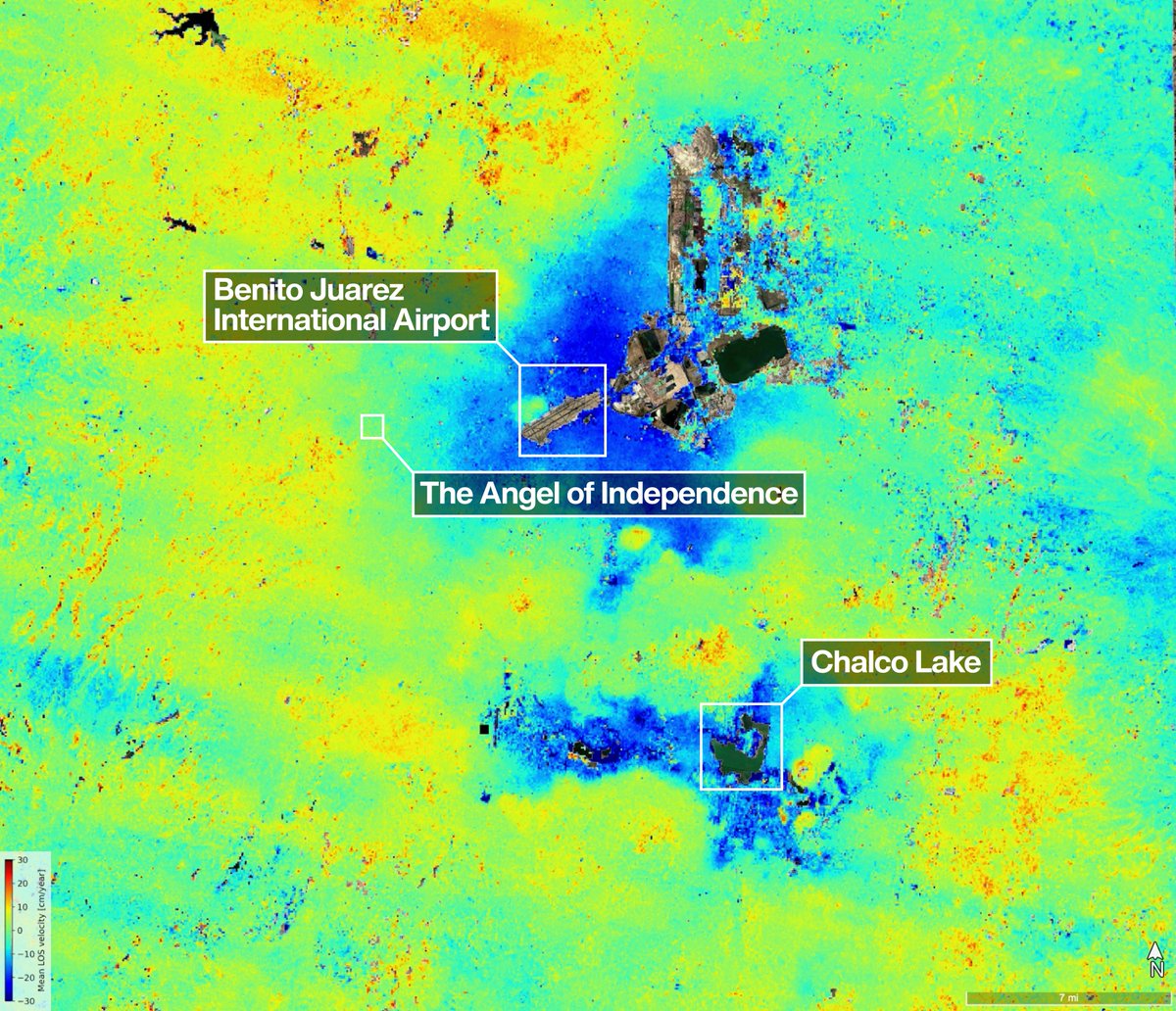
The ground beneath Mexico City is slowly sinking, and now, the NISAR satellite can track it from space.
New data shows parts of the city (in blue) that sank more than half an inch (more than 2 cm) per month from Oct. 2025 to Jan. 2026.
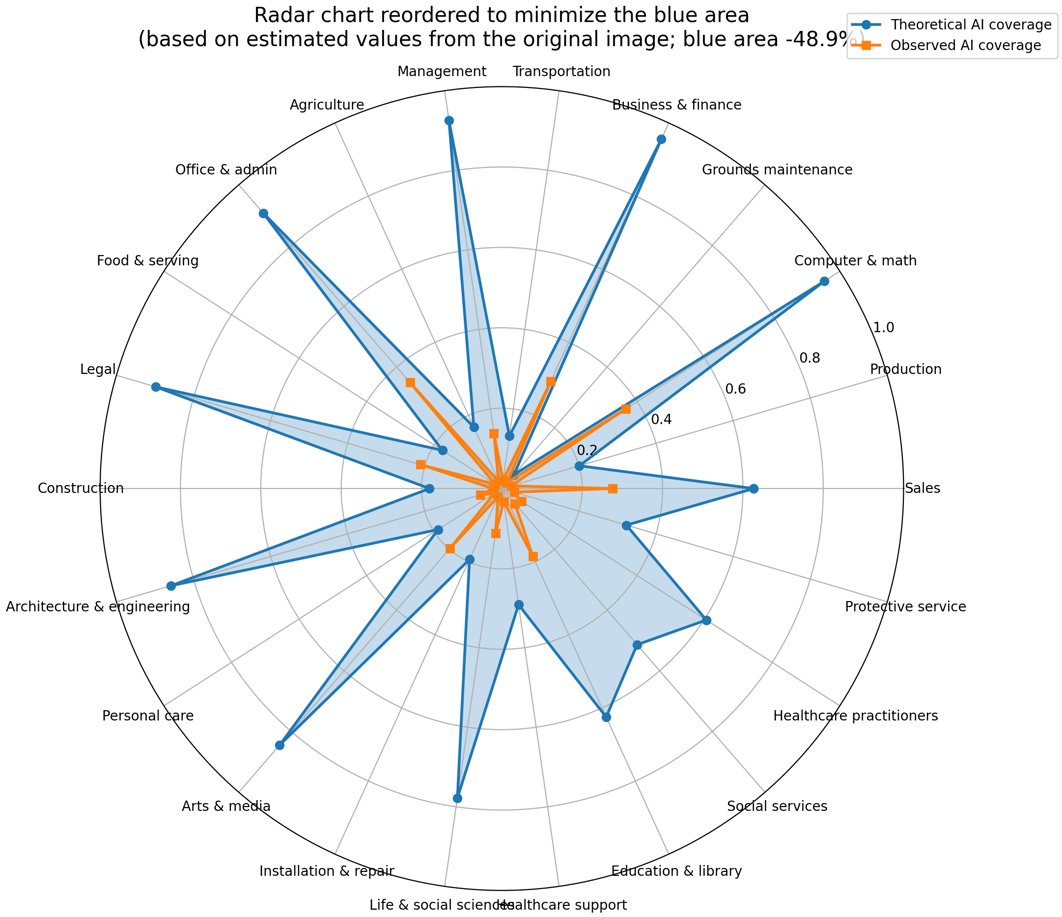
Radar graphs are among the worst ideas in data visualization. The whole point of them is to show the area and you can usually reorder the labels freely in order to create a desired dramatic effect.
Two versions of the same graph:
- left one tells the story that AI is rapidly replacing whole industries
- right one shows the "jaggedness" and reinforces the idea that humans will always have something that AI won't be able to replicate
Fun fact: The 1998 paper that introduced Google and PageRank to the world ends with this acknowledgment:
"Supported by the National Science Foundation under Cooperative Agreement IRI-9411306. Funding also provided by DARPA and NASA."
Sergey Brin was on an NSF Graduate Fellowship. Larry Page was a PhD student on the grant.
Google—now worth $2 trillion—exists because American taxpayers funded "the Stanford Integrated Digital Library Project."
Not a startup garage myth. A government grant.
Every time someone says public research funding "picks winners and losers" or "crowds out private innovation," remember: the most dominant technology company of the 21st century was incubated entirely with public money, inside a public university, by researchers on federal fellowships and grants.
The private sector didn't see it coming. VCs passed. The government funded it anyway—not because it would become Google, but because fundamental research into information retrieval seemed worth understanding.
That's the point. You can't predict which grants will change the world. You fund the science and let researchers explore.
The internet (DARPA). GPS (DoD). Touchscreens (CIA/NSF). mRNA vaccines (NIH). Google (NSF/DARPA/NASA).
Public investment in basic research isn't wasteful spending. It's the seed corn of the entire modern economy.
Cada vez que solicitas un trámite digital, agendas una cita en línea o navegas con el internet de CFE, estás utilizando la potencia del Centro de Datos de Aguascalientes, el más grande que tiene un gobierno en México.
Este centro es fundamental: no hay soluciones digitales sin infraestructura de datos.
¡Y vamos por más! El próximo año iniciamos la construcción de un Centro de Datos con 5 veces más capacidad.
💻 La CONABIO presente en HackaTec 2025
Esta semana participamos en HackaTec, dentro de la Cumbre Nacional de Desarrollo Tecnológico, Emprendimiento e Innovación: INNOVATEC 2025, realizada en el Instituto Tecnológico de Pachuca. 🤩
👨🏻💻👩🏻💻Para la CONABIO es fundamental estar en estos espacios donde la tecnología, la creatividad y el compromiso juvenil se unen para impulsar soluciones que contribuyan al cuidado de la biodiversidad y al futuro sostenible de México.
Nuestros colegas Adán Herrera y Everardo Robredo están participando como mentores, acompañando a las y los jóvenes que están desarrollando proyectos innovadores.
#CONABIO #INNOVATEC2025 #HackaTec #InnovaciónParaLaBiodiversidad #JuventudesPorElFuturo
México da un paso histórico en el desarrollo tecnológico.
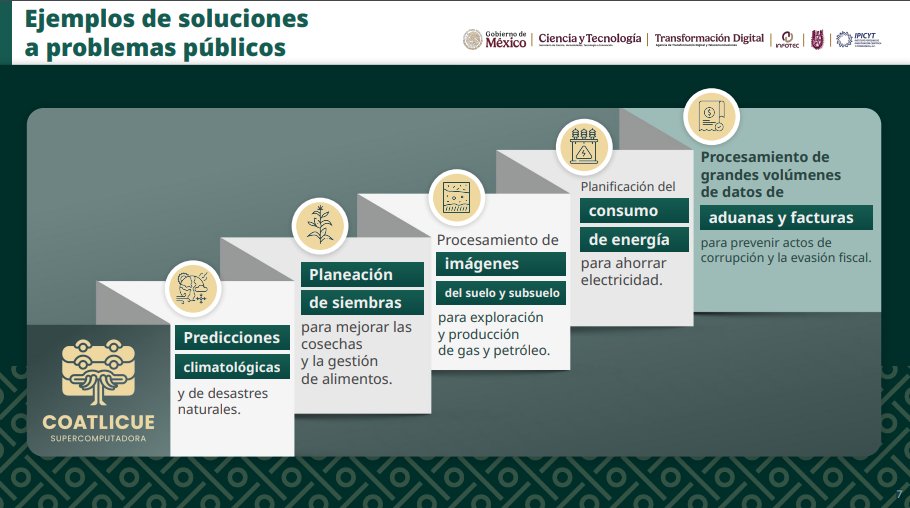
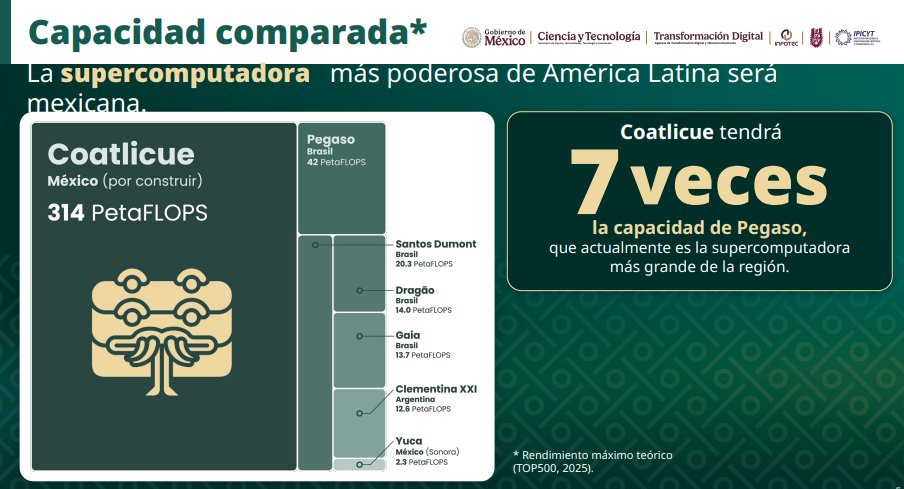
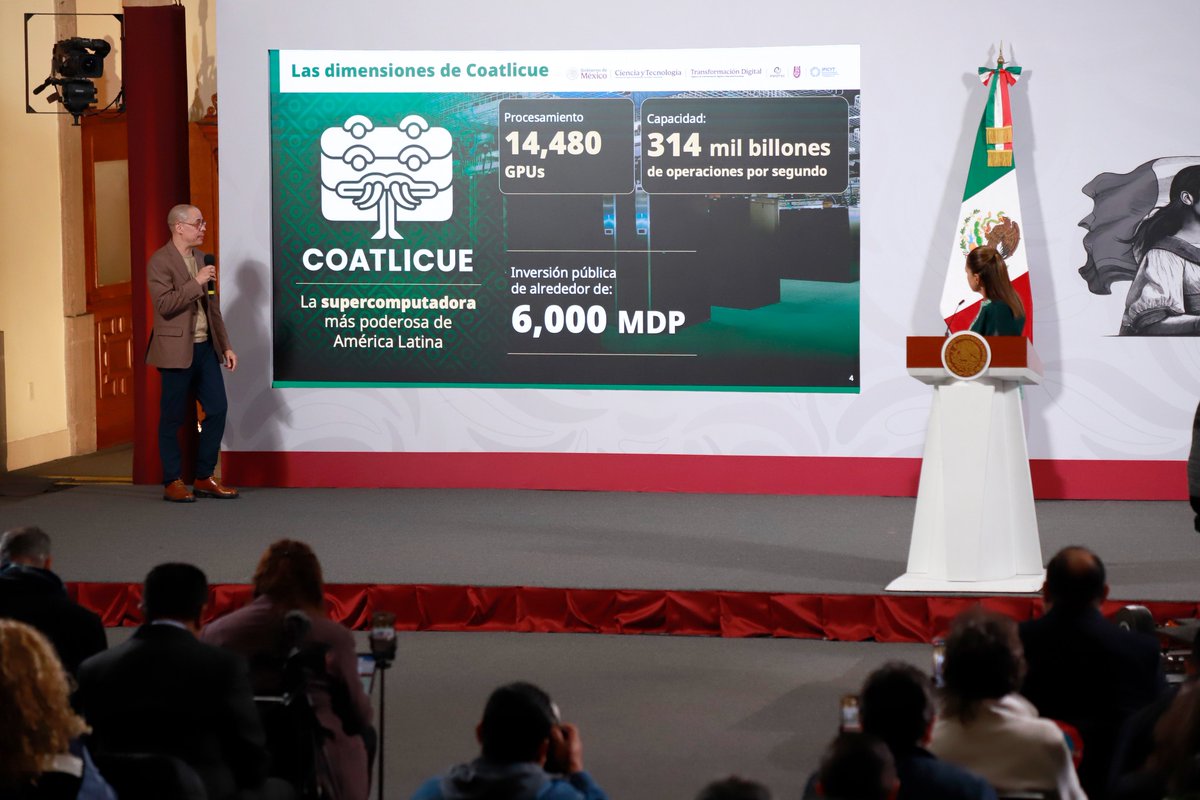
En 2026 inicia la construcción de la supercomputadora pública más potente de Latinoamérica: Coatlicue.
Tendrá una capacidad para realizar 314 mil billones de operaciones por segundo para resolver problemas públicos como:
- ☁️Predicciones climatológicas
- 🌱Planeación de siembra
- 💡Planificación de consumo de energía
-📊Procesamiento de grandes volúmenes de datos de aduanas y facturas para prevenir actos de corrupción y evasión fiscal
Con Coatlicue se impulsará el desarrollo tecnológico del país, la prosperidad económica y la investigación científica nacional.
If you want to eat real food, avoid 1) restaurants with a Michelin star or trying to get a Michelin star, 2) restaurants with a "famous" chef, 3) restaurants with a view.
Currently on the front page of the Wall St Journal's website.
As of today I will no longer be able to say "that is the worst data presentation I have ever seen."
7 Reglas para Escribir Buenos Mensajes de Commit como Programador:
1. Usa verbo imperativo: Escribe tus commits como acciones (Add, Fix, Remove). Ejemplo: “Add new feature”.
2. Sin puntos finales: Los mensajes de commit no necesitan punto final ni suspensivos. ¡Que sean claros y directos!
3. Máximo 50 caracteres: Mantén tus mensajes cortos y concisos. Si necesitas más, considera separar los commits.
4. Añade contexto: Usa el cuerpo del commit para información adicional cuando sea necesario.
5. Commits semánticos: Agrega prefijos como feat:, fix:, docs: para dar más sentido a tus commits.
6. Usa utilidades: Herramientas como Husky o Commitlint pueden ayudarte a mantener un historial limpio y consistente.
7. Explica el qué no el cómo. ¿Qué se añade? ¿Qué se arregla? No expliques ahí cómo lo estás haciendo.
¡Escribe commits claros y tu futuro yo te lo agradecerá!
📢 Just announced: nvmath-python brings NVIDIA accelerated math to #Python.
✅ Pythonic APIs for using CUDA math operations
✅ Works with your favorite Python packages
✅ #OpenSource
Beta version is available now! #HPC
Learn more now: https://t.co/zPoYnfzgSe
Gemma 2 is officially here! 🥳
Available in both 9B and 27B parameter sizes, Gemma 2 is higher performing than ever before. Download the weights on @Kaggle and @HuggingFace, or access the models in Google AI Studio.
Learn more → https://t.co/G19kKkSrq5